

Welcome to a culinary journey deep into the heart of Cameroon, where we celebrate a dish so profoundly loved that it has earned a collection of affectionate nicknames. This incredibly flavorful one-pot meal, known universally as Cameroonian Plantain Porridge, is often referred to as “Born House Planti,” “Porridge Planti,” or “Turning Planti.” Each name speaks to a different aspect of its preparation or cultural significance, showcasing the deep connection Cameroonians have with this staple. For clarity, “planti” is simply the endearing short form for plantain, a versatile fruit that forms the backbone of countless West African dishes. You might also encounter a related variant, the delightful “Sese Planti,” which shares the same starchy, comforting essence.
Just as beloved dishes globally earn playful sobriquets – think “Spag Bol” for Spaghetti Bolognese or “Poundi” for Pounded Yam – this plantain porridge holds a special place in the Cameroonian culinary lexicon. It’s a dish that transcends mere sustenance, embedding itself into social customs and family life. Its widespread popularity is a testament to its comforting flavors and straightforward preparation, making it a go-to meal for busy households and festive gatherings alike. The richness of palm oil, the earthiness of various meats and fish, and the vibrant freshness of leafy greens all come together in a symphony of taste that is uniquely Cameroonian.

The Cultural Tapestry of Born House Planti
The name “Born House Planti” carries profound cultural weight in Cameroon. This moniker originates from the tradition of preparing this nourishing dish for women who have recently given birth. It’s a gesture of care, providing the new mother with a wholesome, energy-rich meal during her recovery period. This tradition underscores the meal’s role as more than just food; it’s a symbol of community, support, and the celebration of new life. The ease of preparation, requiring only one pot, also makes it an ideal meal for a time when new parents might have limited time and energy for elaborate cooking. The simple, yet deeply satisfying nature of the porridge offers comfort and sustenance, making it a truly special dish in Cameroonian homes.
While often called “porridge,” this dish is distinct from the grain-based porridges common in many Western cultures. In West Africa, the term “porridge” frequently refers to flavorful, one-pot stews or meals where starchy vegetables like plantains, yams, or cocoyams are cooked down with various ingredients into a thick, cohesive dish. This plantain porridge exemplifies that definition beautifully, creating a hearty and satisfying meal that is much more substantial than a typical breakfast porridge.
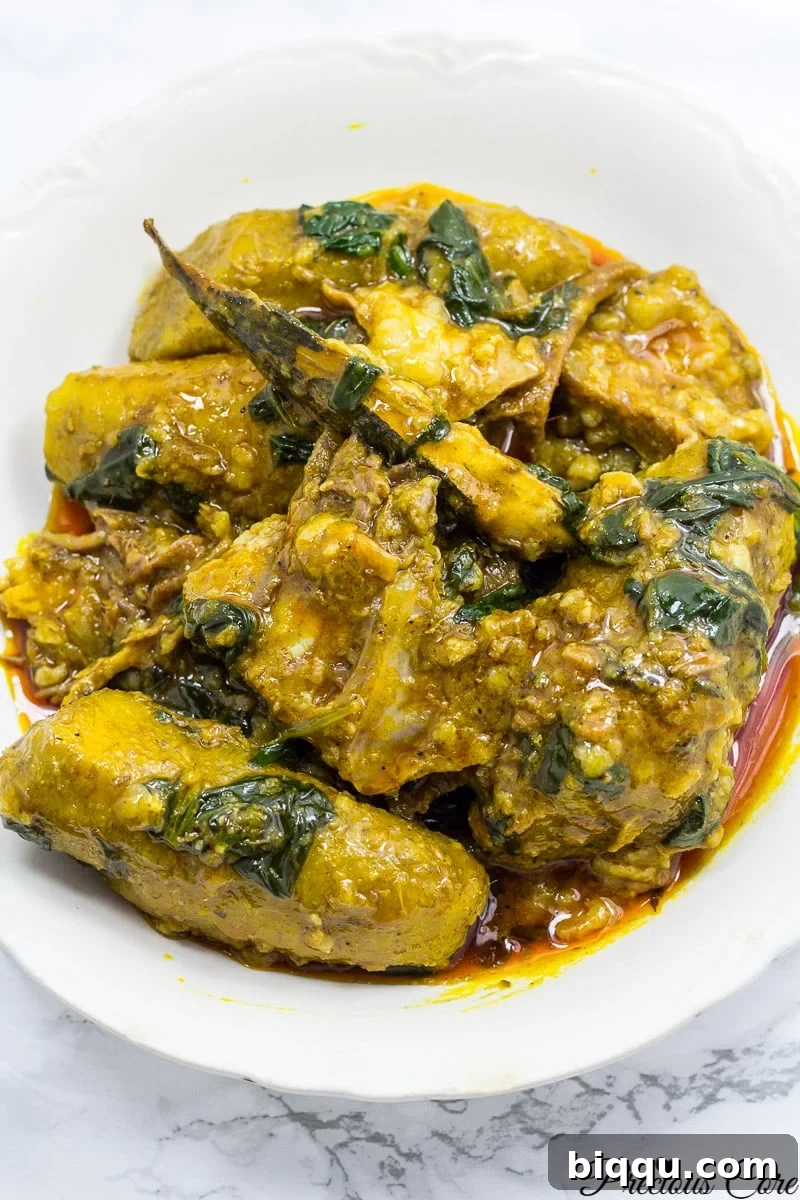
This Cameroonian Plantain Porridge recipe is not just incredibly tasty – truly finger-licking good – but also remarkably simple to make. It falls into that beloved “dump-and-go” category of cooking, which is perfect for busy weeknights or when you simply want to minimize time spent in the kitchen without compromising on flavor. The magic happens as the raw ingredients simmer together, allowing their distinct flavors to meld into a rich, aromatic experience. This particular rendition is generously infused with the deep, smoky notes of smoked fish, tender goat meat, and the unique umami punch of crayfish. These ingredients are not merely additions; they are integral to the authentic taste and aroma that define this cherished Cameroonian delicacy.
Unlocking the Flavors: Key Ingredients and Their Role
The secret to this dish’s captivating flavor lies in a harmonious blend of simple yet potent ingredients, each contributing to its distinctive profile. At its core, we have unripe plantains, which provide a starchy, slightly sweet foundation that thickens the dish as it cooks. Unlike ripe plantains, which are sweet and soft, unripe plantains hold their shape better and offer a more neutral base for the savory elements. They absorb the flavors of the broth and spices beautifully, becoming incredibly tender and delicious.
Palm oil is another non-negotiable ingredient, lending the porridge its characteristic vibrant orange hue and a rich, earthy flavor that is central to West African cuisine. It’s more than just a cooking fat; it imparts a depth of flavor that cannot be replicated with other oils. The amount used can be adjusted to personal preference, but a generous swirl ensures that signature “oyel” sheen and taste that Cameroonians adore.
For protein and an explosion of savory notes, this recipe calls for smoked fish and meat of choice, with goat meat being a fantastic option for its robust flavor and tender texture when slow-cooked. Smoked fish adds a distinct umami and smoky depth that elevates the entire dish, while goat meat provides a hearty, satisfying chew. Other options like beef or chicken can also be used, depending on availability and dietary preferences. Crayfish, a staple in West African cooking, contributes another layer of intense seafood flavor, enriching the broth and adding complexity. These proteins are not just fillers; they are essential for the rich, satisfying character of the porridge.
Seasoning is paramount, and a Maggi Crevette (seasoning cube) or bouillon powder helps to amplify the inherent flavors, creating a well-balanced taste. Fresh aromatics like blended garlic and ginger, though optional, add a fragrant warmth and a subtle kick. For those who enjoy a bit of heat, a habanero pepper can be added whole to infuse the dish with a gentle spice without overpowering other flavors. A touch of “contri onions” (rondelles), a local Cameroonian spice, further enhances authenticity, though it can be omitted if unavailable. Finally, salt is crucial for bringing all these flavors into sharp focus.
Leafy greens are the finishing touch, adding freshness, nutrients, and a slight bitterness that beautifully contrasts the richness of the other ingredients. Traditionally, bitterleaf is used for its distinct, slightly bitter taste, which is highly prized in Cameroonian cuisine. However, due to its limited availability outside of specific regions, fresh spinach makes an excellent and widely accessible substitute, offering a milder flavor profile while still contributing vibrant color and essential nutrients. The beauty of this dish lies in its adaptability, allowing for minor substitutions without compromising its core deliciousness.
Watch how to make Cameroonian Born House Planti:

Cameroonian Plantain Porridge Recipe (Born House Planti, Turning Planti)
10 minutes
45 minutes
55 minutes
4 people
Pin Recipe
Rate
Print Recipe
Ingredients
- 4-5 unripe plantains, peeled and cut in halves
- 1/2-1 cup palm oil
- 1 pound smoked fish and meat of choice (about half kg), I used goat meat
- 1/2 cup crayfish
- 1 Maggi Crevette (seasoning cube) or 2 teaspoons of bouillon powder
- 2 tablespoons blended garlic and ginger (optional)
- 1 habanero (hot) pepper (optional)
- 1 teaspoon contri onions (rondelles) (optional)
- Salt, to taste
- 3-4 handfuls green leafy vegetable – I used spinach (traditionally, bitterleaf is used)
Instructions
-
If using a tough meat like goat meat, place it in the pot with water, ensuring the water level is consistent with the meat. Bring it to a boil and let it cook for about five minutes. At this point, add the peeled and halved plantains. If you are using a softer cut of meat, such as tender beef or chicken, you can add it to the pot simultaneously with the plantains.
-
Once the plantains are in the pot, incorporate all the remaining ingredients, with the exception of the leafy greens. Stir everything together gently to ensure an even distribution of flavors. Allow the mixture to cook for approximately 30 minutes, or until the plantains are thoroughly tender and cooked through. It is advisable to check the pot periodically and add a little more water if the liquid level becomes too low, to prevent scorching and ensure proper cooking.
-
Finally, add the green leafy vegetables to the pot. Stir them into the plantain mixture and let them simmer for just 2 minutes. This brief cooking time will ensure the vegetables retain their vibrant color and a slight crunch. Once the greens are wilted and incorporated, turn off the heat. Your delicious Cameroonian Plantain Porridge is now ready to be served warm and enjoyed!
Notes
Nutrition
Additional Info
Main Course
Cameroonian
657
Why This One-Pot Wonder is a Must-Try
Beyond its cultural roots and delectable taste, Cameroonian Plantain Porridge is a culinary delight that stands out for several reasons. Firstly, its one-pot nature makes it incredibly convenient, minimizing cleanup and making it a perfect choice for busy individuals or families looking for a wholesome meal without the fuss. The process is largely hands-off once all ingredients are in the pot, allowing you to focus on other tasks while dinner simmers to perfection.
Secondly, the nutritional benefits are noteworthy. Plantains are an excellent source of complex carbohydrates, providing sustained energy. They are also rich in vitamins, particularly Vitamin C and Vitamin A, and minerals like potassium. When combined with protein-rich smoked fish and goat meat, and the vital nutrients from leafy greens like spinach, this dish becomes a powerhouse of wholesome goodness. It’s a balanced meal that nourishes the body and satisfies the soul.
The versatility of this plantain porridge also adds to its appeal. While the traditional recipe is fantastic, it’s easily adaptable to dietary preferences and ingredient availability. Don’t have goat meat? Use beef, chicken, or even make it vegetarian with extra vegetables and mushrooms. Can’t find bitterleaf? Spinach, kale, or collard greens are excellent substitutes. This flexibility ensures that anyone, anywhere, can recreate a version of this authentic Cameroonian comfort food.
Furthermore, the experience of eating this porridge is truly unique. The tender, starchy plantains, infused with the robust flavors of the meat, fish, and spices, create a textured and aromatic dish that is deeply comforting. The palm oil not only adds color and flavor but also gives the porridge a silky, luxurious mouthfeel. Each spoonful is a journey through rich, savory, and subtly sweet notes, leaving you feeling fully satisfied and longing for more.

Tips for the Perfect Pot of Plantain Porridge
- Choose the Right Plantains: For this porridge, unripe (green) plantains are essential. They are firm, starchy, and hold their shape during cooking, thickening the stew. Ripe plantains would become too mushy and sweet.
- Quality Palm Oil: Invest in good quality, unrefined red palm oil for the most authentic flavor and vibrant color.
- Meat Preparation: For tough meats like goat, pre-boiling ensures they are tender enough by the time the plantains are cooked. For more tender cuts, a shorter initial cook time or adding them directly with plantains works well.
- Don’t Skimp on Aromatics: Garlic, ginger, and peppers (if using) significantly enhance the depth of flavor. Fresh is always best!
- Adjust Water Content: Keep an eye on the liquid level. The porridge should be thick and cohesive, not watery, but also not dry. Add hot water in small increments if needed.
- Gentle Simmer: Allow the porridge to simmer gently, letting the flavors meld together over time. Avoid high heat, which can lead to burning or uneven cooking.
- Leafy Greens Last: Add your leafy greens towards the end of the cooking process to ensure they remain vibrant and retain their nutritional value and a slight texture.
- Taste and Adjust: Always taste before serving and adjust salt and seasoning as necessary. Different brands of bouillon cubes or spices can vary in intensity.
Serving Suggestions
Cameroonian Plantain Porridge is a complete meal in itself, hearty and filling. However, it can be beautifully complemented by a few simple additions. A side of fresh avocado slices adds a creamy contrast, while a sprinkle of fresh cilantro or parsley can brighten the flavors. For those who enjoy an extra kick, a dash of hot sauce or a side of fresh chili paste can elevate the experience. This dish is best enjoyed warm, straight from the pot, gathering family and friends around for a shared culinary delight.
Conclusion: A Taste of Cameroonian Heritage
This Cameroonian Plantain Porridge, known by its many affectionate names, is more than just a recipe; it’s an invitation to experience a piece of Cameroonian culture and culinary heritage. Its rich flavors, comforting texture, and the ease of its one-pot preparation make it a standout dish that is sure to become a favorite in your kitchen. Whether you’re a seasoned chef or a home cook looking to explore new tastes, this recipe offers a delicious and authentic journey to West Africa. So gather your ingredients, embrace the joy of “dump-and-go” cooking, and prepare to be captivated by the incredible taste of Born House Planti. It’s a meal that truly warms the heart and satisfies the soul.