
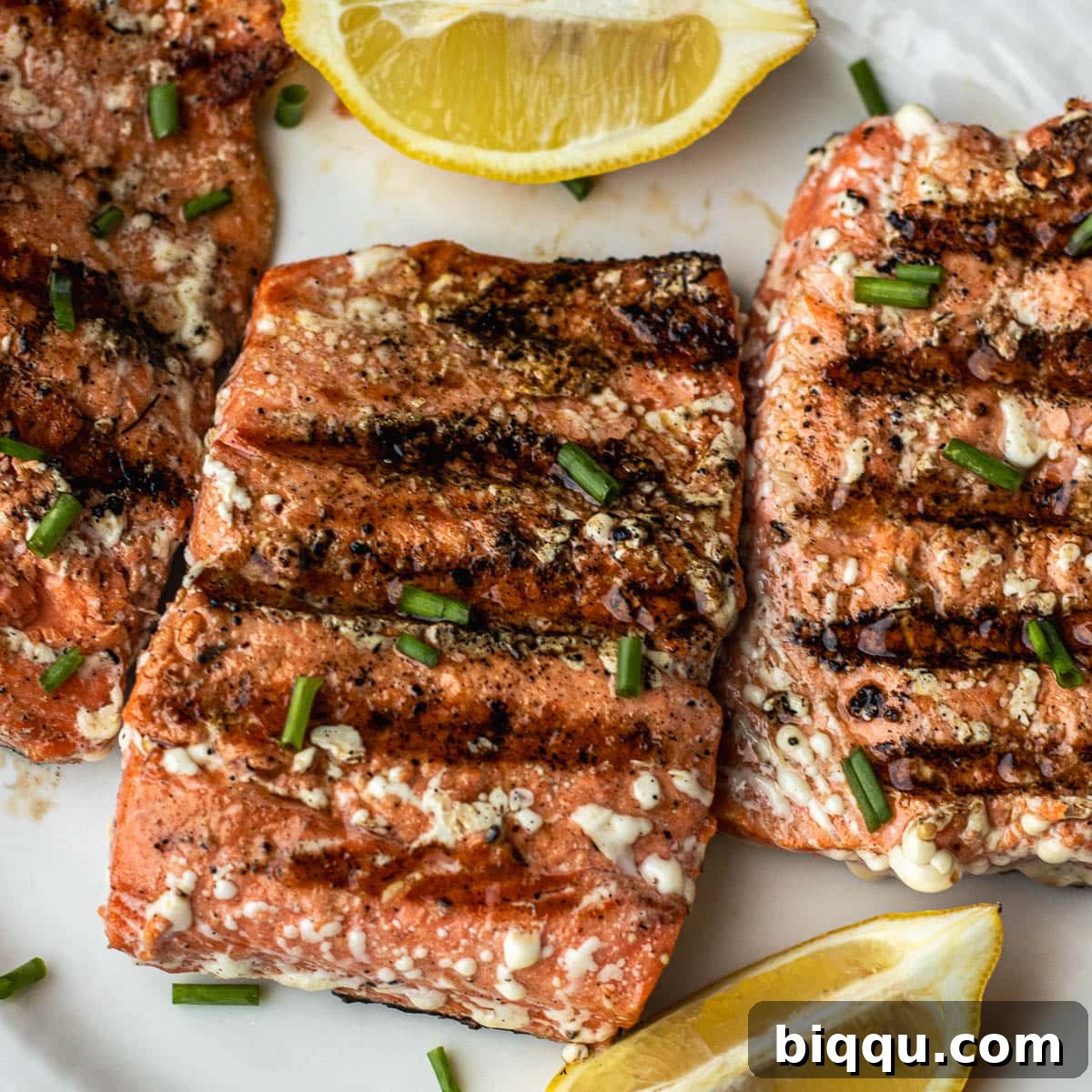
Embark on a culinary journey to grilling perfection with this incredibly delicious Grilled Sockeye Salmon recipe! Proving that exceptional flavor doesn’t require a long list of ingredients, this dish comes together with just four simple components. Whether you’re a seasoned grill master or new to cooking fish, you’ll learn how to achieve perfectly flaky, juicy salmon every time, using either your outdoor grill or a convenient stovetop grill pan.
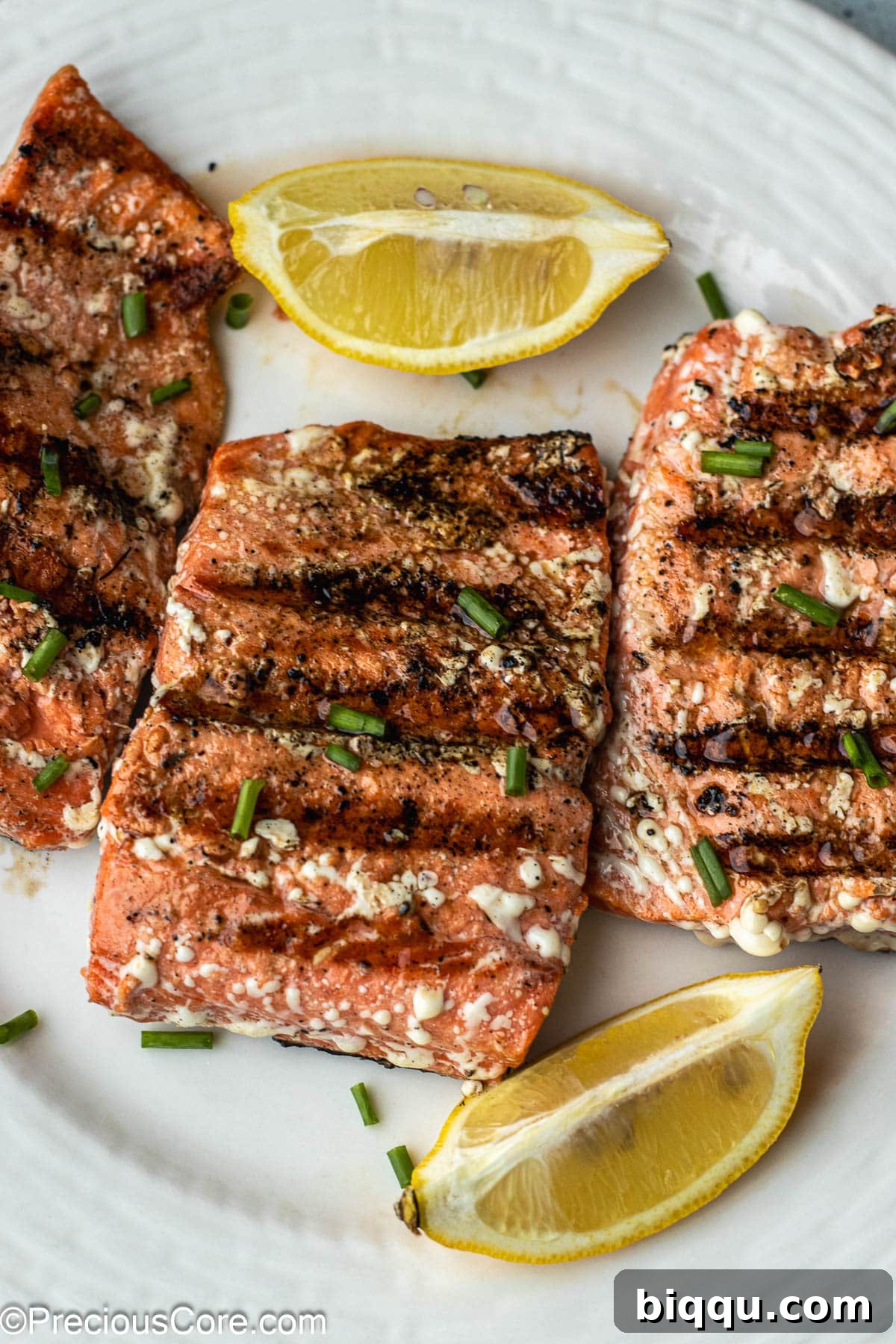
Grilled fish is a staple in many kitchens, and for good reason! It’s a healthy, quick, and satisfying meal option. If you appreciate the simplicity and robust flavors of perfectly cooked seafood, you’ll love exploring other favorites like our Pan Seared Tilapia, Grilled Whole Red Snapper (Oven Grilled), and Oven Grilled Tilapia. These recipes are designed to bring restaurant-quality fish dishes right to your dining table with minimal effort.
This Grilled Sockeye Salmon recipe serves as an excellent starting point for anyone looking to master fish cookery. Its straightforward approach builds confidence and delivers remarkable results. Elevate your meal by serving it alongside a refreshing Mango Avocado Salsa and aromatic Garlic Herb Rice. Prepare to savor a truly delightful experience that embodies the essence of good living!
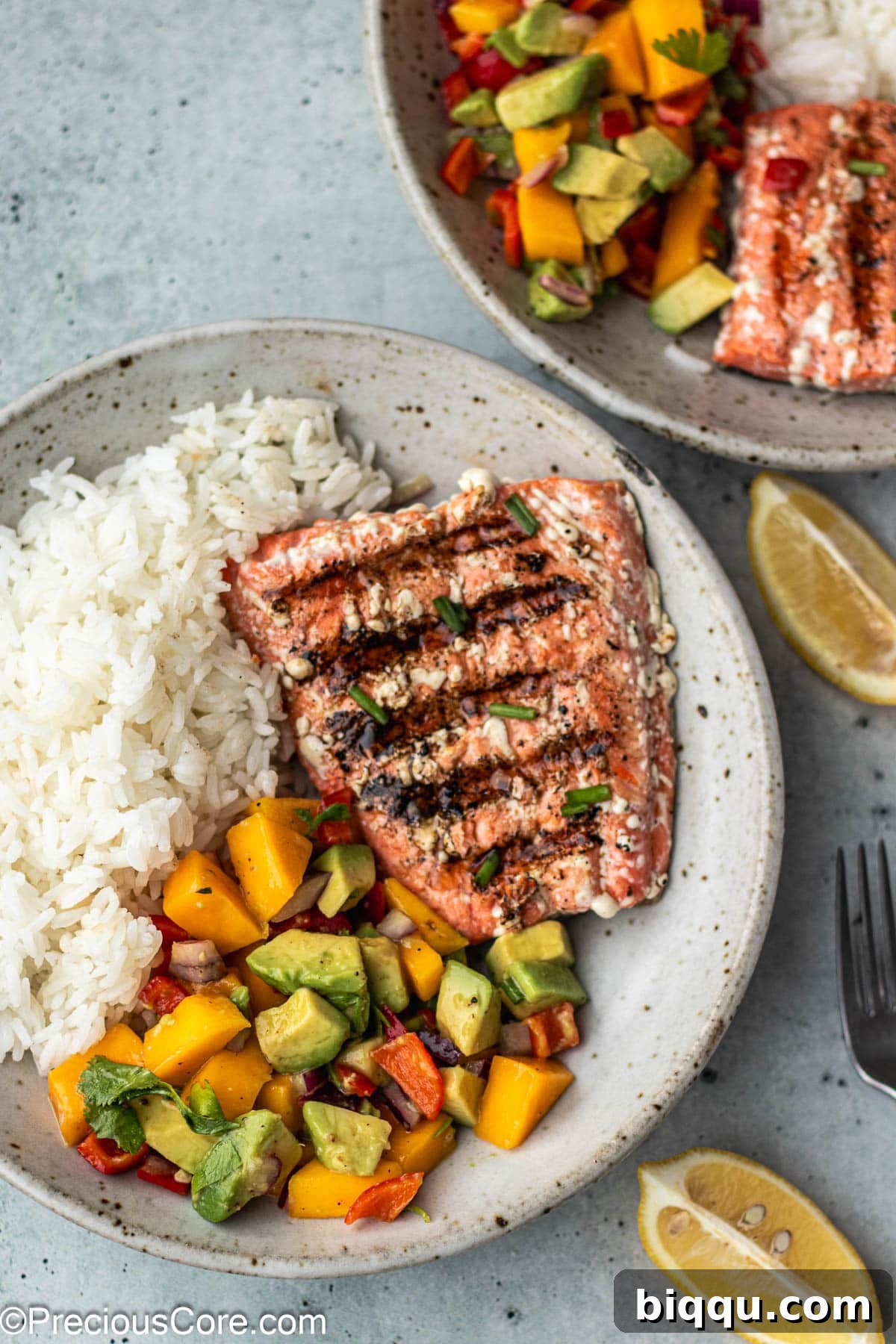
Table of Contents
- Why This 4-Ingredient Recipe is Your Culinary Secret Weapon
- The Unrivaled Appeal of Wild Sockeye Salmon
- Essential Ingredients for Flavorful Sockeye
- Mastering the Grill: Step-by-Step Instructions
- Achieving Flawless Doneness: No More Dry Salmon
- Expert Tips for Grilling Sockeye Salmon Success
- Recommended Grilling Equipment
- Frequently Asked Questions (FAQs)
- Serving Suggestions: Perfect Pairings
- Explore More Salmon Recipes
- Continue Your Grilling Adventures
- Grilled Sockeye Salmon Recipe Card
Why This 4-Ingredient Recipe is Your Culinary Secret Weapon
This grilled sockeye salmon recipe isn’t just easy; it’s a testament to how simple, quality ingredients can create an unforgettable meal. Here’s why it will quickly become a favorite in your kitchen:
- Simplicity at its Best: You truly only need four core ingredients – the salmon itself, olive oil, salt, and pepper. This minimalist approach allows the natural, rich flavor of the sockeye salmon to shine through without being overpowered, making it an ideal choice for both novice and experienced cooks.
- Lightning-Fast Preparation: Say goodbye to lengthy cooking sessions! This recipe is designed for efficiency, taking less than 20 minutes from start to finish. It’s perfect for busy weeknights when you crave a wholesome, homemade meal without compromising on taste or quality.
- A Powerhouse of Health: Sockeye salmon is renowned for its exceptional nutritional profile. Rich in Omega-3 fatty acids, essential vitamins (like D and B12), and minerals, it offers significant benefits for heart health, brain function, and overall well-being. Eating delicious food that also nourishes your body is a win-win!
- Incredibly Versatile: Don’t limit yourself to just serving it as a main course. The versatility of grilled sockeye salmon is remarkable. Flake the cooked fish to create delicious fish tacos, add it to a fresh Lettuce Salad for a protein boost, or build a flavorful rice bowl. The possibilities for incorporating this healthy protein into various meals are truly endless!
- Effortless Meal Prep: Planning ahead for healthy meals just got easier. Grill a larger batch of sockeye salmon, store it in the refrigerator, and you’ll have a ready-to-eat protein component for lunches or dinners throughout the week. It reheats beautifully and maintains its fantastic flavor.
The Unrivaled Appeal of Wild Sockeye Salmon
When it comes to salmon, sockeye stands out. Its distinctive deep orange-red flesh is a visual indicator of its rich nutrient content and wild origins. Compared to Atlantic salmon, which is often farmed, wild-caught sockeye salmon boasts a firmer texture, a more pronounced “salmon” flavor, and a healthier fat profile.
Wild sockeye salmon is an excellent source of omega-3 fatty acids, particularly EPA and DHA, which are crucial for cardiovascular health, reducing inflammation, and supporting cognitive function. It also provides a significant amount of Vitamin D, B vitamins (especially B12 and niacin), and selenium. The leaner nature of sockeye means it cooks up beautifully on the grill, achieving a delightful sear while remaining moist and tender inside, provided it’s cooked correctly.
When choosing your salmon, look for wild sockeye fillets or steaks with vibrant color and a fresh, clean scent. If wild sockeye isn’t available, and you opt for farmed salmon (like Atlantic), prioritize “responsibly farmed” options. These typically adhere to stricter environmental and ethical standards, minimizing their impact on marine ecosystems.
Essential Ingredients for Flavorful Sockeye
The beauty of this recipe lies in its simplicity, proving that you don’t need a pantry full of exotic spices to create a truly great fish dish. With just four high-quality ingredients, you can transform sockeye salmon into a culinary masterpiece:
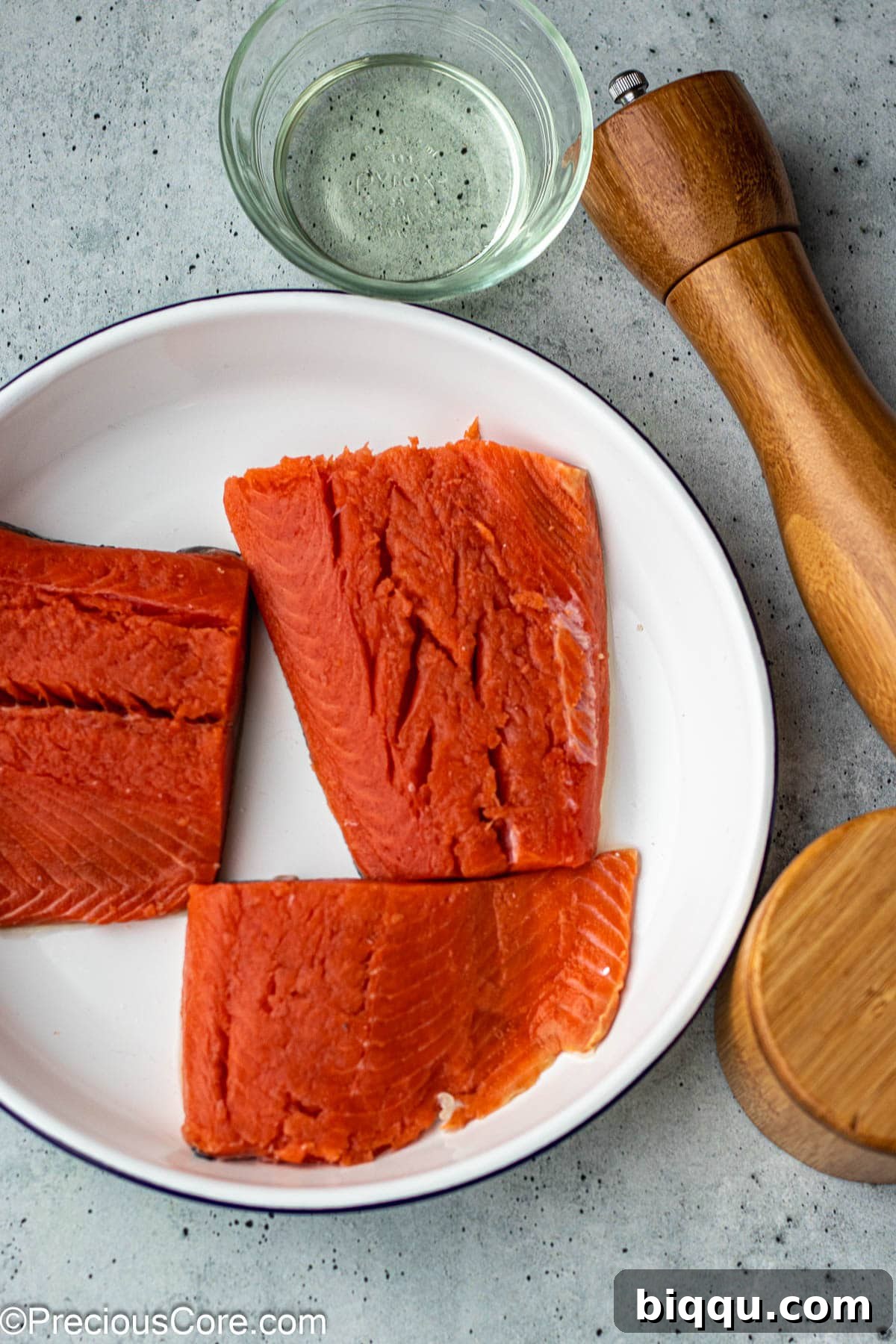
- Wild Sockeye Salmon: As discussed, wild-caught sockeye is preferred for its robust flavor, beautiful deep orange color, and superior nutritional content compared to its farmed counterparts. Its firmer texture holds up exceptionally well on the grill. Opt for fillets or steaks that are uniform in thickness for even cooking.
- High-Quality Olive Oil: This isn’t just for flavor; it’s a critical component for achieving grilling success. Olive oil serves two primary purposes:
- It helps to create a beautiful, even sear on the salmon, contributing to a crispy exterior.
- Crucially, it acts as a non-stick barrier, preventing the delicate fish flesh from adhering to the hot grill grates or grill pan. Ensure your salmon is completely coated for the best results.
- Salt and Pepper: These humble seasonings are truly all you need to highlight the natural deliciousness of sockeye salmon. The “secret” is in applying them correctly:
- Salt: Use enough salt to enhance, not overpower, the salmon’s flavor. A good rule of thumb is approximately half a teaspoon of salt per pound of salmon. This ratio consistently yields perfectly seasoned fish that’s never bland.
- Black Pepper: Freshly ground black pepper adds a subtle, aromatic kick that complements the salmon beautifully.
For the precise measurements of each ingredient, please refer to the detailed recipe card below.
Mastering the Grill: Step-by-Step Instructions
Grilling sockeye salmon to perfection is a simple process when you follow these three easy steps, whether you’re using an outdoor grill or an indoor stovetop grill pan.
- Prepare Your Grill & Fish:
- Begin by patting your salmon fillets or steaks thoroughly dry with paper towels. This crucial step removes excess moisture, which is essential for achieving a beautiful, crisp sear and preventing the fish from steaming instead of grilling.
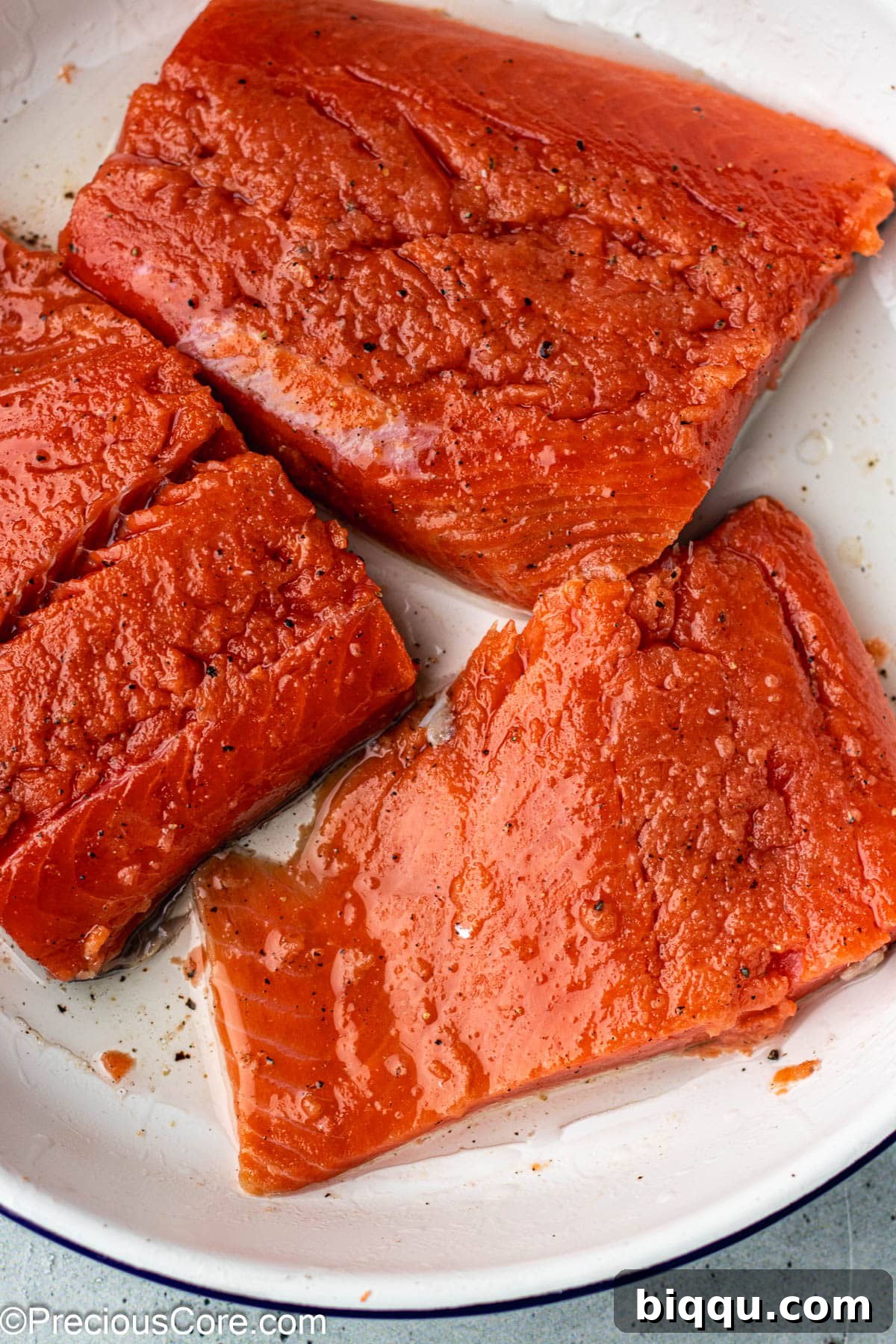
- Next, liberally drizzle and rub olive oil over both sides of the salmon, ensuring it’s completely coated. This creates a protective barrier that not only adds flavor but, more importantly, prevents sticking to the grill.
- Generously season both sides of the salmon with salt and freshly ground black pepper. Distribute the seasonings evenly for balanced flavor.
- Preheat your grill (outdoor or stovetop grill pan) to medium-high heat. Allow it to heat for at least 5-7 minutes. A properly preheated grill is key to clean release and distinct grill marks. If using an outdoor grill, clean the grates with a wire brush once hot, then lightly oil them before adding the fish.
- Season the Fish to Perfection:

Properly seasoned salmon, ensuring flavor in every bite. This step is where the minimal ingredients create maximum impact. The olive oil will help the salt and pepper adhere evenly, creating a flavorful crust as the salmon cooks. Remember, the goal is to enhance the natural taste of the sockeye, not mask it.
- Grill Until Flaky and Tender:
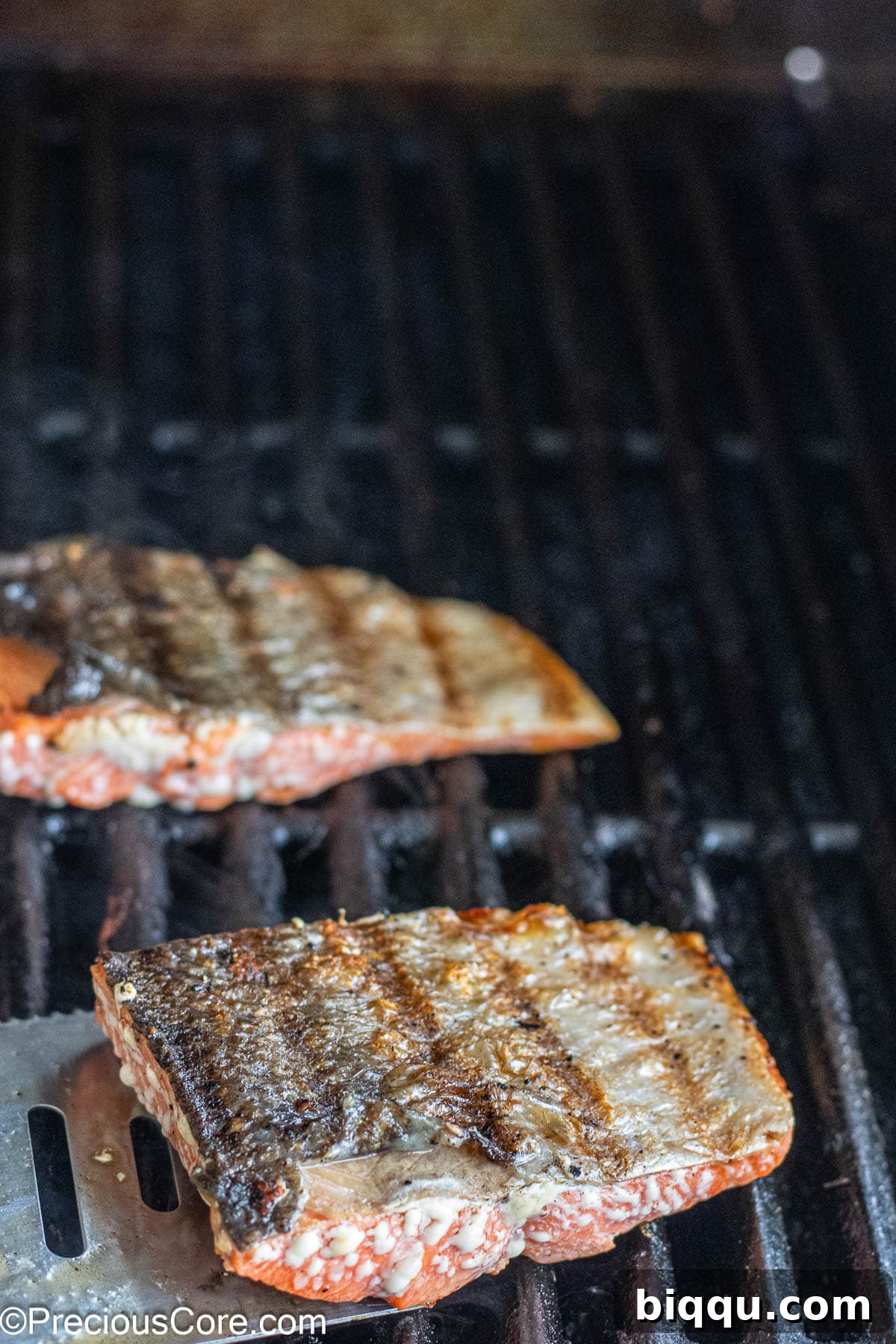
- Carefully place the seasoned salmon onto the hot grill grates. If your salmon has skin, start by placing it skin-side down. This allows the skin to crisp up and acts as a barrier, protecting the delicate flesh from overcooking and making it easier to flip.
- Grill for approximately 3 to 4 minutes per side. The exact grilling time will depend on the thickness of your salmon steaks or fillets and your desired level of doneness. For thicker cuts, you might need an extra minute or two per side. Resist the urge to constantly flip the fish; let it develop a beautiful crust and grill marks before turning.
- For an outdoor grill, closing the lid between flips helps to circulate heat and cook the salmon more evenly. Once flipped, continue grilling until the fish flakes easily with a fork and reaches the recommended internal temperature.
Sockeye salmon grilling to perfection, showing beautiful grill marks.
For more fantastic salmon preparations, be sure to explore our recipes for Pan Grilled Salmon, Salmon and Broccoli Sheet Pan, Baked Cajun Salmon, and Lemon Butter Salmon.
Top Tip for Doneness: The FDA recommends cooking salmon to an internal temperature of 145°F (63°C). The most reliable way to ascertain the exact doneness of your fish and prevent overcooking is by inserting an instant-read thermometer into the thickest part of the fillet. This ensures perfectly cooked salmon every time.
Achieving Flawless Doneness: No More Dry Salmon
Overcooking salmon is a common pitfall that can lead to dry, unappetizing results. To ensure your grilled sockeye salmon remains juicy and tender, pay attention to these visual cues and rely on a trusty thermometer:
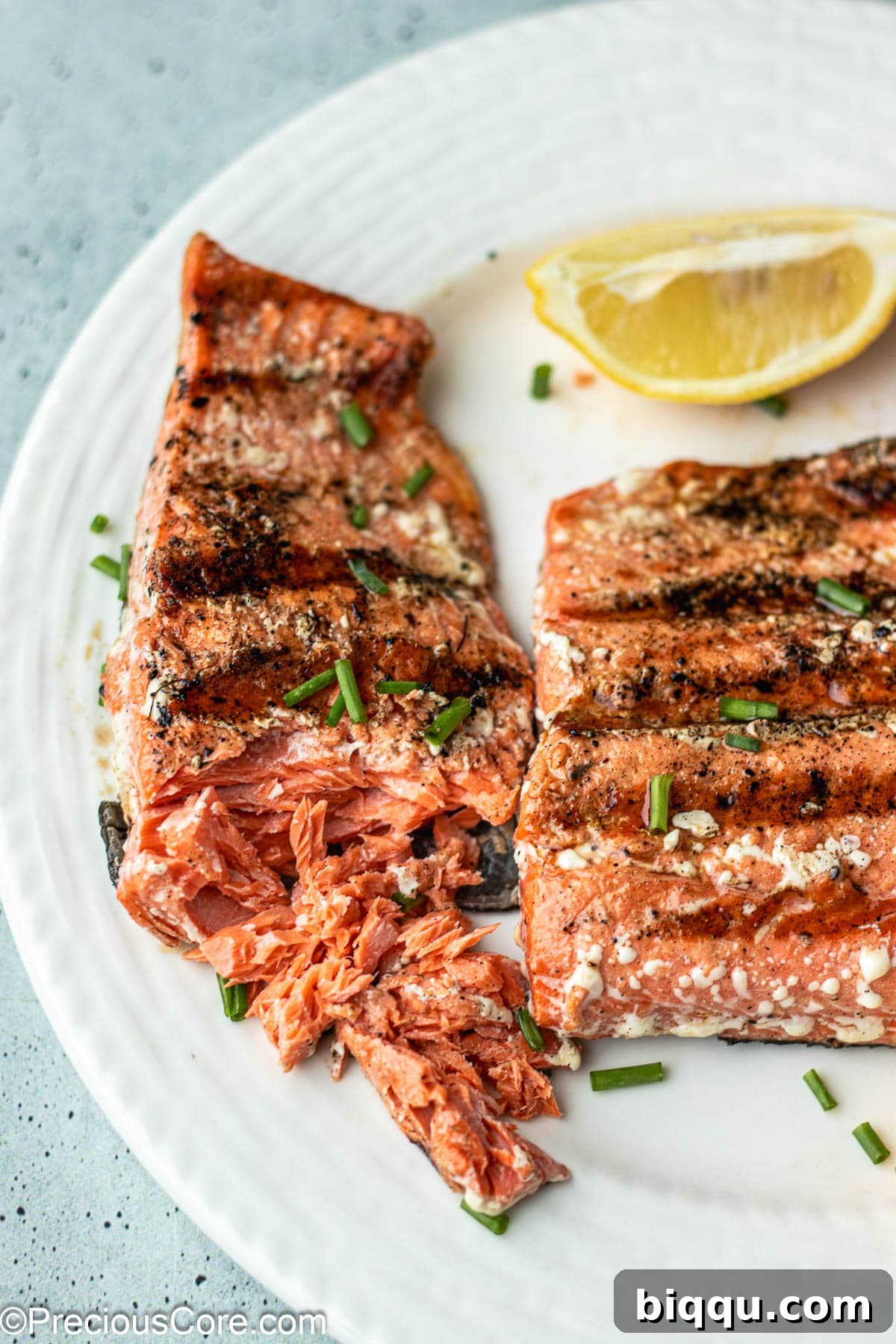
- Color Transformation: Salmon is done when its flesh transitions from a translucent, raw appearance to an opaque, uniformly pink color. As it cooks, you’ll notice the flesh firming up and becoming less glossy.
- The Flake Test: This is a classic indicator of doneness. Gently insert a fork into the thickest part of the salmon and twist slightly. If the fish flakes easily along its natural muscle lines without resistance, it’s done. If it still seems rubbery or tightly bound, it needs a little more time.
- Temperature is Key: For ultimate precision and food safety, always aim for an internal temperature of 145°F (63°C) in the thickest part of the fillet, as recommended by the FDA. Remove the salmon from the heat just before it reaches this temperature, as it will continue to cook slightly from residual heat.
Expert Tips for Grilling Sockeye Salmon Success
Achieving perfectly grilled sockeye salmon every time is easier with these expert tips:
- Pre-Seasoning Time: While this recipe is quick, if time allows, season your salmon 15-30 minutes before grilling and let it sit at room temperature. This allows the salt to penetrate deeper, enhancing the flavor even further.
- Clean Grates are Happy Grates: Always start with clean grill grates. When your grill is still hot after cooking, scrape the surface thoroughly to remove any stuck-on food. Once the grill has completely cooled, remove the grates, wash them with hot soapy water, and allow them to dry fully. Before your next cook, add a small amount of cooking oil to a paper towel and rub it into the grates. This creates a non-stick surface and helps to prevent your delicate fish from tearing or sticking.
- Oil Both the Fish and the Grill: While liberally coating the fish with olive oil is crucial, don’t forget to lightly oil your grill grates too (especially if using a cast iron skillet or grill pan). This double layer of protection is your best defense against sticking.
- Pat Dry, Always: We can’t stress this enough! Removing excess moisture from the sockeye salmon before oiling and seasoning is paramount. A dry surface allows for better searing, resulting in those beautiful grill marks and a crispier exterior.
- Mind the Temperature: Consistent medium-high heat is ideal for grilling salmon. Too low, and the fish might dry out before developing a good sear. Too high, and the exterior could burn while the interior remains undercooked.
- Give it a Rest: Once the salmon is cooked to your desired doneness, transfer it to a plate, tent it loosely with foil, and let it rest for 3-5 minutes. This allows the juices to redistribute throughout the fillet, resulting in a more moist and flavorful piece of fish.
- Flavor Variations (Optional): While our 4-ingredient recipe is fantastic on its own, feel free to experiment with a squeeze of fresh lemon juice, a sprinkle of fresh dill or parsley, a touch of garlic powder, or a pinch of paprika for extra depth of flavor after grilling.
For a different take on preparing salmon, try this delicious Salmon Bites Recipe. And if you’re looking to expand your grilling repertoire beyond fish, my Bone In Ribeye Steak recipe is a must-try for steak lovers.
Recommended Grilling Equipment
Having the right tools can make all the difference in your grilling experience, especially when cooking delicate fish like sockeye salmon:
- A grilling spatula or, even better, a fish spatula, is indispensable. Its thin, flexible, and angled head makes it incredibly easy to slide under the salmon and flip it without breaking the fillet.
- A cast iron grill pan is a fantastic investment for indoor grilling. It retains and distributes heat exceptionally well, giving you those coveted grill marks and a beautiful sear right on your stovetop, regardless of the weather outside.
- An instant-read meat thermometer is your ultimate ally in the kitchen. It eliminates guesswork, ensuring your salmon is cooked perfectly to the FDA-recommended 145°F (63°C) without ever becoming dry or undercooked.
Frequently Asked Questions (FAQs)
To prevent sockeye salmon from drying out, generously brush both sides with olive oil before cooking. This creates a protective barrier that seals in moisture. Crucially, use an instant-read thermometer to monitor the internal temperature and remove the fish from the heat promptly once it reaches 145°F (63°C) in its thickest part. Overcooking is the primary cause of dry salmon, so precise temperature monitoring is key.
Many consider wild-caught sockeye salmon to be superior to “regular” (often farmed Atlantic) salmon due to several factors. Sockeye typically has a richer, more distinct flavor, a firmer texture, and a deeper red color. Nutritionally, wild sockeye is an excellent source of beneficial Omega-3 fatty acids, which support heart and brain health, and often contains fewer contaminants than some farmed varieties. While all salmon is healthy, sockeye offers a premium taste and nutrient profile.
No, the USDA and food safety experts generally caution against rinsing raw meat, fish, and poultry. Rinsing raw salmon can cause bacteria present on its surface to splash onto your sink, countertops, and other cooking utensils, potentially leading to cross-contamination. Instead, simply pat the salmon dry thoroughly with paper towels before cooking. The heat from grilling will effectively kill any surface bacteria.
Absolutely! Frozen sockeye salmon works perfectly for this recipe. Ensure it is completely thawed overnight in the refrigerator or using the cold water method before you begin. Once thawed, pat it very dry with paper towels to remove any excess moisture, as this is crucial for achieving a good sear and preventing sticking.
No problem! You can still enjoy delicious sockeye salmon. For indoor cooking, consider baking it in the oven at 400°F (200°C) for 12-15 minutes, or pan-searing it in a hot non-stick skillet for 4-5 minutes per side. The key is to monitor for doneness using the visual cues and a thermometer to avoid overcooking.
Serving Suggestions: Perfect Pairings
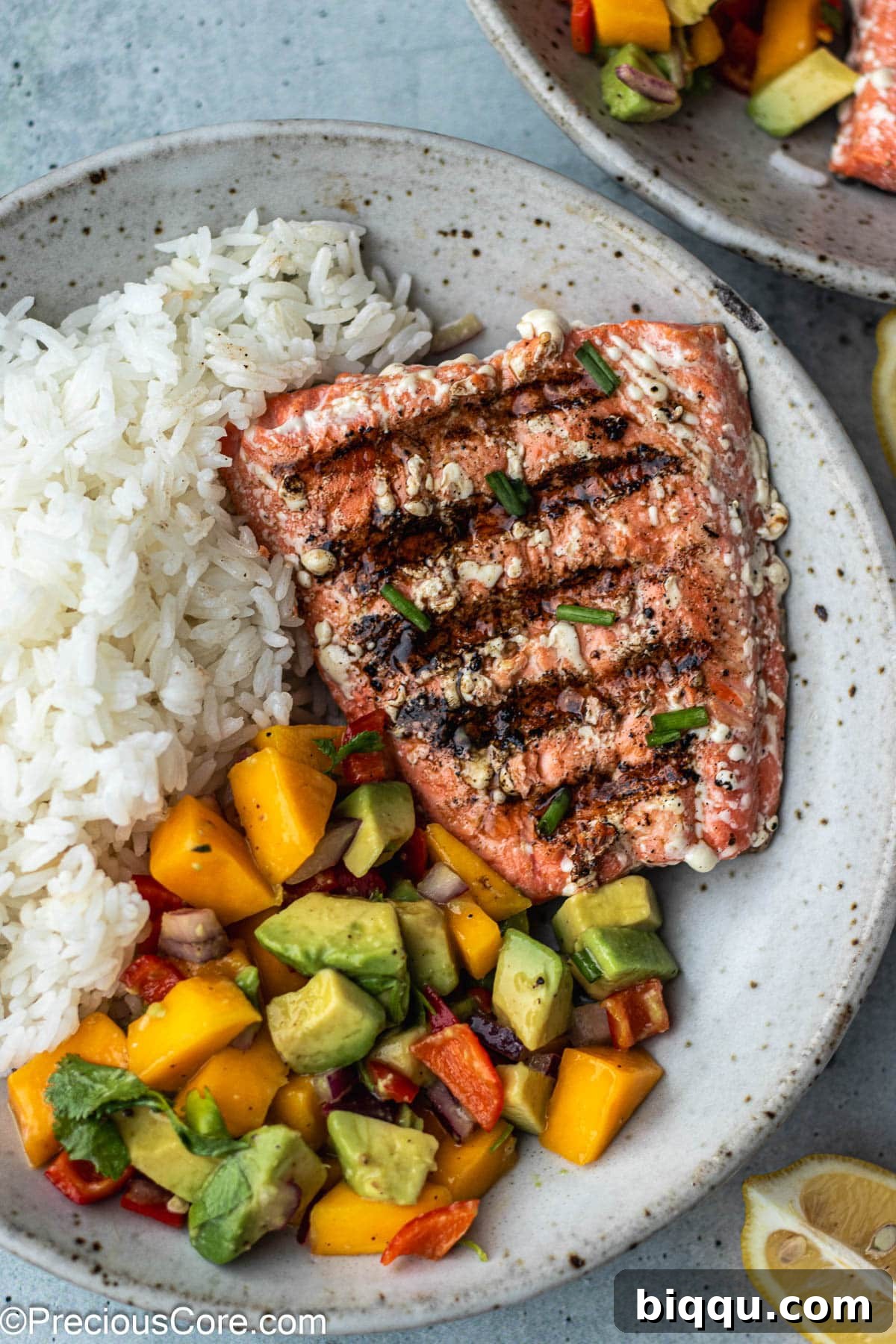
This Grilled Sockeye Salmon is a versatile main course that pairs wonderfully with a variety of side dishes. Here are some of our top recommendations to create a complete and unforgettable meal:
Garlic Herb Rice
Lettuce Salad
Cucumber Mango Salad
The bright, fresh flavors of the salsas and salads complement the richness of the salmon beautifully, while the aromatic rice provides a comforting and satisfying base. Together, these pairings create a balanced and delicious meal that’s perfect for any occasion.
Explore More Salmon Recipes
If you’re now a fan of cooking with salmon, you’re in luck! We have a diverse collection of recipes to inspire your next meal. From quick weeknight dinners to impressive dishes for entertaining, explore these fantastic salmon preparations:
Pan Fried Teriyaki Salmon
Pan Grilled Salmon
Sheet Pan Salmon and Broccoli
Lemon Butter Salmon
Continue Your Grilling Adventures
The grill offers endless possibilities beyond salmon! Expand your outdoor cooking skills with these other delicious grilling recipes:
Jamaican Jerk Chicken
Chicken Skewers
Grilled Boneless Chicken Thighs
Grilled Sockeye Salmon
Grilled Chicken Nuggets
If you make this recipe, please consider leaving a star rating below. Your feedback helps other home cooks discover this delicious recipe, and we love hearing from you! Thank you!
To receive this recipe directly in your email, please use the subscription form available on our full website.
Alternatively, you can bookmark this page to easily find the recipe later!
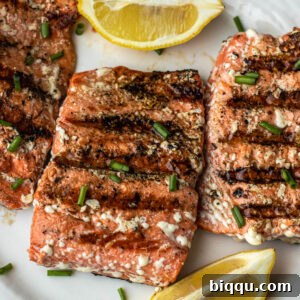
Grilled Sockeye Salmon
10 minutes
10 minutes
20 minutes
4
servings
Pin Recipe
Rate
Print Recipe
Ingredients
-
1 pound sockeye salmon cut into 3-4 steaks -
2 Tablespoons olive oil -
½ teaspoon salt -
¼ teaspoon black pepper
Instructions
-
Pat the salmon dry using paper towels to remove excess moisture. Drizzle the olive oil over the salmon, then sprinkle the salt and pepper evenly on both sides of the fish.
-
Clean your grill grates thoroughly. Set your grill or cast iron grill pan to medium-high heat and allow it to preheat for about 5-7 minutes. Once hot, carefully place the seasoned salmon onto the grates, skin-side down if applicable. Grill the first side, covered (if using an outdoor grill), for 3 to 4 minutes. Flip to the other side and grill for another 3-4 minutes, or until the fish flakes easily when pricked with a fork, or reaches an internal temperature of 145°F (63°C).
-
Remove the grilled salmon from the heat and let it rest for a few minutes before serving with fresh lemon wedges.
Notes
2. Feel free to use a single large salmon fillet for this recipe; cooking times may vary slightly based on thickness.
3. Ensure you completely coat the salmon in olive oil before grilling. This is a key step that helps prevent the delicate fish from sticking to the grill grates.
4. This recipe works equally well with sockeye salmon fillets that have the skin on or off.
5. While sockeye is recommended, you can substitute it with other firm-fleshed fish like trout, arctic char, or coho salmon, adjusting cooking times as needed for thickness.
Nutrition
|
Carbohydrates: 0.1g
|
Protein: 0.01g
|
Fat: 7g
|
Saturated Fat: 1g
|
Polyunsaturated Fat: 1g
|
Monounsaturated Fat: 5g
|
Sodium: 291mg
|
Potassium: 2mg
|
Fiber: 0.03g
|
Vitamin A: 1IU
|
Calcium: 1mg
|
Iron: 0.1mg
Additional Info
Dinner
Western
62
Tried this recipe?
Mention @preciouscore or tag #PreciousCore!