
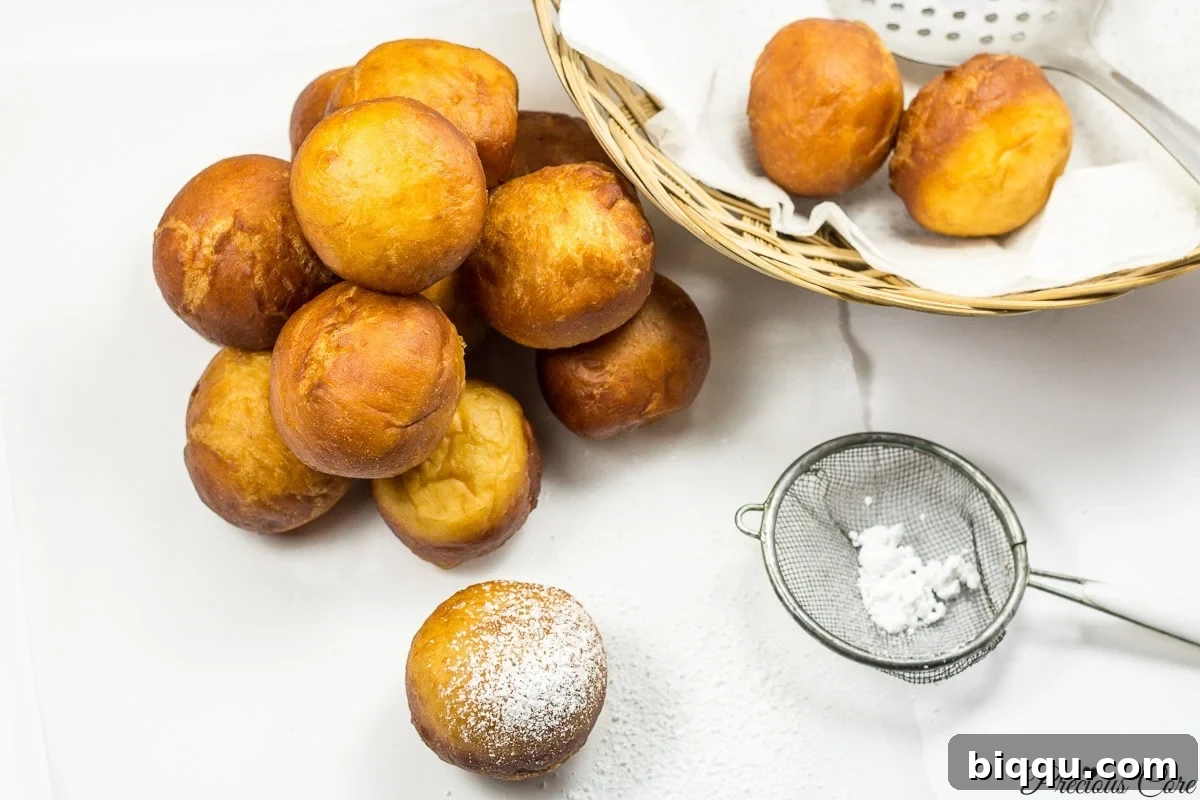
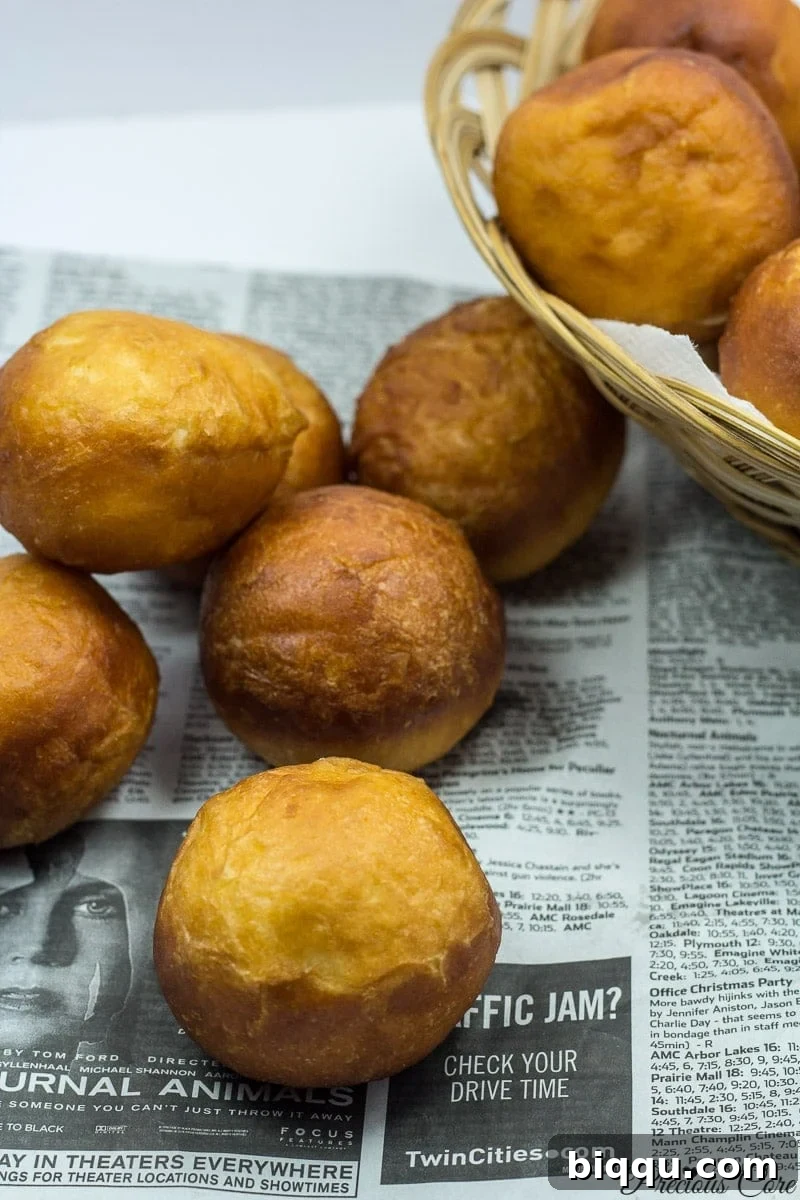
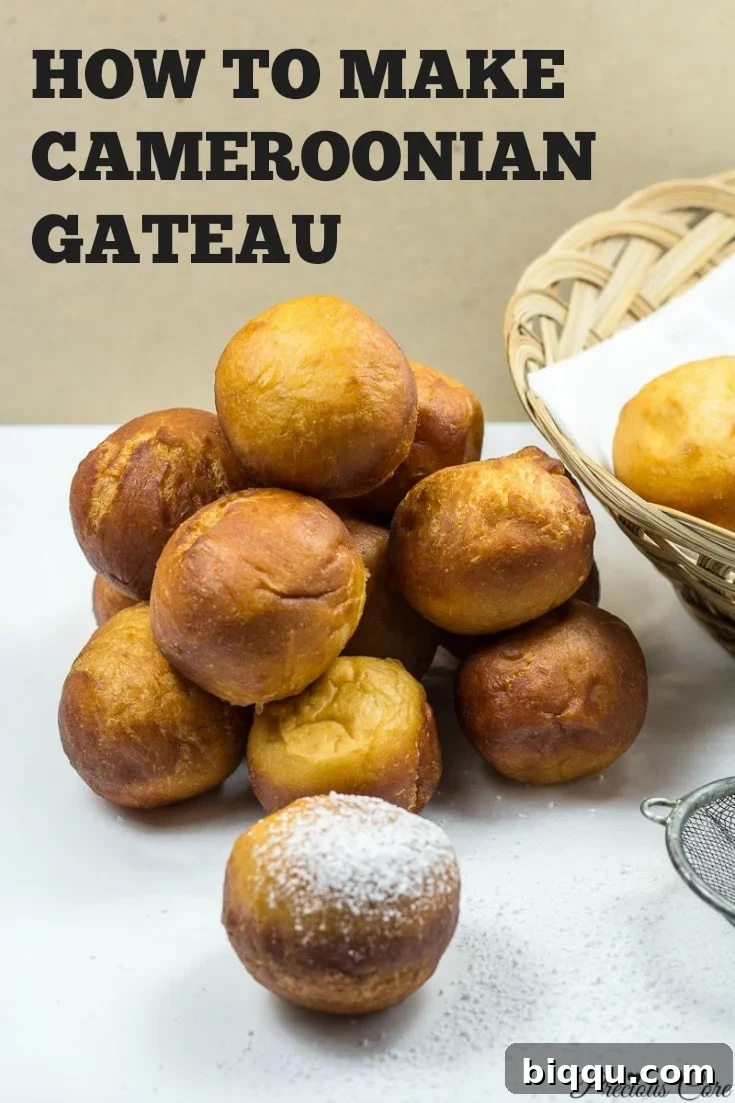
Hello, fellow food enthusiasts! Today, we’re embarking on a delightful culinary journey to Cameroon, a vibrant country rich in flavor and tradition. Our destination? The irresistibly delicious **Cameroonian Gateau**, a deep-fried dough snack that holds a special place in the hearts and bellies of many. Often found gracing the streets, bakeries, and grocery stores across Cameroon, these delectable treats are a staple for breakfast, a satisfying midday snack, or simply a sweet indulgence any time of day.
While the French word “Gateau” literally translates to “cake,” don’t let the name fool you. These aren’t your typical cakes. In the French culinary context, such a fried delicacy would more accurately be referred to as “les beignets.” However, in Cameroon, “Gateau” has become the beloved identifier for this specific style of fried dough. Think of them as an elevated version of the well-known puff puff, but with a distinct character. Cameroonian Gateau boasts a thicker, richer consistency, and a wonderful ability to stay fresh and delicious for longer, making it a truly exceptional treat.
The Evolution of a Recipe: Crafting the Perfect Cameroonian Gateau
My journey to perfecting this **Cameroonian Gateau recipe** began, quite serendipitously, with an accidental discovery. Since first sharing that initial gateau recipe, I’ve dedicated countless hours to tweaking, testing, and refining it. Culinary exploration is a continuous process, and even the most beloved recipes can be enhanced with thoughtful adjustments. While my original “accidental recipe” remains popular and effective for many, I’m thrilled to share the subtle yet impactful changes I’ve made to create what I believe is an even more superior version. These modifications aim to enhance the texture, flavor, and overall experience of making and enjoying this classic Cameroonian snack.
Key Enhancements for an Unforgettable Gateau
These are the carefully considered adjustments that elevate this recipe:
- **Increased Flour Quantity for Structure:** I’ve boosted the all-purpose flour to a robust 4 cups, which conveniently equals half a kilogram. This slight increase provides better structure for the dough, allowing it to develop a more substantial and satisfying texture after frying. For those who prefer metric measurements, this adjustment simplifies the process.
- **Optimal Liquid for Softness and Flavor:** The liquid content has been increased to two cups. This seemingly simple change plays a crucial role. A higher liquid ratio ensures the dough rises more effortlessly and contributes significantly to a richer flavor profile. While the resulting dough is notably sticky, this stickiness is a desirable characteristic. It allows for generous flouring of your work surface before handling, ultimately leading to a softer, fluffier, and truly melt-in-your-mouth gateau.
- **Pure Liquid Milk for Unmatched Richness:** To achieve an unparalleled richness and depth of flavor, I completely omitted water and exclusively used liquid milk. Milk not only adds a creamy undertone but also contributes to the golden-brown crust and tender interior that defines an exquisite Cameroonian Gateau.
Now that we’ve covered the crucial updates, let me issue a friendly but firm warning: This recipe comes with an inherent risk. A risk of utterly falling in love! These deep-fried delights are the very definition of insanely delicious. They are so irresistibly good, so perfectly balanced in sweetness and texture, that they might just make you weep tears of pure joy with every bite!
I am incredibly excited to share this updated **Cameroonian Gateau recipe** with you, complete with a helpful video guide to walk you through each step. Let’s get cooking!

Cameroonian Gateau (Deep Fried Dough)
1 hour
30 minutes
30 minutes
2 hours
32
balls
Save Recipe
Saved Recipe
Pin Recipe
Rate
Print Recipe
Ingredients
-
4 cups all-purpose flour (1/2 kg) + 1 cup more for dusting and kneading -
5 tablespoons unsalted butter (or margarine) -
1/3 – 3/4 cup sugar – use according to desired sweetness -
1 teaspoon salt -
1 large egg -
2 cups liquid milk (whole or semi-skim) -
1 sachet yeast (2 1/4 teaspoons) -
Oil for frying- I used corn oil
Instructions
-
Melt your butter in a saucepan or in a microwave. Set it aside to cool completely. This prevents it from ‘cooking’ the yeast or egg when combined.
-
In a large mixing bowl, pour in the liquid milk, ensuring it’s lukewarm (not hot, to protect the yeast). Sprinkle the yeast over the milk and add the sugar and salt. Stir gently until combined. Allow this mixture to rest for five minutes; this step activates the yeast, preparing it to create that beautiful rise.
-
Once the butter has cooled, add it to the milk mixture and mix thoroughly. Crack the egg into the mixture and beat well until all ingredients are fully incorporated and the mixture is smooth.
-
Gradually add the all-purpose flour to the wet ingredients, mixing well with a sturdy wooden spoon or spatula. Continue to mix for about five minutes until a very sticky, pliable dough forms. The stickiness is intentional and contributes to the gateau’s softness. Cover the bowl tightly with plastic wrap, then drape a paper towel or clean kitchen cloth over it. Place the dough in a warm environment to rise. A pro tip: I often warm my oven for a few minutes and then turn it off, creating the perfect cozy spot for the dough to double in size.
Allow the dough to rise for approximately 1 hour, or until it has visibly doubled in size. This crucial step develops the flavors and creates the airy texture.
-
Generously flour a clean work surface or large cutting board. Gently turn the risen dough onto the floured board. Punch it down lightly to deflate the air, then knead it briefly, adding just enough flour as needed to make it manageable, but still maintaining its soft character. Avoid over-kneading at this stage.
-
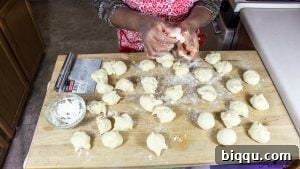
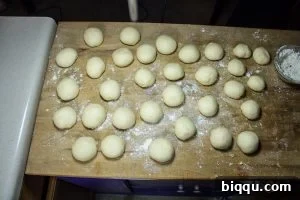
Form the dough into one large log. Using a sharp knife or dough scraper, cut the log in half. Cut each half in half again, and continue this process until you have approximately 32 equal pieces. This systematic cutting ensures uniform sizing for consistent frying.

-
Take each small piece of dough and gently mold it between your palms to form a smooth, uniform ball. This creates the classic spherical shape of Cameroonian Gateau.
-
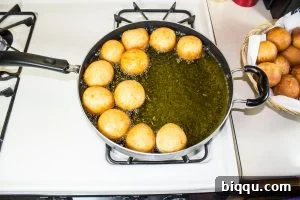
While you are halfway through shaping the dough balls, place a large, heavy-bottomed pan or deep fryer on the stove and pour in your frying oil (I prefer corn oil for its neutral flavor and high smoke point). I typically use about 2 liters of oil. The oil temperature is paramount for perfect gateau. Heat the oil on high for 5-10 minutes. Once hot, reduce the heat to medium. If you have a deep fryer thermometer, the ideal temperature is 325 degrees F (175 degrees C). Maintaining this medium heat ensures the gateau cooks evenly through the center without browning too quickly on the outside, preventing a raw interior.
-
Carefully drop the dough balls into the preheated oil, being mindful not to overcrowd the pan. Frying in batches (around 10-12 balls at a time) helps maintain the oil temperature. Once one side turns a beautiful light golden brown, gently flip the gateau to cook the other side. Continue turning them occasionally until they are uniformly golden brown and cooked through, usually taking about five minutes per batch. Remove the cooked gateau with a slotted spoon and place them on a tray lined with paper towels to absorb any excess oil. Repeat this process until all the dough has been fried.
-
Serve your homemade Cameroonian Gateau warm and enjoy the soft, buttery goodness!
Notes
Nutrition
Carbohydrates: 19g |
Protein: 2g |
Fat: 3g |
Saturated Fat: 1g |
Polyunsaturated Fat: 0.2g |
Monounsaturated Fat: 1g |
Trans Fat: 0.1g |
Cholesterol: 12mg |
Sodium: 81mg |
Potassium: 42mg |
Fiber: 0.4g |
Sugar: 8g |
Vitamin A: 87IU |
Calcium: 23mg |
Iron: 1mg
Additional Info
Snack
Cameroonian
110
Tried this recipe?Mention @preciouscore or tag #PreciousCore!