
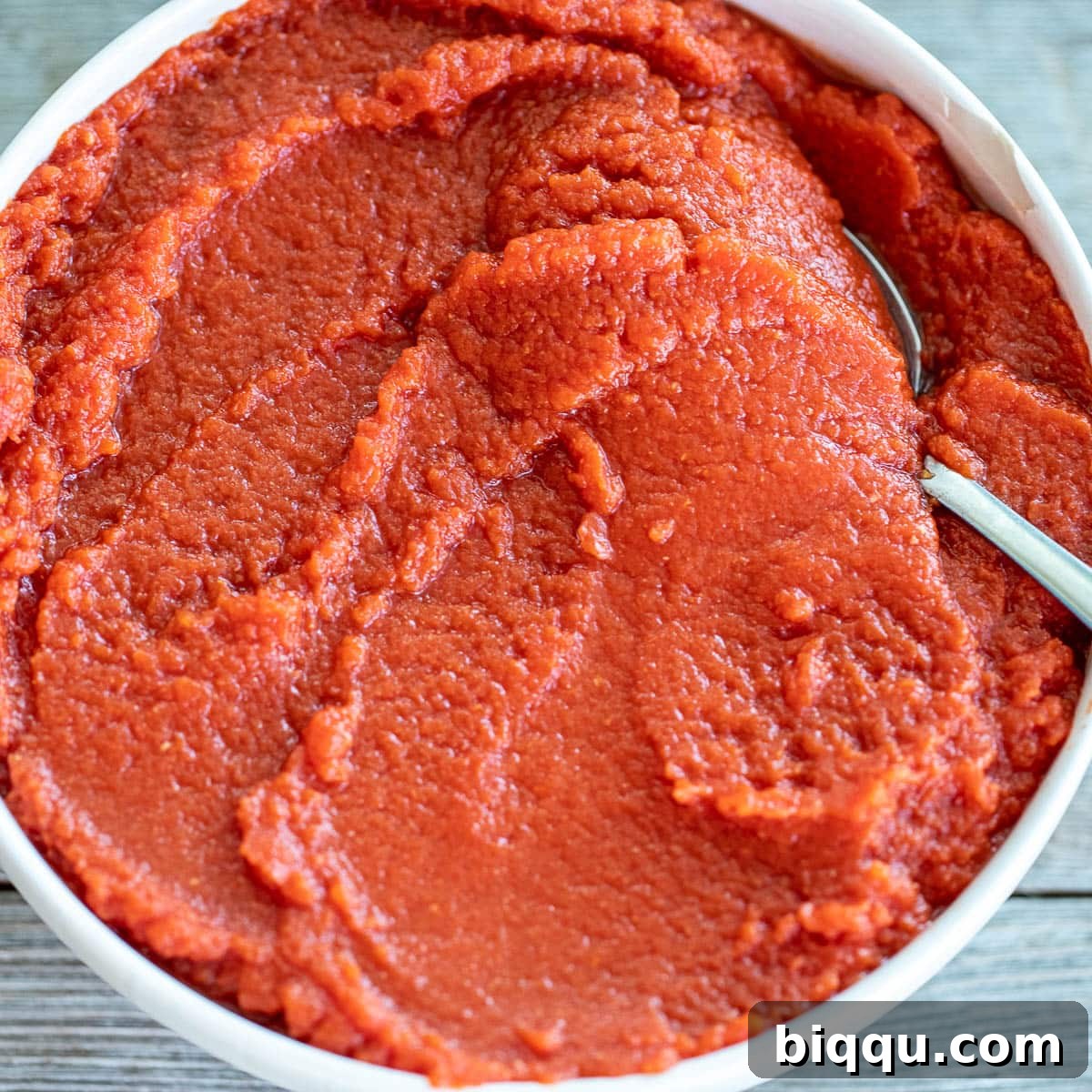
Homemade Tomato Paste: Unlock Unbeatable Flavor with Just One Ingredient
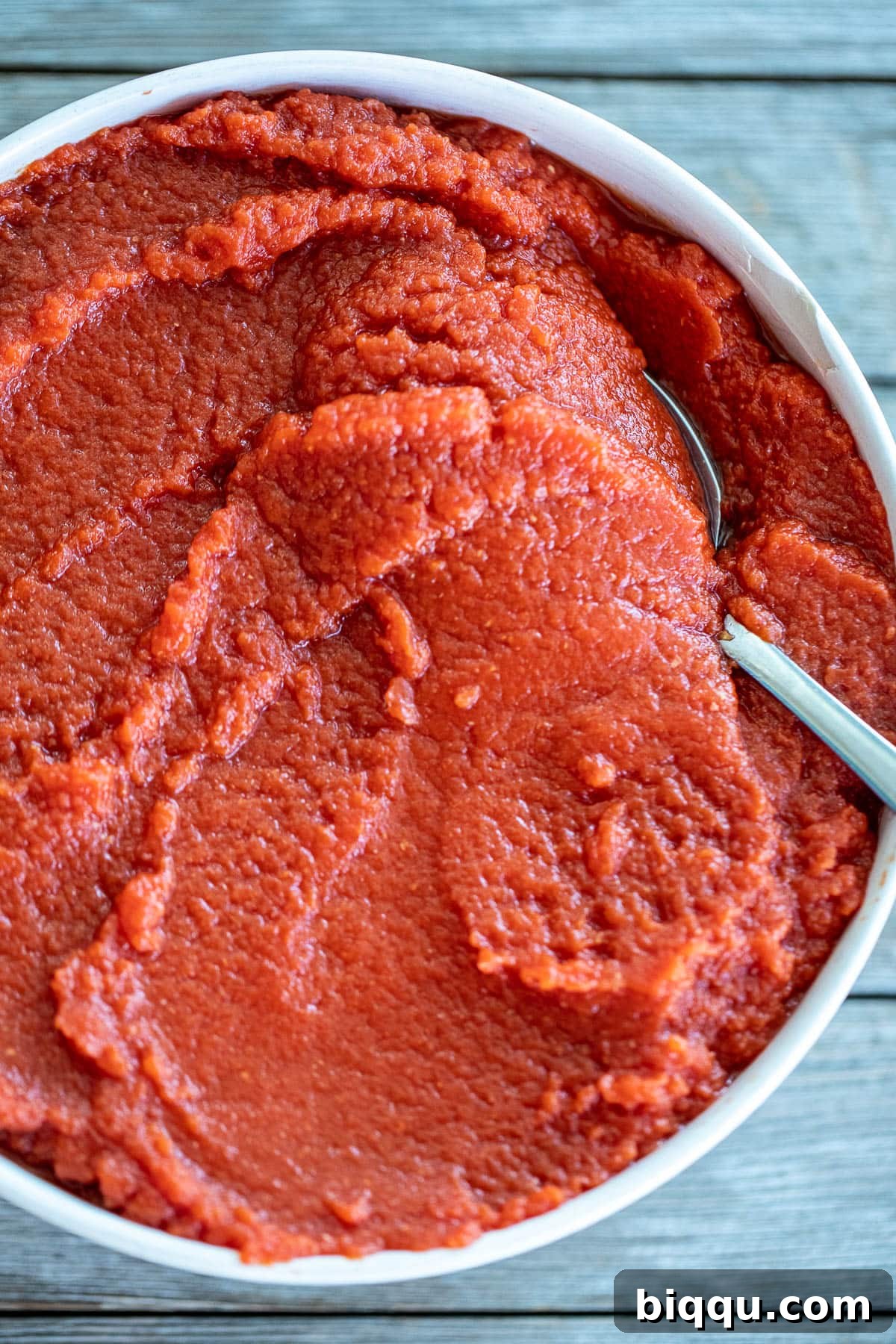
Imagine a tomato paste so intensely flavorful, so naturally sweet, and so free from artificial additives that it transforms every dish you add it to. This isn’t a dream; it’s the reality of making your own **Homemade Tomato Paste**. Far superior to any store-bought variety, this recipe requires just one core ingredient: fresh, ripe tomatoes. If your garden is overflowing, or you’ve found an incredible deal at the farmers market, get ready to turn that abundance into a culinary treasure.
My gardening journey has taken a wonderful turn. What once felt like a struggle now yields more ripe, juicy tomatoes than I can possibly consume fresh. After enjoying countless batches of savory stews, comforting pasta dishes, and vibrant vegetable creations, I realized I needed an effective way to preserve this summer bounty. That’s when the idea of crafting my own tomato paste truly ripened.
This recipe isn’t about making a tiny batch; it yields a substantial amount – typically around 2 pounds from every 10 pounds of fresh tomatoes. This makes it perfect for home cooks who appreciate having a versatile, flavor-packed ingredient on hand, far exceeding the small cans found at the grocery store. The rich, concentrated tomato flavor is unparalleled, bringing a depth to your cooking that only comes from real, simple ingredients.

Whether you’re harvesting from your own backyard, benefiting from a generous tomato season at the local market, or simply stocking up when prices are low, making your own tomato paste is an incredibly rewarding endeavor. It’s a fantastic way to capture the essence of summer, ensuring you have that bright, robust tomato flavor all year round.
Tomatoes are incredibly versatile, forming the foundation of countless beloved recipes, from robust Roasted Tomato and Garlic Soup to homemade Roasted Tomato Pizza Sauce. But for this particular recipe, you’ll discover a deep, authentic tomato flavor that elevates ordinary meals to extraordinary. This thick, versatile paste is not only incredibly simple to make but also surprisingly easy to store. So, gather your tomatoes, and let’s create some kitchen magic!
Table of Contents
- The Only Ingredient You Need
- 4 Simple Steps for Crafting the Best Tomato Paste
- Watch How To Make Homemade Tomato Paste
- Flavor Variations for Your Homemade Paste
- Expert Tips for Perfect Tomato Paste
- No Special Equipment Needed
- How to Store Your Homemade Tomato Paste
- Recipe Frequently Asked Questions
- More Delicious Tomato Recipes to Try
- Homemade Tomato Paste Recipe Card
The Only Ingredient You Need: Fresh Tomatoes
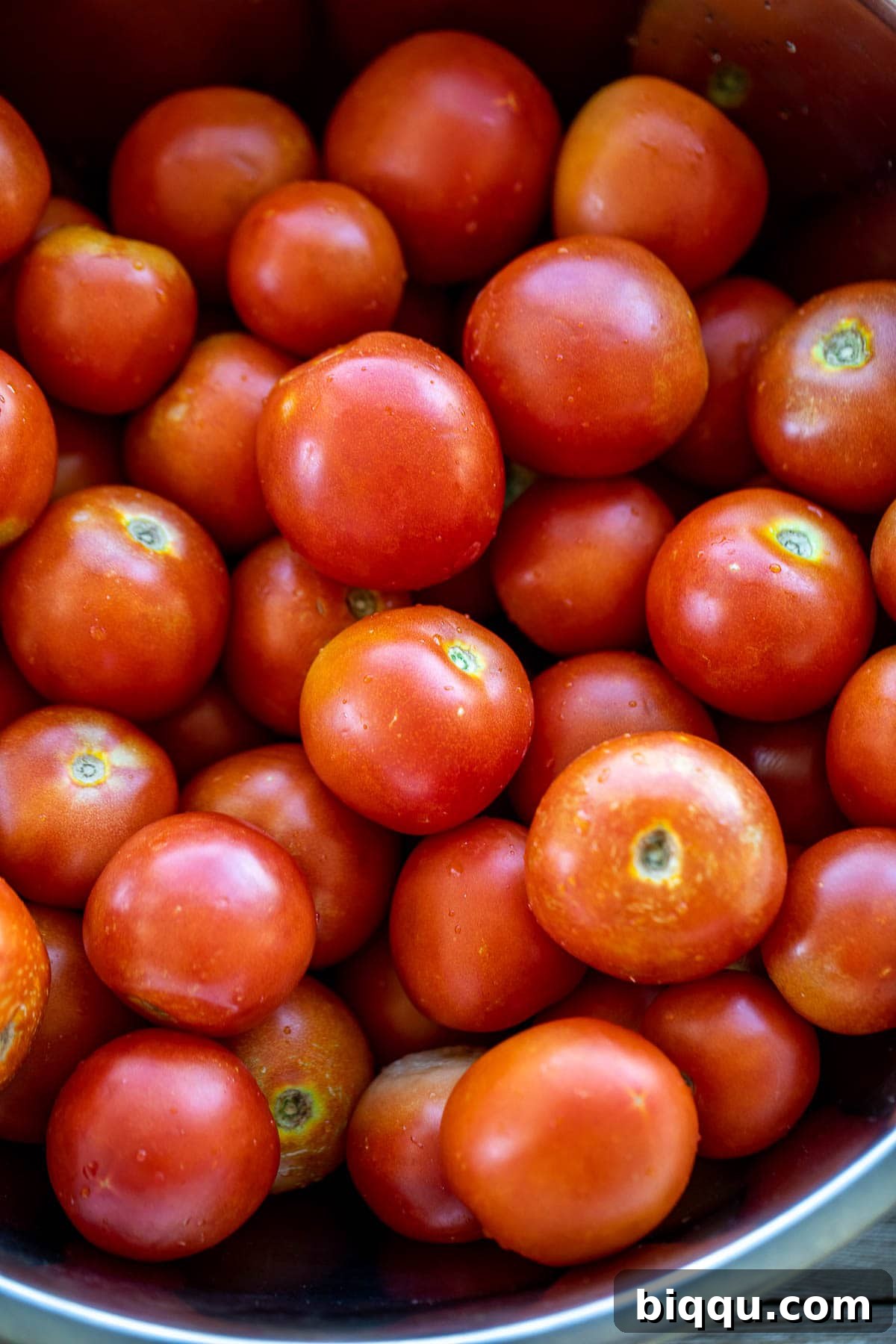
The beauty of this homemade tomato paste recipe lies in its simplicity: you only need one ingredient – fresh, ripe tomatoes! While many types of tomatoes can work, for the absolute best results, I highly recommend choosing varieties with a higher pulp-to-seed ratio and less water content. Excellent choices include Roma tomatoes (also known as plum tomatoes or Italian plum tomatoes) and San Marzano tomatoes. These varieties are renowned for their rich flavor and meaty texture, which are ideal for a thick, concentrated paste. However, if these aren’t available, other garden favorites like Early Girl or even beefsteak tomatoes will still yield a delicious paste.
To Salt or Not to Salt? A Pure Flavor Approach
You might notice that some homemade tomato paste recipes suggest adding a little olive oil, citric acid (often from lemon juice), or salt (table or kosher salt). While these can certainly be added, I advocate for keeping your base tomato paste simple and, most importantly, salt-free. Here’s why:
- **Enhanced Versatility:** A salt-free paste gives you complete control over the seasoning of your final dishes. You can add salt, herbs, and spices as needed for each specific recipe, preventing over-salting or conflicting flavor profiles.
- **Natural Sweetness and Acidity:** Without added citric acid, your paste will maintain a more natural and consistent balance of acidity and sweetness, reflecting the true flavor of the tomatoes themselves. While tomatoes are naturally somewhat acidic, this method ensures a pure, unadulterated taste.
- **Health Benefits:** Avoiding added salt in the paste reduces overall sodium intake, allowing you to create healthier meals tailored to dietary preferences.
Later, when you cook with your homemade paste, you can easily dress it up with a drizzle of olive oil, fresh or dried herbs like basil or oregano, a bay leaf, or a pinch of salt to suit the specific needs of your dish.
4 Simple Steps for Crafting the Best Tomato Paste
Making your own superior homemade tomato paste is surprisingly straightforward, involving just four key steps. There’s no need to blanch or cook the tomatoes in boiling water beforehand, as they will be thoroughly cooked after blending. While the cooking process itself can take a few hours, much of this time is hands-off, and your active prep time will only be around half an hour!
Let’s walk through the process:
-
Prepare the Tomatoes: Cut into Quarters
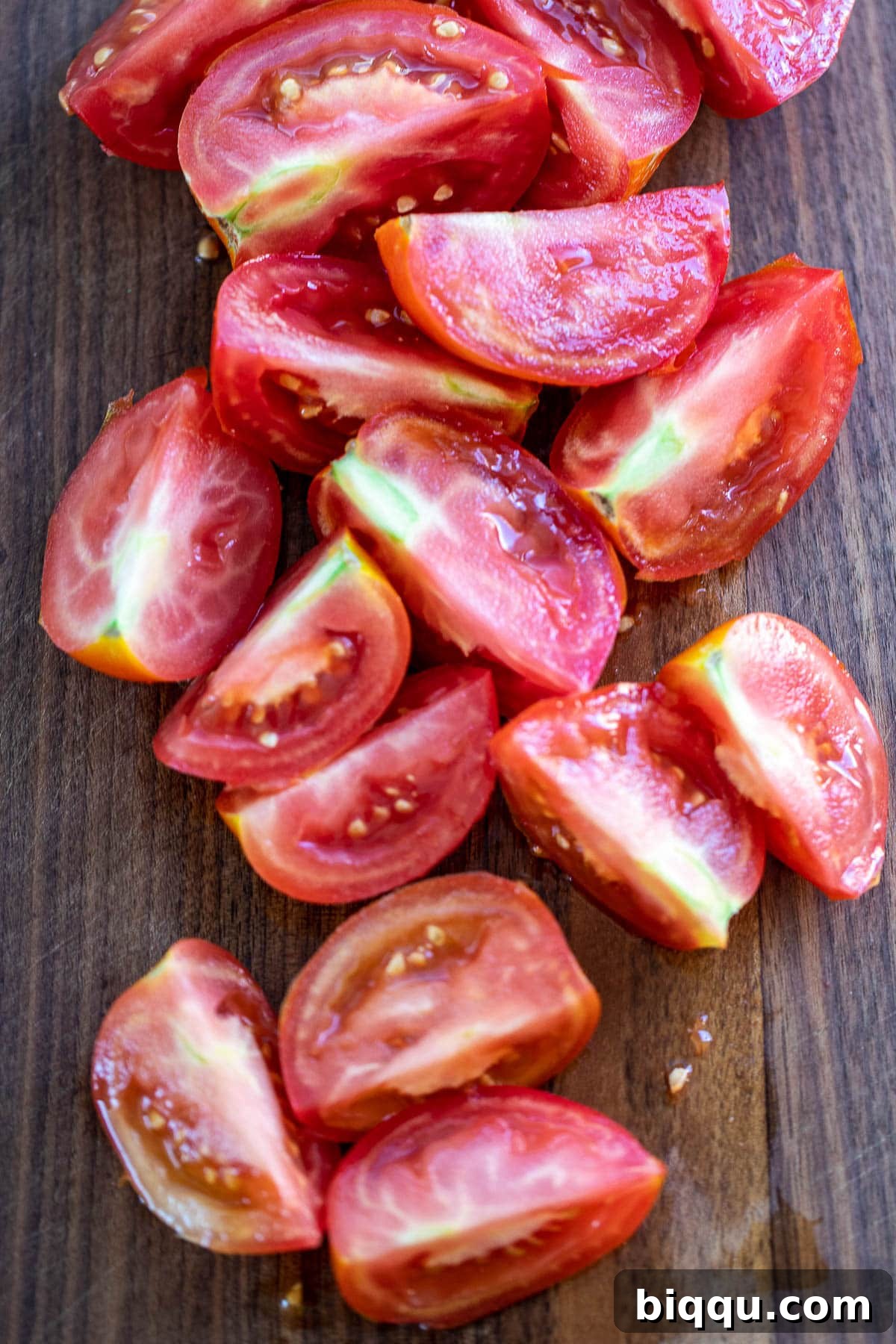
Begin by thoroughly rinsing your room-temperature tomatoes under cold water to remove any dirt or debris. There’s no need to remove the tomato skins at this stage. Once clean, simply cut each tomato into quarters. This size is perfect for blending efficiently.

Quartered tomatoes, ready for blending. -
Blend to Create a Silky Tomato Purée
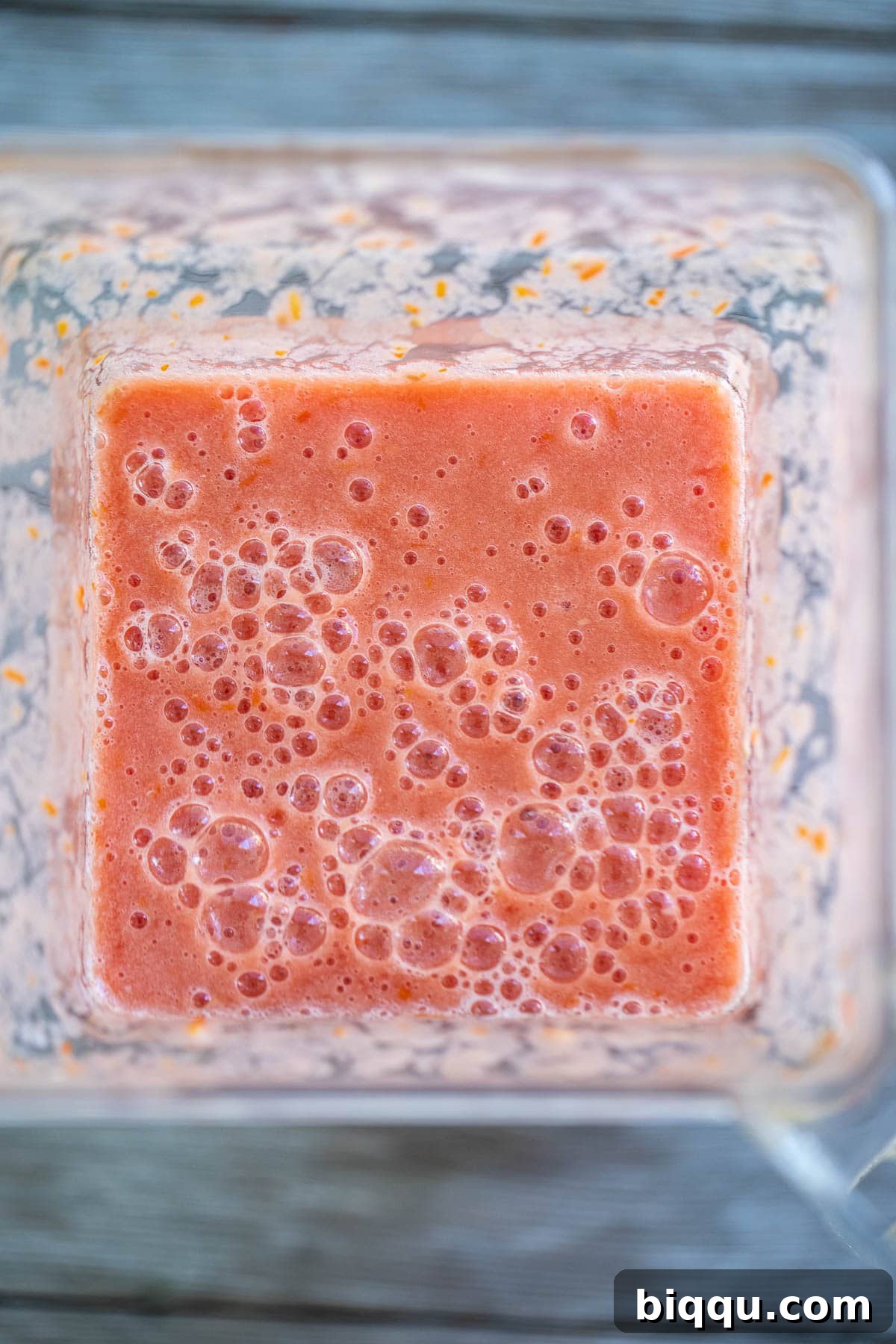
Transfer the quartered tomatoes to a blender. Depending on the quantity of tomatoes you have, you’ll likely need to work in several batches. Blend until you achieve a smooth, consistent tomato purée. Aim for a texture without large chunks, as this will facilitate straining.
Achieving a smooth tomato puree is the first step to a luxurious paste. -
Strain for a Refined Texture (Optional but Recommended)
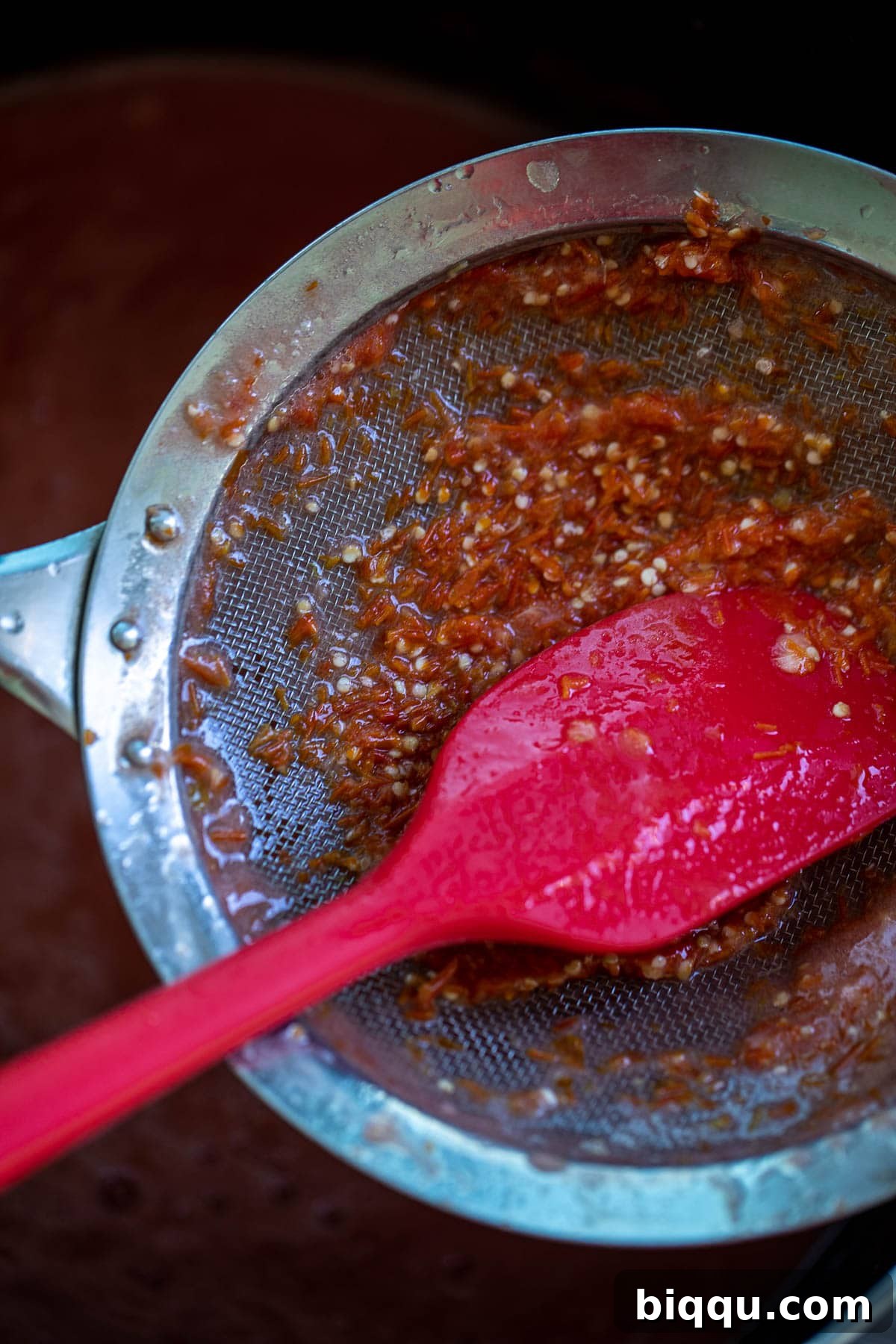
Once blended, pass the tomato purée through a fine mesh sieve into a large bowl or directly into your cooking pot. This crucial step helps remove most of the remaining seeds and any larger pieces of skin, resulting in an incredibly smooth and refined tomato paste, similar in texture to what you find in commercial cans.
Straining removes seeds and skins for a perfectly smooth paste. Chef’s Note: While removing seeds is optional, it greatly contributes to a smoother final product. Some believe that tomato seeds can impart a slightly bitter taste, though in my experience, the flavor difference is minimal. It truly comes down to your preference for texture – seedless for silky smooth, or with seeds for a more rustic feel.
-
Slow Cook to Perfection: Reduce and Thicken
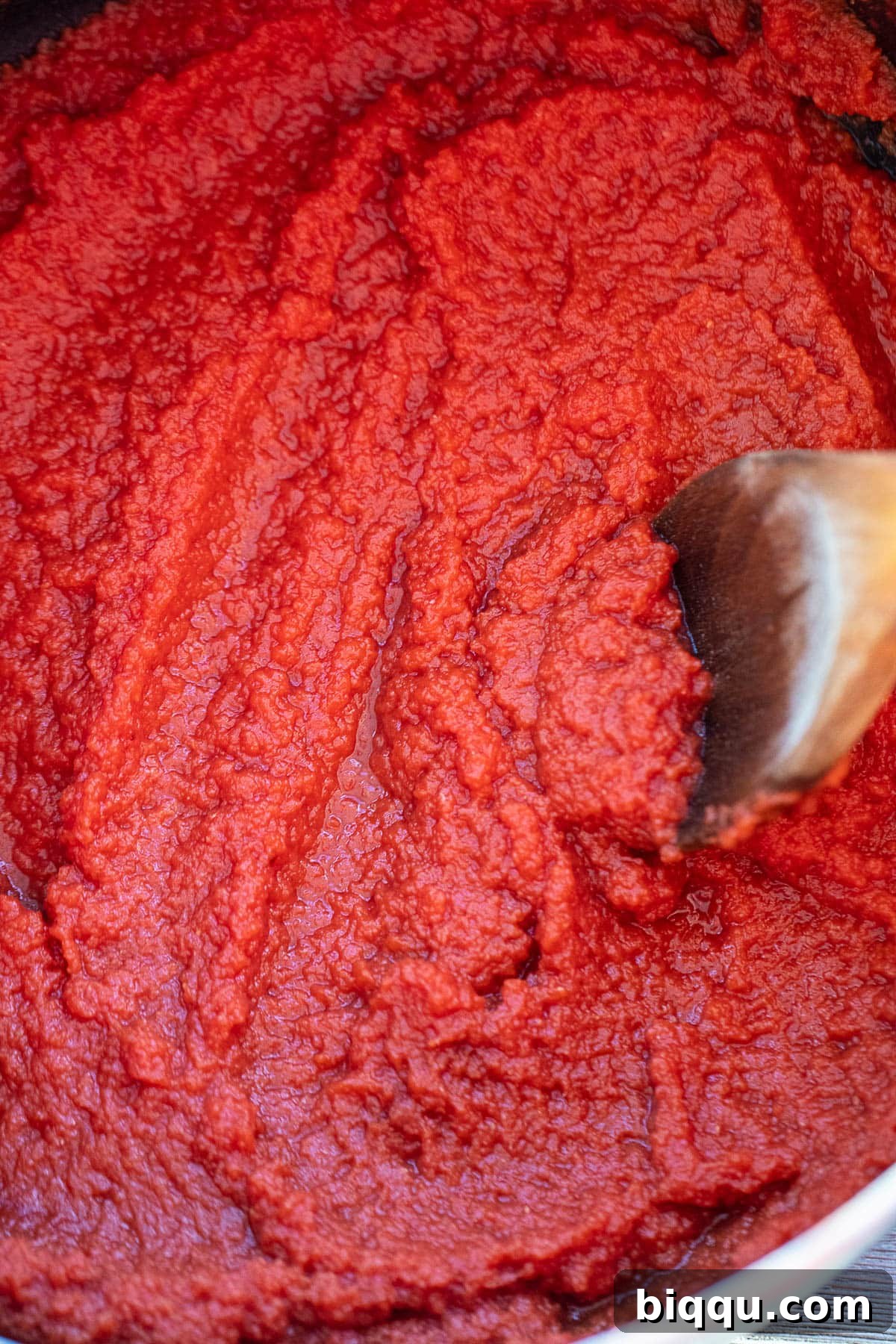
Pour the strained tomato purée into a large, heavy-bottomed pot or Dutch oven. Place it over medium-high heat initially, bringing the purée to a gentle simmer. As the liquid begins to evaporate and the purée reduces, lower the heat gradually to medium, then to low. The key here is patience and allowing the “tomato water” to slowly evaporate, concentrating the flavors and thickening the paste.
This reduction process takes a significant amount of time – typically 2-3 hours, depending on the initial water content of your tomatoes and the heat level. Resist the urge to stir constantly, especially in the early stages, as this can impede evaporation. Stir occasionally, especially as the paste thickens, to prevent it from sticking to the bottom and burning. You’ll know it’s ready when it has transformed into a rich, deep red, thick tomato paste that holds its shape on a spoon.
The magical transformation: reducing tomato puree into a concentrated, thick paste.
Watch How To Make Homemade Tomato Paste
For a visual guide and to see these steps in action, check out this helpful video:
Don’t forget to subscribe to my channel for more easy and delicious recipes!
Flavor Variations for Your Homemade Paste
While the pure, single-ingredient tomato paste is exquisite on its own, don’t hesitate to experiment with flavor variations to suit your culinary preferences. Adding extra ingredients during the blending or cooking process can create unique and exciting profiles:
-
Roasted Tomato Paste
For an incredibly smoky and rich depth of flavor, roast your tomatoes before blending. Halve or quarter the tomatoes, toss them lightly with a tiny bit of olive oil (optional, but enhances roasting), and spread them on a baking sheet. Roast in a hot oven (around 400°F / 200°C) until they are softened and slightly charred at the edges. Once cooled, blend the roasted tomatoes and proceed with the straining and cooking steps. This pre-roasting step adds an amazing layer of complexity that elevates the paste significantly.
-
Spicy Tomato Paste
If you love a kick, add a whole scotch bonnet or habanero pepper (or half, depending on your heat tolerance!) to the blender along with your tomatoes. Ensure the pepper is thoroughly blended into the purée. The heat will infuse beautifully into the concentrated paste, perfect for spicier stews and sauces.
-
Herby or Garlicky Tomato Paste
Infuse your paste with aromatic herbs and garlic for an immediate flavor boost. Blend fresh garlic cloves, basil leaves, thyme sprigs, or oregano with your tomatoes. The flavors will deepen and meld during the slow cooking process, creating a ready-to-use flavor bomb for Italian dishes, Mediterranean cuisine, or anything that benefits from fresh herbs and garlic.
The possibilities are endless! Feel free to incorporate other favorites like smoked paprika, a touch of balsamic vinegar, or even sun-dried tomatoes (rehydrated) for an even more intense umami profile.
Expert Tips for Perfect Tomato Paste
Achieving the perfect homemade tomato paste is simpler with a few insider tricks:
- **Always Use Fresh Tomatoes:** For the best possible flavor and texture, fresh, ripe tomatoes are non-negotiable. Canned tomatoes, while convenient for other uses, simply won’t yield the vibrant taste and quality you’re looking for in homemade paste.
- **Consider Your Pot Choice:** Use a large, heavy-bottomed pot or Dutch oven. This helps distribute heat evenly and prevents scorching, especially as the paste thickens and becomes more prone to sticking.
- **The Slow Cooker Method:** If you prefer an even more hands-off approach, you can finish the cooking process in a slow cooker. After blending and straining, transfer the purée to your slow cooker. Cook on low, uncovered, for several hours (4-8 hours or more, depending on volume and desired thickness), stirring occasionally, until it has reduced significantly and achieved a thick consistency. The extended, gentle heat works wonders.
- **Prevent Burning:** As the tomato paste reduces and most of the liquid evaporates, it becomes thicker and less watery, making it more susceptible to burning. It’s crucial to lower the heat gradually – from medium-high to medium, then to low – as the paste thickens. Stir more frequently during the final stages to ensure even cooking and prevent sticking to the bottom of the pot. A burnt flavor can quickly ruin your entire batch.
- **Ventilation is Key:** Ensure good ventilation in your kitchen while the paste is cooking down. The evaporating water can create a lot of steam, and good airflow will help the process along.
- **Repurpose Your Paste into Ketchup:** Beyond its primary use, your homemade tomato paste can easily be transformed into delicious homemade ketchup! This is a fantastic way to avoid the preservatives often found in store-bought versions. You’ll just need to combine your paste with white vinegar, a small amount of sugar (or your preferred sweetener), and a blend of seasonings like onion powder, garlic powder, and a pinch of allspice or clove.
No Special Equipment Needed
One of the great advantages of making homemade tomato paste is that you don’t need any highly specialized kitchen gadgets. The essential tools are likely already in your kitchen:
- **Blender or Food Processor:** For transforming your quartered tomatoes into a smooth purée.
- **Fine Mesh Sieve:** Crucial for straining out seeds and skins if you desire a super smooth paste.
- **Large, Heavy-Bottomed Pot:** For the slow reduction process.
While some people prefer to use a food mill to process tomatoes, which efficiently separates pulp from seeds and skins, it’s not strictly necessary. A standard blender and sieve will yield excellent results. I do not recommend an immersion blender for the initial puréeing, as it won’t achieve the same smooth consistency as a powerful upright blender.
How to Store Your Homemade Tomato Paste
One of the biggest advantages of making a large batch of homemade tomato paste is its excellent storability. Properly preserving it ensures you can enjoy its rich flavor for months to come. Here are several effective methods to extend its shelf life:
1. The Ice Cube Method (Freezing)
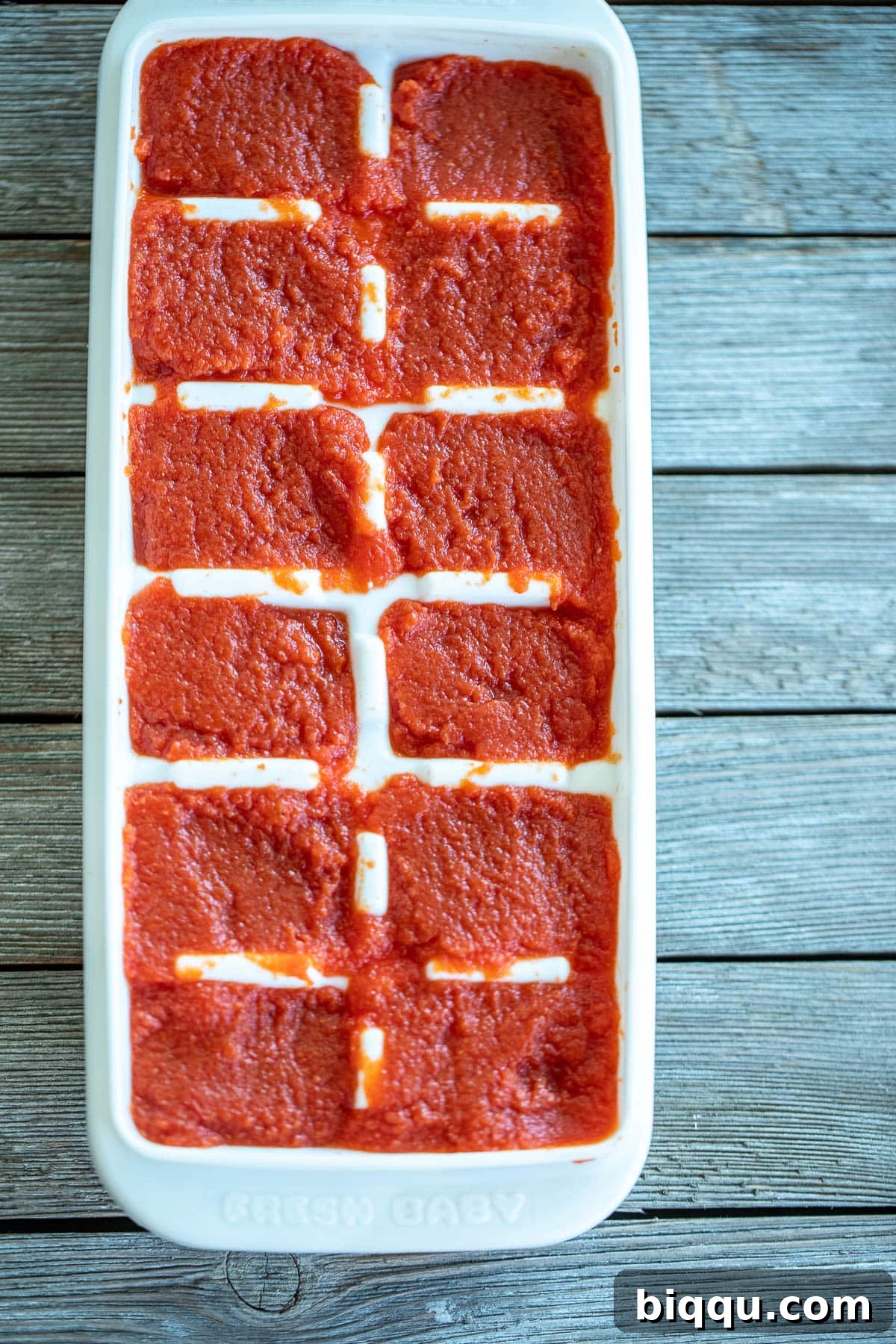
This is arguably the easiest and most convenient method for portion control. Once your tomato paste has cooled completely, spoon it into standard ice cube trays. Freeze overnight until solid. Once frozen, pop the individual tomato paste cubes out of the trays and transfer them to freezer-safe plastic bags or airtight containers. Label with the date. Your frozen tomato paste will keep for 2-3 months. Simply add frozen cubes directly to your recipes as needed – they’ll melt and integrate seamlessly into hot dishes.
2. The Olive Oil Method (Refrigeration)
For shorter-term storage in the refrigerator, the olive oil method is excellent. Pack your cooled homemade tomato paste into clean mason jars, filling them up to about three-quarters full. Then, pour a generous layer of olive oil over the top, ensuring the paste is completely covered. The oil acts as a barrier, preventing air from reaching the paste and inhibiting spoilage. Screw on the lid tightly and store in the refrigerator for up to a week. Remember to top up the oil layer if you use some of the paste.
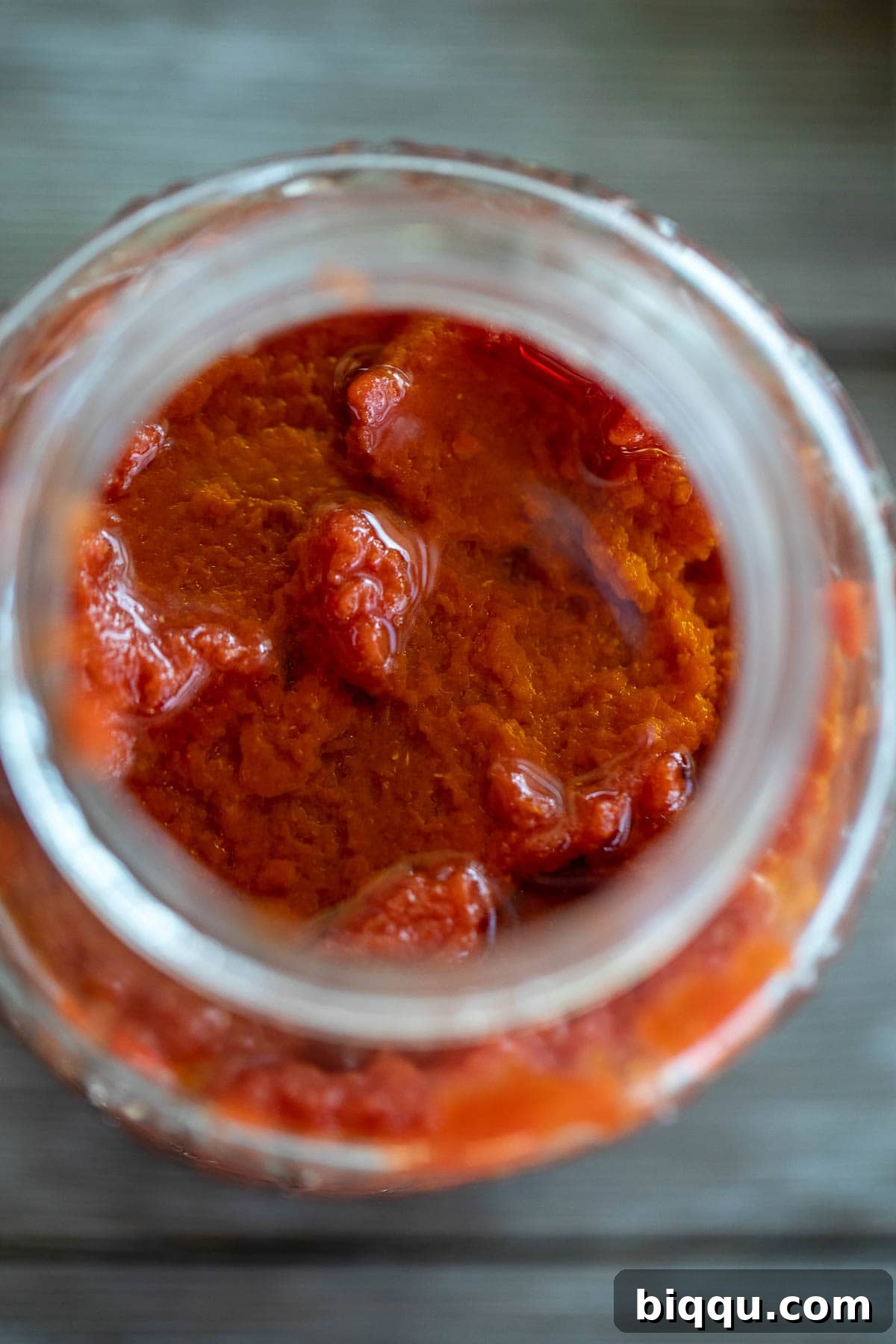
3. The Canning Method (Long-Term Preservation)
For truly long-term, shelf-stable storage, canning is an excellent option. This method requires proper sterilization and processing techniques but allows you to store your homemade tomato paste in glass jars at room temperature for a year or more. It’s ideal for those who make very large batches. For best results and safety, I highly recommend following a reputable guide for canning tomato paste. A great resource is provided by the National Center for Home Food Preservation; you can follow their detailed guide here.
A handy rule of thumb: Approximately 10 pounds of fresh tomatoes will yield about 2 pounds of rich, concentrated homemade tomato paste.
Recipe Frequently Asked Questions
How Do You Preserve Homemade Tomato Paste?
As detailed above, the most effective methods for preserving homemade tomato paste are freezing (using the ice cube method) or canning. Both significantly extend its shelf life, allowing you to enjoy your delicious paste for months. If you don’t anticipate using the entire batch within a week, I strongly recommend one of these preservation techniques.
What Are The Ingredients In Homemade Tomato Paste?
My preferred recipe proudly uses only one ingredient: fresh, ripe tomatoes! However, other recipes might include additional ingredients like olive oil, lemon juice (for acidity/preservation), or various seasonings (salt, herbs). Store-bought tomato pastes commonly contain added salt, sugar, and preservatives, which is precisely why homemade is often a superior choice.
Can You Freeze Uncooked Tomato Paste?
What you might refer to as “uncooked tomato paste” is essentially tomato purée. While you can certainly freeze raw tomato purée for other culinary uses, if your goal is to make a concentrated tomato paste, it’s essential to cook it down first. The cooking process reduces the water content and intensifies the flavor, creating the thick consistency characteristic of paste. Therefore, I recommend cooking the purée into a paste and then freezing the cooled paste for best results.
More Delicious Tomato Recipes to Try
If you’ve got an abundance of tomatoes or simply love their versatile flavor, here are a few more recipes to inspire your cooking:
Tomato Fish Stew – Cameroonian Fish Stew
A flavorful and hearty stew perfect served with rice or pasta.
Cucumber Tomato and Onion Salad
A refreshing and simple salad, bursting with garden-fresh flavors.
Roasted Tomato and Garlic Soup
Comforting and deeply flavorful, this soup highlights the sweetness of roasted tomatoes.
Roasted Tomato Pizza Sauce
Elevate your homemade pizzas with this rich and aromatic roasted sauce.
If you try this incredible homemade tomato paste recipe, please consider leaving a star rating below. Your feedback helps others discover the recipe, and I always love hearing from you! Thank you!
Want to save this recipe?
Enter your email below and we’ll send the recipe straight to your inbox!
Homemade Tomato Paste Recipe
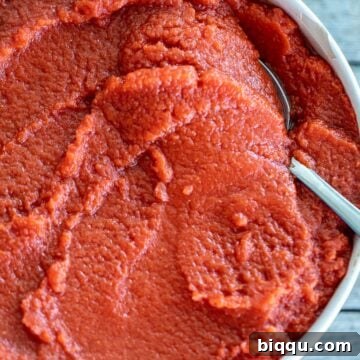
In just 4 simple steps, you can create a vibrant, flavorful tomato paste at home! Its taste is far superior to anything you can buy in a can. Use this rich, concentrated paste in stews, sauces, soups, and countless other meals for an unparalleled tomato-ey flavor!
Recipe Details
- Prep Time: 30 minutes
- Cook Time: 2 hours
- Total Time: 2 hours 30 minutes
- Yields: Approximately 2 lbs (from 10 lbs tomatoes)
- Servings: 6 servings (based on original recipe card, but depends on usage)
- Rating: 5 out of 5 stars (based on 4 votes)
Ingredients
- 10 pounds fresh tomatoes (Roma or San Marzano recommended)
Instructions
- Cut Tomatoes. Rinse tomatoes thoroughly under cold water. Cut each tomato into quarters.
- Blend Tomatoes. Place the quartered tomatoes in a blender and blend until a smooth purée is formed. You may need to do this in several batches, depending on your blender size.
- Sieve. Pass the blended tomato purée through a fine mesh sieve. Press firmly to extract as much liquid as possible and remove seeds and larger pieces of skin.
- Cook Down To a Paste. Transfer the sieved tomato purée into a large, heavy-bottomed pot. Bring to a gentle simmer over medium-high heat. As the liquid evaporates and the purée begins to reduce, gradually lower the heat to medium, then to low. Cook uncovered, stirring occasionally (more frequently as it thickens), until the purée reduces significantly and transforms into a thick, concentrated tomato paste. This process usually takes about 2-3 hours, depending on the water content of your tomatoes and the heat intensity. Do not stir constantly, especially in the early stages, to allow for efficient evaporation.
- Store. Once cooled, store your homemade tomato paste using one of the methods described in the “How to Store Your Homemade Tomato Paste” section (freezing in ice cubes, refrigerating with olive oil, or canning).
Notes
- **Tomato Choice:** While any fresh tomatoes will work, for the best results, select tomatoes with more pulp and less water, such as Roma or San Marzano varieties.
- **Yield:** This recipe uses 10 pounds of fresh tomatoes, which will cook down to approximately 2 pounds of concentrated homemade tomato paste.
- **Storage Methods:**
- **Ice Cube Method:** Spoon cooled paste into ice cube trays and freeze overnight. Transfer frozen cubes to freezer-safe bags and store in the freezer for 2-3 months.
- **Olive Oil Method:** Pack cooled paste into mason jars (three-quarters full). Cover completely with a layer of olive oil. Seal and refrigerate for up to one week.
- **Canning Method:** For long-term, shelf-stable storage, canning is an option. Please refer to a reliable canning guide, such as the National Center for Home Food Preservation’s guide, for safe and effective instructions.
Nutrition Information (Per Serving)
- Calories: 136 kcal
- Carbohydrates: 29g
- Protein: 7g
- Fat: 2g
- Saturated Fat: 0.2g
- Polyunsaturated Fat: 1g
- Monounsaturated Fat: 0.2g
- Sodium: 38mg
- Potassium: 1792mg
- Fiber: 9g
- Sugar: 20g
- Vitamin A: 6297 IU
- Vitamin C: 104mg
- Calcium: 76mg
- Iron: 2mg
Additional Information
- Course: Sauces, Condiments
- Cuisine: Western, Global
- Keyword: Tomato Paste, Homemade, Preserving
Tried this recipe?
Mention @preciouscore or tag #PreciousCore on Instagram!