
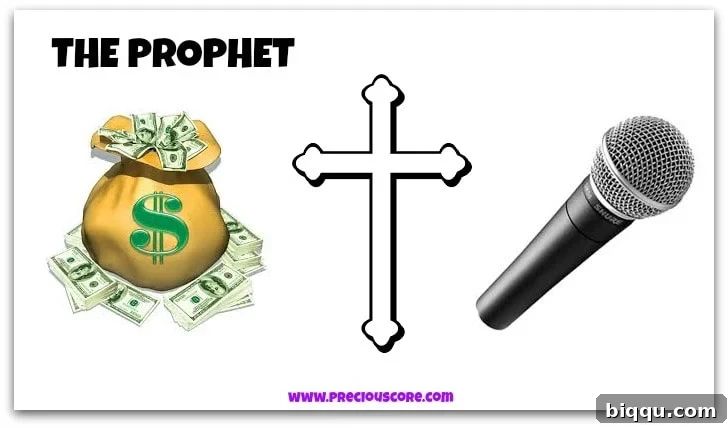
Exploring the Dynamics of Modern Prophetic Church Services: Faith, Finances, and Spiritual Manifestations
In the evolving landscape of contemporary Christian worship, prophetic services have emerged as a significant and often captivating phenomenon. These gatherings are characterized by fervent declarations, dynamic spiritual experiences, and a unique intertwining of faith with financial stewardship. This comprehensive look delves into the core components of such a service, from the foundational calls for tithing and offerings to the dramatic pronouncements and ministrations of a prophet, culminating in the critical practice of “seed sowing.” Join us on an observational journey to understand the intricate blend of spiritual expectation, communal engagement, and financial dynamics that define these powerful church experiences.
The Cornerstone of Giving: Tithing and Offerings in Charismatic Worship
The service typically commences with a fundamental and often emphasized aspect of many Christian denominations: the call for financial contributions. As the congregation settles, a dedicated church leader, often referred to as a “brother,” approaches the altar. His demeanor is earnest, and his words carry weight as he begins his routine exhortation on giving. “Tithing is a direct command from the Lord,” he declares with unwavering conviction. “It is your divine obligation to return one-tenth of the blessings God has bestowed upon you back to Him.” This statement immediately establishes a clear precedent, positioning financial giving not merely as an optional donation but as a mandatory act of obedience and faith.
He pauses, subtly peering at the congregation through his reading glasses, which are perched just so on the bridge of his nose. As if seeking a more profound confirmation of belief or perhaps a deeper emotional response, he urges everyone to open their Bibles to a specific and frequently cited passage: Malachi chapter three, verse ten. With a deliberate, almost ceremonial gesture, he retrieves his own Bible—a well-worn, leather-bound volume that visibly bears the marks of extensive use and cherished devotion over many years. In a voice that, though slightly croaky, carries impressive authority, he reads the powerful scripture aloud:
“Bring ye all the tithes into the storehouse…”
This ancient biblical instruction serves as the undeniable scriptural bedrock for the emphasis on tithing within the service. Following this declaration, the leader extends a direct invitation for the “brothers and sisters in the Lord” to bring their tithes forward. A significant portion of the congregation responds, moving gracefully toward the front of the church, each holding a pristine white envelope. These envelopes, often pre-printed, symbolize their commitment to this sacred financial practice. As they kneel at the altar, special prayers are offered over them, invoking divine favor, blessings, and prosperity in return for their faithful obedience. This ritual reinforces the deeply held belief that financial generosity is directly linked to supernatural recompense and spiritual breakthrough.
Without missing a beat, the focus then shifts slightly to another form of giving: regular Sunday offerings. The leader encourages the Christians to present their weekly offerings to the Lord, distinguishing them from tithes but maintaining the same underlying principle of sacrificial giving. Once again, a stream of white envelopes makes its way to a beautifully adorned basket positioned prominently on the stage. This “white envelope parade” is far from a somber affair; it is an exuberant procession, accompanied by lively singing and enthusiastic dancing. The entire process transforms the act of giving into a joyous and celebratory expression of worship, trust, and anticipation of divine return. The atmosphere is palpably charged with collective hope and the implicit promise of blessings tied to their financial contributions.
The Advent of the Prophetic: Elevating Spiritual Momentum
As the segment dedicated to financial contributions concludes, the service undergoes a palpable transformation, shifting into its much-anticipated “prophetic” phase. The leader hands the microphone over to the senior pastor, who, with an air of heightened expectation and solemnity, announces that today’s gathering is a “prophetic service.” He then instructs the congregants to engage with their neighbors, prompting a collective, resounding declaration that reverberates throughout the sanctuary: “My blessing will be greater than yours!” This communal affirmation fosters a spirit of competitive yet faith-filled aspiration, where individual spiritual ambition is amplified by the unified voice of the assembly. The energy in the room intensifies dramatically, signaling a profound shift in the service’s primary focus from structured giving to spontaneous spiritual manifestation.
An unmistakable ripple of eager anticipation spreads through the entire assembly as the pastor calls for everyone to stand to receive the prophet. Without hesitation, every individual rises, their eyes alight with a mixture of eagerness, wonder, and hopeful expectation. The prophet then makes his entrance onto the stage—a slender, brown-skinned young man, appearing to be in his late twenties, who immediately exudes an undeniable aura of spiritual authority and confidence. Grabbing the microphone with a practiced hand, his very first words are a powerful command designed to ignite the congregation’s passion and collective praise:
“Somebody give God praise!”
The response is instantaneous and overwhelming. A deafening crescendo of screams, shouts, and ecstatic exclamations erupts from the crowd: “Oooooh Yaaaaay!!! Alleluyah! Yes! Yes! Yes! Uhhhhh!” These raw, uninhibited expressions of praise serve as a powerful and energetic prelude to the prophetic ministrations that are about to unfold. The prophet, clearly a master of crowd dynamics and spiritual showmanship, further amplifies the excitement. “Look, I want you to praise God more than you have ever done before!” he exhorts, deliberately pushing the congregation to reach new zeniths of spiritual fervor and emotional engagement. The resulting cacophony of screams and shouts is nothing short of deafening, leaving no doubt that the “show,” as it might be perceived by an outside observer, is now unequivocally in full, dynamic swing.
The Prophet’s Dynamic Performance: Preaching, Prophecy, and Manifestations
With the stage vividly set and the congregation thoroughly electrified, the prophet smoothly transitions into song, his voice adding another resonant layer to the multi-sensory experience. He paces energetically and purposefully from one end of the altar to the other, his movements fluid and commanding attention. His bright white cassock, pristine and flowing, creates a striking visual impression that perfectly complements his confident swagger as he moves down the aisle, symbolizing both purity and authority. His commanding presence ensures that all eyes are fixed upon him, and every gesture, seemingly spontaneous, appears carefully orchestrated to captivate and engage his devoted audience.
He then shifts seamlessly into a general discourse on the fundamental tenets of Christianity, delivering his message with unwavering conviction and an almost hypnotic cadence. “Listen to me,” he proclaims, his voice ringing out with clarity and power, “salvation is the best thing that can happen to anybody!” This profound, yet foundational, declaration is met with an equally fervent and unanimous response from the congregation, whose shouts of agreement amplify the collective sentiment of faith and adoration. Among the loudest and most passionate voices is that of a woman positioned near the back of the church. Her face, gleaming not only with intense excitement generated by the prophet’s theatrical delivery but also with the visible sheen of anointing oil meticulously applied over her heavily caked foundation, radiates fervent enthusiasm. With purple-painted lips, she vociferously affirms every single declaration made by the prophet, her body language reflecting total immersion. Periodically, she maneuvers across the hall, her six-inch high-heeled shoes making normal steps a challenging, almost hobbling endeavor, further underscoring her deep and unrestrained engagement with the service.
The prophet’s ministry then moves into direct, personalized encounters, transitioning from general exhortation to individual prophecy. He beckons to a distinguished brother impeccably dressed in a black suit, seated intently in the very first row of the pew. The man promptly rises, his movements suggesting both eagerness and reverence, and steps onto the stage, becoming the first direct recipient of a personal prophecy. “I see great things happening in your life! God is about to do something that will truly surprise you,” the prophet announces with palpable conviction, laying his right hand firmly upon the brother’s forehead. With a sudden, powerful push, the brother stumbles backward several steps in quick succession. Another church member, acting as a designated catcher, is strategically positioned behind him, ready to prevent a full fall—a common and often expected manifestation in such charismatic services. Though the brother falters significantly, he manages not to fall completely to the ground. Undeterred by this near-miss, the prophet shouts a single, potent, and resounding word: “Fire!” The congregation responds instantly with enthusiastic clapping and fervent shouts, signaling their unequivocal recognition and affirmation of the spiritual transaction and power display that has just taken place.
The next opportuned recipient of the prophet’s blessing is a sister whose voluminous, intricately folded scarf significantly obstructs the view of those seated directly behind her. The prophet begins to articulate what he “sees in the spirit” concerning her life and future, relaying these insights to the heavily accessorized woman with a personalized touch. While some specific details are undoubtedly unique to her, the underlying language, thematic framework, and prophetic cadence bear a striking resemblance to the words previously spoken to the brother in the suit, suggesting a structured approach to these divine pronouncements. In a more elaborate and visually dramatic display, the prophet then produces a crisp, pristine white bed sheet and carefully spreads it across the sacred space of the altar. He retrieves a spray bottle and mists a clear liquid—often believed to be anointing oil or holy water—all over the bed sheet before instructing the woman to walk upon it. She complies, walking with a majestic, almost processional gait, embodying a sense of purpose and honor. The congregation erupts once more in rapturous cheers and applause, validating the perceived spiritual power and significance of this ritualistic act.
Healing, Deliverance, and the Pivotal Call for “Seed Sowing”
Following the individual prophecies and dramatic manifestations, the service transitions seamlessly into a segment intensely focused on healing and deliverance. The prophet issues a powerful call for the sick, the afflicted, and those seeking spiritual breakthrough to come forward to the altar. A diverse group responds, moving purposefully to the front; among them is even the church’s own prophetess, who has been visibly battling a strange and debilitating illness that has left her significantly altered in appearance and almost unrecognizable. Eager for divine intervention, they raise their hands in supplication. The prophet then prays fervently over them, and, mirroring his previous interaction with the man in the suit, he physically pushes several individuals. As they fall—often gently caught by ushers strategically placed to prevent injury—the prayer session is deemed complete for them, and the congregation offers another resounding round of applause, affirming the perceived healing or deliverance. A select, “privileged” few are then granted the distinct honor of walking on the special white bed sheet, presumably to receive an even more potent dose of anointing or a deeper spiritual impartation.
With the anointing and healing ministrations concluded, the prophet skillfully redirects the congregation’s attention back to the critical and oft-repeated theme of financial giving, reintroducing it under a new, spiritually charged term: “seed sowing.” He announces to the congregation, “It is time to sow your seed. Just come forward and sow your seed. If you do not have cash here, you could write a check.” This declaration explicitly draws a powerful parallel between financial contribution and the agricultural metaphor of planting a seed, implying that giving money is an act of spiritual investment designed to yield a future harvest of blessings and prosperity. Instantly, some congregants reach into their bags for checkbooks, diligently filling out the details, while others produce the now-familiar white envelopes, ready to contribute. A steady stream of “seed sowers” makes their way to the altar. While their individual motivations may vary and the specific amounts differ, one singular commonality unites them: their “seeds” are invariably monetary. This practice, deeply embedded in the principles of prosperity theology, suggests that financial giving is a crucial spiritual act that unlocks divine favor, breakthroughs, and material prosperity.
Post-Service Engagement: Exclusive Prophetic Counsel and Financial Expectation
After delivering numerous prophecies and profound declarations, and overseeing the various ministrations and the critical “seed sowing” segment, the prophet concludes his powerful session and prepares to depart the stage. He clutches his now-infamous white bed sheet to himself, his lips subtly mumbling—perhaps in personal prayer, reflection, or even a quiet communication—as he exits the immediate spotlight, leaving the congregation buzzing with spiritual energy.
The pastor then steps back onto the stage, reinforcing an important announcement for those seeking further, more personalized interaction with the prophet. “All those who want to see the prophet can do so after the service,” he declares, establishing an exclusive opportunity for one-on-one engagement and personal counsel. However, this private audience comes with a clear and unmistakable prerequisite: “However, you must bring a prophetic seed with you.” He repeats the instruction for emphasis, leaving absolutely no room for ambiguity: “If you want to see the prophet after service, you can come to my office but make sure you come with a prophetic seed.” This final directive solidifies the intricate and overt link between access to deeper spiritual engagement, the reception of personal prophecy, and a direct financial contribution, suggesting that exclusive spiritual benefits are often contingent upon providing a monetary “seed.”
This detailed observation of a modern prophetic service vividly illustrates a compelling blend of charismatic worship, strong communal engagement, and a distinctive, often theatrical, approach to spiritual and financial stewardship. The seamless integration of tithing, offerings, dynamic prophetic declarations, theatrical healing ministrations, and the crucial practice of “seed sowing” illuminates a vibrant and complex spiritual landscape where faith, finances, and the pursuit of divine intervention are deeply and overtly intertwined, profoundly shaping the worship experience for many believers in contemporary churches.