
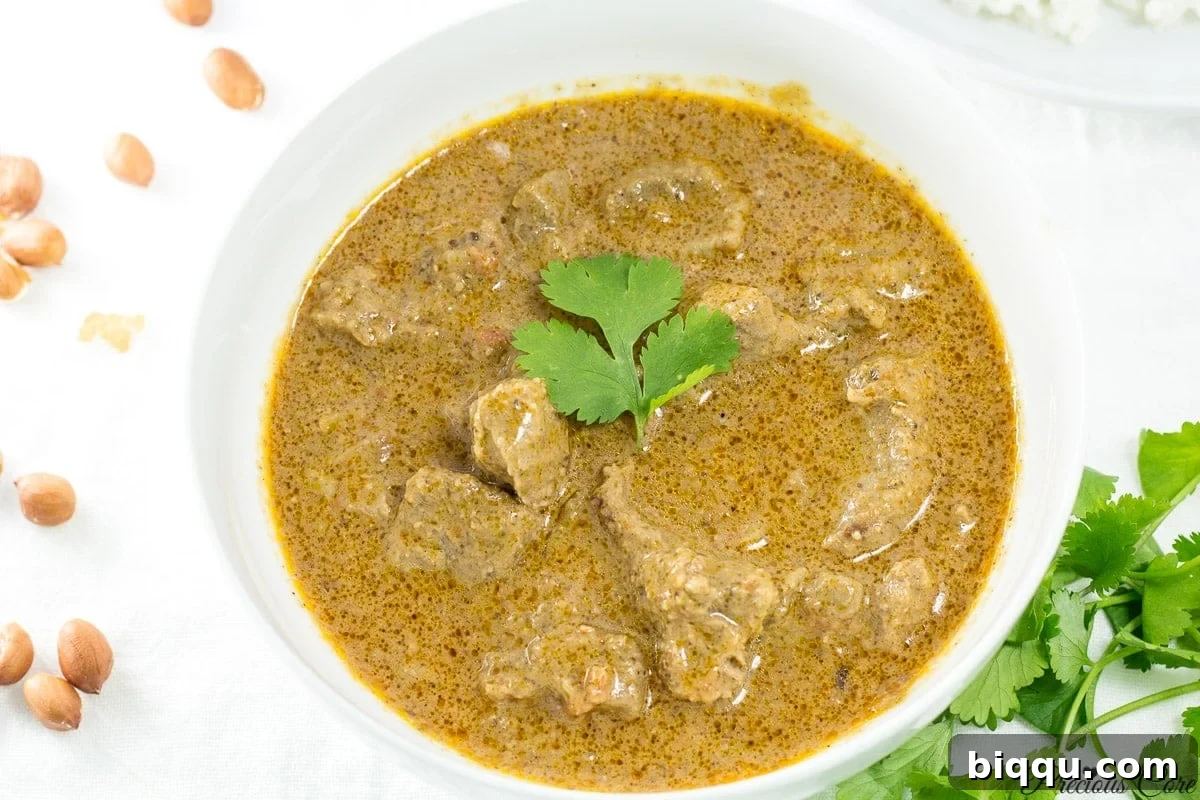
If you’re reading this, chances are you share a love for the humble, yet incredibly versatile, groundnut – or peanut, as it’s often known in other parts of the world. Today, we’re diving deep into the rich, creamy, and utterly delightful world of African Groundnut Soup. This isn’t just any soup; it’s a culinary masterpiece that captures the essence of West African flavors, a dish so profoundly “groundnutty” that its taste will linger deliciously in your memory. As a student in Nigeria years ago, I remember making this soup, and my roommate’s simple, yet perfect, description: “the soup is tasting groundnut, groundnut, groundnut!” And yes, that’s precisely its charm.
The magic of groundnut soup lies in its transformation from simple nuts to a complex, savory broth. Raw groundnuts are gradually roasted to unlock their full aromatic potential, then finely ground into a paste. This paste is then simmered with a symphony of exotic spices in a rich beef or chicken stock, creating a luscious, creamy texture that beckons you to grab a spoon – or perhaps even drink it straight from the bowl! It’s an experience that transcends a mere meal, offering a comforting embrace with every spoonful.
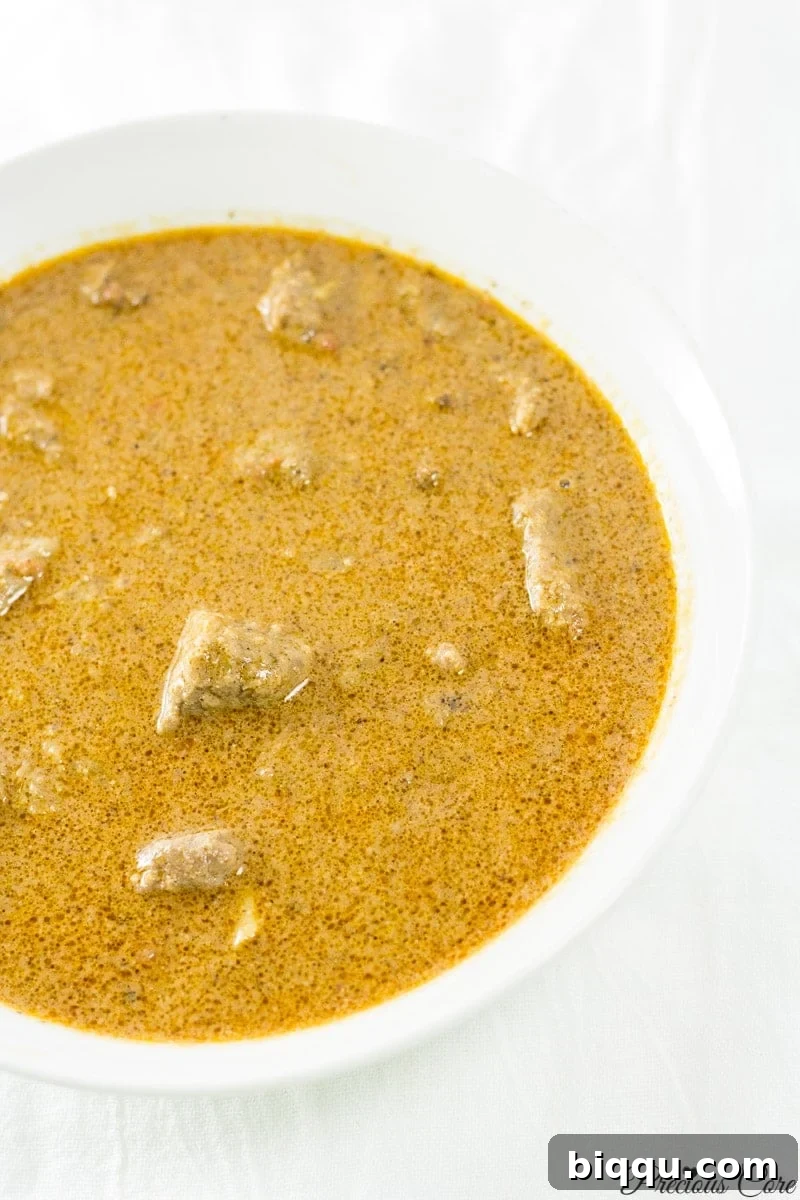
The Simplicity and Richness of West African Peanut Soup
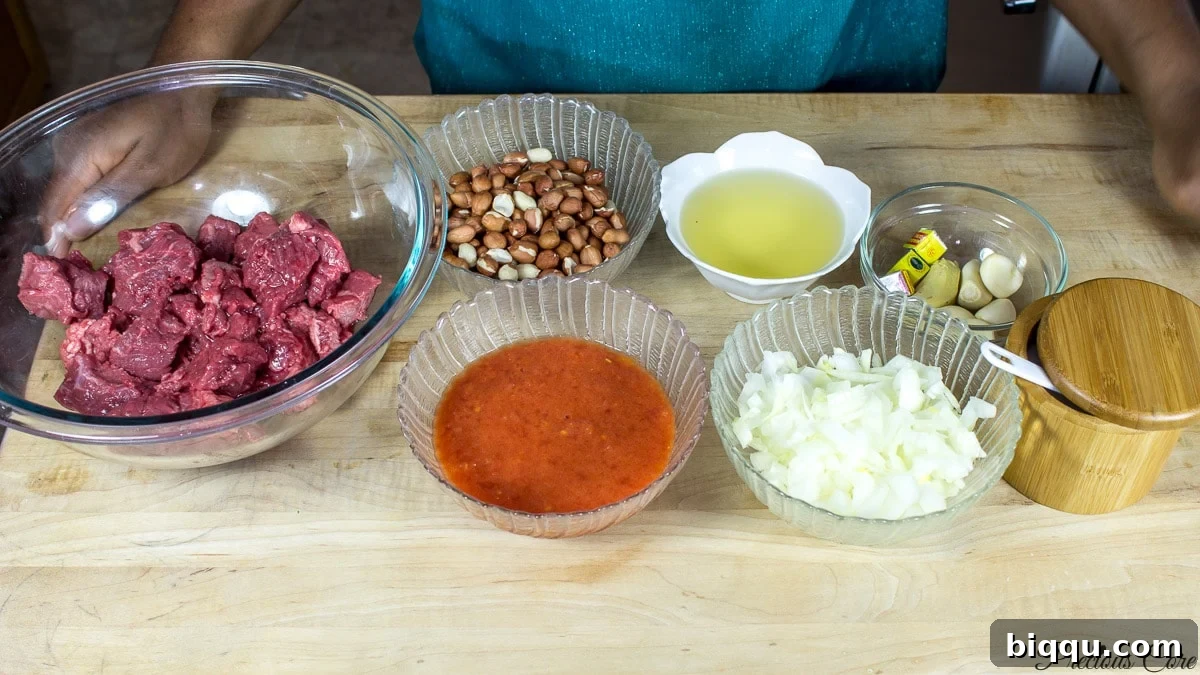
One of the most appealing aspects of this exquisite African dish is how effortlessly it comes together, despite its complex flavor profile. You don’t need an endless list of obscure ingredients to create this culinary marvel. At its core, the authentic groundnut soup recipe requires just a few pantry staples: raw groundnuts (or peanuts), ripe tomatoes, fragrant onions, pungent ginger and garlic, your preferred seasoning, a touch of oil, and a choice of protein, traditionally beef.
This streamlined ingredient list makes it an accessible dish for home cooks eager to explore West African cuisine without the hassle. The beauty lies in the quality and freshness of these basic components, which, when combined and cooked with care, yield a depth of flavor that is truly remarkable. From the earthy notes of the groundnuts to the piquant kick of ginger and garlic, each ingredient plays a crucial role in building the distinctive taste of this beloved soup.
The Peanut Debate: Roasting Your Own vs. Ready-Made Peanut Butter
While the traditional method involves roasting raw groundnuts and grinding them into a paste, a convenient shortcut exists for those moments when time is of the essence: using plain peanut butter straight from the jar. Essentially, peanut butter is a pre-made groundnut paste, and opting for it can significantly cut down your cooking time, making this delicious peanut soup even quicker to prepare for a weeknight meal.
However, for the purists and those seeking an unparalleled depth of flavor, there’s an undeniable advantage to roasting and grinding your own groundnuts. This process allows you to control the roast level, extracting a richer, more nuanced flavor that imbues the soup with a distinct authenticity. The aroma of freshly roasted groundnuts filling your kitchen is an experience in itself, a promise of the deliciousness to come. It’s a step that, while adding a little extra time, truly elevates the final taste of your homemade African groundnut stew, making it taste genuinely traditional and heartfelt.
Groundnuts, Peanuts, and West African Culinary Terms
The terminology surrounding this key ingredient can sometimes be a point of minor confusion, especially across different regions. What many parts of the world commonly refer to as “peanuts,” are universally known as “groundnuts” throughout West Africa. It’s a subtle but important distinction that reflects local culinary heritage. So, when we talk about groundnut soup in this context, we are indeed referring to a delicious creation made from peanuts.
Interestingly, in West Africa, the term “peanuts” often refers to a specific, popular snack: groundnuts that have been coated in a flavorful flour mixture and then fried or baked. These delightful treats are affectionately known as “Peanut Burger” or simply “peanuts” for short. This regional nuance highlights the diverse ways in which ingredients are named and prepared across different cultures, adding another layer of richness to the story of African cuisine.
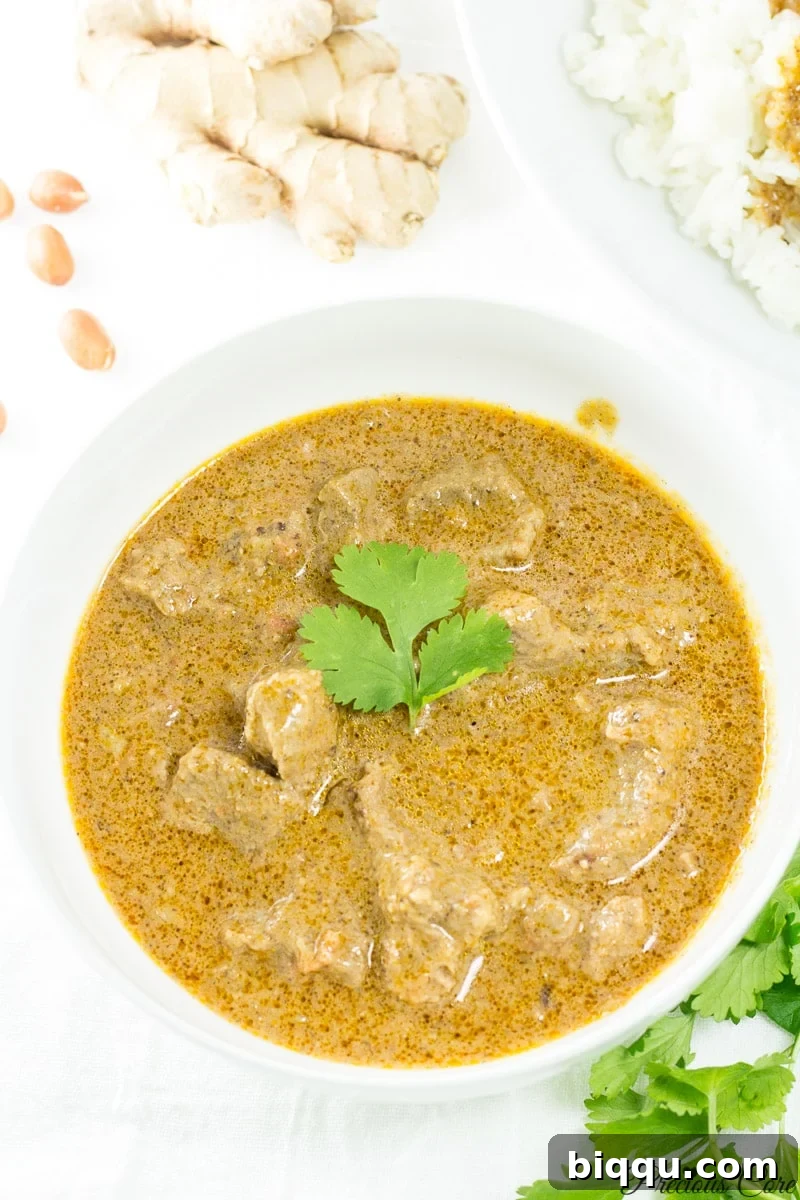
A Tapestry of Tastes: Regional Variations of African Peanut Soup
The beauty of African groundnut soup lies not only in its core ingredients but also in the myriad of ways it is prepared across the continent. This versatile dish is a true testament to the rich culinary diversity of Africa, with each country and even region adding its unique twist. While the foundational element of groundnuts remains consistent, the accompanying ingredients and cooking methods can vary significantly, offering a delightful spectrum of flavors and textures.
Ghana’s Nkatenkwan: A Culinary Icon
In Ghana, this beloved dish is known as Nkatenkwan, a staple often enjoyed with fufu or omo tuo. Ghanaian versions frequently feature a blend of chicken, goat, or beef, simmered in a rich groundnut base often enhanced with traditional Ghanaian spices and sometimes a hint of palm oil, giving it a vibrant reddish hue and distinct flavor profile. The consistency can range from thick and hearty to a slightly lighter broth, depending on regional preferences and the cook’s individual style.
Maafe: The Heart of West Africa
Across other West African countries like Senegal, Mali, Gambia, and Côte d’Ivoire, the soup takes on the name Maafe (or variations like Tigadegena or Domoda). Maafe often showcases a richer, thicker consistency and might incorporate a wider array of vegetables such as carrots, potatoes, sweet potatoes, and cabbage. It’s typically cooked with beef, lamb, or chicken, and its robust flavors are often balanced with a touch of tomato paste and a blend of aromatic spices, creating a truly comforting and filling stew.
Sauce d’Arachide: A French Colonial Influence
In French-speaking African nations, particularly those with a strong culinary tradition, you might hear it referred to as Sauce d’arachide. While sharing the groundnut base, these versions often lean into a more refined cooking technique, sometimes incorporating a bouillon cube or specific local herbs to enhance the overall flavor. The serving style might also differ, often accompanying white rice or various forms of fufu, highlighting the regional culinary heritage.
Beyond the Borders: Other Names and Interpretations
Beyond these well-known names, the soup is also simply referred to as “peanut stew” or “groundnut stew” by many. My Ugandan neighbor once lovingly called it “peanut butter soup,” a simple yet accurate description that speaks to its universal appeal. This wide array of names and regional adaptations underscores the dish’s significant presence and popularity across diverse African communities, making it a true culinary ambassador of the continent.
Some variations even experiment with different proteins like smoked fish or assorted seafood, adding a unique umami depth. Vegetarians and vegans can easily adapt the recipe by using mushrooms, legumes, or a medley of root vegetables as the protein base, proving the incredible flexibility of this foundational recipe. The addition of vegetables like eggplant, okra, or spinach is also not uncommon, adding both nutritional value and textural contrast.
Perfect Pairings: What to Serve with Groundnut Soup
The experience of enjoying African groundnut soup is truly complete when paired with its traditional accompaniments. This soup’s creamy, savory, and slightly spicy profile makes it incredibly versatile, complementing a variety of starchy sides that are staples in African cuisine. The right accompaniment not only enhances the flavor but also provides a satisfying balance to the richness of the soup.
For me, the combination of groundnut soup and rice is an absolute delight – a match made in culinary heaven. The fluffy texture of white rice beautifully soaks up the creamy sauce, creating a harmonious mouthful with every bite. It’s a classic pairing that offers both comfort and profound satisfaction.
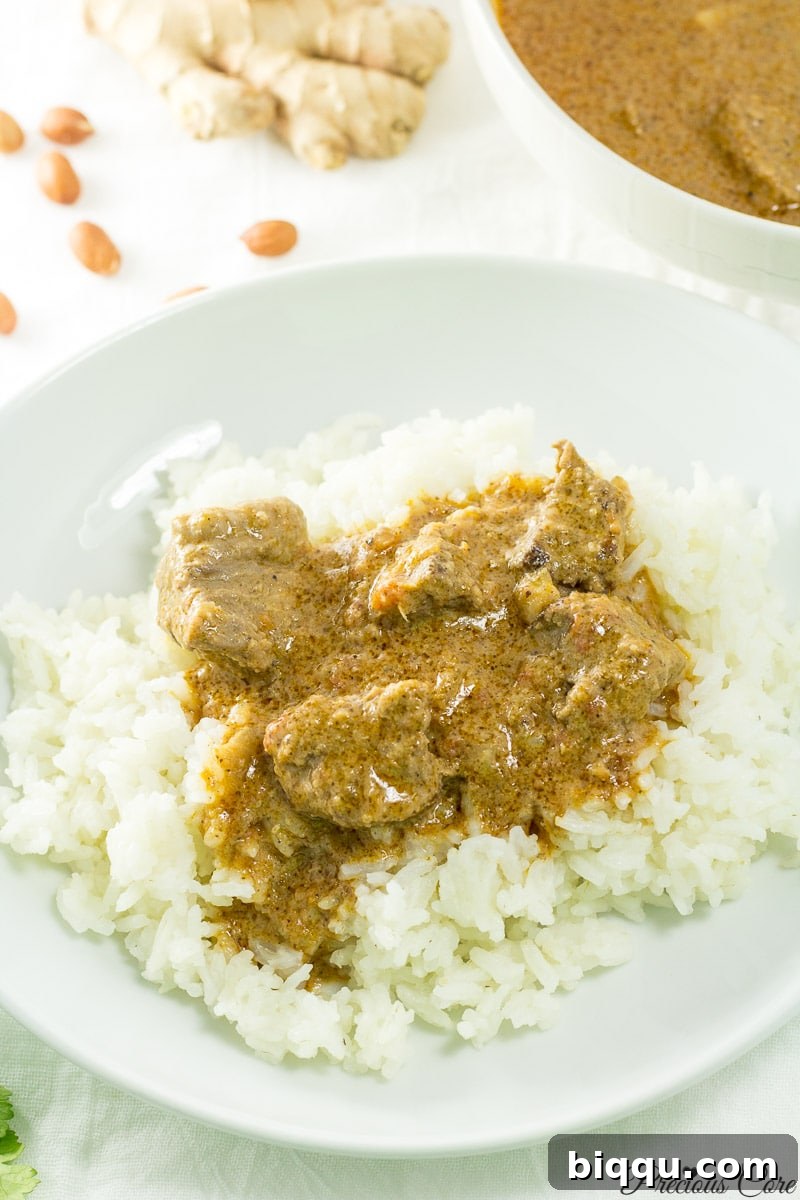
But the culinary possibilities don’t end there! This delicious West African peanut soup also pairs wonderfully with:
- Boiled Plantains: The slight sweetness and firm texture of boiled ripe plantains offer a fantastic contrast to the savory soup. They provide a comforting, wholesome element that is deeply traditional.
- Pounded Yam (Fufu): A quintessential West African staple, pounded yam, or fufu, is ideal for “swallowing” (a common way to eat starchy sides in the region). Its neutral flavor allows the groundnut soup’s rich tastes to shine, and its soft, pliable texture is perfect for scooping up every last drop of the sauce.
- Cooked Garri (Eba): Made from processed cassava, garri, when reconstituted with hot water to form a firm dough, provides another excellent fufu-like accompaniment. It’s light yet filling, absorbing the soup’s flavors wonderfully.
- Banku or Kenkey: These fermented corn or corn and cassava doughs, popular in Ghana, bring a slight tanginess that beautifully cuts through the richness of the groundnut soup, offering a unique flavor dynamic.
- Ugali or Sadza: East and Southern African maize meal porridges, while not traditionally paired, can also serve as a hearty and absorbent base for this versatile soup, showcasing its adaptability.
No matter your preference, serving groundnut soup with a starchy side transforms it into a fulfilling and incredibly delicious meal. It’s an experience that truly embodies the warmth and hospitality of African cooking.
Watch the Full Recipe Video
For those who prefer a visual guide, I’ve prepared a comprehensive video demonstrating each step of this incredible African groundnut soup recipe. Follow along to see how all the simple ingredients transform into a rich, flavorful, and creamy soup that will delight your senses. It’s the perfect way to confidently recreate this traditional dish in your own kitchen.
Authentic Groundnut Soup Recipe
Here’s a detailed recipe to guide you through making a truly authentic and delicious batch of African Groundnut Soup. This recipe is designed to yield a rich, creamy, and flavorful soup that serves approximately 6 people, with a total preparation and cooking time of about 45 minutes.
Groundnut Soup
Yields: 6 servings | Prep time: 15 mins | Cook time: 30 mins | Total time: 45 mins
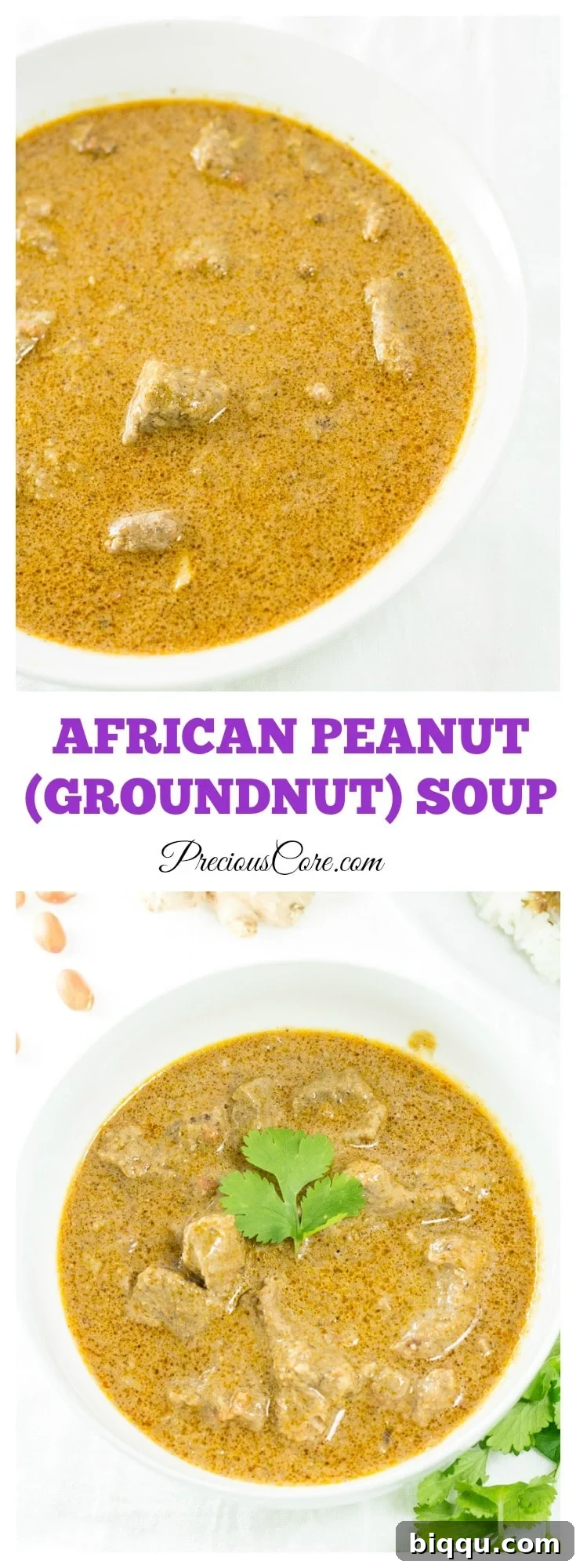
This is a rich, creamy, and flavorful soup made with roasted peanuts (groundnuts) and other exotic ingredients. It is excellent on rice and just so good with any starchy side.
Ingredients
- 1 cup raw groundnuts (peanuts)
- 1 pound beef (about 1/2 kg) – cut into small slices
- 5 garlic cloves – peeled
- 1/2-1 inch ginger – peeled
- 1 onion – chopped
- 2 tomatoes – diced or blended
- 1/2 cup oil (e.g., canola)
- 3 small seasoning cubes (Maggi)
- 1 teaspoon salt
- 1 hot (habanero) pepper – optional
Instructions
- Place the raw groundnuts in a dry skillet over medium heat and roast for about 5-10 minutes. Stir frequently to ensure even roasting and prevent burning. They should achieve a beautiful brown color with some black spots, indicating they are well roasted.
- While the groundnuts are roasting, thoroughly wash your beef and place it in a pot with 2 cups of water. Add half a teaspoon of salt, one seasoning cube (Maggi), and a tablespoon of chopped onions. Bring to a boil, then reduce heat and let it cook for about 20 minutes on medium-high, or until the meat is tender. Add more water as needed to keep the meat submerged.
- Once the roasted groundnuts have cooled completely, blend them into a fine powder or paste. A coffee grinder or a powerful blender works best for this. After blending, add a cup of water to the ground peanuts and mix thoroughly to form a smooth paste.
- Separately, blend the peeled garlic cloves, ginger, and the habanero pepper (if using) into a fine paste.
- By now, your beef should be tender. Remove the beef from the pot and set it aside, reserving the flavorful stock. Place the pot back on the fire over medium heat to allow any remaining stock to reduce slightly. Add the oil and let it heat up. Sauté the remaining chopped onions until they are fragrant and translucent.
- Add the diced or blended tomatoes to the pot and fry them for about 5-7 minutes, stirring occasionally, until their acidity has cooked out (they should no longer taste sour).
- Stir in the blended ginger, garlic, and pepper paste. Cook for another 2 minutes, then add the cooked beef and its reserved stock.
- Now, add the smooth groundnut paste and the remaining two seasoning cubes, along with half a teaspoon of salt. Mix all ingredients thoroughly until well combined.
- Let the soup simmer gently for about 5-10 minutes, allowing all the flavors to meld and deepen. Taste and adjust the seasoning as needed. If the soup is too thick, you can add a little more water or stock to reach your desired consistency.
- Serve your rich, creamy groundnut soup warm over fluffy rice, with boiled plantains, pounded yam (fufu), or any other starchy side of your choice. Enjoy this authentic taste of Africa!
Notes
- For a quicker preparation, you can use 1 cup of plain, unsweetened peanut butter in place of roasting and grinding raw peanuts.
- Feel free to substitute beef with chicken, fish, or even a mix of mushrooms and other vegetables for a vegetarian option. Adjust cooking times accordingly.
- Adjust the amount of habanero pepper to your preferred spice level, or omit it entirely for a milder soup.
Nutrition
(Approximate values per serving, based on 6 servings)
- Calories: 465 kcal
- Carbohydrates: 9g
- Protein: 22g
- Fat: 40g
- Saturated Fat: 7g
- Polyunsaturated Fat: 10g
- Monounsaturated Fat: 22g
- Trans Fat: 1g
- Cholesterol: 52mg
- Sodium: 935mg
- Potassium: 580mg
- Fiber: 3g
- Sugar: 2g
- Vitamin A: 368 IU
- Vitamin C: 10mg
- Calcium: 56mg
- Iron: 3mg
Additional Info
- Course: Soup
- Cuisine: African, West African
- Keywords: Groundnut Soup, Peanut Soup, African Soup, Maafe, Nkatenkwan, Beef Groundnut Soup
A Culinary Journey: The Health Benefits of Groundnut Soup
Beyond its incredibly satisfying taste, African Groundnut Soup is also a remarkably nutritious dish, packed with health benefits derived from its wholesome ingredients. Groundnuts themselves are powerhouses of nutrition, offering a rich source of plant-based protein, essential healthy fats (monounsaturated and polyunsaturated), and dietary fiber. These components contribute to satiety, support heart health, and aid in digestion, making the soup not just delicious but also a substantial meal.
The inclusion of beef or chicken provides high-quality animal protein, crucial for muscle repair and growth, as well as essential vitamins and minerals like iron and B vitamins. For those opting for vegetarian versions with mushrooms or legumes, the protein content remains impressive, contributing to a well-balanced diet.
Fresh vegetables like tomatoes, onions, garlic, and ginger add a wealth of vitamins, antioxidants, and anti-inflammatory compounds. Tomatoes are rich in Vitamin C and lycopene, a powerful antioxidant. Garlic and ginger are renowned for their immune-boosting properties and ability to add incredible depth of flavor without relying solely on salt. This combination of ingredients ensures that each spoonful of West African Groundnut Soup is not only a treat for your taste buds but also a nourishing contribution to your overall well-being.
Conclusion: Embrace the Richness of African Groundnut Soup
From its humble origins to its widespread acclaim, African Groundnut Soup stands as a testament to the vibrant and diverse culinary landscape of the continent. It’s a dish that tells a story of tradition, community, and the simple joy of flavorful, comforting food. Whether you call it Groundnut Soup, Peanut Soup, Maafe, or Nkatenkwan, its creamy texture, rich aroma, and deeply satisfying taste are universally cherished.
We’ve explored its simple yet potent ingredients, the subtle art of preparation, and the fascinating regional variations that make it such a dynamic culinary experience. Paired with your favorite starchy side, it transforms into a complete meal that warms the soul and tantalizes the palate.
Now armed with the knowledge and a detailed recipe, we encourage you to embark on your own culinary adventure and bring the authentic flavors of West Africa into your home. Don’t hesitate to experiment with proteins, spice levels, and serving suggestions to make this versatile soup truly your own. If you make this fantastic soup, please share your creation! We’d love to see your delicious results on Instagram; just tag @preciouscore or use the hashtag #PreciousCore. Happy cooking!