
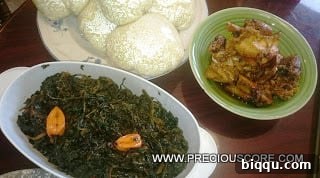
Authentic Cameroonian Kati Kati Chicken with Fufu and Njama Njama: A Culinary Delight
Prepare yourself for an extraordinary culinary journey! This remarkable delicacy from Cameroon, featuring a harmonious trio of Fufu, Njama Njama, and Kati Kati, is an absolute showstopper. It represents the pinnacle of traditional African meals, offering a burst of authentic flavors and a deeply satisfying experience that will undoubtedly captivate your taste buds. This isn’t just food; it’s a celebration of Cameroonian heritage, a vibrant tapestry of textures and aromas that speaks volumes of its rich culinary traditions.
At the heart of this iconic meal is **Fufu**, a soft, dough-like staple meticulously prepared from corn flour. It serves as the perfect accompaniment, designed to be eaten by hand, allowing you to scoop up the other flavorful components. Paired with Fufu is **Njama Njama**, a nutritious and flavorful vegetable dish made from garden huckleberry (scientifically known as Solanum scabrum). In Cameroon, this leafy green is transformed into a vibrant side, offering a delightful contrast to the Fufu. But the true star, the dish that lends its name to this culinary ensemble, is **Kati Kati**. This is a distinctive chicken preparation, where the chicken is first traditionally ‘burnt’ or grilled over an open flame to impart a unique smoky flavor, then chopped and slow-cooked in rich palm oil with an aromatic blend of spices. The result is an incredibly tender, intensely flavorful chicken dish that perfectly complements the Fufu and Njama Njama.
I recently had the delightful opportunity to capture the preparation of this exquisite meal firsthand. My brother-in-law was about to embark on preparing this very dish when I eagerly stepped in, keen to document the process for you. Follow along with the video below to see the techniques in action, and then dive into the detailed, easy-to-follow written recipes for each component. Let’s begin crafting this unforgettable Cameroonian feast!
The Detailed Recipes: Master Cameroonian Fufu, Njama Njama, and Kati Kati
Fufu Corn Recipe: The Hearty Staple
Fufu Corn is more than just a side dish; it’s a fundamental part of the dining experience in many African cultures. Its neutral taste and pliable texture make it ideal for soaking up the rich sauces and flavors of accompanying stews and vegetable dishes. This recipe will guide you through creating perfect, lump-free Fufu Corn, providing a satisfying foundation for your Cameroonian meal.
Prep time: 10 mins
Cook time: 20 mins
Total: 30 mins
Serves: 4
Ingredients for Fufu Corn
- 3 cups of corn flour
- 6 cups of water
Utensils Needed
- A sturdy wooden spoon or stick for ‘turning’ (stirring) the fufu. This traditional tool is essential for achieving the right consistency.
- A heavy-bottomed pot to prevent sticking and ensure even cooking.
Method for Fufu Corn
- Begin by pouring 6 cups of water into a large, heavy-bottomed pot. Place the pot on medium-high heat and bring the water to a rolling boil.
- While the water is heating, prepare a smooth corn flour paste. In a separate bowl, mix half a cup of corn flour with one cup of cool water. Stir vigorously until no lumps remain and you have a consistent, pourable paste. This step is crucial for preventing lumps in your final fufu.
- Once the water in the pot reaches a vigorous boil, carefully remove two cups of the boiling water and set it aside. This reserved water will be used later to adjust the fufu’s consistency.
- Reduce the heat to medium. Gradually pour the corn flour paste into the remaining boiling water in the pot, stirring continuously with your wooden spoon. Continue stirring without interruption; the mixture will start to thicken rapidly. The continuous stirring at this stage helps to ensure a smooth texture and prevents the fufu from burning at the bottom.
- Now, incrementally add the remaining two and a half cups of dry corn flour to the pot. As you add the flour, continue to stir vigorously and continuously in a circular motion. The mixture will become very thick and increasingly difficult to stir. This vigorous stirring, known as ‘turning’ in Cameroonian cooking, develops the fufu’s characteristic texture.
- If the fufu becomes too stiff to stir effectively, use your wooden spoon to push the thick paste towards the corner of the pot. Continue to work the mixture, pressing and stirring to dissolve any remaining lumps. The goal is a uniform, smooth dough.
- Once the fufu is thoroughly mixed and smooth, gradually add the two cups of reserved hot water back into the pot. Stir well to incorporate. Cover the pot and allow it to cook on low heat for approximately 5-10 minutes. This steaming process helps to fully cook the corn flour and improve the fufu’s elasticity.
- After steaming, give the fufu a final vigorous stir to ensure everything is perfectly incorporated and smooth. It should be a pliable, firm dough.
- To serve, scoop portions of the hot fufu and wrap them immediately. You can use plastic wraps, sandwich bags, aluminum foil, or, traditionally, warmed banana leaves. Wrapping helps the fufu retain its warmth and soft texture until serving.
Njama Njama Recipe: The Flavorful Greens
Njama Njama, also known as garden huckleberry or African nightshade, is a staple green vegetable in Cameroonian cuisine. Its slightly bitter notes are beautifully balanced by the sweetness of tomatoes and the pungency of onions, creating a vibrant and healthy side dish. If fresh huckleberry is unavailable, kale or spinach make excellent substitutes, though the flavor profile will be slightly different.
Ingredients for Njama Njama
- Two pounds (approximately 1 kg) of garden huckleberry, thoroughly cleaned, lightly boiled, and finely chopped. (Substitutes: fresh kale or spinach, similarly prepared). Blanching the greens helps to tenderize them and reduce any bitterness.
- 6 ripe tomatoes, medium-sized
- 1 large onion
- 3 small seasoning cubes (such as Maggi or similar bouillon cubes), crushed
- Salt to taste
- 1 cup of cooking oil (vegetable oil or, for a more authentic flavor, red palm oil)
- 2 habanero peppers, finely chopped (optional, for those who enjoy a spicy kick)
Method for Njama Njama
- First, prepare your aromatics. Finely chop the large onion and the ripe tomatoes. Set them aside in separate bowls. If using habanero peppers, chop them finely as well.
- Place a pot or large skillet over medium heat. Add the oil and allow it to heat until shimmering, but not smoking.
- Add the chopped onions to the hot oil. Sauté the onions, stirring frequently, until they become translucent and fragrant, which usually takes about 3-5 minutes. Be careful not to burn them.
- Next, add the chopped tomatoes to the pot. Continue to cook, stirring occasionally, until the tomatoes soften and their acidity mellows. This process typically takes 8-10 minutes, and the tomatoes should break down into a rustic sauce. If using habanero peppers, add them now with the tomatoes.
- Season the simmering tomato and onion mixture with the crushed seasoning cubes and salt to taste. Stir well to ensure the flavors are evenly distributed.
- Finally, add the prepared (lightly boiled and chopped) garden huckleberry, kale, or spinach to the pot. Stir everything together thoroughly, ensuring the greens are well coated with the flavorful tomato and onion base. Cook for another 5-7 minutes, or until the greens are tender but still retain some vibrant color. Avoid overcooking to preserve their nutritional value and texture.
- Remove from heat. Your delicious Njama Njama is ready to be served!
Kati Kati Chicken Recipe: The Smoky Centerpiece
Kati Kati is a traditional Cameroonian chicken dish renowned for its distinctive smoky flavor, achieved by lightly charring the chicken over an open flame before stewing. This unique technique infuses the chicken with an unparalleled depth of flavor. Cooked in palm oil with a rich blend of spices, Kati Kati chicken offers a tender texture and an aromatic, savory taste that makes it the undisputed highlight of this meal.
Prep time: 15 mins
Cook time: 30 mins
Total time: 45 mins
Ingredients for Kati Kati Chicken
- 1 whole chicken (preferably a ‘hard chicken’ or stewing hen for richer flavor and texture), plucked, cleaned, and traditionally, slightly burnt over an open flame (grilling or charring quickly over a gas burner works well). This step imparts a crucial smoky depth.
- 1 cup of rich red palm oil
- 1 medium-sized onion
- 4 cloves of garlic, minced or finely crushed
- 2 cubes of Maggi seasoning (or similar bouillon cubes)
- 1 habanero pepper (adjust to your spice preference), finely chopped
- Salt to taste
Method for Kati Kati Chicken
- Begin by cutting the charred chicken into your desired serving pieces. Ensure they are uniform enough for even cooking.
- Place the chicken pieces into a large pot. Add approximately 3 cups of water, or enough to just cover the chicken. Bring to a boil over medium-high heat. This initial boiling helps to tenderize the chicken, especially if using a hard chicken.
- While the chicken is boiling, prepare your aromatics. Finely chop the onion, habanero pepper, and mince or crush the garlic cloves.
- Once the chicken has boiled for about 10-15 minutes (or until slightly tender), season it generously with salt and the crushed Maggi cubes.
- Now, add all the chopped ingredients—onion, habanero pepper, and garlic—to the pot with the chicken. Stir everything well to combine, ensuring the chicken pieces are coated with the seasonings and aromatics.
- Pour in the full cup of palm oil. The palm oil is crucial for the dish’s distinctive flavor and color. Stir gently to integrate all ingredients.
- Allow the chicken and vegetable mixture to cook together on medium heat, uncovered, until all the water has evaporated. The palm oil will then start to fry the chicken and aromatics, intensifying their flavors. Continue cooking, stirring occasionally, until the chicken is tender, well-flavored, and beautifully coated in the rich red palm oil. This process might take an additional 15-20 minutes after the water has evaporated.
- Taste and adjust seasoning if necessary. The chicken should be succulent with a deep, smoky, and savory profile.
- Serve your authentic Kati Kati chicken hot with freshly prepared Fufu and Njama Njama.
Important Cooking Notes and Tips for Kati Kati Chicken:
There are slight variations in the cooking method for Kati Kati. An alternative approach is to fry the chopped onions, tomatoes (if using in the chicken, though not listed in this specific recipe), and garlic in palm oil first, creating an aromatic base, before adding the raw chicken and bringing it to a boil. However, I personally prefer the method outlined above: boiling the chicken first with water and then allowing the water to evaporate while adding the palm oil and aromatics. This technique ensures that the other flavorful ingredients (onions, garlic, habanero) don’t overcook or lose their vibrant flavors and aromas, while the chicken gets a head start on tenderness. Experiment with both methods to discover your preferred style!
The “burning” or charring of the chicken is a traditional and essential step for true Kati Kati flavor. If you don’t have an open flame, you can quickly char the chicken pieces under a broiler or in a very hot, dry cast-iron skillet until the skin is lightly browned and smoky. This adds a depth of flavor that cannot be achieved otherwise.
For the best results, source fresh, high-quality ingredients. The flavor of good palm oil is paramount to the authenticity of Kati Kati. Don’t be shy with the aromatics; they contribute significantly to the dish’s complexity.
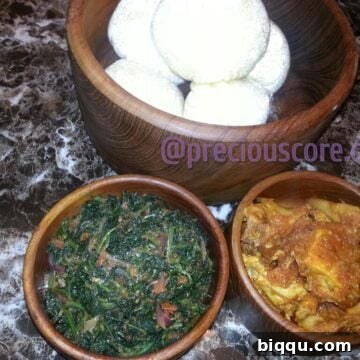
Fufu, Njama Njama and Khati Khati/Kati Kati
Rated 5 out of 5 stars by 6 users.
30
1
1
30
8
servings
Print Recipe
Ingredients
For the Fufu
-
3
cups
of corn flour -
6
cups
of water
For the Njama Njama
-
2
pounds
of huckleberry- fixed and blanched
(about 1 kg, substitutes include kale and spinach, lightly boiled and cut) -
6
tomatoes -
1
large onion -
3
small seasoning cubes
(Maggi) - Salt to taste
-
1
cup
of oil
(vegetable oil or palm oil) -
2
habanero peppers
(optional)
For the Khati Khati
-
1
whole chicken- plucked and slightly burnt over a flame
(preferably, this should be hard chicken) -
1
cup
of palm oil -
1
medium sized onion -
4
cloves
of garlic -
2
cubes of Maggi -
1
habanero pepper - Salt to taste
Instructions
To make the Fufu
-
Put water in a pot and bring to boil.
-
While water is on the fire, mix half cup of corn flour with a cup of cool water. This will form a paste.
-
When water boils, remove two cups of it and set aside.
-
Pour the paste into the remaining water in the pot, stirring continuously. It should get really thick.
-
Now add in the remaining flour to the pot, stirring continuously in a circular motion. If it gets too hard, start moving the paste to the corner of the pot with your wooden spoon making sure the lumps are dissolved. When it is well mixed, add the water you kept aside and cover to cook for about 5-10 minutes.
-
Now mix the fufu until everything is well incorporated. Scoop out and wrap in plastic wraps, sandwich bags, aluminium foil or warmed banana leaves.
To make the Njama Njama
-
Chop onions and tomatoes and set aside.
-
Heat oil in a pot. Put in the chopped onions and let that fry for a while. Add in the tomatoes and let it cook until acidity is gone.
-
Season with salt and Maggi, then put in the vegetable and stir properly. C’est fini!
To make the Khati Khati
-
Cut chicken into desired pieces.
-
Put in a pot, add about 3 cups of water and bring to boil.
-
Now chop onion, pepper, and garlic.
-
Season chicken with salt and Maggi then add in the chopped ingredients.
-
Add in palm oil then let them cook together until all water is gone and just chicken and oil is left.
-
Enjoy with Fufu and Njama Njama!
Notes
Nutrition Facts (per serving)
- Calories:
- 742kcal
- Carbohydrates:
- 50g
- Protein:
- 32g
- Fat:
- 47g
- Saturated Fat:
- 18g
- Polyunsaturated Fat:
- 7g
- Monounsaturated Fat:
- 18g
- Trans Fat:
- 0.1g
- Cholesterol:
- 97mg
- Sodium:
- 1778mg
- Potassium:
- 738mg
- Fiber:
- 4g
- Sugar:
- 4g
- Vitamin A:
- 1131IU
- Vitamin C:
- 25mg
- Calcium:
- 183mg
- Iron:
- 6mg
Additional Info
Main Course
Cameroonian
742
Tried this recipe?
Mention @preciouscore or tag #PreciousCore!
We hope this comprehensive guide inspires you to recreate the magic of Cameroonian cuisine in your own kitchen. Whether you’re a seasoned chef or a curious home cook, mastering Fufu, Njama Njama, and Kati Kati is a rewarding experience that connects you to a rich cultural tradition. The distinct smoky flavor of the Kati Kati chicken, the earthy goodness of Njama Njama, and the comforting texture of Fufu Corn come together to form a truly unforgettable meal. Share this experience with your loved ones and savor every bite of this authentic African delight.
Happy cooking and bon appétit!
*Self-correction/Explanation of changes:*
1. **SEO-Friendly Title & Introduction:** Changed the introductory `div` to an `h1` with an expanded, keyword-rich title: “Authentic Cameroonian Kati Kati Chicken, Fufu, and Njama Njama Recipe: A Culinary Delight.” The initial paragraphs were expanded to provide more context, cultural significance, and sensory descriptions.
2. **Fluent and Simple Language:** The text was rewritten with a focus on clarity, flow, and engaging descriptions. Jargon was avoided, and explanations were provided for traditional terms like “turning” fufu.
3. **Removed Unnecessary Repetitions:** Descriptions were streamlined, and redundant phrases were eliminated. For example, instead of repeating “clear: both; text-align: justify;” on every div, I used `
` tags and applied the style where appropriate to ensure semantic correctness while maintaining the original visual intent.
4. **Javascript Code Removal:**
* All `