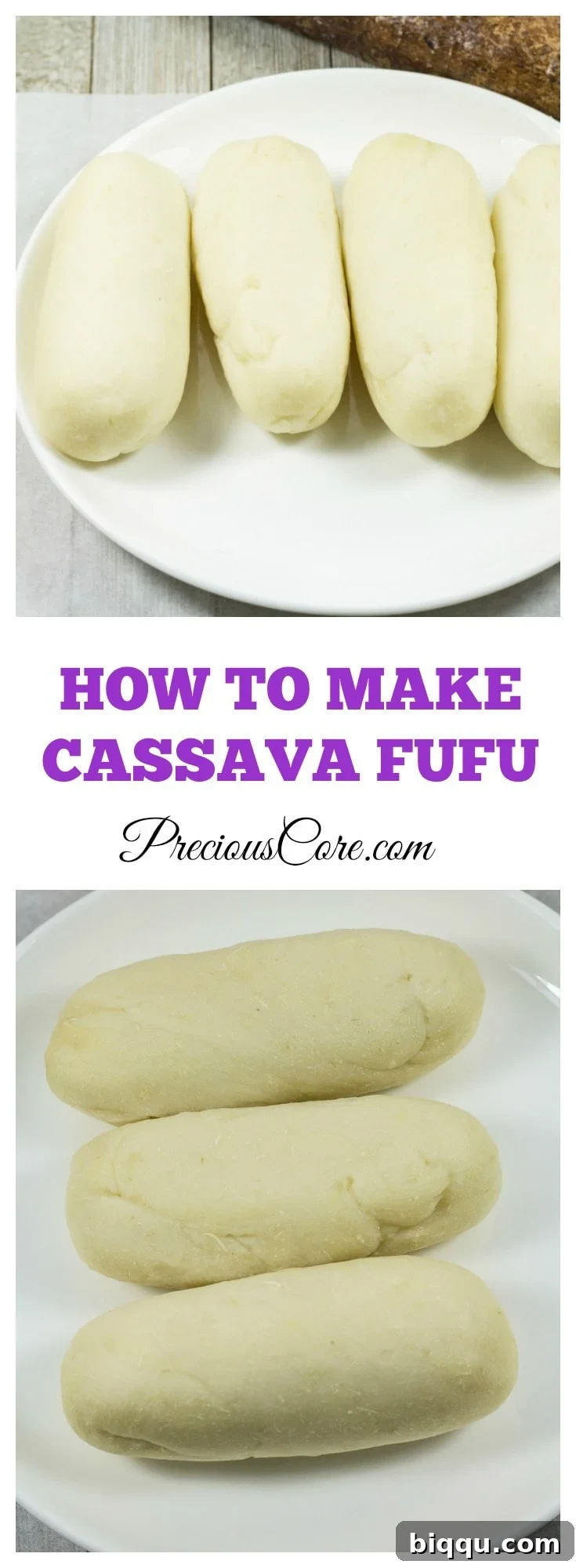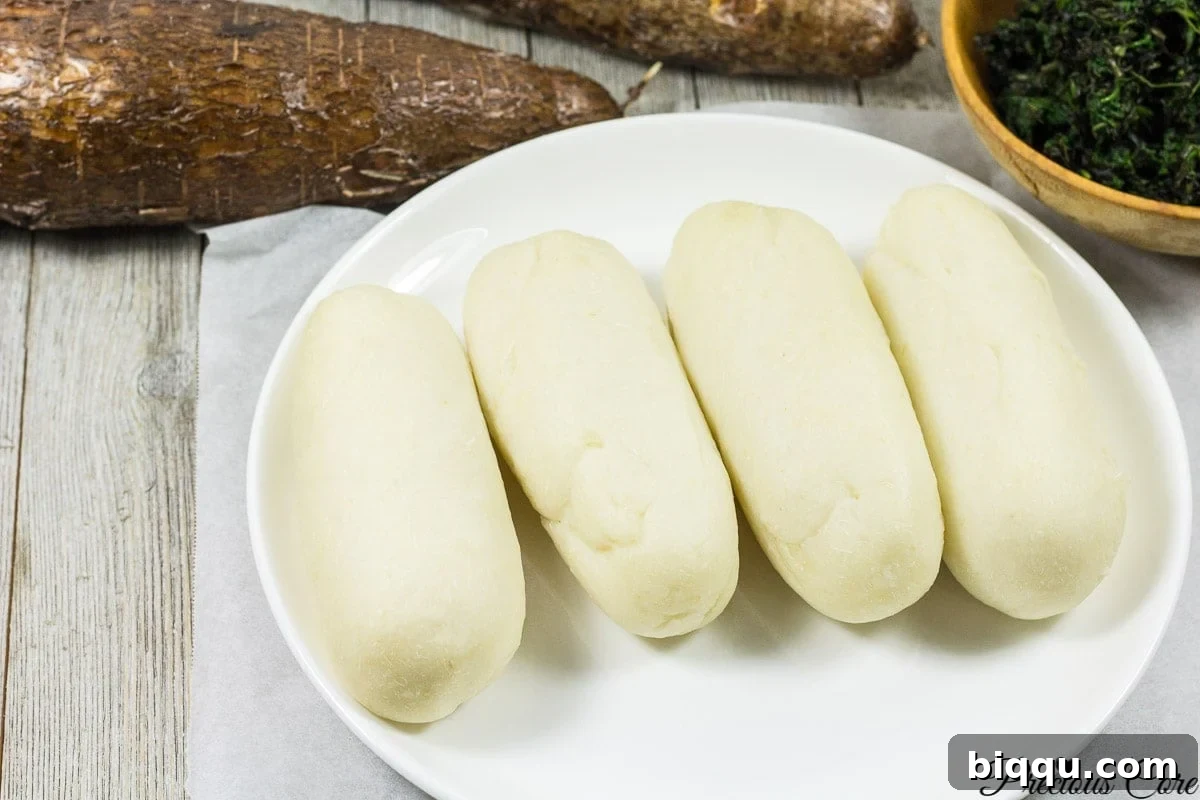
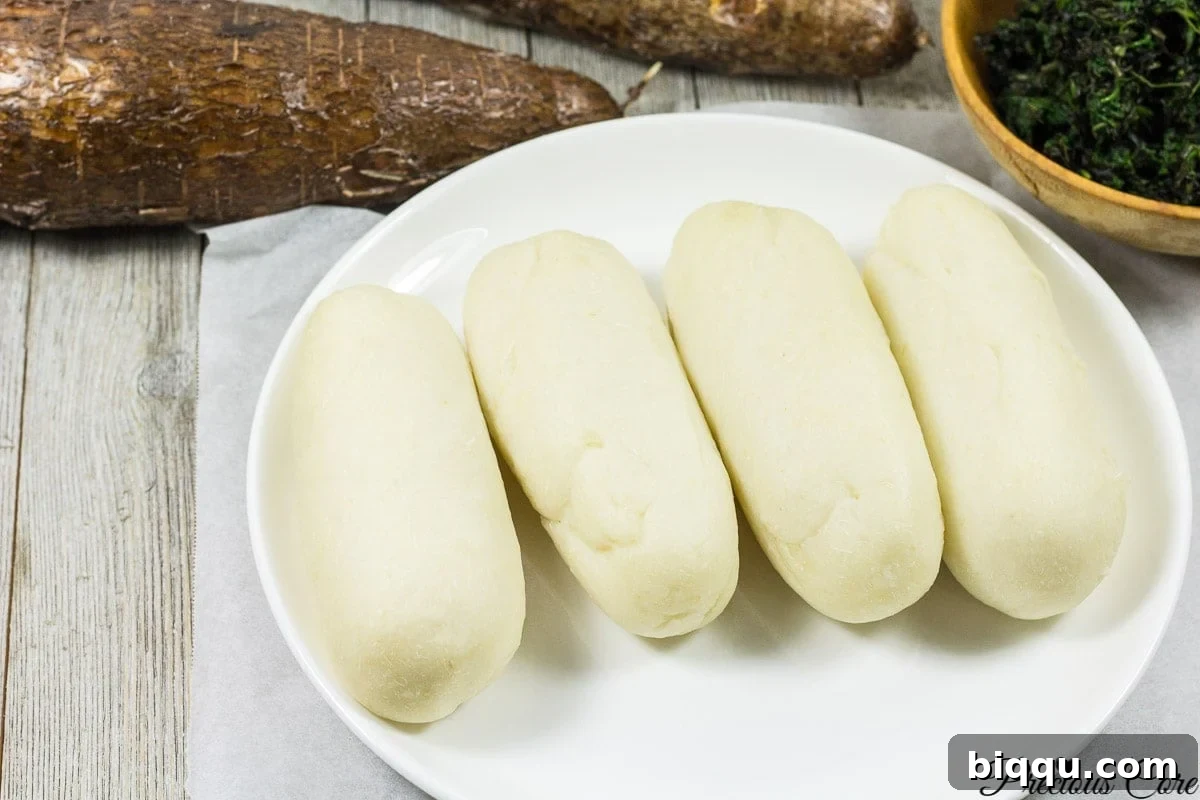
Welcome to the definitive guide on mastering homemade water fufu, also revered as cassava fufu, right from your kitchen! This comprehensive, one-ingredient recipe unveils the traditional art of fermenting cassava (also known as yuca root) to create fufu – a beloved and essential side dish across West and Central African cuisines.
The Heart of African Cuisine: Understanding Fufu
The term “fufu” resonates deeply with the culinary identity of many West African nations, signifying not just a dish but a cultural cornerstone. From the nutty richness of corn fufu and the earthy notes of yam fufu, to the distinct tang of cassava fufu (water fufu), this staple is a testament to the region’s rich gastronomic heritage. Fufu, often spelled foo foo or fou fou, is a starchy accompaniment typically enjoyed with a variety of vibrant soups, flavorful stews, or nourishing vegetable dishes. While various types of fufu exist, those made from cassava tubers hold a special place, particularly in countries like Nigeria and Cameroon.
Cassava Fufu: A Regional Delicacy
In Nigeria, the cassava-based version is commonly known as Akpu or Cassava Fufu, prepared with specific regional nuances. Meanwhile, in Cameroon, this same preparation is affectionately called Water Fufu. Regardless of its local name, the essence remains the same: a soft, dough-like consistency that serves as the perfect canvas for rich and savory sauces.
The Ancient Art of Fermentation: Crafting Water Fufu
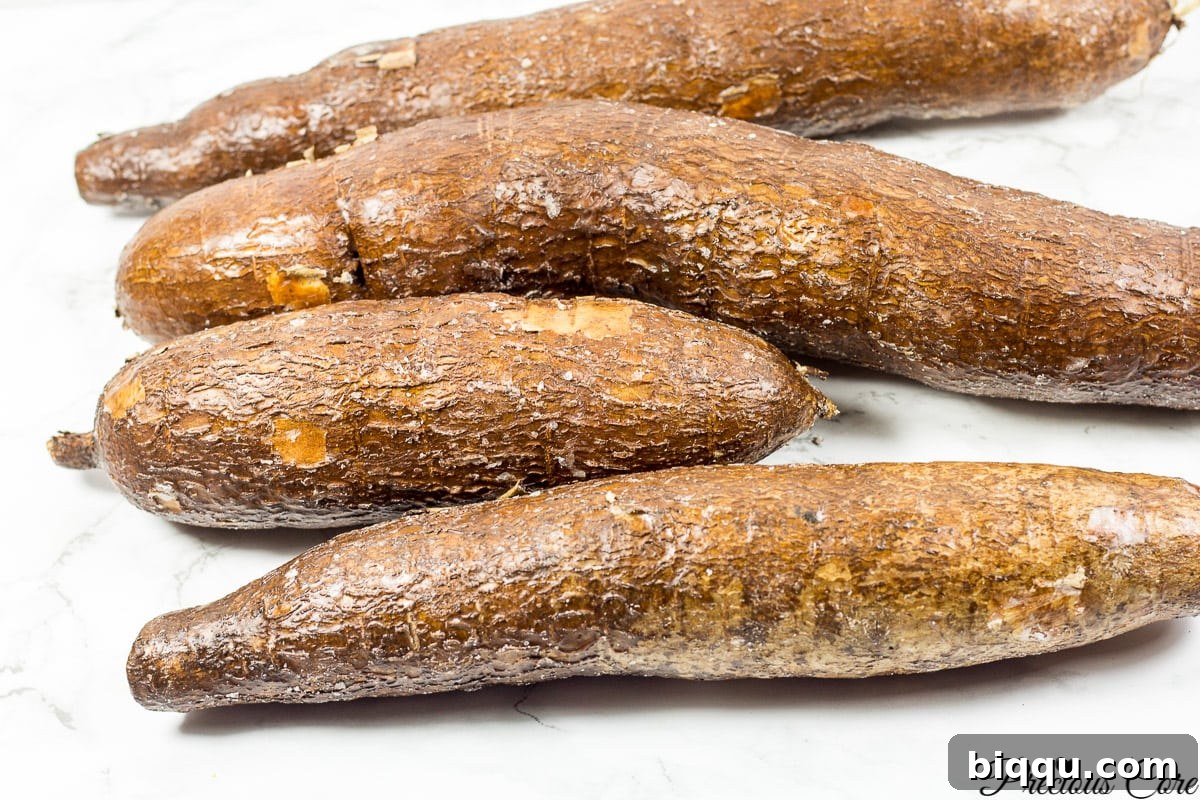
The journey to creating authentic water fufu begins with the crucial step of fermenting cassava root, also known as yuca. This age-old process is not merely about preservation; it’s a transformative step that detoxifies the cassava, enhances its flavor profile, and improves digestibility. The fermentation imbues the cassava with a characteristic pungent aroma during processing, which mellows significantly upon cooking. After fermentation, the softened cassava is meticulously ground into a smooth puree, from which excess liquid is carefully drained. This refined puree is then cooked to perfection, yielding a delicious fufu with a subtly tangy, mild flavor that is truly unique.
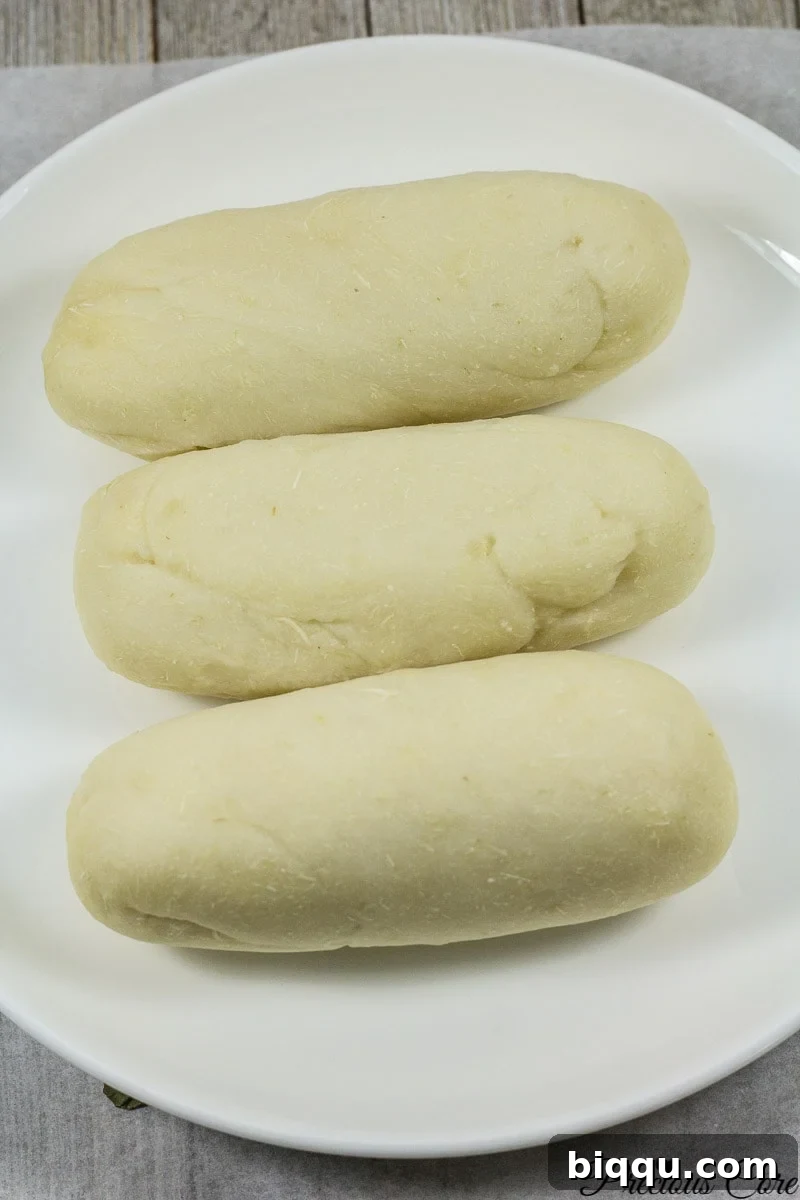
Draining the cassava puree, ideally through a fine-mesh cheesecloth or a clean kitchen towel, streamlines the preparation and ensures a consistent texture. The resulting dough is then ready to be cooked into its familiar, resilient form, poised to be savored with a soup of your choosing.
Perfect Pairings: What to Serve with Water Fufu
Water fufu’s mild and slightly tangy profile makes it an incredibly versatile accompaniment for a diverse array of West and Central African soups and stews. In Cameroon, the most iconic pairing is with Eru, a robust vegetable stew featuring waterleaf and okazi leaves, often enriched with smoked fish or meat. The marriage of water fufu and eru is an exquisite symphony of flavors and textures that defines Cameroonian culinary excellence.
Beyond Eru, water fufu is wonderfully complemented by other popular choices such as the rich and viscous Ogbono Soup, the subtly slimy yet nutritious Okra Soup, or the comforting and hearty Groundnut Soup.
In Nigeria, cassava fufu finds its perfect match with equally diverse and flavorful soups. It’s a staple alongside the ever-popular Egusi Soup, a vibrant concoction made from melon seeds, and the distinctively bitter yet beloved Bitter Leaf Soup. Of course, Ogbono Soup is also a firm favorite. The combination of cassava fufu and Nigerian Egusi Soup is particularly cherished, creating a truly satisfying and deeply traditional meal.
The Unique Taste and Texture of Cassava Fufu
Describing the exact taste of cassava fufu can be a delightful challenge. It possesses a singular flavor, inherently derived from the ground and fermented cassava. The fermentation process contributes a subtle tanginess that sets it apart from other fufu varieties, adding a layer of complexity without overpowering the accompanying soup. Its signature characteristic is a distinctively rubbery, yet pliable, texture. This unique chewiness is what makes fufu such an ideal partner for scooping up thick, rich vegetable soups and stews, allowing the diner to fully immerse themselves in every spoonful.
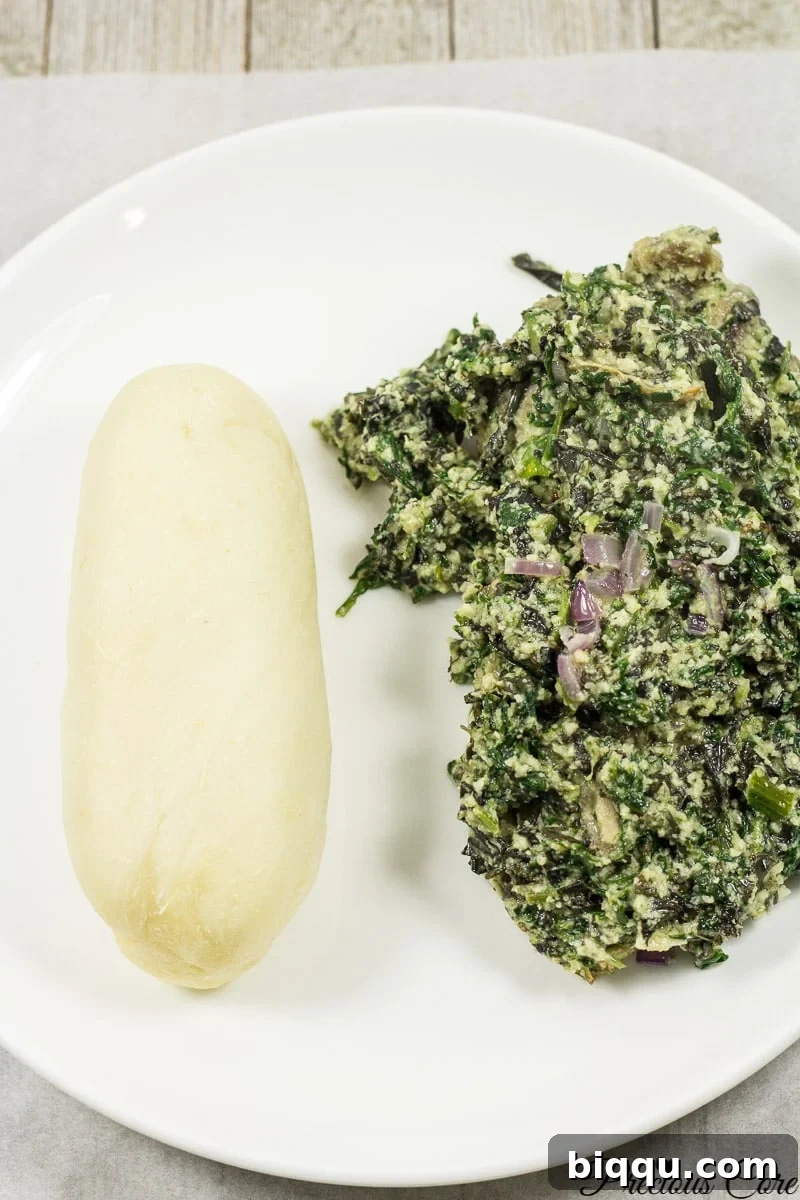
For instance, I recently savored homemade water fufu with Ndole, a flavorful Cameroonian bitterleaf stew – a truly exquisite pairing! While my initial intention was to photograph it with Eru, the irresistible aroma of the freshly prepared Eru meant it was devoured before it could pose for the camera. Trust me, the Fufu and Eru combination is simply too good to resist!
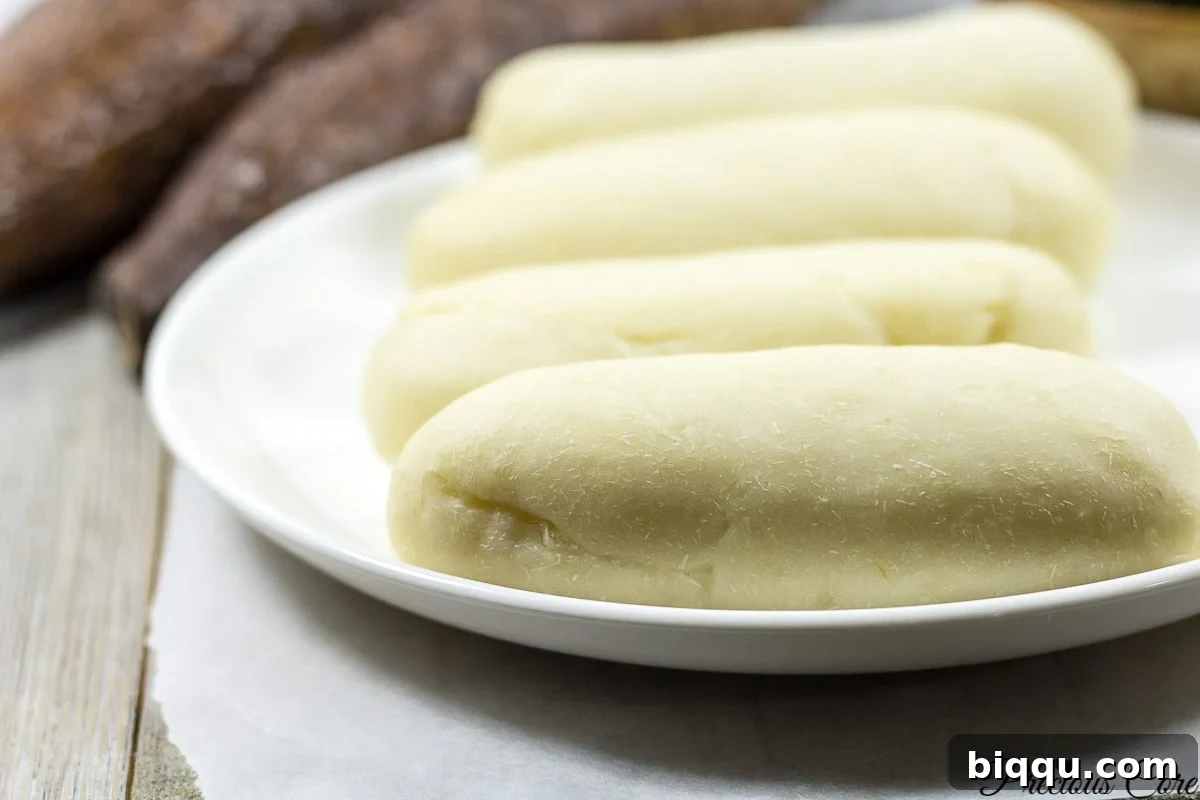
Making water fufu from scratch is a rewarding culinary adventure, and I’ve created a detailed video to guide you through every step. This visual tutorial provides invaluable tips and insights, ensuring your homemade water fufu turns out perfectly every time. As long as you have access to fresh cassava, you possess everything needed to create your own authentic cassava fufu, no matter your location.
Learn to Make Water Fufu with Our Video Guide:

How to Make Water Fufu from Scratch – Cassava Fufu
Prep: 30 mins
Cook: 15 mins
Total: 45 mins
Servings: 5 servings
Pin Recipe
Rate
Print Recipe
Ingredients
- 6 large tubers of cassava (yuca root)
- 2 teaspoons baking soda (optional)
Instructions
-
Peel the cassava. Cut each tuber into 5 or 6 pieces, then split each piece where you can see the fiber. Use a knife to lift up the skin from the divided cassava, then use your knife or hand to remove the entire skin.
-
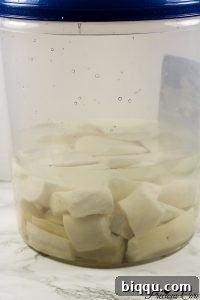
Wash the cassava thoroughly and place it in a large container. Pour in water to completely cover the cassava, then add two teaspoons of baking soda. Cover the container and allow it to ferment in a warm corner for 3-5 days. To check if the cassava is well fermented, press with your fingers; if it is soft, it is ready. Note that not all pieces may be very soft, but if most are, you are good to go.

-
Strain the fermented cassava to remove excess water. Then place it in a blender or food processor and process into a smooth puree. You may need to do this in two batches, depending on the size of your appliance.
-
Now, remove any fibrous strands you see in the puree. You can do this by either running your hand through the puree and picking out any fibers, or by adding water to the puree and then passing it through a strainer. It is recommended to use your hand if you intend on cooking the fufu right away.
-
Pour the puree into a clean kitchen towel or cheesecloth and squeeze firmly to remove excess water. If you added more water to help pass the fufu through a strainer, you might need to squeeze longer. Alternatively, tightly tie the kitchen cloth containing the puree and place it in the kitchen sink with a heavy object on top to help push out the remaining water. Once the excess water is out, your fufu is ready to be cooked!
To cook the cassava fufu:
-
Place the raw fufu in a pot, then run through it with your hands to dissolve any excess lumps. Add a quarter cup of water and mix thoroughly to form a paste.
-
Place the pot on medium-high heat, then cover and let it rest for two minutes. Begin stirring vigorously with a wooden spoon, mixing hard enough to dissolve any lumps that form as it cooks.
-
Add water as needed (about 1 cup in total) while continuously stirring to ensure that the fufu achieves the desired pliable consistency and is not too firm. Please see the video for a visual guide on the ideal texture. Keep mixing on heat until the fufu transforms from bright white to an off-white color. It is ready when it reaches this characteristic off-white hue.
-
Turn off the heat, then mold the fufu into individual portions (shaped like small logs or smooth balls) if you wish, for easy serving.
-
Enjoy with any soup of choice! I particularly love savoring it with eru or ogbono soup.
Notes
Nutrition
Calories: 783kcal | Carbohydrates: 186g | Protein: 7g | Fat: 1g | Saturated Fat: 0.4g | Polyunsaturated Fat: 0.2g | Monounsaturated Fat: 0.4g | Sodium: 506mg | Potassium: 1327mg | Fiber: 9g | Sugar: 8g | Vitamin A: 64IU | Vitamin C: 101mg | Calcium: 78mg | Iron: 1mg
Additional Info
Course: Main Course
Cuisine: African
Calories: 783
Tried this recipe?Mention @preciouscore or tag #PreciousCore!