
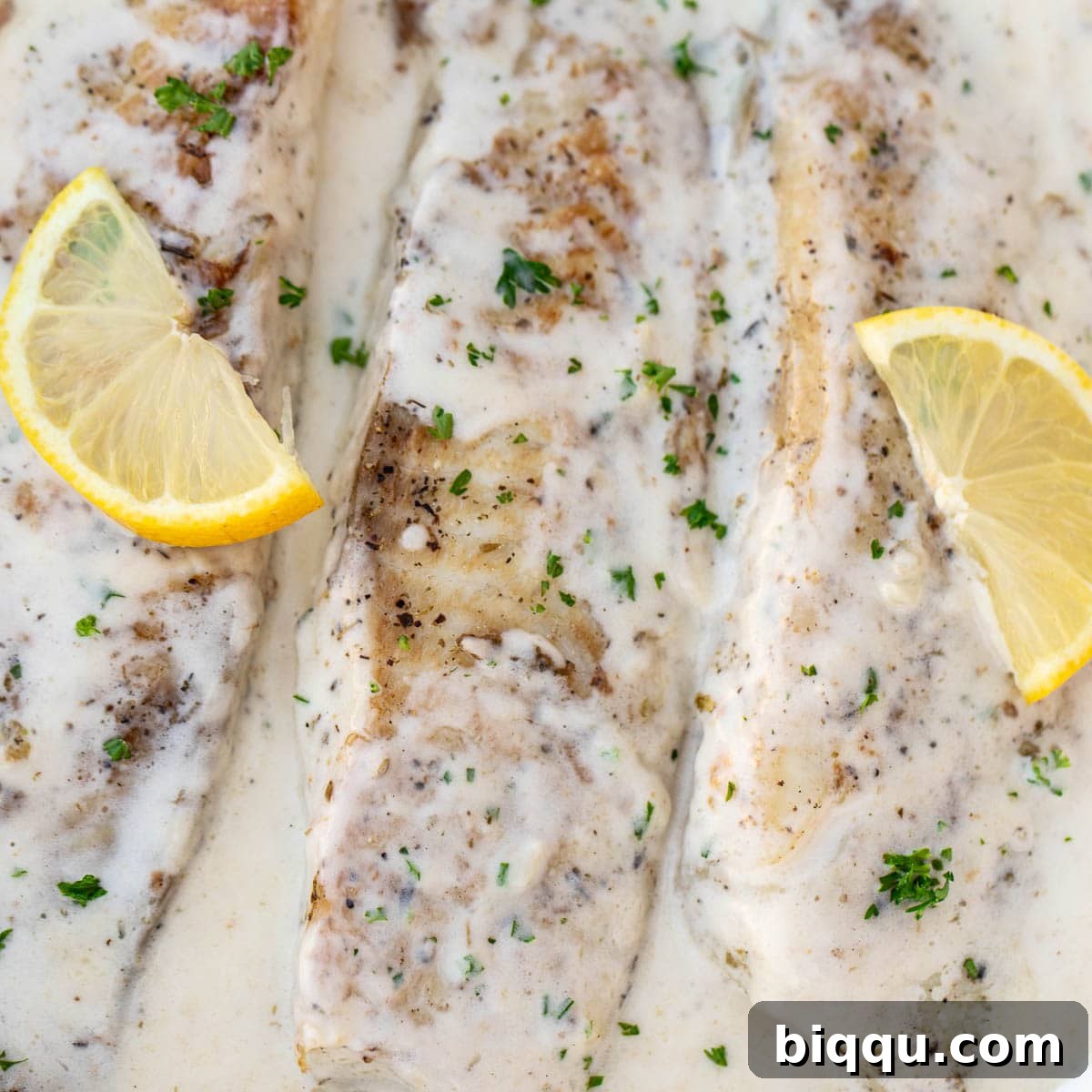
Prepare to delight your taste buds and impress your loved ones with this incredible recipe for Fish in White Sauce! Whether you’re planning an intimate dinner party, seeking a quick yet gourmet weeknight meal, or simply craving something new and exciting, this 25-minute recipe is an absolute game-changer. It’s so effortlessly delicious, you’ll want to keep it in your regular cooking rotation. Plus, if you’re feeding a larger crowd, you can easily double the ingredients to serve more people without compromising on flavor or cooking time!
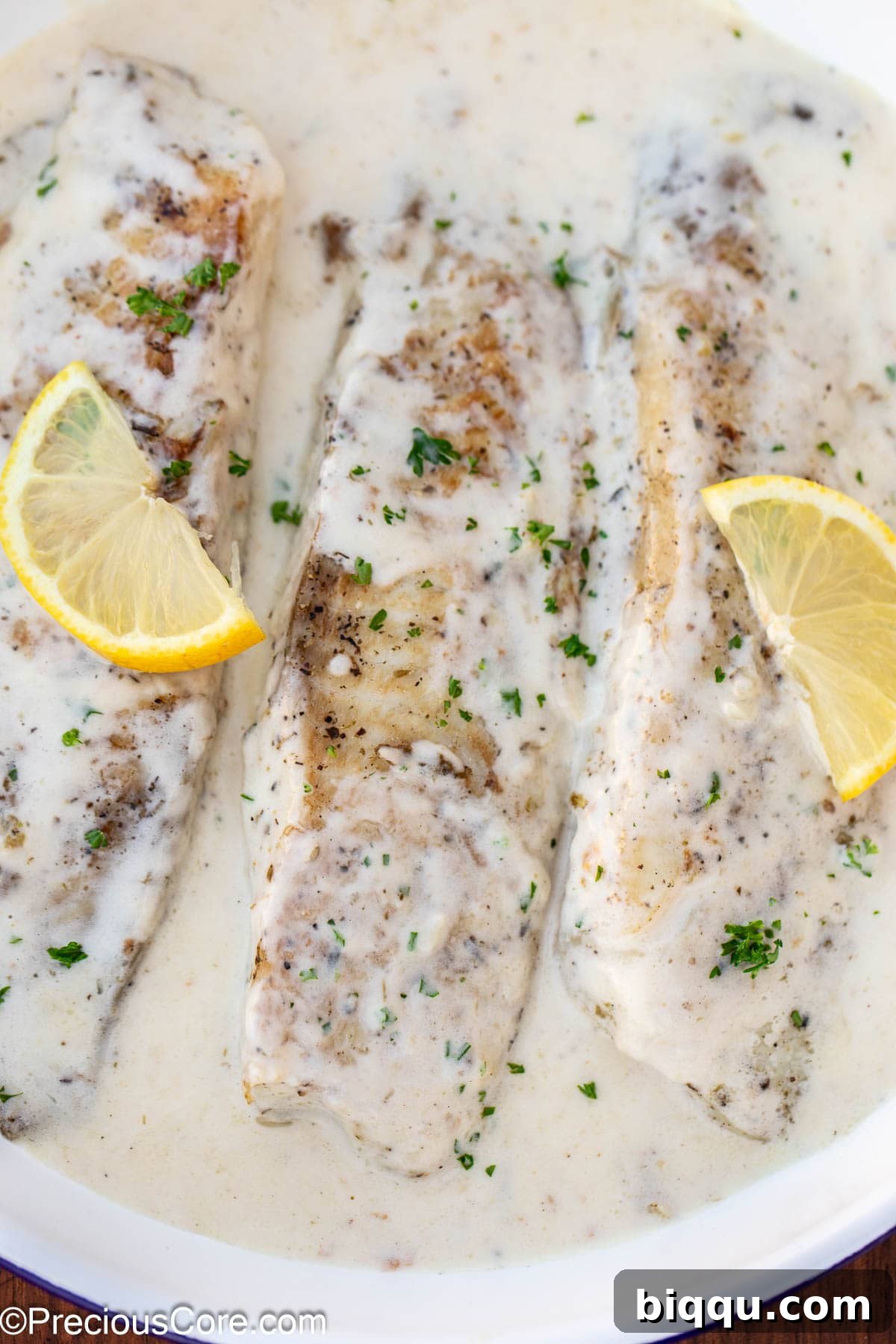
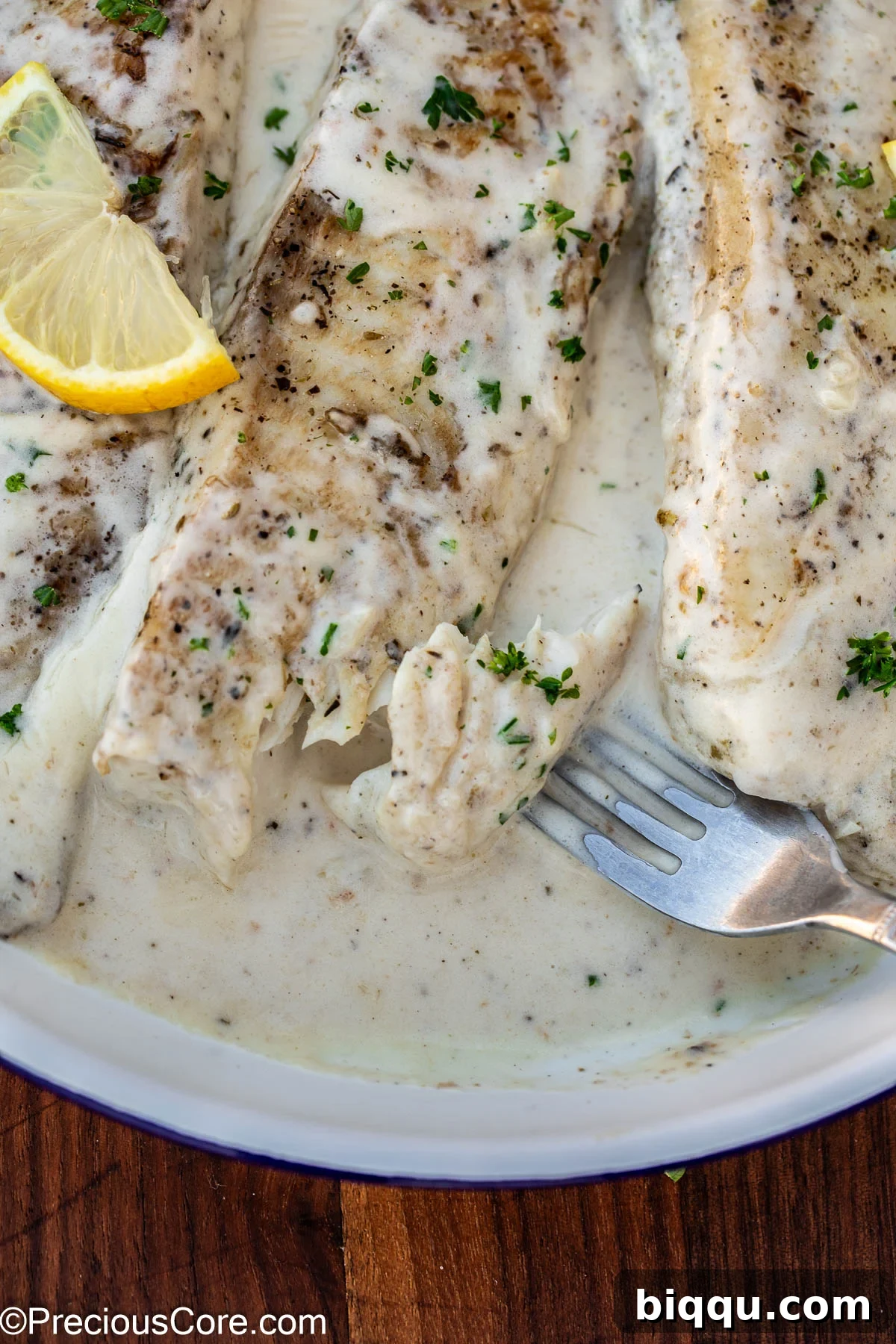
This entrée promises a culinary journey where tender, flaky fish fillets are exquisitely coated in a rich, vibrant, and zesty lemon cream sauce. Each bite delivers a harmonious blend of flavors, with subtle hints of aromatic butter, pungent garlic, fresh parsley, and bright citrus juice perfectly complementing the mild, delicate taste of the tilapia. It’s a dish that feels incredibly luxurious and complex, yet is surprisingly simple to create, proving that gourmet meals don’t require hours in the kitchen.
One of the many wonderful aspects of this Fish in White Sauce recipe is its incredible versatility when it comes to serving. It pairs beautifully with a wide array of side dishes, allowing you to tailor your meal to any preference or occasion. Imagine serving it alongside a fragrant Garlic Herb Rice for an aromatic and satisfying combination, or with crisp Sautéed Vegetables for a lighter, healthier option. Pasta lovers will rejoice at the thought of the creamy sauce coating their favorite noodles, while those who enjoy classic comfort food will find it heavenly with velvety Buttermilk Mashed Potatoes. For a fresh contrast, a simple Lettuce Salad adds a refreshing crunch. In our home, my daughters adore it with pasta, while my husband prefers it with rice – a testament to its universal appeal and a true family-pleasing dinner!
Fish-based meals are a fantastic way to introduce variety into your diet and offer a lighter alternative when you need a break from traditional meats. If you’re eager to explore more delightful fish recipes, I highly recommend trying my Pan Seared Tilapia, a quick and flavorful classic. For a buttery garlic kick, my Garlic Butter Tilapia is always a hit, and for those who love bright, tangy notes, the Lemon Butter Tilapia is simply irresistible. Each recipe showcases how versatile and delicious fish can be, making healthy eating both easy and enjoyable.
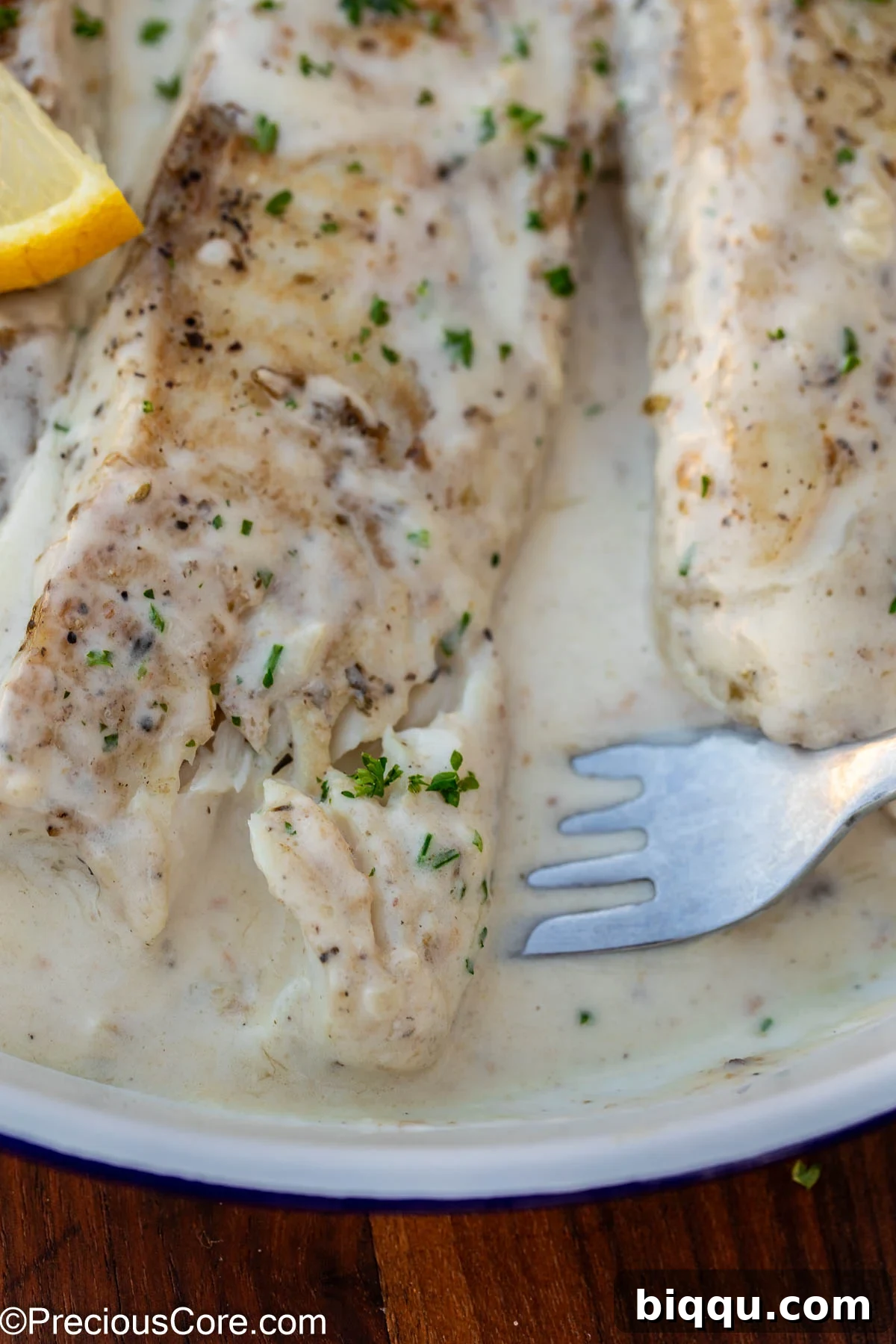
Table of Contents
- Why You’ll Love This Fish in White Sauce Recipe
- Essential Ingredients for Your Creamy Fish
- How To Make Fish In White Sauce: A Detailed Guide
- 1. Prepare and Season the Tilapia Fillets
- 2. Sear the Fish to Golden Perfection
- 3. Remove Fish and Prepare for Sauce
- 4. Begin the Creamy White Sauce Base
- 5. Whisk in Liquids and Thicken
- 6. Simmer Fish in the Rich Sauce
- 7. Final Seasoning and Garnish
- Substitutions and Creative Variations
- Expert Tips for Perfect Fish in White Sauce
- What Kind Of Fish Should I Use?
- Recipe Frequently Asked Questions
- More Recipes With Creamy Sauce
- Perfect Pairings: Serving Suggestions
- More Easy Dinner Recipes
- Fish In White Sauce Recipe Card
Why You’ll Love This Fish in White Sauce Recipe
This isn’t just another fish recipe; it’s a culinary triumph that ticks all the boxes for a fantastic meal:
- A Powerhouse of Protein! In today’s busy world, finding meals that are both delicious and nutritious can be a challenge. This recipe delivers a satisfying dose of protein, with one cooked fillet typically containing between 21 to 26 grams. This makes it an ideal choice for a dinner that will not only satisfy your hunger but also nourish your body after a long day. It’s perfect for supporting muscle recovery and keeping you feeling full longer.
- Dinnertime in a Flash – Ready in 25 Minutes. If you’re like me, a quick weeknight meal is a non-negotiable. This recipe allows you to have a mouth-watering, restaurant-quality dinner on the table in less than 30 minutes. The efficiency comes from the quick-cooking nature of fish and the simple, yet elegant, sauce preparation. It’s truly unbeatable when time is of the essence but flavor is still a priority!
- Budget-Friendly Yet Luxurious. Eating well shouldn’t break the bank. Tilapia, the star of this dish, is generally an inexpensive and widely available fish. This recipe allows you to create a dinner that feels incredibly luxurious and indulgent, thanks to the flaky texture of the fish and the insanely delicious, rich sauce, all without putting a strain on your budget. It’s proof that sophisticated flavors can be achieved with accessible ingredients.
- Impressively Easy to Master. Despite its elegant presentation and rich flavor profile, this recipe is remarkably simple to follow, even for novice cooks. The steps are straightforward, and the ingredients are common, ensuring a stress-free cooking experience. You’ll be able to create a dish that looks and tastes like it came from a gourmet kitchen with minimal effort.
Essential Ingredients for Your Creamy Fish
While the full, detailed list of ingredients is conveniently provided in the recipe card below, let’s highlight some of the primary components that make this dish truly special. Understanding the role each ingredient plays will help you appreciate the balanced flavors and textures of this exquisite meal:
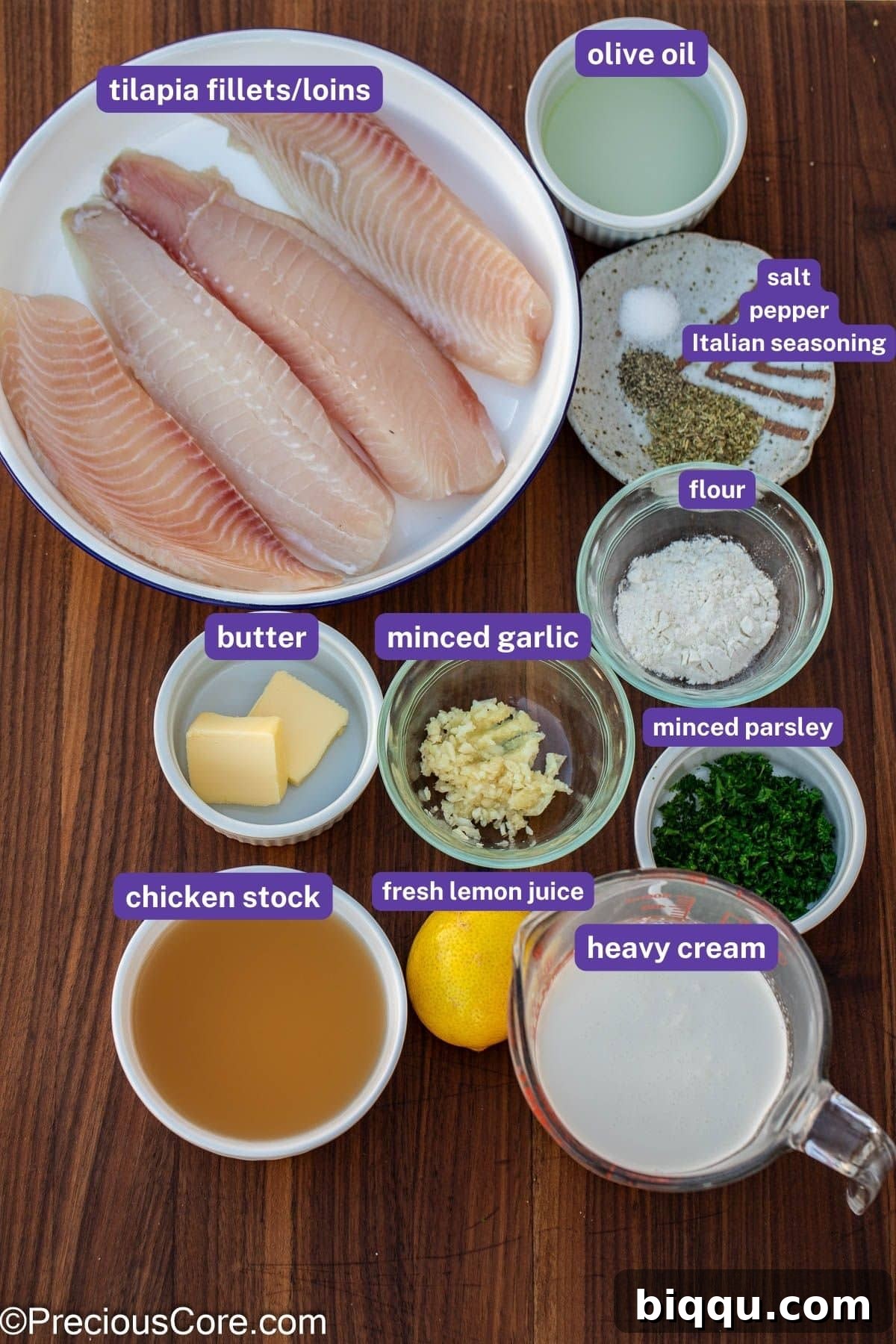
- Tilapia Fillets: Known for its mild sweetness and delicate flavor, tilapia works beautifully as the canvas for our rich white sauce. Its subtle taste allows the other ingredients to shine through without being overpowered. Using room temperature fillets is a crucial tip for ensuring uniform cooking, leading to perfectly flaky fish. While tilapia loins, which are thicker cuts, were what I found at my local grocery store and worked wonderfully, standard fillets are also excellent.
- Olive Oil: A staple in any kitchen, olive oil serves a vital purpose here by preventing the fish from sticking to the pan and aiding in achieving that perfect golden sear. Don’t be tempted to skip it, as it contributes to both the cooking process and the overall flavor.
- Fresh Lemon Juice: This is the secret weapon that brightens the entire dish! Added towards the end of cooking, fresh lemon juice cuts through the richness of the cream, imparting a vibrant, zesty finish that elevates the overall taste of the sauce and the fish. Always opt for fresh over bottled for the best flavor.
- Garlic: The foundation of so many incredible sauces, fresh minced garlic is essential. When sautéed in butter, it transforms, releasing a nutty, fragrant aroma that pairs exquisitely with the fish and forms a deeply flavorful base for the creamy sauce.
- Heavy Cream: This is where the magic of the “white sauce” truly comes to life. Heavy cream provides the luxurious, velvety texture and rich flavor that defines this dish. It creates a decadent mouthfeel that milk simply cannot replicate, so it’s a key ingredient for achieving the desired creamy consistency.
- Unsalted Butter: Beyond its role in cooking the garlic, butter adds a layer of richness and depth to the sauce, contributing to its smooth texture and indulgent flavor.
- All-Purpose Flour: A small amount of flour is used to create a roux with the butter and garlic. This is crucial for thickening the sauce, giving it body and a glossy finish.
- Chicken Stock: Providing a savory base, chicken stock enhances the overall depth of flavor in the sauce. It balances the richness of the cream and butter, creating a more complex profile.
- Salt, Black Pepper, and Italian Seasoning: These pantry staples are used to season the fish, creating a flavorful crust during searing, and are later adjusted in the sauce to perfection. Italian seasoning adds a wonderful aromatic herb blend.
Top Tip: Always ensure the fish you are using is fresh. Fresh fish will have a mild, clean aroma and firm, translucent flesh. Avoid any fish with a strong “fishy” smell or dull appearance.
How To Make Fish In White Sauce: A Detailed Guide
You truly don’t need any advanced culinary skills to whip up this impressive Fish In White Sauce. The steps are straightforward, and the results are consistently delicious. Here’s a detailed breakdown of the easy process involved:
1. Prepare and Season the Tilapia Fillets
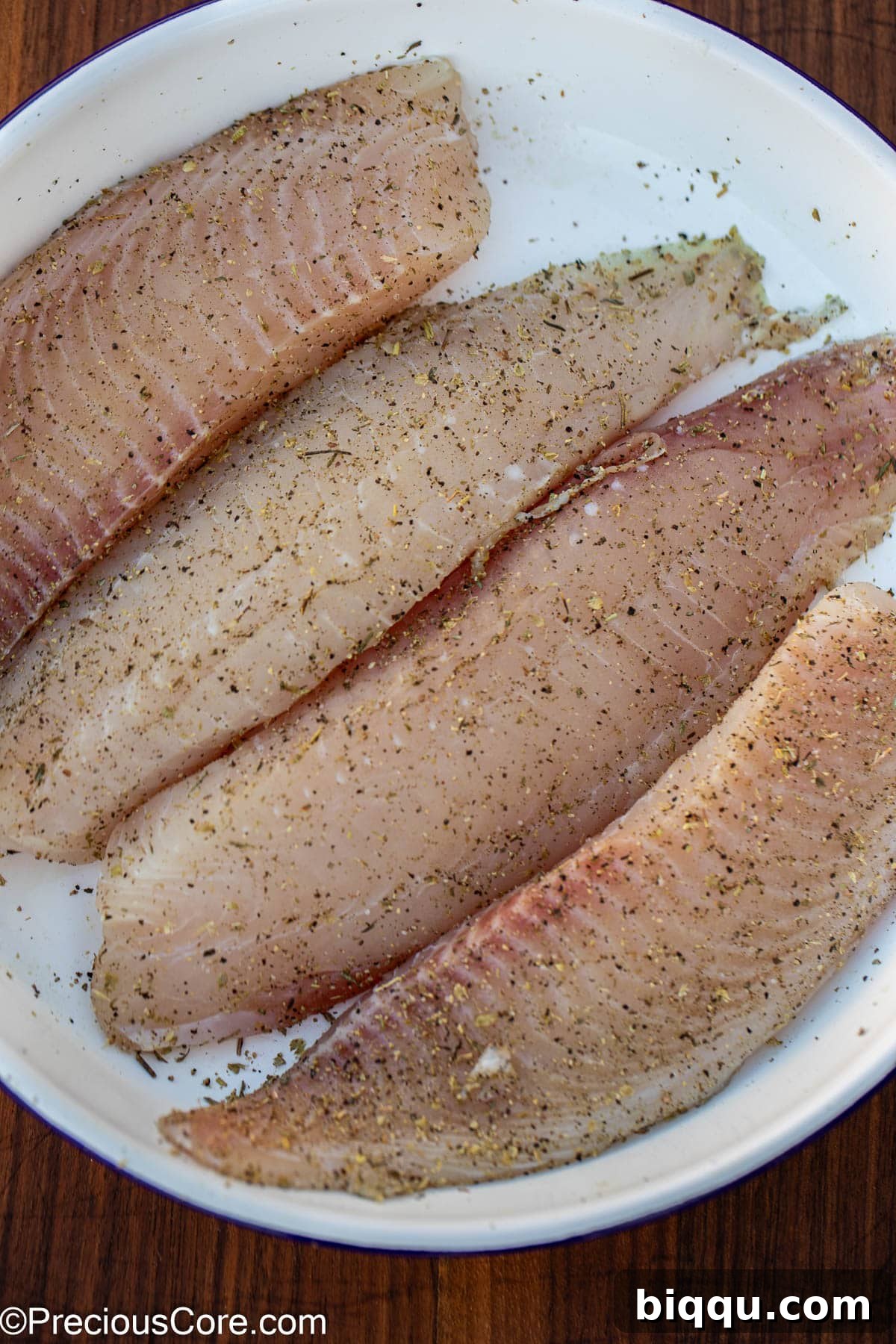
Begin by gently patting your room temperature tilapia fillets (or loins) thoroughly dry with paper towels. This crucial step helps remove excess moisture, which is key to achieving a beautiful, golden-brown sear and prevents the fish from steaming instead of frying. Once dry, generously season both sides of the fillets with salt, black pepper, and Italian seasoning. Ensure an even coating to infuse flavor throughout the fish.
2. Sear the Fish to Golden Perfection
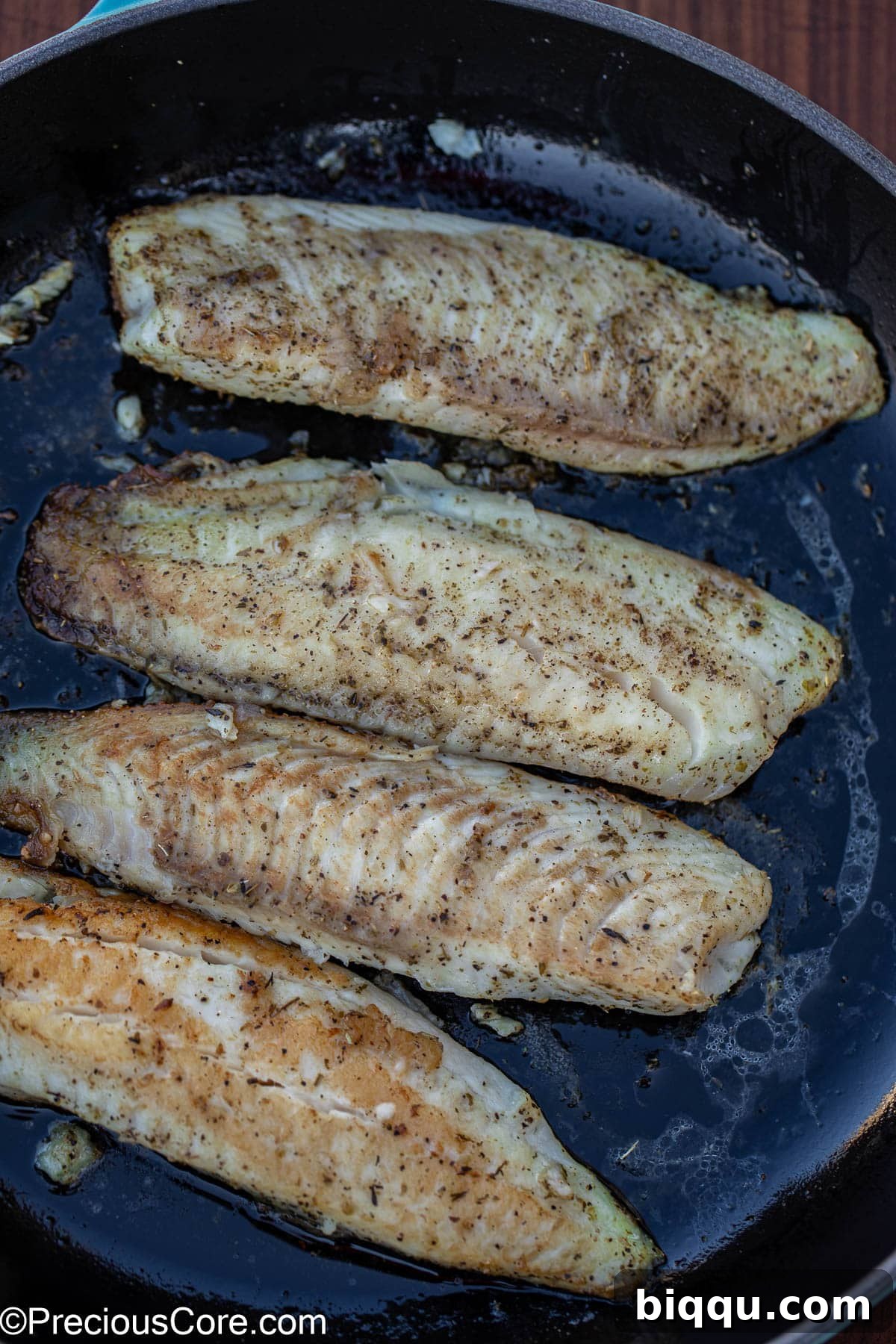
Heat the olive oil in a large skillet (ideally 12 inches wide) over medium-high heat for about 2 minutes. You want the oil to be shimmering but not smoking. Carefully add the seasoned tilapia fillets to the hot pan, making sure not to overcrowd the skillet. Cook on one side for approximately 3 minutes, allowing a beautiful golden crust to form. The goal is to cook until the edges start to look opaque and the fish releases easily from the pan.
3. Lightly Cook the Fish, Flipping Halfway Through
Using a fish spatula, gently flip each fillet to the other side and cook for an additional 2 minutes. The fish should be mostly cooked through but still slightly underdone, as it will finish cooking in the sauce. This searing creates a delicious texture and locks in flavor. Once lightly cooked, carefully remove the fish from the pan and set it aside on a plate. Don’t worry about any bits left in the pan – these will add flavor to your sauce!
4. Begin the Creamy White Sauce Base
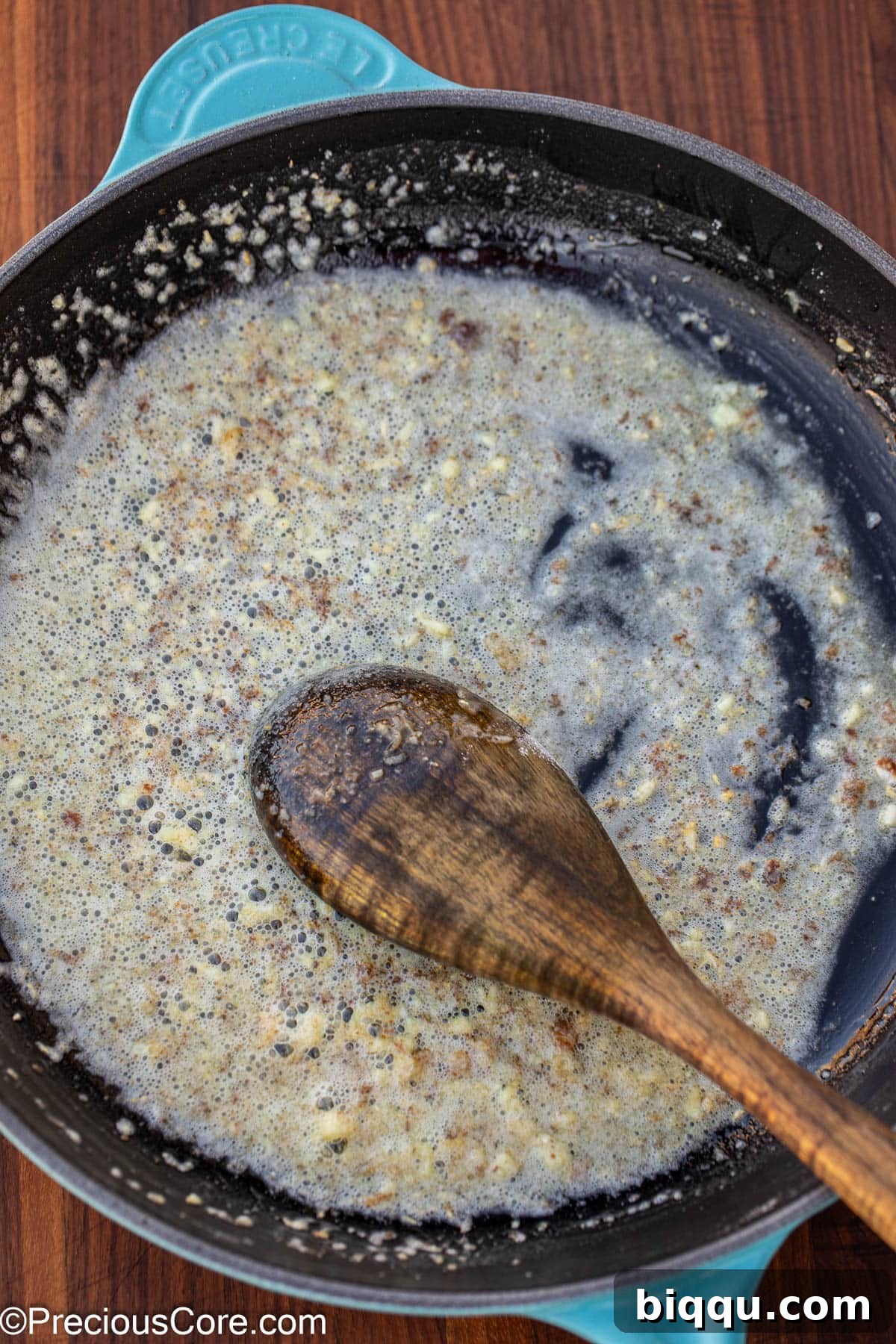
Reduce the heat to medium. Add the unsalted butter to the same skillet where you cooked the fish. Let it melt completely, allowing it to coat the bottom of the pan and pick up any flavorful fond. Once the butter is melted and sizzling gently, add the minced garlic. Stir continuously for about 10 seconds until the garlic becomes wonderfully fragrant and slightly golden, being careful not to burn it. This aromatic foundation is key to a delicious sauce.
5. Stir in Flour and Liquids, Except Lemon Juice
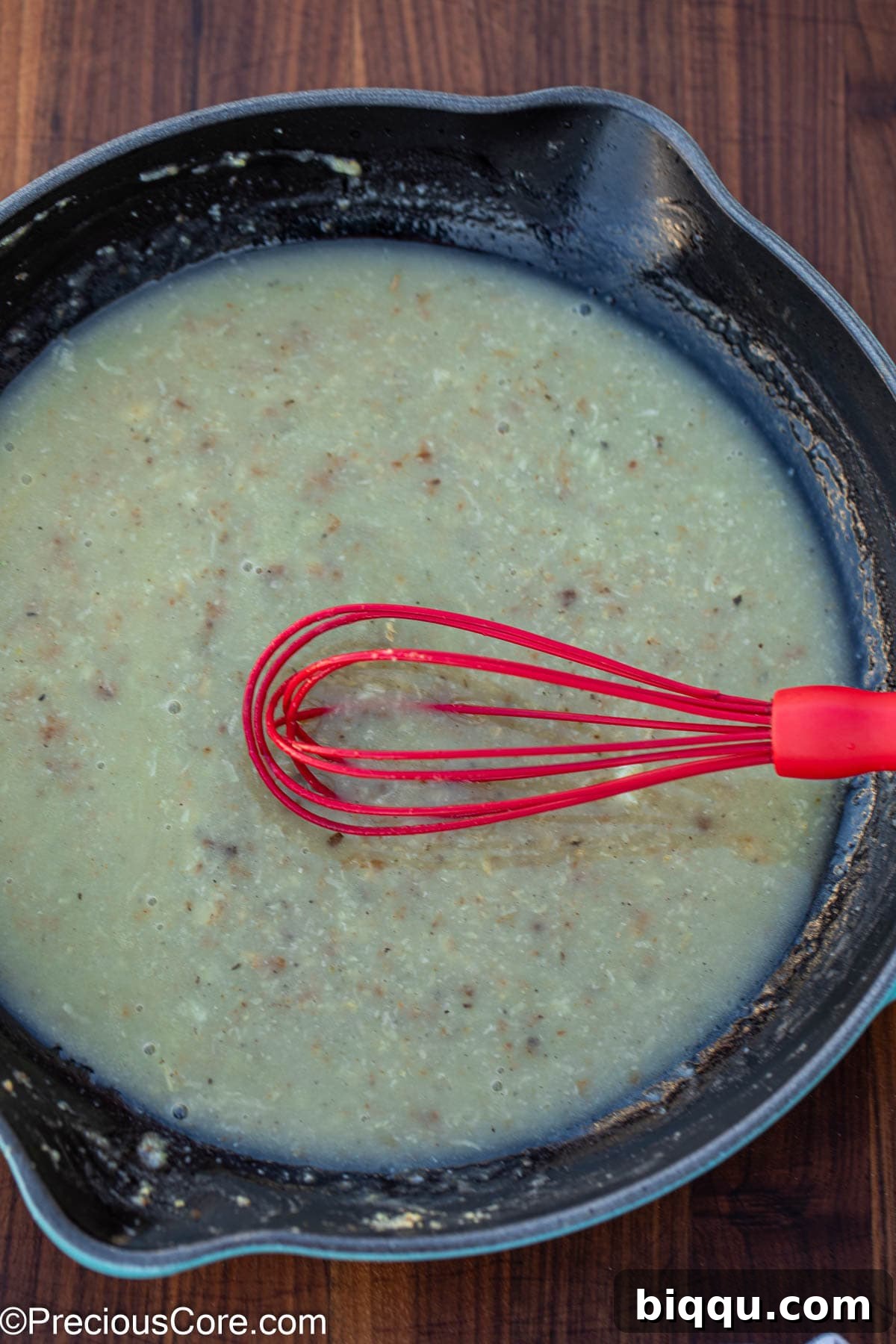
Sprinkle the all-purpose flour into the pan with the butter and garlic. Stir continuously for about 30 seconds to cook out the raw flour taste and create a roux. Gradually whisk in the chicken stock, ensuring no lumps form. Bring the mixture to a gentle simmer, then let it simmer for about 5 minutes, stirring or whisking occasionally. You’ll notice the sauce will begin to thicken and become beautifully glossy. Finally, whisk in the heavy cream and allow it to simmer for another 5 minutes, allowing the sauce to reach a rich, creamy consistency.
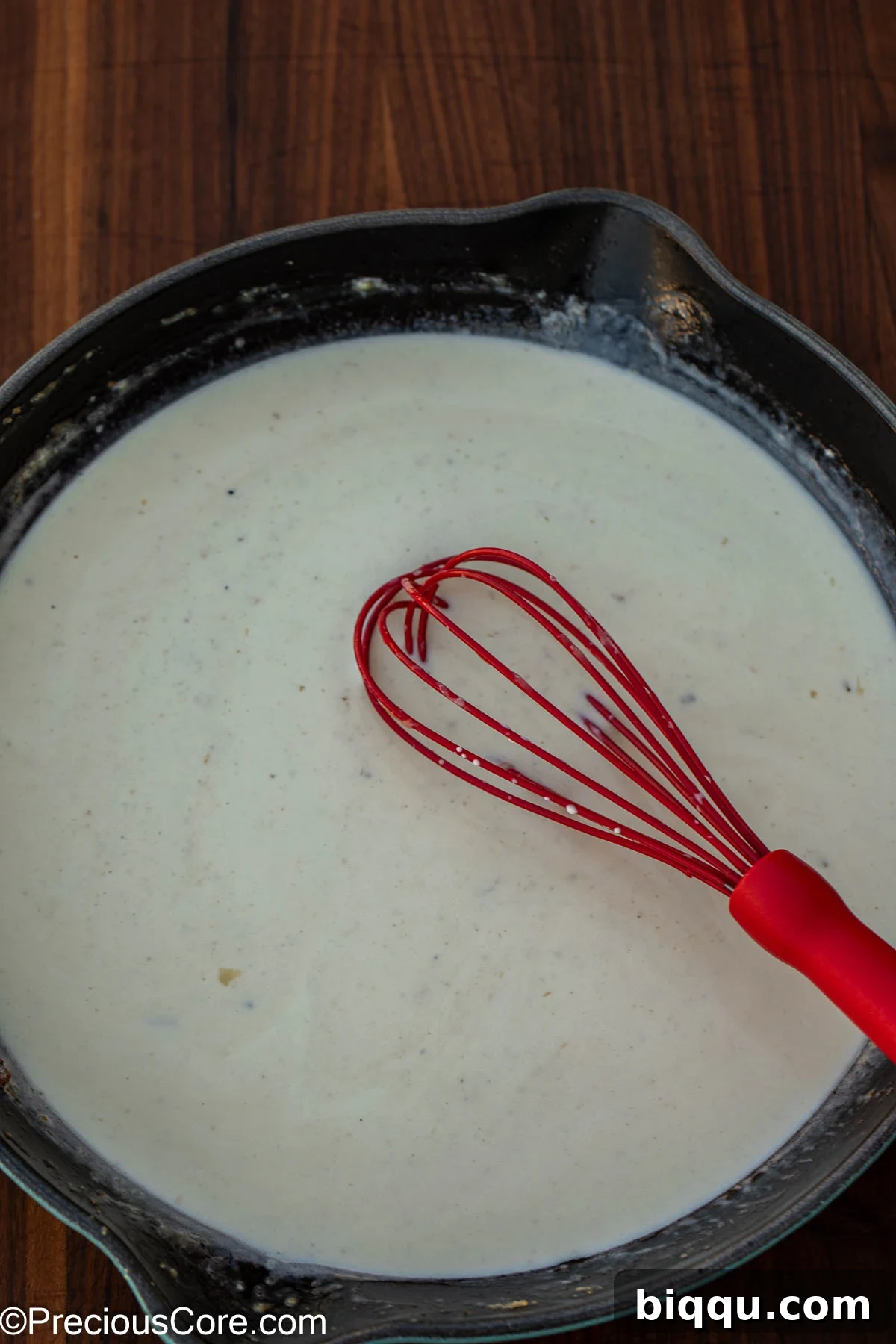
6. Finish Cooking the Fish in the Sauce
Once your luscious white sauce has achieved the desired consistency, carefully return the lightly seared fish fillets to the pan, nestling them gently into the sauce. Allow the fish to simmer in the sauce for an additional 2 minutes. This final simmer ensures the fish finishes cooking through, absorbing the incredible flavors of the creamy lemon-garlic sauce.
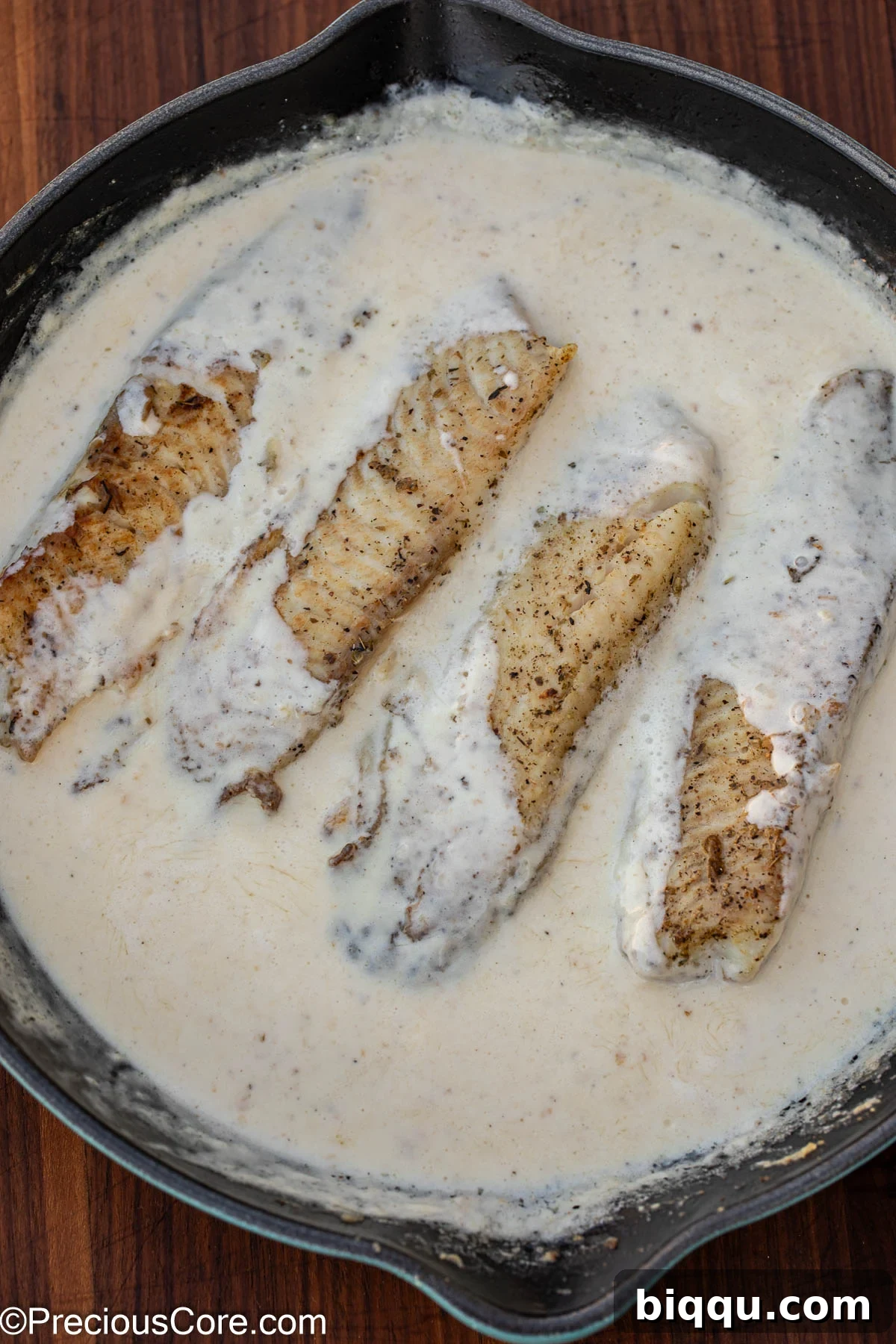
7. Adjust Seasoning, Add Lemon Juice, and Garnish
Before serving, taste the sauce and adjust the seasoning as needed with a pinch more salt or pepper. This is also the moment to add the fresh lemon juice, stirring it in gently. Start with 1 tablespoon and add more to your personal taste – the lemon juice brightens the entire dish and adds a delightful tang. Garnish generously with freshly minced parsley for a burst of color and herbaceous freshness. For an elevated look and flavor, consider adding fresh dill as well, which pairs beautifully with fish. Serve immediately and enjoy your perfectly cooked, flavorful Fish in White Sauce!
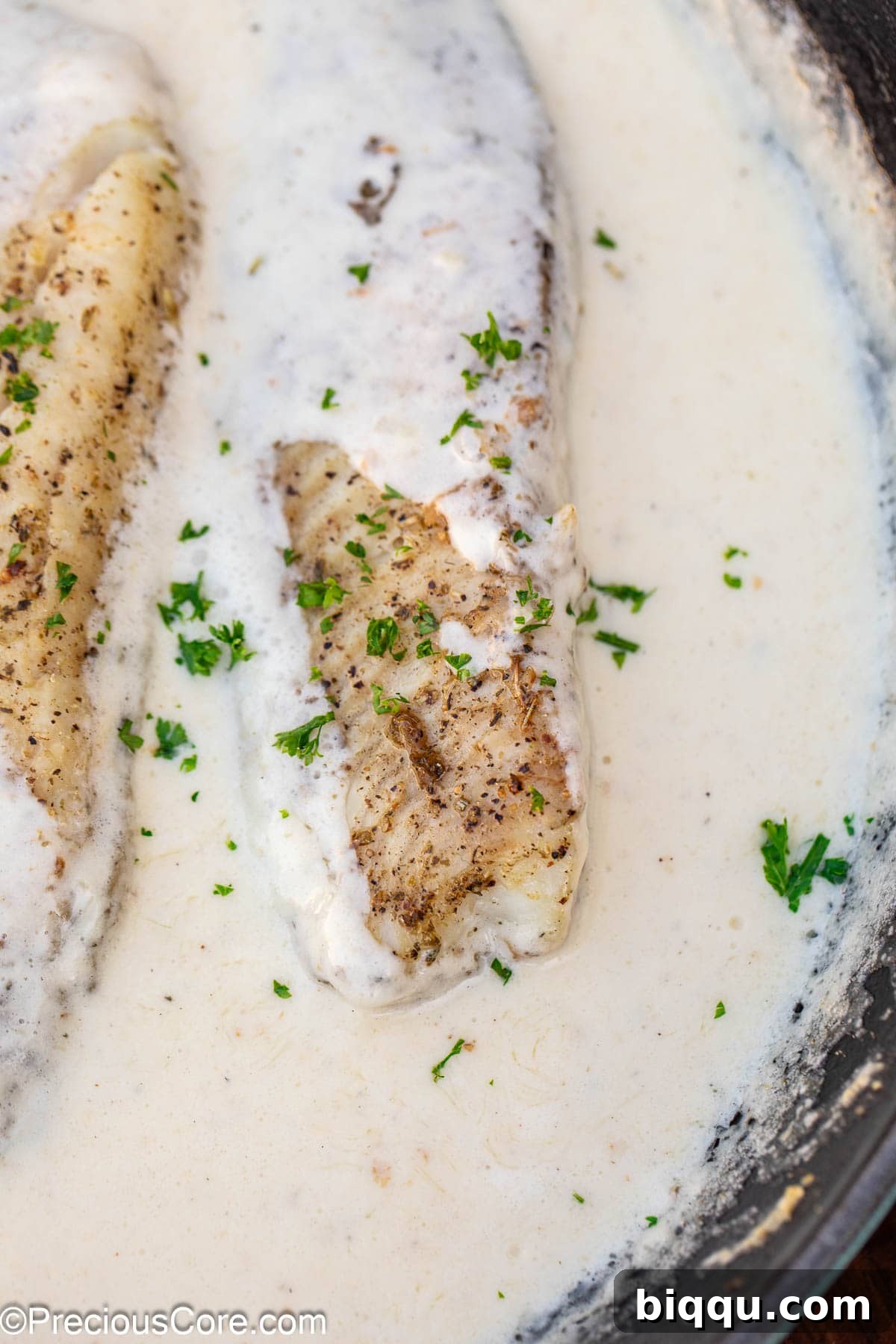
And there you have it – how to make luscious, lemony fish in white sauce. This meal is truly best served warm, straight from the skillet. If you happen to have any leftovers, they should be stored in an airtight container in the refrigerator for up to 3 days. When reheating, gently simmer the creamy lemon butter sauce on low heat, adding a splash more chicken stock or a bit of milk if the sauce has become too thick to restore its perfect consistency.
Chef’s Hint: Fish tends to cook very quickly, so it’s important not to overcook it. The fish is perfectly ready when it flakes easily with a fork, indicating it’s tender and moist. Overcooked fish will be dry and tough.
Substitutions and Creative Variations
One of the joys of cooking is the freedom to adapt recipes to your specific preferences, dietary needs, or what you simply have on hand. This Fish in White Sauce recipe is wonderfully flexible. Feel free to adjust it to your liking with these small but impactful changes:
- Different Fish or Protein: While tilapia is a fantastic choice, its mild flavor makes it highly adaptable. Don’t hesitate to substitute the tilapia fillets for other white fish varieties like delicate cod fillets, flaky mahi-mahi, hearty halibut, tender snapper, or even robust catfish. Each will bring its unique texture and subtle flavor to the dish, all of which marry beautifully with the creamy white sauce. But why stop at fish? This same incredible method and sauce can be used to cook other kinds of protein, such as succulent pork chops or lean chicken breast, offering a whole new range of meal possibilities!
- Seasonings and Herbs: The base seasoning is excellent, but you can easily customize the flavor profile. Enhance the fish or sauce by incorporating different seasonings and fresh herbs. For a deeper savory note, try a pinch of onion powder or garlic powder in addition to fresh garlic. If you crave a more intense, peppery lemon flavor, a dash of lemon pepper seasoning will do wonders. For an herbaceous twist, consider fresh oregano, thyme, or even a sprinkle of red pepper flakes for a subtle kick. A little lemon zest added to the sauce at the very end will also provide a more pronounced citrus aroma and flavor.
- Gluten-Free Flour: Making this dish gluten-free is incredibly simple. Just swap the all-purpose flour for a gluten-free alternative. Many excellent gluten-free all-purpose flour blends are available on the market today. Always check the special flour’s packaging, as some require a 1:1 substitution ratio, while others might need slight adjustments in measurement to achieve the desired sauce thickness.
- Add Vegetables: Boost the nutrition and color by adding quick-cooking vegetables to the pan. Sautéed spinach, asparagus spears, or cherry tomatoes can be added during the last few minutes of the sauce simmering or gently folded in with the fish.
- Cheese Please: For an extra layer of richness and flavor, a sprinkle of freshly grated Parmesan cheese can be stirred into the sauce just before adding the lemon juice.
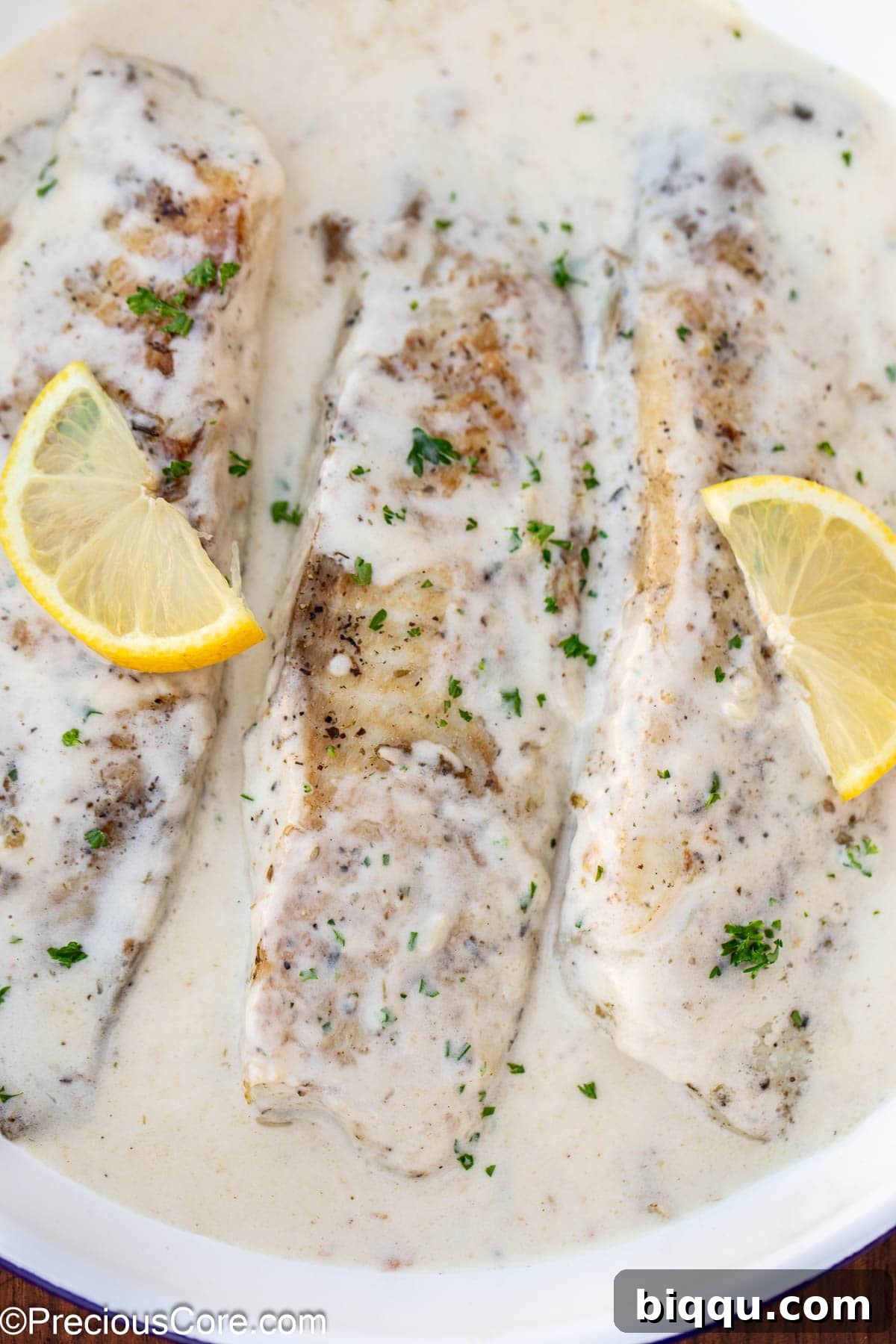
Expert Tips for Perfect Fish in White Sauce
Achieving a restaurant-quality fish dish at home is easier than you think, especially with a few professional insights:
- Ensure Fish Fillets are Fully Defrosted: Starting with completely defrosted fish is paramount for even cooking and a great sear. The best method is to plan ahead and defrost them in the refrigerator overnight. If you’re short on time, a quicker method is to place the vacuum-sealed fish fillets in a bowl of cold water. Change the water with fresh, cold water every 20-30 minutes until they are fully defrosted. They might even be ready before you need to refresh the water! Never use hot water, as this can start to cook the fish unevenly.
- Double-Check for Pin Bones: Before you begin cooking, it’s always a good practice to thoroughly inspect your fish fillets for any small pin bones. Even professionally filleted fish can sometimes have a few missed bones. Run your fingers along the length of the fillet, feeling for any firm, sharp points. If you find any, use a pair of clean needle-nose pliers or specialized fish tweezers to carefully pull them out. This ensures a smoother, more enjoyable dining experience.
- Prioritize Responsibly Sourced Fish: Whether you opt for tilapia or another type of fish, it’s increasingly important to make conscious choices about your seafood. Always strive to purchase fillets that come from responsibly farmed or sustainable wild-caught sources. This not only supports healthier ocean ecosystems and ethical farming practices but also often ensures a higher quality product, containing lower levels of potential contaminants and a better overall flavor. Look for labels from organizations like the Marine Stewardship Council (MSC) or Aquaculture Stewardship Council (ASC), or consult seafood sustainability guides from reputable sources like the Monterey Bay Aquarium Seafood Watch.
- Don’t Overcrowd the Pan: When searing the fish, give each fillet enough space in the skillet. Overcrowding will lower the pan’s temperature, leading to steamed fish rather than a beautiful sear, and will prevent the formation of that delicious crust. Cook in batches if necessary.
- Use Room Temperature Ingredients for the Sauce: For the smoothest sauce, try to have your chicken stock and heavy cream at room temperature. This helps them incorporate more easily into the roux without clumping, resulting in a perfectly silky sauce.
What Kind Of Fish Should I Use?
While tilapia is a fantastic and accessible choice for this recipe due to its mild flavor and quick cooking time, don’t fret if you can’t get your hands on it! There are plenty of other excellent options that will work just as effectively and taste equally delicious with our creamy white sauce. Some wonderful alternatives you can try include:
- Cod: A popular choice known for its flaky texture and very mild flavor.
- Catfish: Offers a slightly firmer texture and a distinct, earthy flavor that stands up well to creamy sauces.
- Flounder: Very delicate and thin, it cooks quickly and has a subtle, sweet flavor.
- Halibut: A premium white fish with a firm, meaty texture and a rich, sweet flavor.
- Red Snapper: Known for its firm, moist flesh and distinctive, slightly nutty flavor.
Although each of these white-fleshed fish varieties has unique qualities and might present a slightly bolder flavor or a different texture compared to tilapia, the luscious lemony sauce with its savory hints of garlic and butter is a universally perfect match for any of them. Feel confident in experimenting to find your favorite combination!
Looking for quick and inspiring serving ideas to complement your Fish in White Sauce? This versatile dish shines when paired with simple sides like fluffy steamed rice, perfectly al dente pasta, or a medley of vibrant steamed or roasted vegetables. For a truly Mediterranean flair, you might also want to check out my incredible recipe for Mediterranean Baked Fish!
Recipe Frequently Asked Questions
White fish is a broad category encompassing many delicious and versatile species. Some of the most popular white fish fillets widely enjoyed around the world include cod, halibut, flounder, tilapia, sea bass, grouper, haddock, catfish, and red snapper. The popularity of specific fish types can often depend on geographical region, local accessibility, and the influence of different culinary traditions and cuisines.
Fish, with its delicate flavor, pairs wonderfully with a variety of sauces that can either complement or contrast its natural taste. This recipe, for example, utilizes a creamy white sauce that adds impressive richness and zesty flavor to a mild fish like tilapia. However, there are many other fantastic options, such as vibrant pesto sauce, classic lemon butter sauce, tangy mustard sauce, elegant white wine sauce, or herbaceous dill sauce. The best choice often depends on the specific type of fish you’re preparing and the overall flavor profile you aim to achieve.
No, white sauce and Alfredo sauce are distinct, though both are creamy and delicious! A classic white sauce, often referred to as Bechamel in French cooking, typically begins with a roux—a mixture of fat (like butter) and flour. To this, a dairy product such as milk, half-and-half, or cream is added to create a smooth, thick sauce. Classic white sauce usually doesn’t include cheese as a primary ingredient.
Meanwhile, Alfredo sauce is fundamentally different. Its base is typically butter, garlic, and heavy cream, followed by a generous amount of Parmesan cheese, which is a defining ingredient. While some variations might include a touch of nutmeg or other spices, Alfredo sauce generally does not use flour for thickening, relying instead on the reduction of cream and the emulsification of cheese to achieve its rich consistency.
While this dish is best enjoyed fresh, you can prepare certain components in advance. The white sauce can be made a day or two ahead and stored in an airtight container in the refrigerator. Reheat it gently over low heat, whisking in a little extra chicken stock or milk if it’s too thick. The fish itself cooks so quickly that it’s ideal to pan-sear it just before serving to ensure the best texture and avoid overcooking.
This recipe, featuring lean protein from fish and a sauce made with wholesome ingredients, can certainly be part of a healthy diet when enjoyed in moderation. Fish is an excellent source of omega-3 fatty acids and essential vitamins. To make it even healthier, you can adjust the amount of heavy cream, or swap some of it for milk or light cream. Pairing it with plenty of fresh vegetables or a light salad will further boost its nutritional value.
More Recipes With Creamy Sauce
There’s just something irresistibly comforting and luxurious about creamy sauces! If you, like me, adore the rich and velvety texture that a well-made creamy sauce brings to a dish, then you’re in for a treat. Here are some of my other favorite recipes featuring decadent creamy sauces that I know you’ll love:
Chicken Drumsticks in Creamy Sauce
Chicken in White Sauce
Marry Me Chicken
Perfect Pairings: Serving Suggestions
The beauty of this Fish in White Sauce lies in its versatility. It harmonizes effortlessly with a variety of side dishes, allowing you to create a well-rounded and delicious meal for any occasion. Here are some fantastic side dishes that perfectly complement the rich flavors of this fish entrée:
Garlic Butter Green Beans
Pan Fried Brussels Sprouts With Bacon
Sauteed Peppers
Easy Coconut Rice
Easy Roasted Potatoes
More Easy Dinner Recipes
Making dinner time easy, delicious, and stress-free is my ultimate goal for you! After mastering this amazing Fish in White Sauce, you’ll be ready to tackle more quick and satisfying meals. Dive into these fantastic easy dinner recipes that are perfect for any night of the week:
Pan Seared Boneless Chicken Thighs
Bone In Ribeye Steak
One Pot Chicken Thighs And Rice
107 Easy Dinner Recipes For Family
Mediterranean Baked Fish
Cajun Honey Butter Salmon
If you make this recipe, please leave a star rating below. Your rating helps others find the recipe, plus I love hearing from you! Thank you!
Fish In White Sauce
Rate
Print Recipe
Ingredients
- 1 pound tilapia fillets or loins (3-4 fillets or loins, sub with other white fish like snapper or sea bass)
- ¼ teaspoon salt
- ¼ teaspoon black pepper
- 1 teaspoon Italian seasoning
- 2 tablespoons olive oil
- 2 Tablespoons unsalted butter
- 3 cloves garlic, minced
- 1 Tablespoon flour
- 1 cup chicken stock
- 1¼ cups heavy cream
- 1-2 Tablespoons fresh lemon juice
- Parsley for garnish.
Instructions
-
Pat room temperature tilapia fillets or loins dry and season both sides with the salt and pepper, and Italian seasoning.
-
Add the olive oil to a large skillet (12 inches wide) and heat up on medium-high heat for 2 minutes.
-
Add the tilapia fillets to the pan. Cook on one side for 3 minutes then using a fish spatula, flip carefully to the other side and cook for 2 minutes. Remove the fish from the pan and set aside.
-
Add butter to the pan and let it melt. Reduce the heat to medium. Add minced garlic and stir for 10 seconds until fragrant. Add the flour and stir for 30 seconds to remove the raw flavor. Whisk in the chicken stock and bring to a simmer. Let it simmer for 5 minutes while stirring or whisking occasionally until the sauce is thick and glossy. Whisk in the heavy cream and let it simmer for another 5 minutes.
-
Add the fish back to the pan, nestling it into the sauce. Let it simmer for 2 minutes to finish cooking. Taste and adjust seasoning as needed. Add the fresh lemon juice according to taste and stir to combine.
-
Garnish with minced parsley and serve warm over mashed potatoes, pasta, or rice.
Notes
Other kinds of fish to use: Some great options include cod, catfish, flounder, halibut, or red snapper. If using tilapia, ensure it is sustainably sourced and responsibly farmed, as indicated on the packaging.
Nutrition
Carbohydrates: 7g |
Protein: 27g |
Fat: 42g |
Saturated Fat: 23g |
Polyunsaturated Fat: 3g |
Monounsaturated Fat: 14g |
Trans Fat: 0.2g |
Cholesterol: 158mg |
Sodium: 312mg |
Potassium: 497mg |
Fiber: 0.3g |
Sugar: 3g |
Vitamin A: 1279IU |
Vitamin C: 1mg |
Calcium: 77mg |
Iron: 1mg
Additional Info
Tried this recipe?Mention @preciouscore or tag #PreciousCore!