
Crafting the Perfect Tropical Fruit Salad: A Taste of Freshness
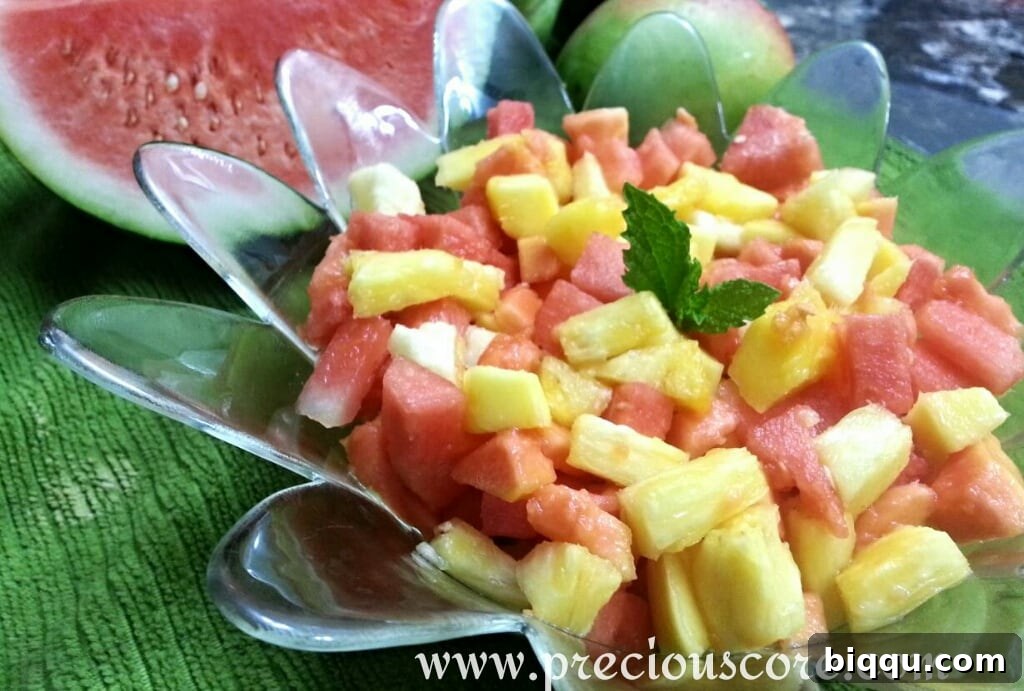
There’s something universally appealing about a fresh, vibrant fruit salad. For many, it evokes cherished memories, perhaps of a parent’s go-to healthy snack or a refreshing treat on a warm day. My own father had a particular fondness for fruit salad, a simple yet profound delight that always brought a smile to his face. It’s incredibly easy to fall in love with the harmonious blend of different fruits in a single bowl, each bite offering a burst of natural sweetness and a spectrum of beneficial nutrients.
Beyond its delicious taste, fruit salad is a powerhouse of health benefits. Did you know that nutrition experts widely recommend consuming at least five servings of fruits and vegetables daily for optimal health? Creating a fruit salad is one of the most enjoyable and effective ways to meet this crucial dietary guideline. By combining an assortment of nature’s candy, you not only make healthy eating effortless but also incredibly satisfying. It’s a delightful journey for your taste buds and a fantastic boost for your well-being. Get ready to explore the vibrant world of tropical fruits and learn how to assemble an exotic fruit salad that’s as good for your body as it is for your soul.
The Ultimate Tropical Fruit Salad Recipe
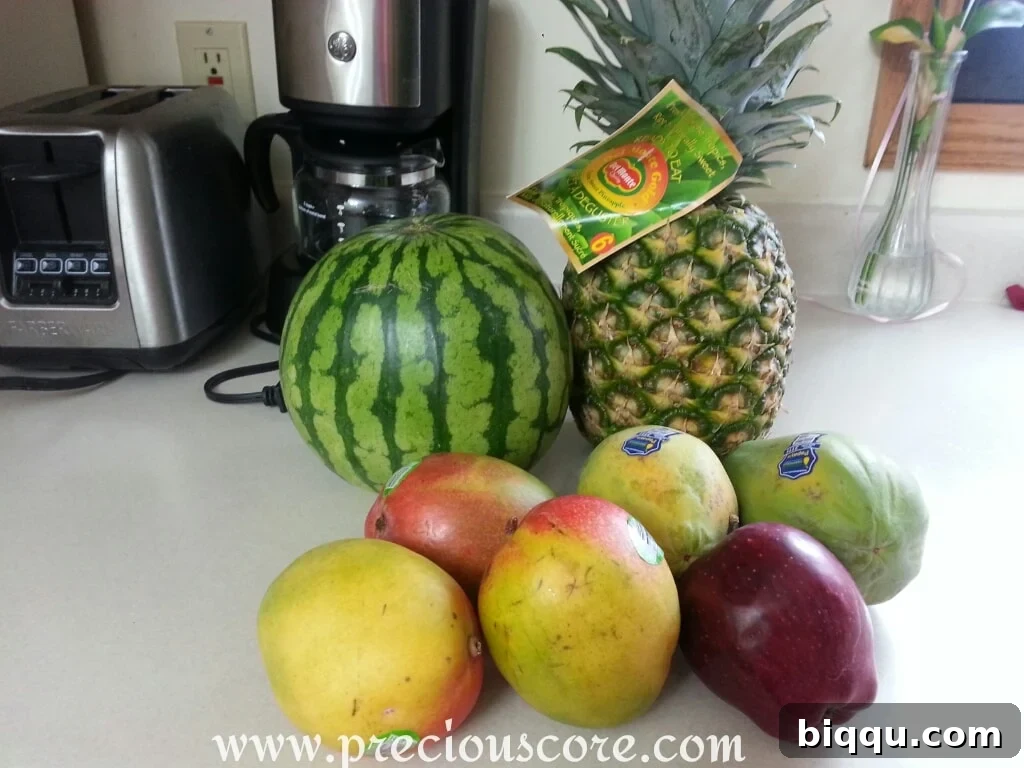
This recipe focuses on readily available tropical fruits, offering a refreshing and naturally sweet experience. It’s designed to be straightforward, requiring no cooking and minimal preparation time, making it perfect for a quick breakfast, a light lunch, a healthy snack, or a delightful dessert.
Prep Time: 20 minutes
Cooking: No cooking required
Serves: 4-6 people
Ingredients for Your Tropical Masterpiece
To create a truly exquisite and refreshing fruit salad, selecting the freshest, ripest fruits is paramount. Each fruit contributes its unique flavor, texture, and nutritional profile, creating a balanced and delightful mix. For this tropical medley, we’ll focus on a core selection that promises vibrant colors and irresistible taste:
- 1 large, ripe Pineapple: Look for a pineapple that smells sweet at the base and has slightly yielding skin.
- 1 medium-sized Paw Paw (Papaya): Choose a papaya with skin that has started to turn yellow-orange and feels slightly soft to the touch.
- 2 firm, ripe Mangoes: Select mangoes that have a fragrant aroma near the stem and give slightly when gently squeezed. Avoid overly soft or bruised fruits.
- 1 large, crisp Apple: Any variety works, but a crisp, sweet apple like Fuji or Honeycrisp adds a nice contrasting crunch.
- 1 small Watermelon or half of a large one: A ripe watermelon will sound hollow when tapped and feel heavy for its size.
These ingredients form the base of our tropical delight, but feel free to consider other local seasonal favorites if you wish to personalize your salad further. The key is freshness!
Step-by-Step Preparation: Crafting Your Fruit Salad
1. Preparing the Pineapple
Begin with your beautiful pineapple. Place it on a cutting board, carefully slice off the top crown and the base. Stand the pineapple upright and, using a sharp knife, carefully slice downwards, following the curve of the fruit to remove the thick skin. Once peeled, you’ll notice the “eyes” – small, brown, fibrous spots. You can either remove these by making V-shaped cuts around them or simply slice them off with a potato peeler. Next, cut around the hard, fibrous core in the middle. Chop the sweet, juicy flesh into bite-sized pieces. I find that making the pieces small enough allows for a perfect spoon-full featuring a combination of different fruits, enhancing every bite. Strive for uniformity in size for all your fruits, as this makes the salad more aesthetically pleasing and enjoyable to eat. Remember, we eat with our eyes first! As you work, it’s perfectly acceptable (and highly encouraged) to snack on a few pieces of that delicious, fresh pineapple.
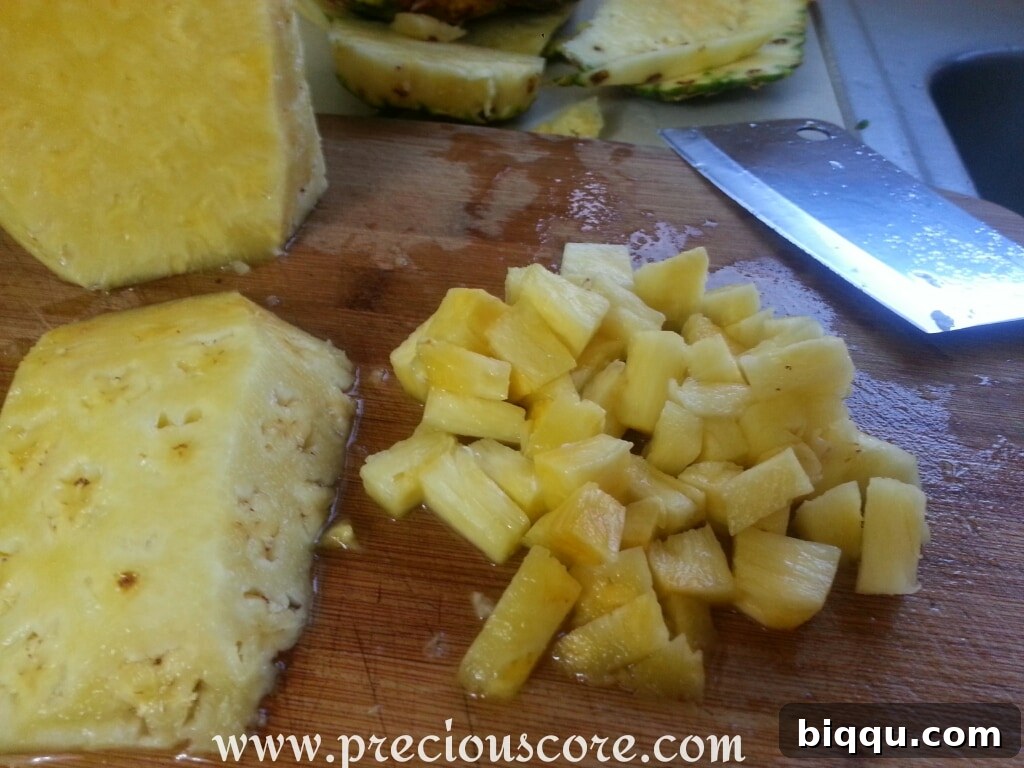
Place your freshly cut pineapple pieces into a large mixing bowl. This will be the foundation of your fruit salad.
2. Preparing the Paw Paw (Papaya)
Next, take your ripe paw paw. Wash it thoroughly under cool running water. Carefully peel the skin using a vegetable peeler or a sharp knife. Once peeled, place it on your cutting board.
Slice the paw paw lengthwise in half. With a spoon, gently scoop out the black, gelatinous seeds from the center. Discard the seeds.
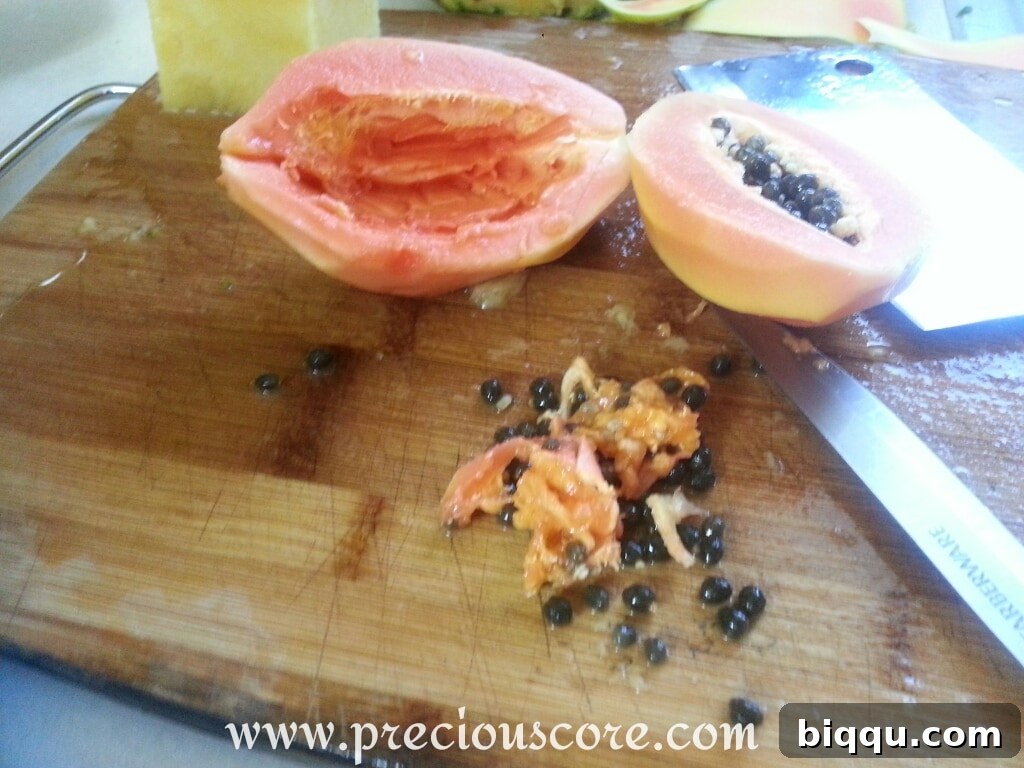
Now, cut the paw paw flesh into pieces that are roughly the same size as your pineapple cubes. This consistency in size helps create a harmonious texture throughout the salad.
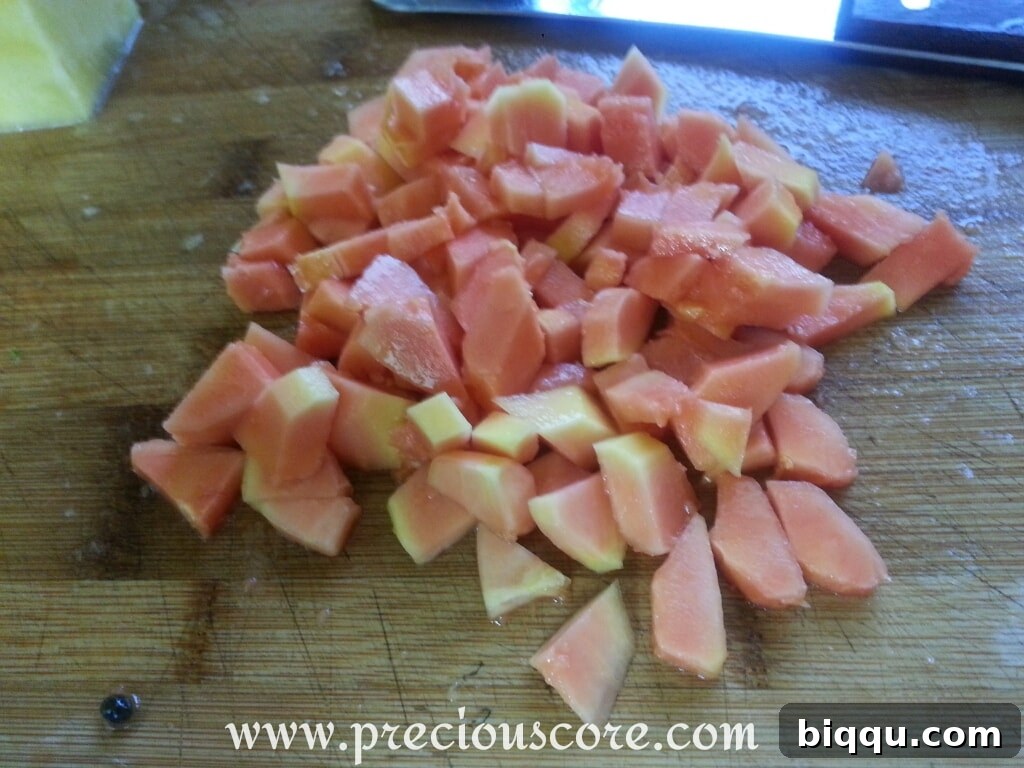
Add these vibrant orange pieces to the bowl with the pineapple.
3. Preparing the Mangoes
Handling mangoes can be a bit tricky, but with practice, it becomes easy. Wash your mangoes. Stand a mango upright on your cutting board. Slice down each side of the flat, central seed, trying to get as much flesh as possible. You’ll be left with two large “cheeks” and a thin middle section containing the seed. You can then carefully score the flesh of the cheeks in a grid pattern (without cutting through the skin) and scoop out the cubes with a spoon, or simply peel the skin off the cheeks and seed section and then chop the flesh. For the latter method, a potato peeler can work wonders. Once the skin is removed, carefully cut around the seed to maximize the amount of fruit. Chop the sweet, golden mango flesh into bite-sized pieces.
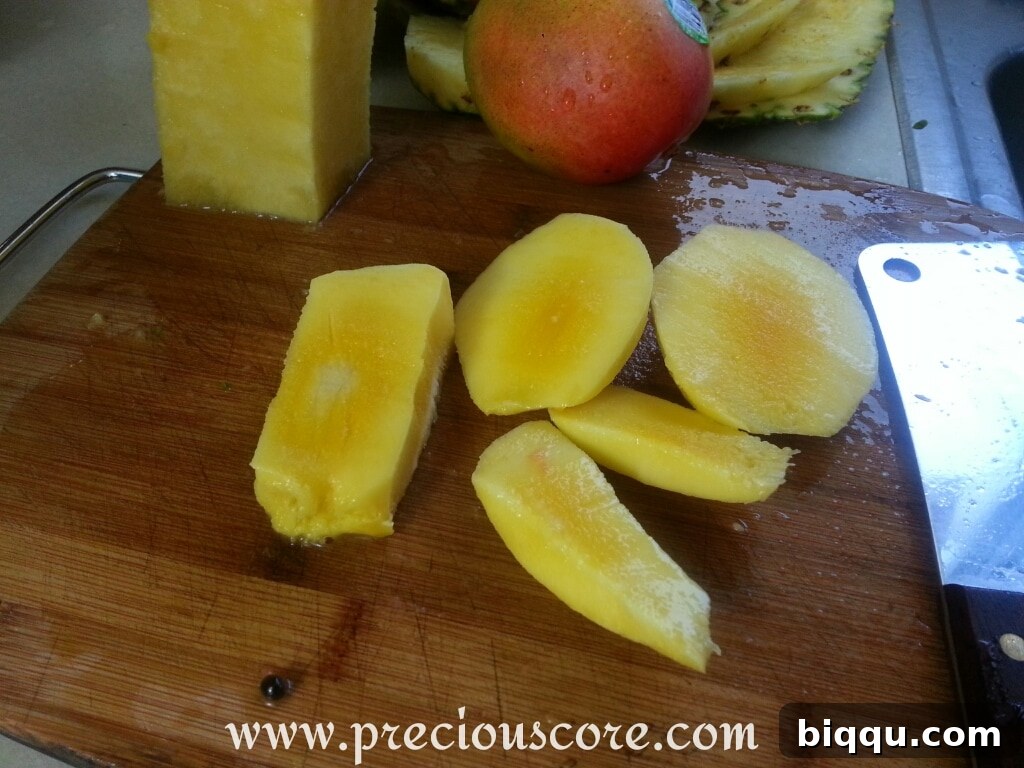
These juicy mango pieces will add a luscious sweetness to your salad. Chop them up neatly!
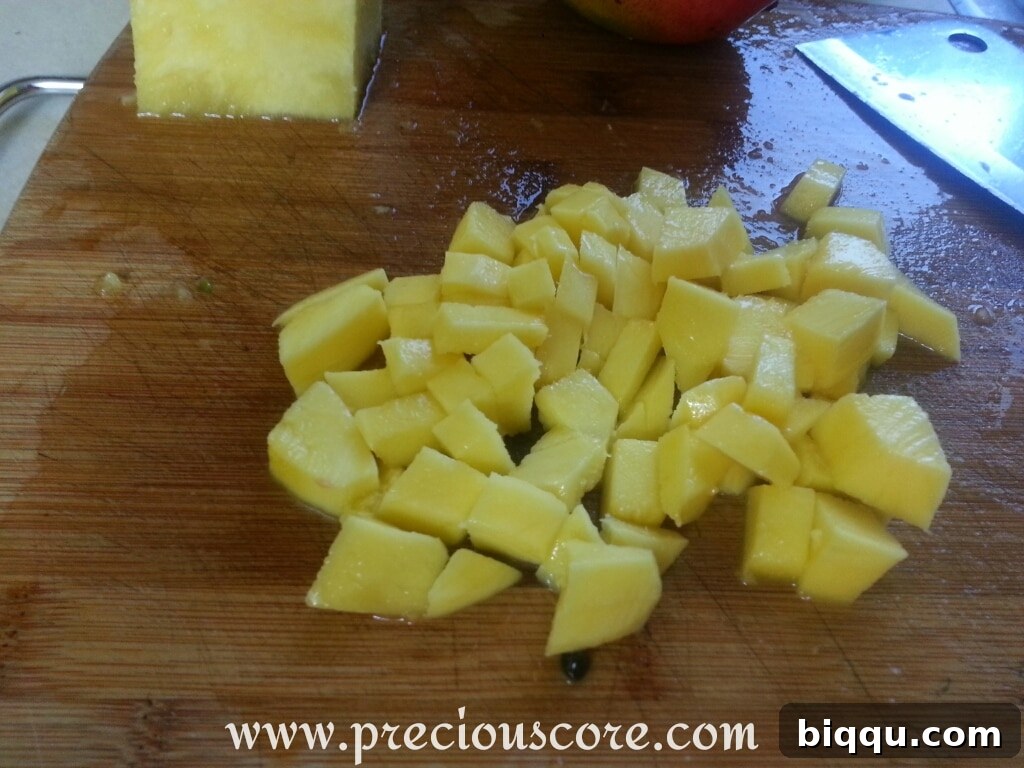
Add the chopped mango to the growing collection of fruits in your large bowl.
4. Preparing the Watermelon
Watermelon is incredibly refreshing and adds a beautiful splash of color. Start by washing your watermelon. If you’re using a large one, cut it in half, then cut a large wedge or section from it. Now, this is the perfect moment for a little chef’s privilege: grab a piece of that succulent watermelon and enjoy a refreshing bite. Once you’ve had your fill, get back to business!
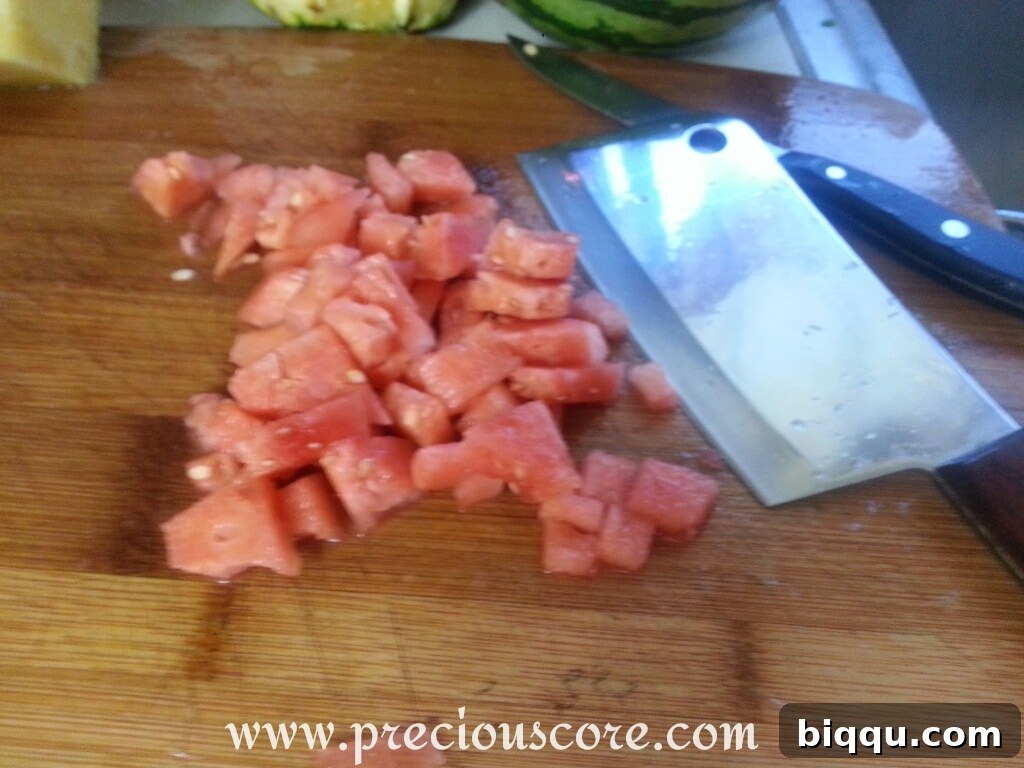
Place the watermelon section cut-side down on your cutting board. Using a sharp knife, carefully slice the red flesh away from the rind. If your watermelon contains seeds, you’ll want to remove them before chopping. You can do this by laying the de-rinded watermelon flat and carefully picking out the seeds with the tip of your knife or your fingers. Once free of seeds and rind, chop the watermelon flesh into bite-sized cubes, again aiming for consistency with the other fruits.
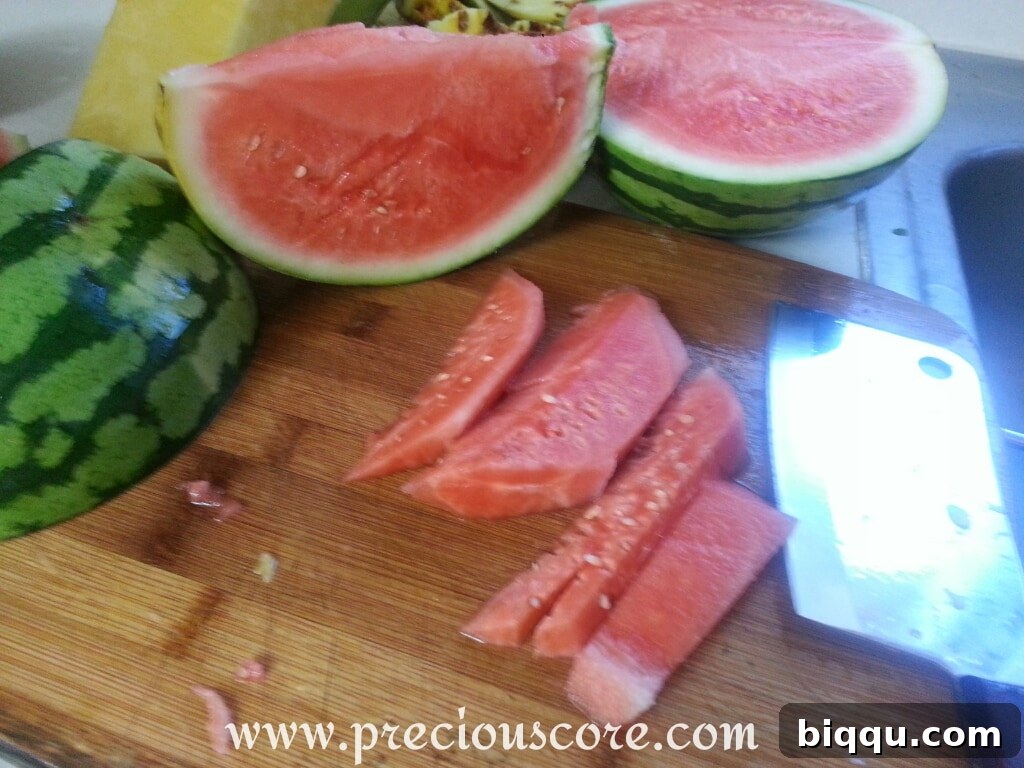
Add these hydrating, sweet cubes to the big bowl with the rest of the tropical fruits.
5. Preparing the Apple
Finally, the apple adds a lovely crisp texture and a touch of tartness to balance the tropical sweetness. Wash your apple thoroughly. You have a choice here: you can peel the apple if you prefer a softer texture, or leave the skin on for added fiber and a touch of color. If you decide to peel, use a vegetable peeler. Once peeled (or not), cut the apple into quarters, remove the core and seeds, and then chop the apple flesh into pieces similar in size to your other fruits. To prevent browning, you can lightly toss the apple pieces in a tiny bit of lemon or lime juice immediately after chopping, although for a salad that will be consumed relatively quickly, this step might not be strictly necessary.
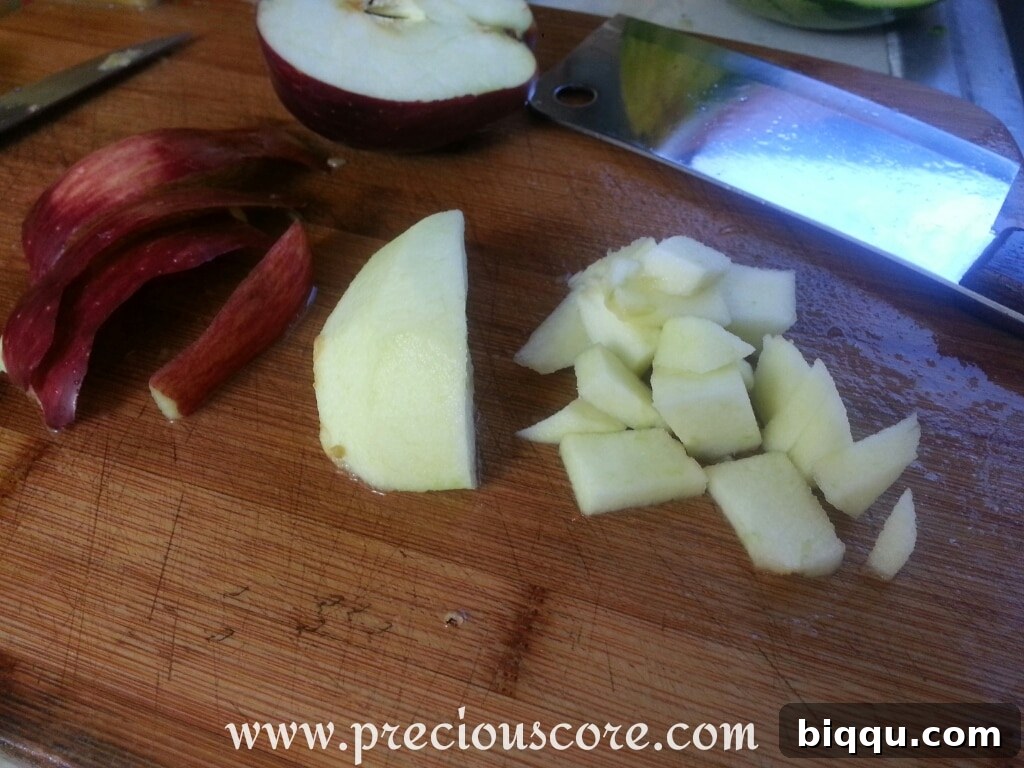
Add the crisp apple pieces to the rest of the colorful fruits in the bowl.
6. The Grand Finale: Mixing and Serving
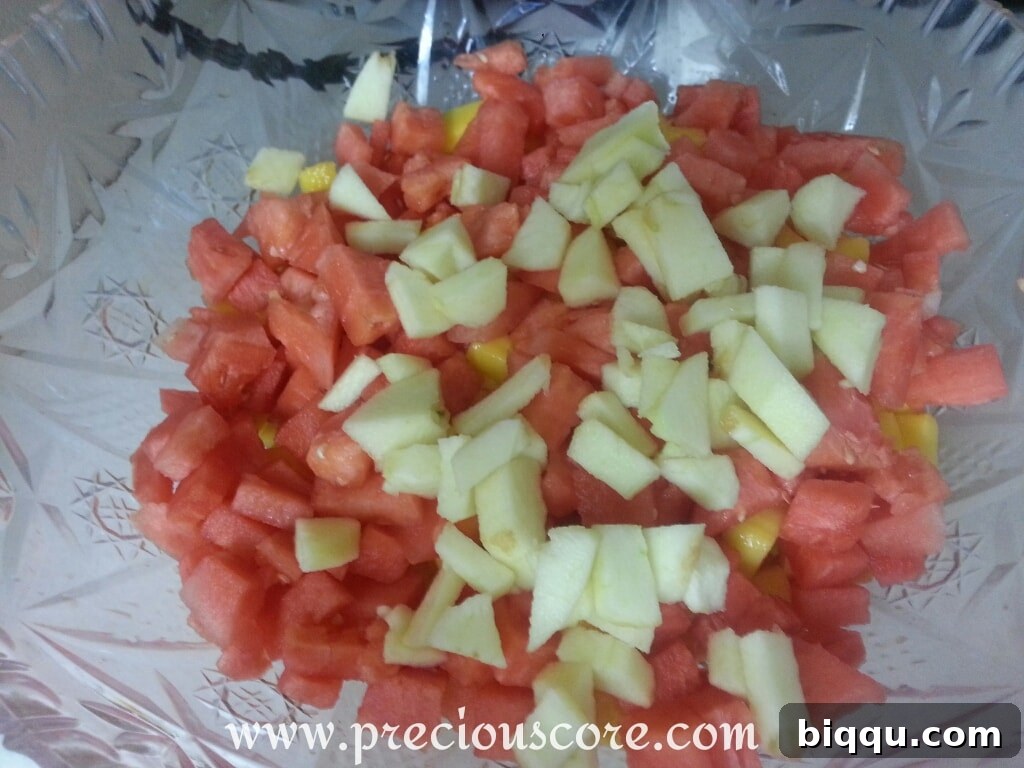
With all your fruits prepped and in the bowl, it’s time for the moment of truth! Gently mix all that goodness up using a large spoon or spatula. Be careful not to mash the softer fruits; you want to combine them gently so the flavors mingle and the colors create a beautiful tapestry. And just like that, your exotic tropical fruit salad is done! Serve immediately to enjoy its peak freshness and vibrant flavors.

Enhance Your Fruit Salad: Tips for Customization and Extra Flavor
While this tropical fruit salad is delightful on its own, there are countless ways to customize and enhance it. The beauty of a fruit salad lies in its versatility. Don’t be afraid to experiment and make it truly your own!
Expand Your Fruit Palette
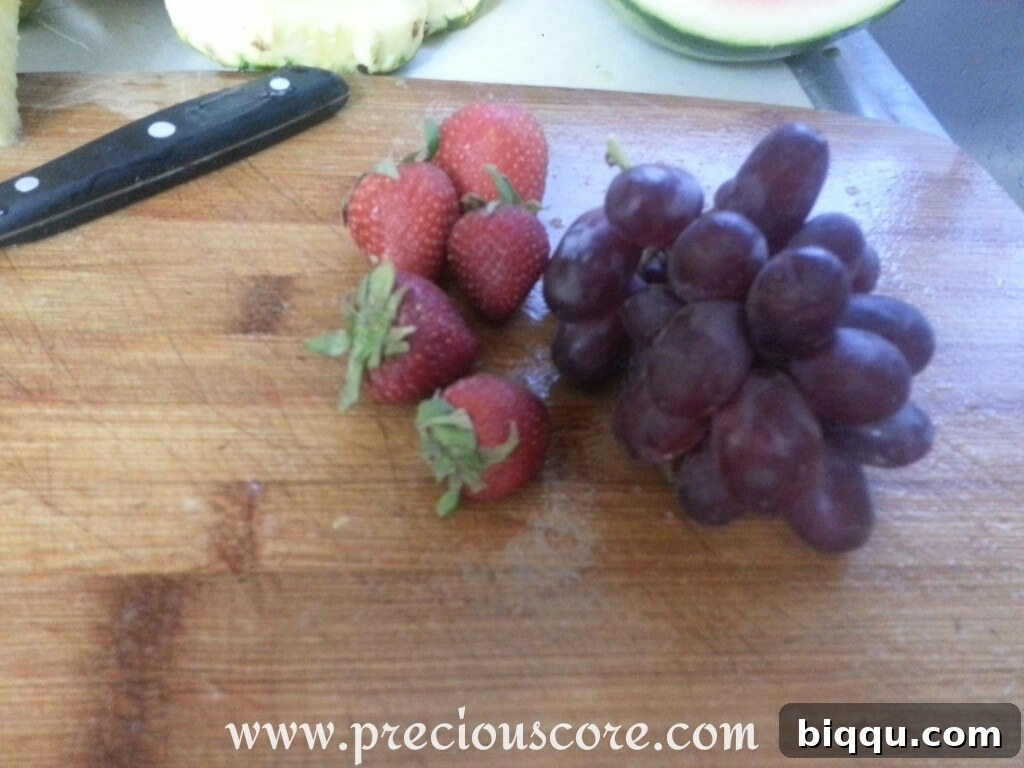
The fruits used in this recipe are fantastic, but the world of fruits is vast and varied. If you have access to other delicious options, feel free to incorporate them. Some fruits might not be as readily available in certain regions, such as Cameroon, but if you can find them, they make excellent additions:
- For a very colorful fruit salad: Aim to use as many different colors of fruits as you can. Think beyond the basic and introduce variety. Examples include:
- Melons: Honeydew melon for a pale green, cantaloupe for a vibrant orange.
- Grapes: Green, red, or black seedless grapes add a juicy pop.
- Berries: Strawberries, blueberries, raspberries, and blackberries are packed with antioxidants and beautiful hues.
- Stone Fruits: Peaches, nectarines, and plums (when in season) offer a soft, sweet texture.
- Citrus: Seedless tangerines, oranges, or grapefruit segments can add a zesty brightness.
- Exotics: Kiwi (for a striking green and tiny black seeds), dragon fruit, star fruit, or lychees for a truly exotic touch.
- Choosing Seasonal Fruits: Always prioritize seasonal fruits as they are at their peak flavor and nutritional value.
Add a Little Zest and Moisture
If you prefer your fruit salad with a bit of a “sauce” or extra liquid, a natural fruit juice can do wonders. This not only keeps the fruits moist but also adds another layer of flavor:
- Natural Fruit Juices: A cup or two of fresh orange juice, apple juice, pineapple juice, or even a blend can elevate the taste.
- Citrus Squeeze: A squeeze of fresh lime or lemon juice brightens all the flavors and helps prevent some fruits (like apples) from browning.
- Sweeteners & Herbs: A drizzle of honey or maple syrup can enhance sweetness. Fresh mint leaves, chopped basil, or a tiny pinch of ginger can add an unexpected aromatic twist.
Boost Texture and Nutrition with Toppings
For an extra layer of texture and a nutritional boost, consider adding some crunchy or creamy toppings just before serving:
- Nuts: Chopped almonds, walnuts, pecans, or cashews.
- Seeds: Chia seeds, flax seeds, pumpkin seeds, or sunflower seeds.
- Coconut: Toasted coconut flakes or shredded coconut.
- Dairy/Non-Dairy: A dollop of Greek yogurt, coconut yogurt, or a scoop of cottage cheese for a protein boost.
The Health Benefits of a Fruit Salad Feast
Beyond its incredible taste and visual appeal, a fruit salad is a nutritional powerhouse. Incorporating it regularly into your diet can lead to numerous health advantages:
- Rich in Vitamins and Minerals: Fruits are natural sources of essential vitamins like Vitamin C (for immunity), Vitamin A (for vision and skin), and various B vitamins, as well as minerals such as potassium and magnesium.
- High in Fiber: The dietary fiber in fruits aids in digestion, promotes a feeling of fullness, and helps regulate blood sugar levels, contributing to weight management and gut health.
- Antioxidant Powerhouse: Many fruits, especially berries and mangoes, are loaded with antioxidants that combat free radicals, reduce inflammation, and protect your cells from damage, potentially lowering the risk of chronic diseases.
- Excellent Hydration: Fruits like watermelon and pineapple have a high water content, contributing significantly to your daily hydration needs, especially crucial in warm climates.
- Natural Energy Boost: The natural sugars in fruits provide a quick and sustained energy boost without the crash associated with processed sugars.
- Supports Heart Health: The potassium, fiber, and antioxidants found in fruits all play a role in maintaining cardiovascular health, helping to regulate blood pressure and cholesterol levels.
By enjoying a diverse mix of fruits, you ensure a broad spectrum of these beneficial compounds, making fruit salad an exceptionally wholesome choice for any meal or snack.
Serving and Storage Suggestions
Serve your fruit salad chilled for the best experience. It makes a fantastic breakfast, a refreshing side dish for lunch, a light dessert, or a healthy snack at any time of day. For optimal flavor and texture, it’s best consumed within 1-2 days. To store, cover the bowl tightly with plastic wrap or transfer the salad to an airtight container and refrigerate. This helps keep the fruits fresh and prevents them from browning too quickly.