
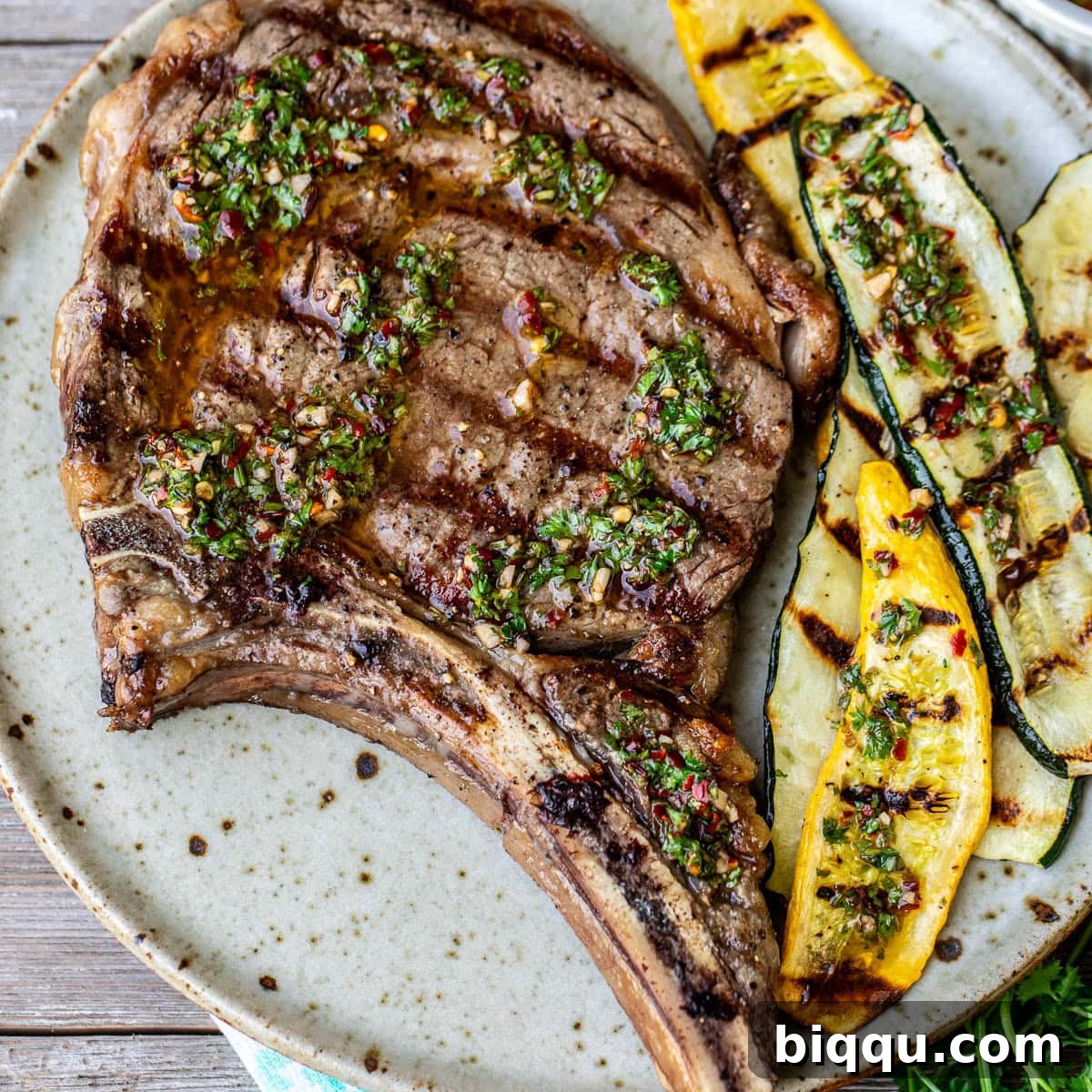
The Ultimate Guide to Cooking a Perfect Bone-In Ribeye Steak
There are few culinary delights as satisfying as a perfectly cooked steak. While many cuts offer their unique charm, a Bone-In Ribeye Steak stands in a league of its own. Renowned for its unparalleled juiciness, rich flavor, and melt-in-your-mouth tenderness, the bone-in ribeye transforms a simple meal into a memorable occasion. The presence of the bone isn’t just for show; it enhances the steak’s flavor profile and helps maintain moisture, resulting in a superior dining experience.
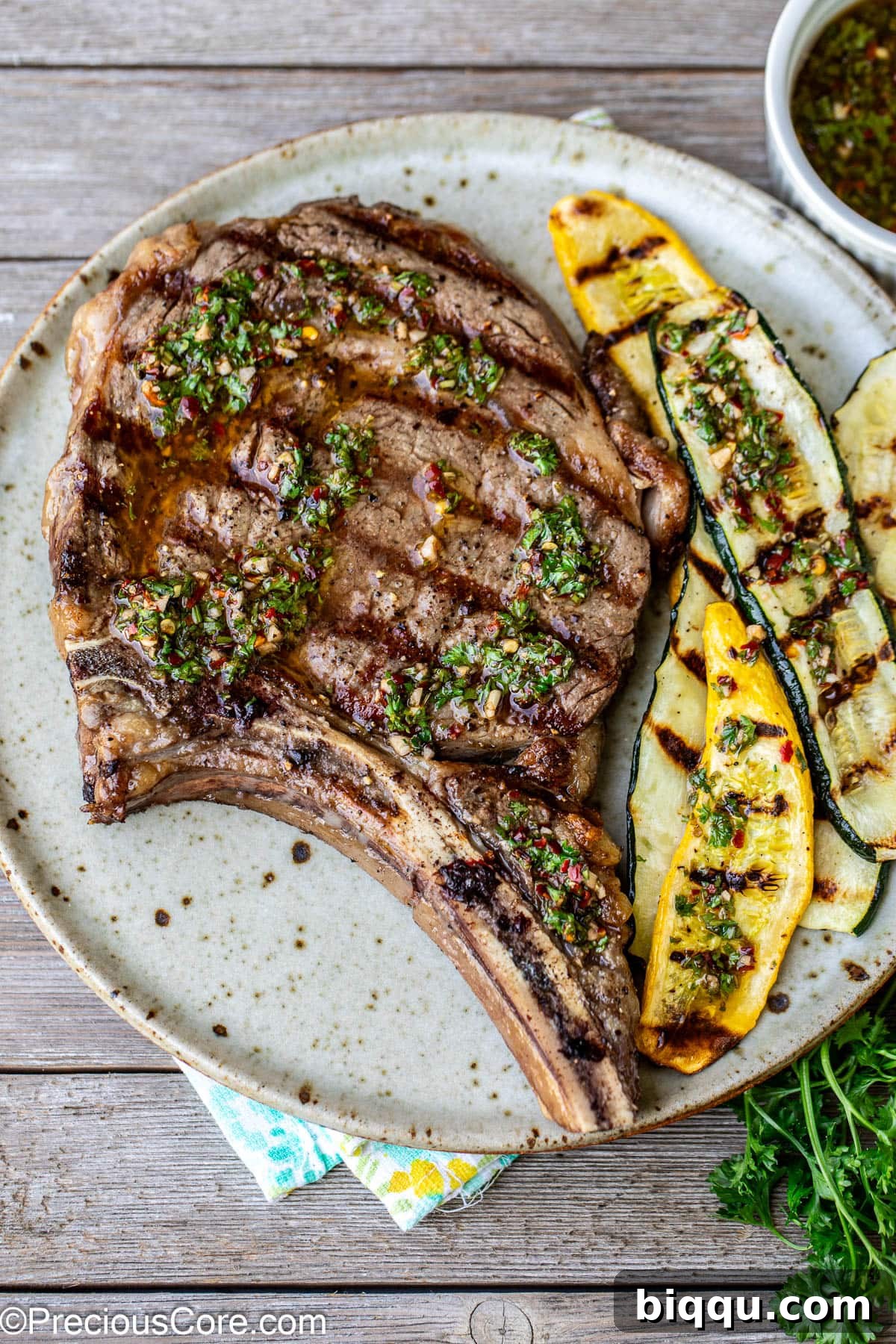
Whether you prefer the smoky char of a grill, the even heat of an oven, or the classic crust from a pan-sear, mastering the art of cooking a bone-in ribeye is an achievable goal for any home cook. This comprehensive guide will equip you with all the knowledge and techniques needed to prepare a restaurant-quality steak right in your own kitchen.
Forget the hefty price tag of a high-end steakhouse; with a bit of practice and attention to detail, you can consistently create thick, flavorful, and incredibly tender steaks that will impress even the most discerning palates. It’s easier than you might imagine, and the rewards are immeasurable. If you’re a true steak enthusiast, be sure to explore other delicious steak recipes like Steak and Pasta for a delightful weeknight dinner, a hearty Ribeye Steak Sandwich perfect for lunch, or even a quick Steak Fried Rice for a convenient one-pan meal.
Understanding the Bone-In Ribeye Steak
The ribeye is consistently one of the most popular and flavorful cuts of beef available. It comes from the rib section of the cow, specifically from the area under the front section of the backbone. This region is not heavily used by the animal, which contributes to the meat’s exceptional tenderness. What truly sets the ribeye apart is its generous marbling – the intramuscular fat that melts during cooking, basting the meat from within and imparting a rich, buttery flavor and incredibly juicy texture that surpasses leaner cuts like filet mignon.
When the bone is left in, as in a bone-in ribeye, the steak can also be known by more dramatic names such as “Tomahawk steak” (when a long section of the rib bone is left attached and frenched for presentation) or “Cowboy steak” (a bone-in ribeye with a shorter, trimmed bone). Regardless of the moniker, the essence remains the same: a premium cut bursting with flavor and character.
Why Choose Bone-In? The Advantages of the Bone
Choosing a bone-in ribeye offers several distinct advantages that elevate it above its boneless counterpart:
- Enhanced Flavor: The bone itself contains marrow and connective tissues that, when heated, slowly release their rich flavors into the surrounding meat. This infusion creates a deeper, more complex taste profile that is often described as savory and umami-rich.
- Superior Juiciness: The bone acts as a natural insulator, slowing down the cooking process of the meat directly adjacent to it. This leads to a more evenly cooked steak and helps to retain moisture, ensuring every bite is succulent.
- Even Cooking: Because the bone conducts heat more slowly than the meat, it helps prevent the edges of the steak from overcooking before the center reaches your desired doneness.
- Impressive Presentation: There’s no denying the visual appeal of a bone-in steak. It makes for a more dramatic and satisfying presentation, perfect for special occasions or when you simply want to indulge in a hearty, impressive dinner.
Essential Ingredients for Your Bone-In Ribeye
One of the beauties of a high-quality bone-in ribeye is that it requires minimal seasoning to shine. The meat’s natural flavors are the star of the show. Here’s what you’ll typically need:
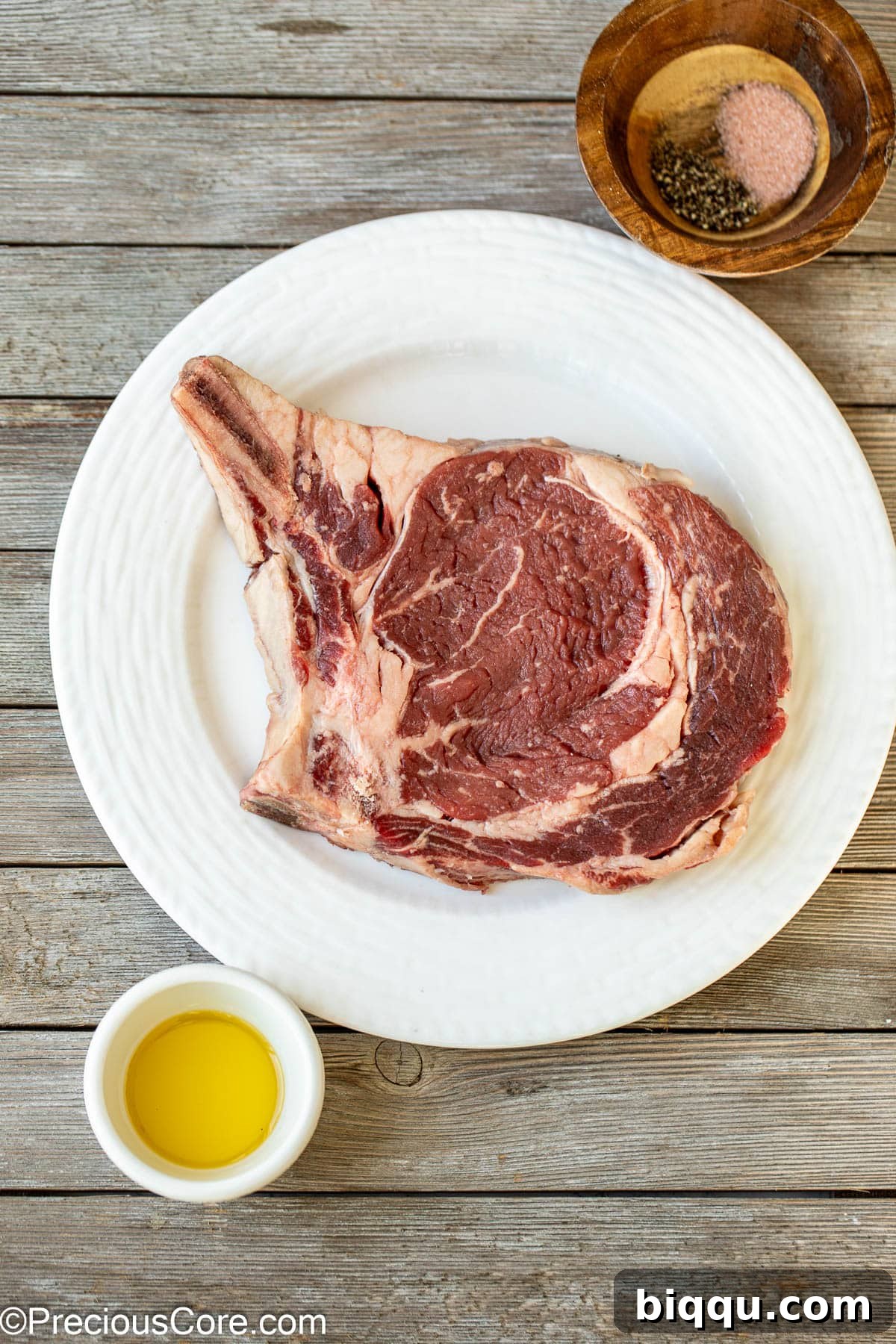
- Bone-In Ribeye Steaks: For a typical serving of 4 people, a 1-pound bone-in ribeye, about 1 to 1.5 inches thick, is usually sufficient. Look for steaks with good marbling throughout the meat.
- Olive Oil: A light coating of olive oil serves two purposes: it helps the seasonings adhere evenly to the meat, and it creates a barrier that prevents the steak from sticking to your cooking surface, whether it’s a skillet or a grill grate.
- Salt: Essential for seasoning, salt brings out the steak’s inherent flavors. While any salt works, keep in mind that kosher salt has a larger crystal size and is less salty by volume than fine table salt. Adjust quantities accordingly. Flaky sea salt or pink Himalayan salt can add a nice texture and subtle mineral notes.
- Freshly Ground Black Pepper: The classic companion to salt, black pepper adds a subtle peppery bite that complements the rich beef flavor without overpowering it. Always use freshly ground for the best aroma and taste.
Recipe Variations and Flavor Enhancements
While a simple salt and pepper seasoning is often all you need, you can certainly experiment with other ingredients to customize your ribeye experience:
- Butter vs. Oil: For grilling, olive oil is generally preferred due to its higher smoke point. However, if you’re pan-searing or finishing in the oven, adding a knob of unsalted butter to the pan towards the end of cooking allows you to baste the steak, infusing it with a rich, nutty flavor.
- Additional Seasonings: Bone-in ribeyes are naturally flavorful, so heavy spice rubs are rarely necessary. However, a light sprinkle of garlic powder, onion powder, or a pinch of smoked paprika can add subtle depth. For delicate herbs like tarragon or minced dried onions, it’s best to add them towards the end of cooking, as they can burn at very high temperatures.
- Fresh Herbs: Rosemary and thyme are classic pairings for steak. If pan-searing or oven-baking, add whole sprigs of fresh herbs to the pan with butter during basting. Their aromatic compounds will release into the fat, permeating the steak with their fragrant essence.
- Garlic: Minced garlic cloves, added to the pan with butter and herbs during the last few minutes of cooking, can provide a wonderful aromatic boost. Be mindful that garlic burns quickly, so add it late in the process and baste frequently to distribute its flavor.
Preparing Your Bone-In Ribeye for Cooking
Regardless of your chosen cooking method, a few crucial preparation steps will ensure your bone-in ribeye cooks perfectly and develops a magnificent crust:
1. Bring to Room Temperature: Remove your steak from the refrigerator at least 30 minutes to an hour before cooking. This allows the meat to warm up slightly, promoting more even cooking from edge to center.
2. Pat Dry Thoroughly: This is a non-negotiable step for achieving a proper sear. Use paper towels to vigorously pat both sides of the steak dry. Any surface moisture will prevent the Maillard reaction (the browning that creates delicious flavor and crust) and instead steam the meat.
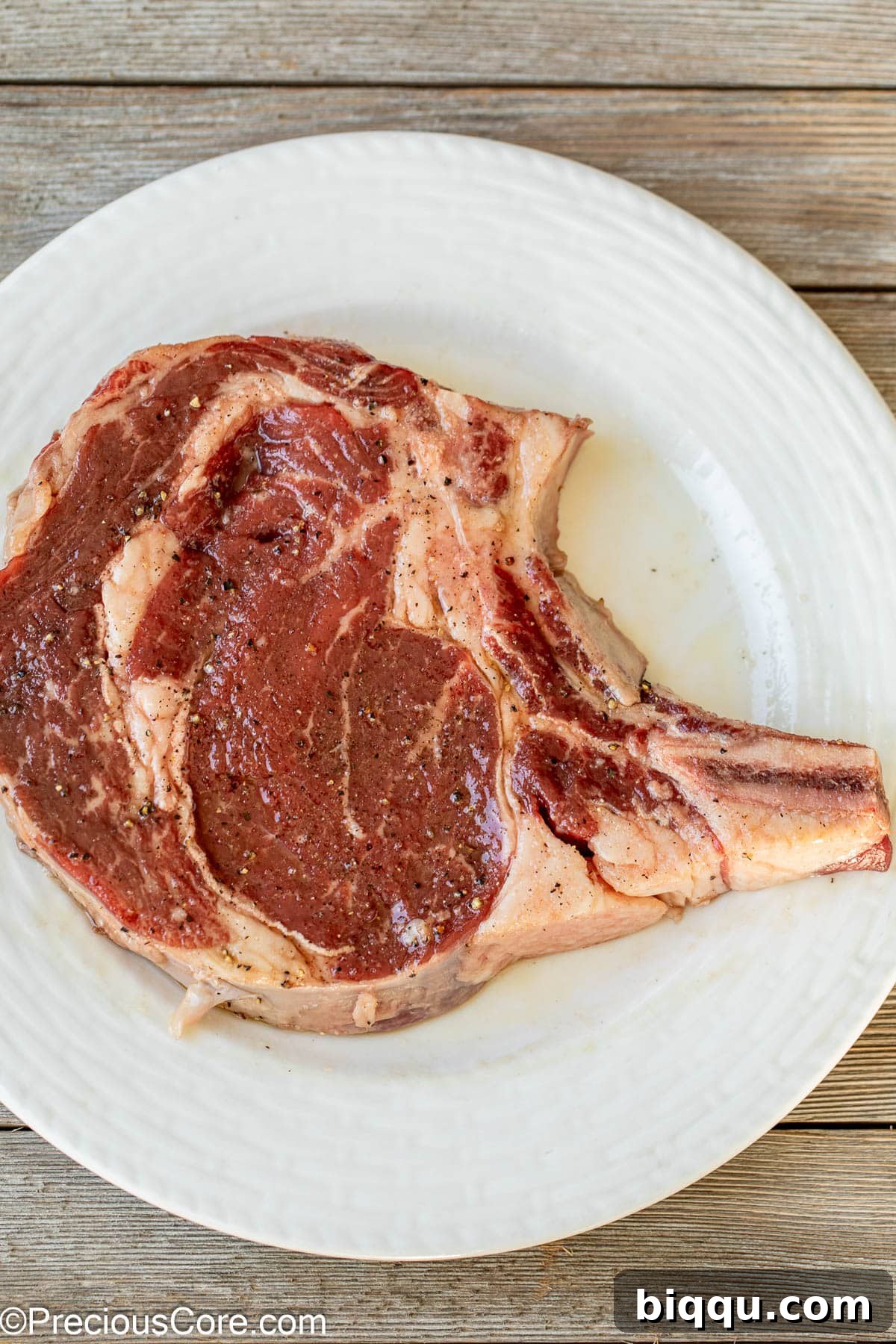
3. Season Generously: Drizzle both sides of the steak with olive oil, then season liberally with salt and freshly ground black pepper. Don’t be shy with the salt; a thick steak needs a good amount to penetrate the meat. Ensure the seasonings adhere well to the surface.
Mastering Different Bone-In Ribeye Cooking Methods
The beauty of the bone-in ribeye is its versatility. Here are several popular methods, each yielding a slightly different, yet equally delicious, result:
1. Pan-Seared Perfection (Stovetop Method)
This method is fantastic for developing a deep, flavorful crust, especially when followed by basting.
- Preheat a heavy-bottomed skillet, ideally cast iron, over medium heat for at least 5 minutes. The pan needs to be scorching hot. Increase the heat to medium-high.
- Add a tablespoon of high-smoke-point oil (like grapeseed or avocado oil, or just olive oil as previously applied) to the pan and swirl to coat. Wait until the oil shimmers and just begins to smoke lightly.
- Carefully place the seasoned steak in the hot pan. Cook for 3-5 minutes per side, depending on your desired doneness. Resist the urge to move or flip the steak too frequently; let it develop a beautiful brown crust.
- After the first flip, you can add a tablespoon or two of butter, a few sprigs of fresh rosemary or thyme, and crushed garlic cloves to the pan. Tilt the pan and use a spoon to continuously baste the melting butter and aromatics over the steak until cooked to your preference.
2. The Reverse Sear (Oven Method)
The reverse sear method is ideal for thicker bone-in ribeyes (1.5 inches or more), as it promotes incredibly even cooking and minimizes the gray band typically seen in traditional searing methods.
- Preheat your oven to a low temperature, typically 250-275°F (120-135°C). Place the seasoned bone-in ribeye on a wire rack set over a baking sheet.
- Bake in the preheated oven for 35-45 minutes, or until the internal temperature reaches 110-120°F (43-49°C) for medium-rare, using a meat thermometer. This slow cooking ensures the steak cooks uniformly.
- Once the steak reaches the target internal temperature, remove it from the oven. While it rests briefly, preheat a heavy skillet (cast iron works best) on high heat on the stovetop until it’s screaming hot. Add a touch of high-smoke-point oil.
- Transfer the oven-cooked ribeye to the hot skillet and sear for a quick 30-60 seconds per side, just until a deep, appetizing crust forms. Be quick, as the goal is to sear, not cook further.
3. Grilling on a Gas Grill
For those who love the convenience and char of grilling, a gas grill can produce excellent results.
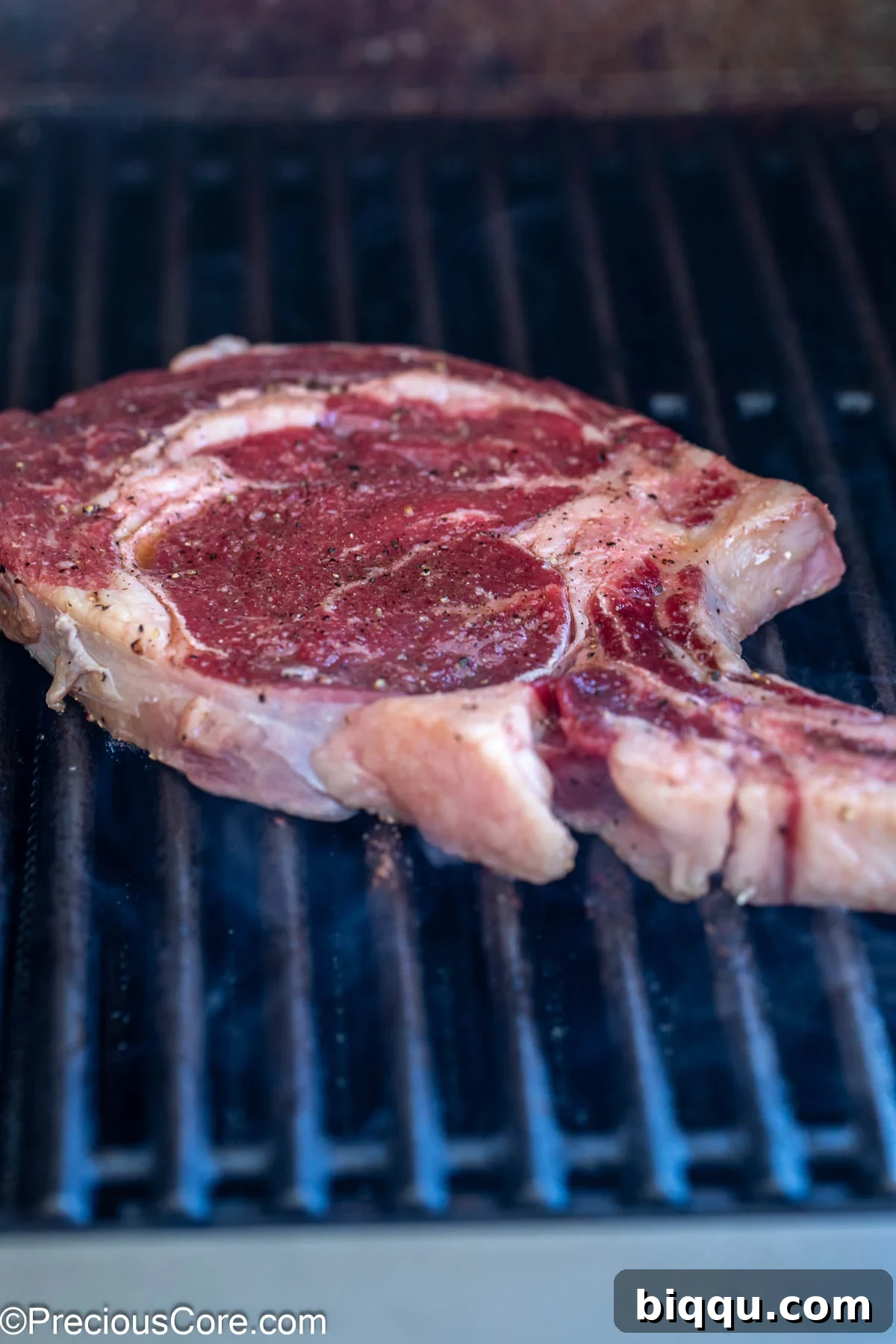
- Preheat your gas grill to high heat, ensuring the grates are thoroughly hot before placing the steak.
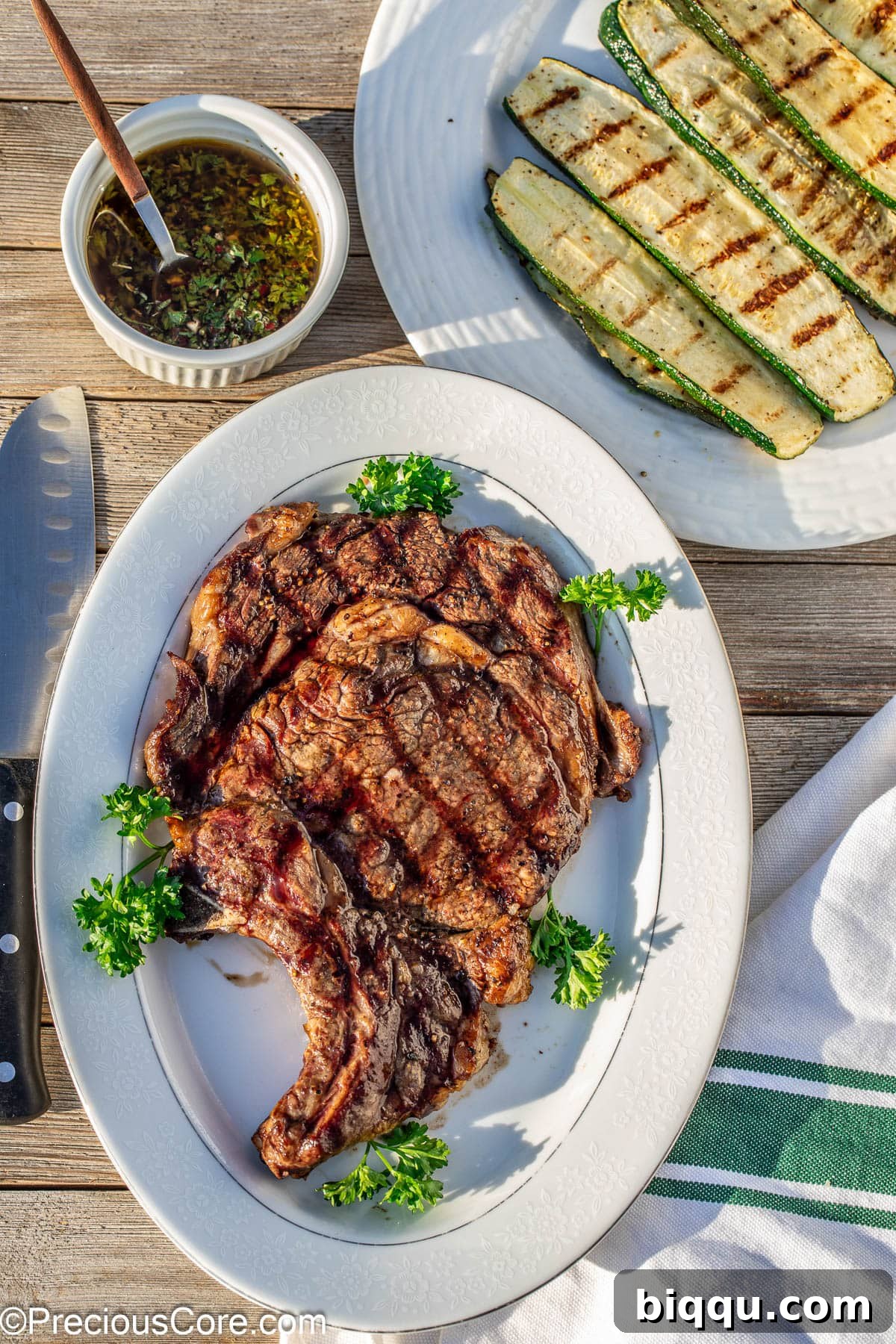
- Place the seasoned ribeye directly over the high heat. Grill for 4 to 5 minutes per side for medium-rare, or until your desired internal temperature is reached. For thicker steaks, you might consider moving it to a cooler zone on the grill (indirect heat) after searing to finish cooking more gently.
4. The Art of Charcoal Grilling
A charcoal grill imparts a smoky flavor that’s hard to beat, perfect for a robust bone-in ribeye.
- Prepare your charcoal grill for two-zone cooking: pile most of the hot coals on one side for direct, high heat, leaving the other side empty for indirect, lower heat.
- Place the seasoned ribeye directly over the hottest coals. Sear each side for 1-2 minutes to achieve a beautiful crust and rich color.
- Once seared, move the steak to the cooler side of the grill (indirect heat). Close the lid and continue to cook for 4-7 minutes per side, depending on thickness and desired doneness. You can flip it once or twice during indirect cooking to ensure even heat distribution.
Top Tip: Always dry your steak thoroughly with paper towels before seasoning and cooking. This is key to achieving that perfect, crispy crust.
Achieving the Ideal Doneness: A Temperature Guide
Knowing when your steak is perfectly cooked is crucial. The most accurate way is to use an instant-read meat thermometer. Insert the thermometer horizontally into the thickest part of the steak, avoiding the bone, as the bone will read hotter than the meat itself.
- Rare: 120-125°F (49-52°C) – Cool red center, very tender and juicy.
- Medium Rare: 130-135°F (54-57°C) – Warm red center, tender and juicy. (Often considered the ideal for ribeye).
- Medium: 140-145°F (60-63°C) – Warm pink center, slightly firmer.
- Medium Well: 150-155°F (66-68°C) – Slightly pink center, mostly cooked through.
- Well Done: 160-165°F (71-74°C) – No pink, firm throughout.
Remember that the steak’s internal temperature will rise by 5-10°F (3-6°C) as it rests off the heat. This is known as carryover cooking, so remove your steak slightly before your target temperature.
The Finger and Palm Method: A Traditional Technique
While a thermometer is king for accuracy, the finger and palm method is a useful trick for estimating doneness, especially when a thermometer isn’t available. Gently press your finger against the cooked steak and compare its resistance to the feel of the fleshy part of your palm below your thumb:
- Raw Steak: The soft, relaxed feel of your open palm.
- Medium-Rare: Touch your thumb to your middle finger; the fleshy part of your palm will feel slightly firmer, similar to a medium-rare steak.
- Medium: Touch your thumb to your ring finger; your palm will feel firmer still, akin to a medium-cooked steak.
- Medium-Well: Touch your thumb to your pinky finger; your palm will feel quite firm, mirroring a medium-well steak.
This method requires practice and is less precise than a thermometer, but it can be a good quick check in a pinch. Consider using both methods initially to calibrate your senses.
Expert Tips for a Flawless Bone-In Ribeye
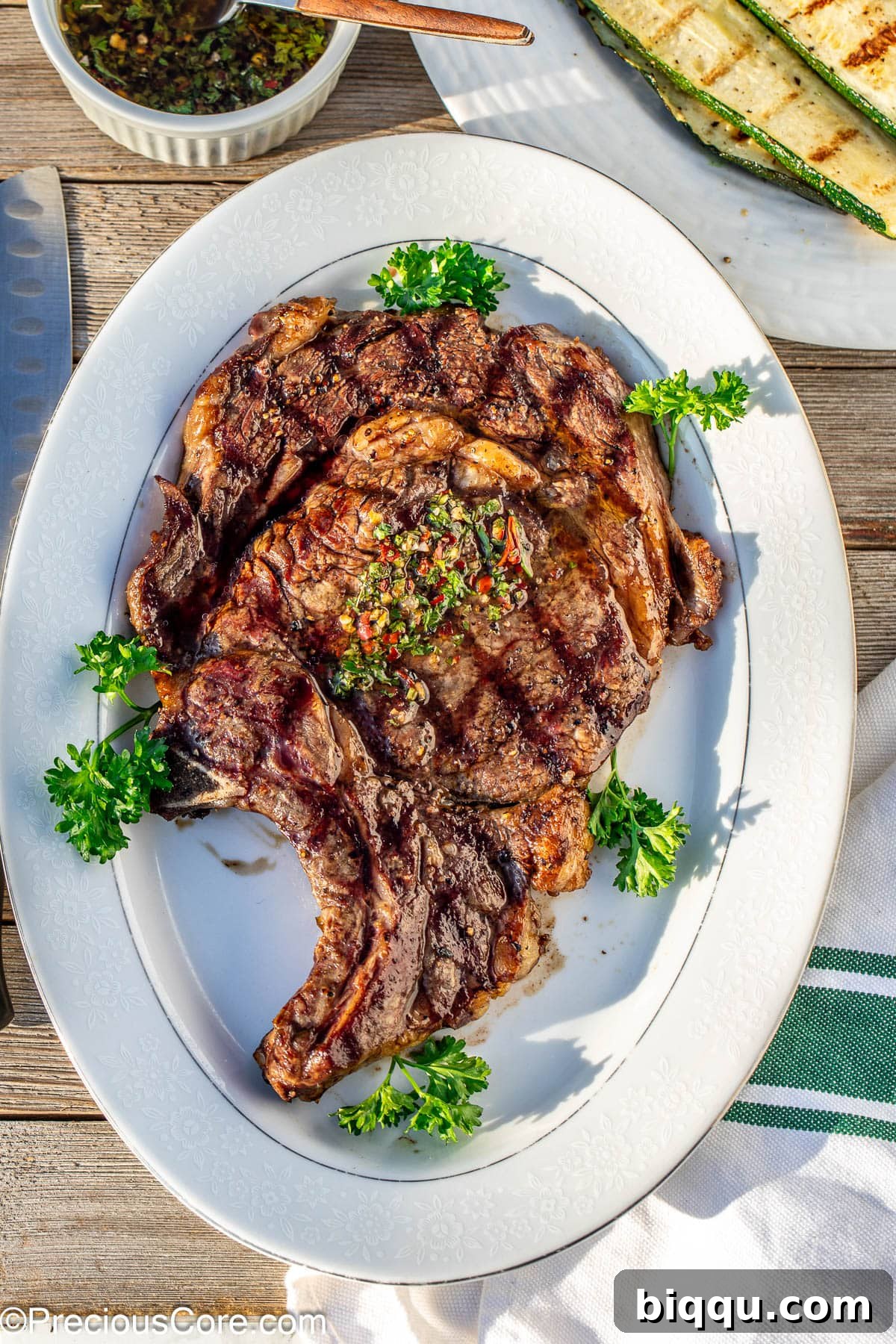
- The Importance of Resting: After cooking, transfer your steak to a cutting board and tent it loosely with foil. Let it rest for at least 5-10 minutes. This crucial step allows the juices, which have been pushed to the center by the heat, to redistribute evenly throughout the meat, resulting in a more tender and juicy steak. Skipping this step leads to juices gushing out when you cut, leaving you with a dry steak.
- Avoid Cutting to Check Doneness: Never cut into the center of your steak to check for doneness. This will cause precious juices to escape, drying out your steak. Rely on a good meat thermometer instead.
- Reheating Leftovers: Storing leftover bone-in ribeye in an airtight container in the refrigerator is best. Avoid reheating in the microwave, as it often results in a rubbery texture. Instead, gently reheat in a 250°F (120°C) oven until just warm, then quickly sear it in a hot pan for 30 seconds per side to revive the crust. This “reverse sear” reheating method offers the best texture.
- Resist Constant Flipping: When searing, allow the steak to cook undisturbed on each side for several minutes before flipping. This allows a robust, flavorful crust to form, which is key to a truly great steak.
- Carving Your Steak: For optimal tenderness, slice your bone-in ribeye against the grain. This shortens the muscle fibers, making each bite easier to chew and more enjoyable.
- Invest in Quality Meat: The quality of your steak significantly impacts the final result. Whenever possible, purchase from a reputable butcher who can provide high-quality, well-marbled cuts.
Frequently Asked Questions (FAQs) About Bone-In Ribeye Steak
What is the best way to cook a ribeye steak with a bone in it?
There isn’t a single “best” method, as it often comes down to personal preference and available equipment. Grilling offers a smoky flavor and great char, while pan-searing provides an incredible crust. The reverse sear (oven + sear) is excellent for even cooking, especially for thicker steaks. Each method outlined in this guide will produce a fantastic bone-in ribeye.
Is ribeye steak better with the bone in?
Many culinary experts and steak enthusiasts agree that bone-in ribeye is superior. The bone imparts a deeper, richer flavor to the surrounding meat and helps insulate the steak, leading to a juicier and more evenly cooked result. The fat content attached to the bone also contributes to the steak’s tenderness.
Should I marinate a bone-in ribeye?
Given the ribeye’s naturally rich marbling and robust flavor, marinating is generally not necessary. Simple seasonings like salt and pepper are often enough to highlight its delicious taste. Over-marinating can sometimes detract from the steak’s inherent qualities. Focus on proper cooking techniques and doneness for the best flavor.
Serving Suggestions: What to Pair with Your Ribeye
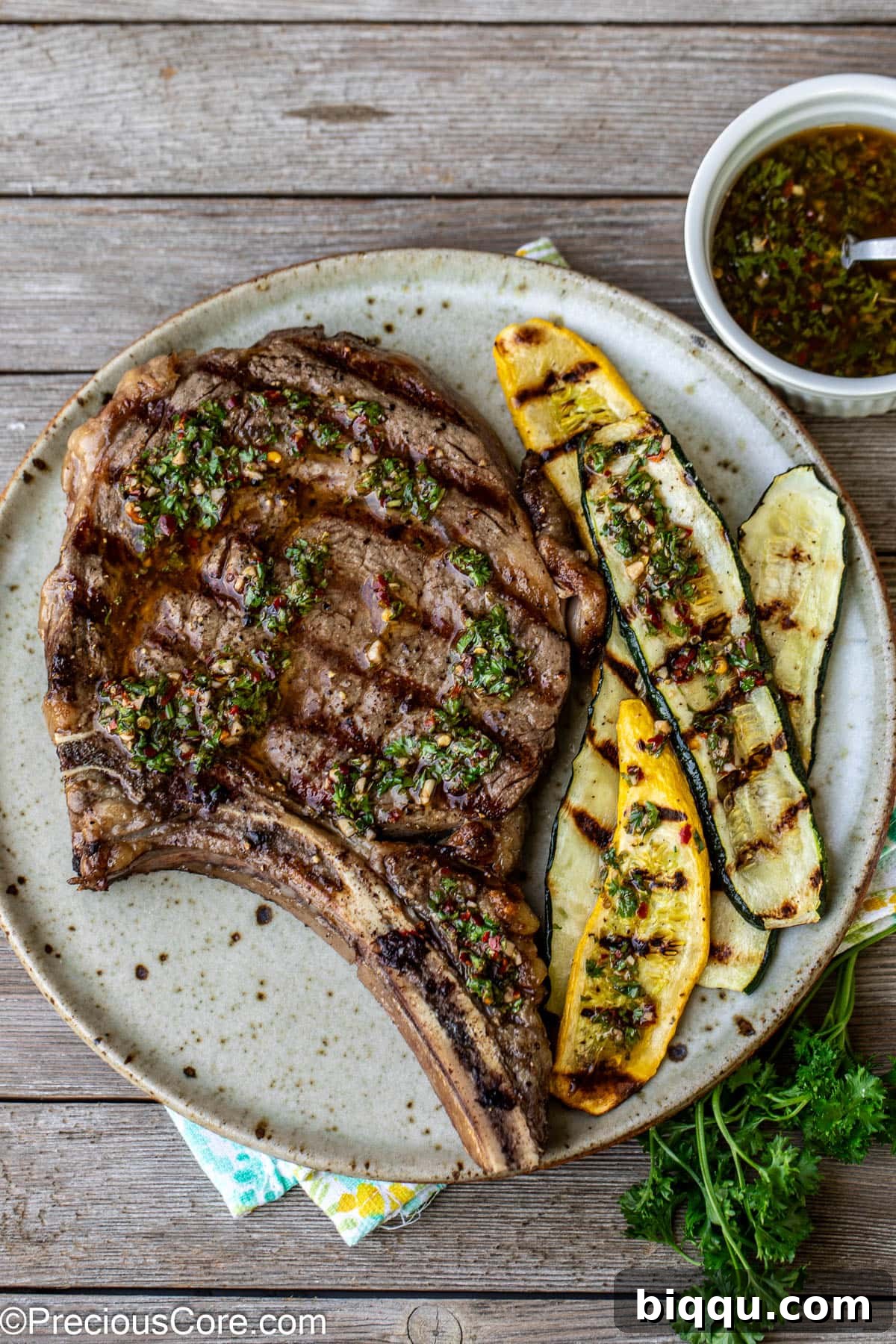
A glorious bone-in ribeye deserves equally delicious side dishes. While grilled zucchini is a fantastic choice that complements the steak beautifully, here are other options to elevate your meal:
Perfect Pairings
Enhance your bone-in ribeye experience with these delightful side dishes:
Rosemary Garlic Mashed Potatoes
Pan Fried Brussels Sprouts With Bacon
Honey Whole Wheat Dinner Rolls
Brown Sugar Honey Glazed Carrots
Garlic Butter Green Beans
More Steak Recipes to Explore
- Pan Seared Flank Steak
- Steak and Pasta
- Pan Seared Ribeye Steaks
- Steak and Scrambled Eggs
- Steak Fried Rice
Cooking a bone-in ribeye steak at home is a rewarding experience that produces incredibly satisfying results. With the right techniques and a little attention to detail, you can create a culinary masterpiece that rivals any restaurant. Enjoy the journey of mastering this magnificent cut!
If you make this recipe, please consider sharing your feedback. Your rating and comments are invaluable! Thank you!