
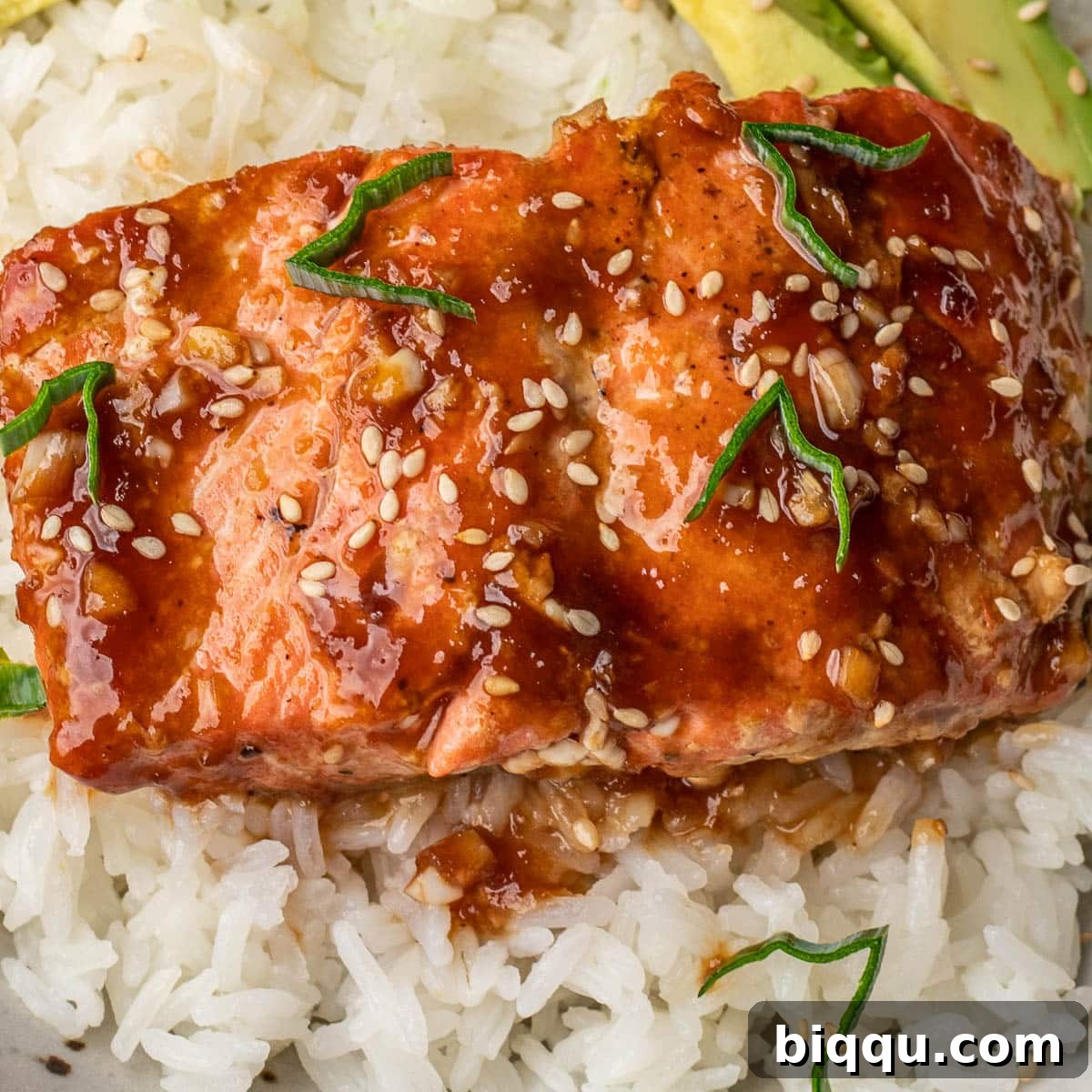
Pan Fried Teriyaki Salmon: Your Go-To Quick & Flavorful Weeknight Meal
This Pan Fried Teriyaki Salmon recipe promises a delightful culinary experience, featuring perfectly cooked salmon fillets generously coated in a luscious, homemade sweet and savory teriyaki sauce. Prepare to impress your family and friends with this incredibly satisfying dinner that comes together in just 17 minutes! It pairs exquisitely with steaming hot, fluffy rice and your favorite fresh vegetable side dish, making it an ideal choice for a healthy and hearty meal any night of the week.
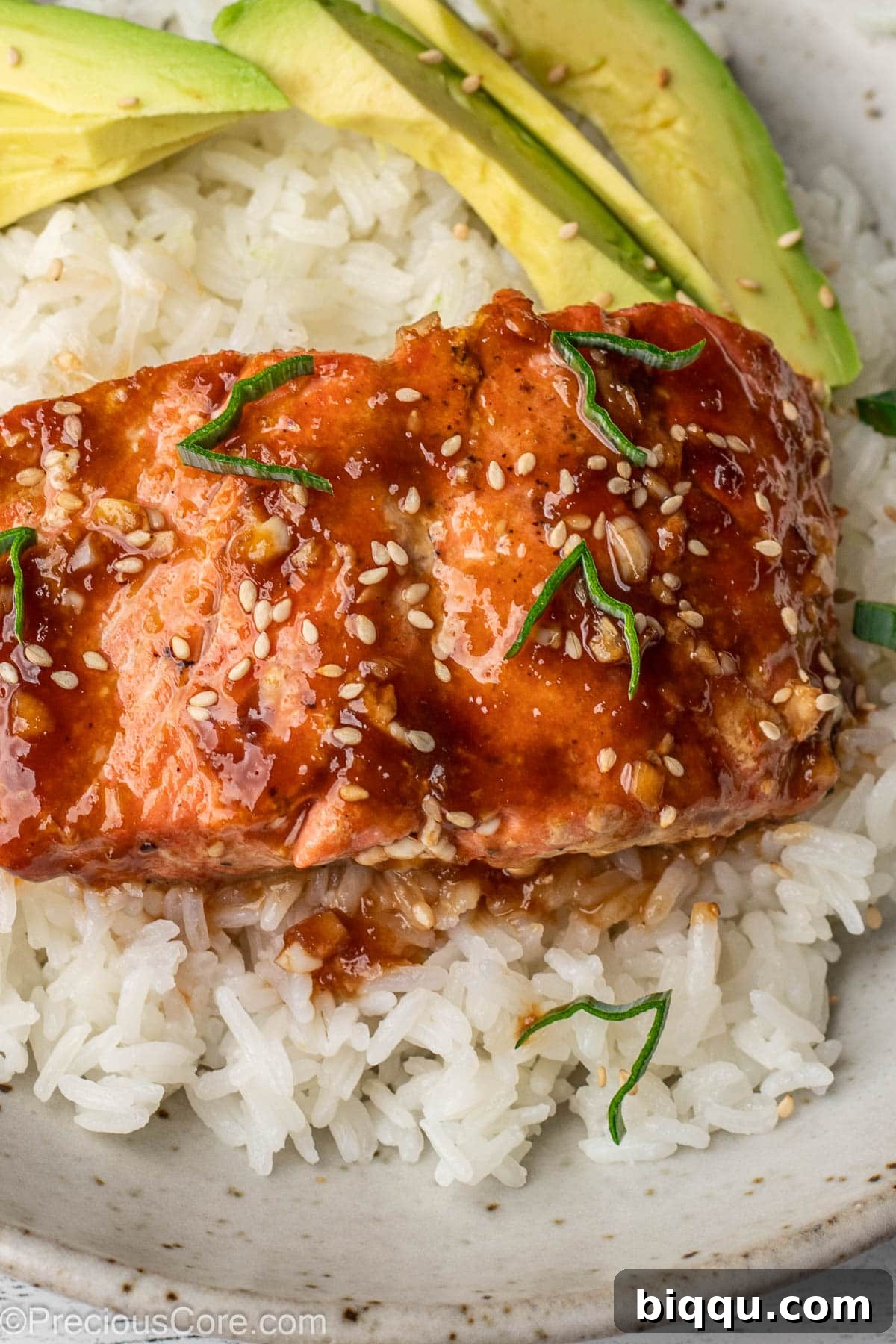
There’s nothing quite like the irresistible taste of expertly prepared teriyaki salmon. The vibrant, glossy sweet and salty sauce, inspired by classic Japanese flavors, transforms simple salmon fillets into a gourmet-level dish. My family, especially my girls, adore the teriyaki salmon from our favorite restaurant, Waba Grill, and this homemade rendition captures that same beloved flavor profile, making it a staple in our kitchen. The rich glaze beautifully complements the delicate texture of the fish, making every bite truly memorable.
While rice is the traditional accompaniment, the versatility of this teriyaki salmon means you can enjoy it with a variety of other sides. From fresh steamed broccoli and carrots for a quick and healthy option to more elaborate vegetable creations, this dish adapts effortlessly to your preferences. A sprinkle of toasted sesame seeds on top not only adds a lovely textural crunch but also enhances the authentic Asian restaurant aesthetic and flavor.
If you appreciate perfectly cooked, flaky salmon, you’ll also love exploring other fantastic salmon recipes like our Pan Grilled Salmon, the convenient Salmon and Broccoli Sheet Pan, the robust Grilled Sockeye Salmon, and the bright, zesty Lemon Butter Salmon. Each offers a unique way to enjoy this nutritious fish.
Table of Contents
- Why This Recipe Works
- What Is Teriyaki?
- Ingredients Needed for Pan Fried Teriyaki Salmon
- Substitutions and Variations
- How To Pan Fry Teriyaki Salmon
- Expert Tips for Perfect Teriyaki Salmon
- Storage and Reheating Tips
- Recipe FAQs
- Serving Teriyaki Salmon
- Similar Recipes
- Pan Fried Teriyaki Salmon Recipe Card
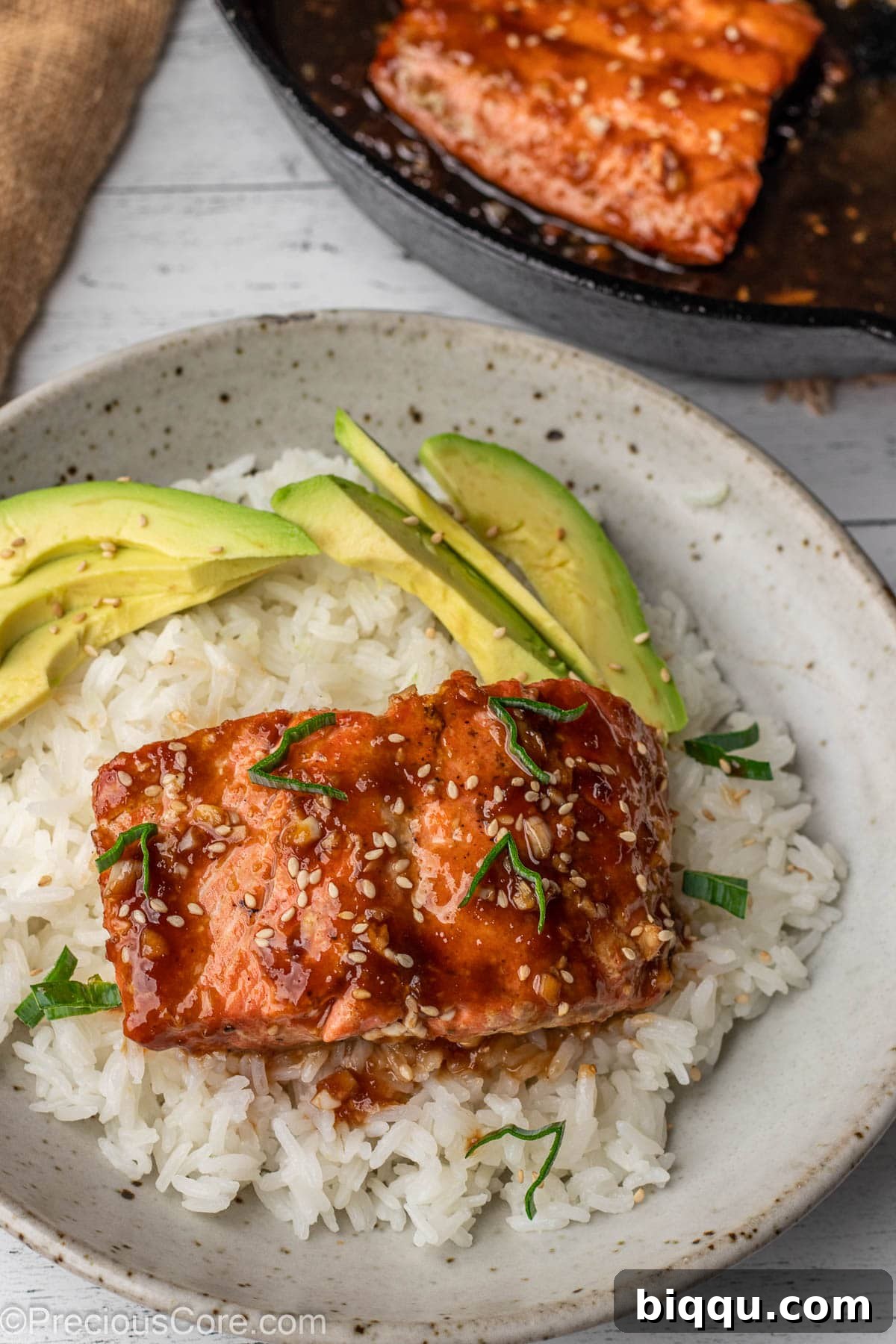
Why This Pan Fried Teriyaki Salmon Recipe Works So Well
This pan-fried teriyaki salmon recipe stands out as a winner for several compelling reasons:
- Achieve Perfectly Cooked, Flaky, and Juicy Fish Every Time. The secret to avoiding dry or burnt salmon lies in our precise cooking technique. Instead of coating the salmon in sauce before cooking (which often leads to sugar caramelizing and burning before the fish is done), we pan-fry the salmon first to achieve a beautiful sear and perfect doneness. Then, the rich teriyaki sauce is simmered separately and generously basted over the cooked fish, ensuring a glossy, flavorful glaze without any burning. This method guarantees a tender, flaky interior and a deeply satisfying sauce.
- Experience a Harmonious Balance of Sweet and Salty Flavors. The homemade teriyaki sauce is meticulously crafted to deliver that ideal umami profile – a delightful interplay of savory soy sauce and a touch of sweetness from brown sugar, balanced by the tang of lemon. This intricate flavor combination is what makes the teriyaki glaze so incredibly addictive and complements the natural richness of the salmon.
- Remarkably Easy to Prepare, Even for Novice Cooks. Don’t be intimidated by restaurant-quality results; this recipe is designed for simplicity. By following our straightforward, step-by-step guide, you’ll master the art of cooking salmon to perfection and creating an exquisite sauce with minimal effort. It’s a foolproof method for a delicious meal.
- Incredibly Quick, Ready in Less Than 20 Minutes. For those busy weeknights when time is of the essence, this recipe is a lifesaver. From start to finish, you can have a gourmet-tasting meal on the table in under 20 minutes, making it faster than ordering takeout and significantly healthier.
- The Sauce is a Match Made in Heaven for Rice and Other Sides. Beyond its perfect pairing with fluffy white rice, the rich, savory teriyaki sauce is incredibly versatile. It complements a wide array of side dishes, from simple steamed vegetables to roasted potatoes, allowing you to easily customize your meal.
To make dinner even more efficient, start cooking your rice on one burner while you prepare this Pan Fried Teriyaki Salmon on another. By the time your succulent salmon is ready, your rice will be perfectly cooked, allowing you to serve a complete and wholesome dinner simultaneously. It’s the ultimate hack for a stress-free, delicious meal.
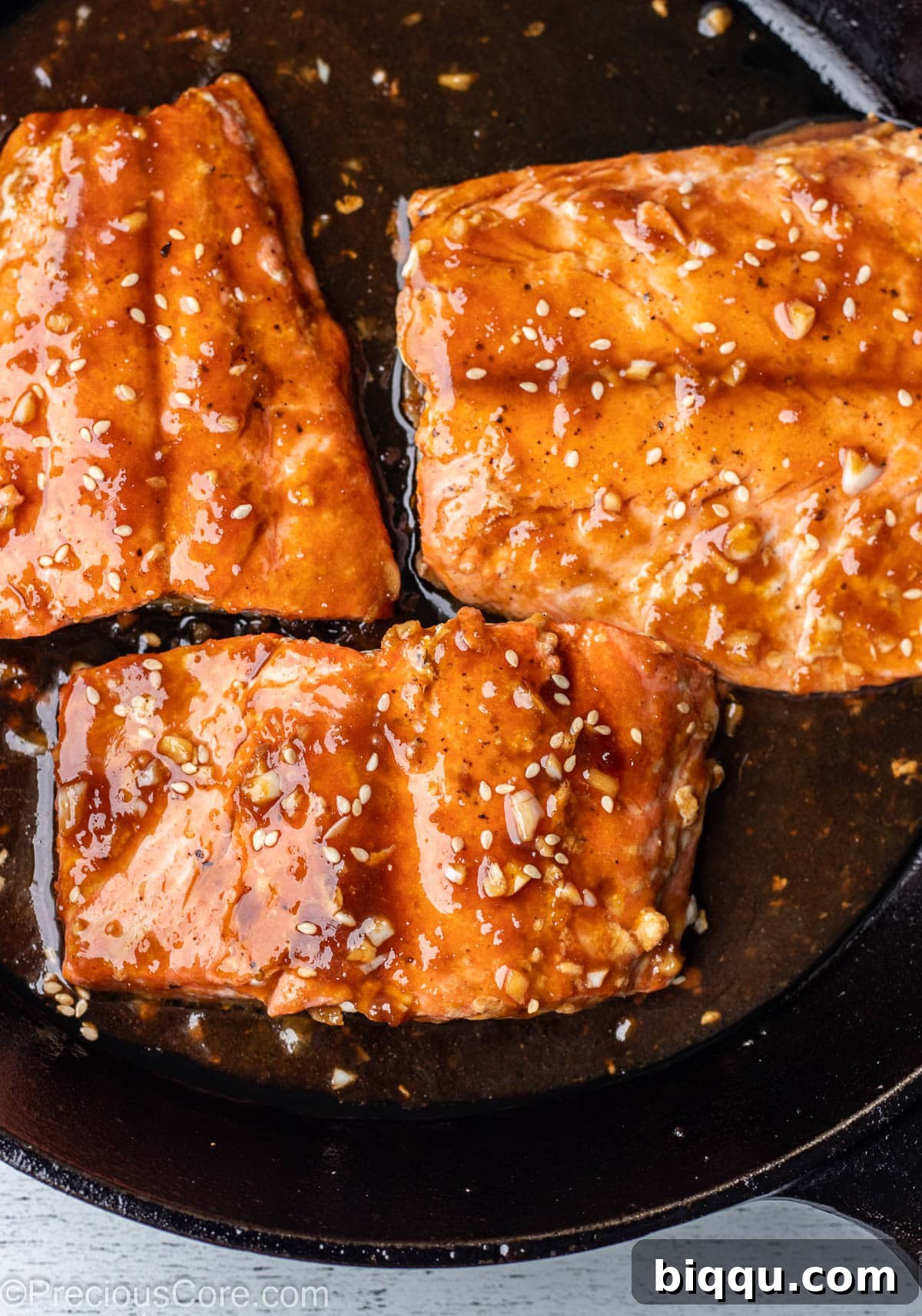
What Is Teriyaki? Unpacking This Classic Japanese Flavor
The term “Teriyaki” is deeply rooted in Japanese culinary tradition, derived from two distinct Japanese words: “teri,” which beautifully translates to “shine” or “luster,” and “yaki,” which encompasses various cooking methods such as “to cook,” “to grill,” or “to fry.” This combination perfectly describes the signature glossy sheen of dishes prepared with teriyaki sauce.
At its heart, teriyaki refers to a versatile sweet and savory sauce that is a cornerstone of Japanese cooking. It’s skillfully used in multiple ways: as a glistening glaze brushed over proteins, a flavorful marinade to infuse depth into meats and fish, or even as a dipping sauce to enhance a variety of dishes. The foundational ingredients typically include soy sauce for its umami and saltiness, sugar for sweetness and caramelization, and mirin, a type of sweet rice wine essential for authentic Japanese flavor, providing a subtle tang and enhancing the “teri” (shine).
For this particular pan-fried teriyaki salmon recipe, we’ve opted for a slight twist on the traditional sauce by incorporating hoisin sauce and lemon juice instead of mirin. Hoisin sauce adds a rich, slightly thicker consistency and a complex savory-sweetness, while the fresh lemon juice brilliantly mimics the acidity that mirin would typically provide, ensuring a perfectly balanced flavor profile. If you’re a purist and wish to explore the traditional route with mirin, you can often find it at well-stocked Asian grocery stores, which will lend an even more authentic Japanese nuance to your homemade teriyaki salmon.
Essential Ingredients for Pan Fried Teriyaki Salmon
Crafting this incredibly flavorful teriyaki salmon requires just a handful of accessible ingredients, all coming together in under 20 minutes for a delightful meal. Here’s a closer look at the key components you’ll need to create this pan-fried masterpiece:
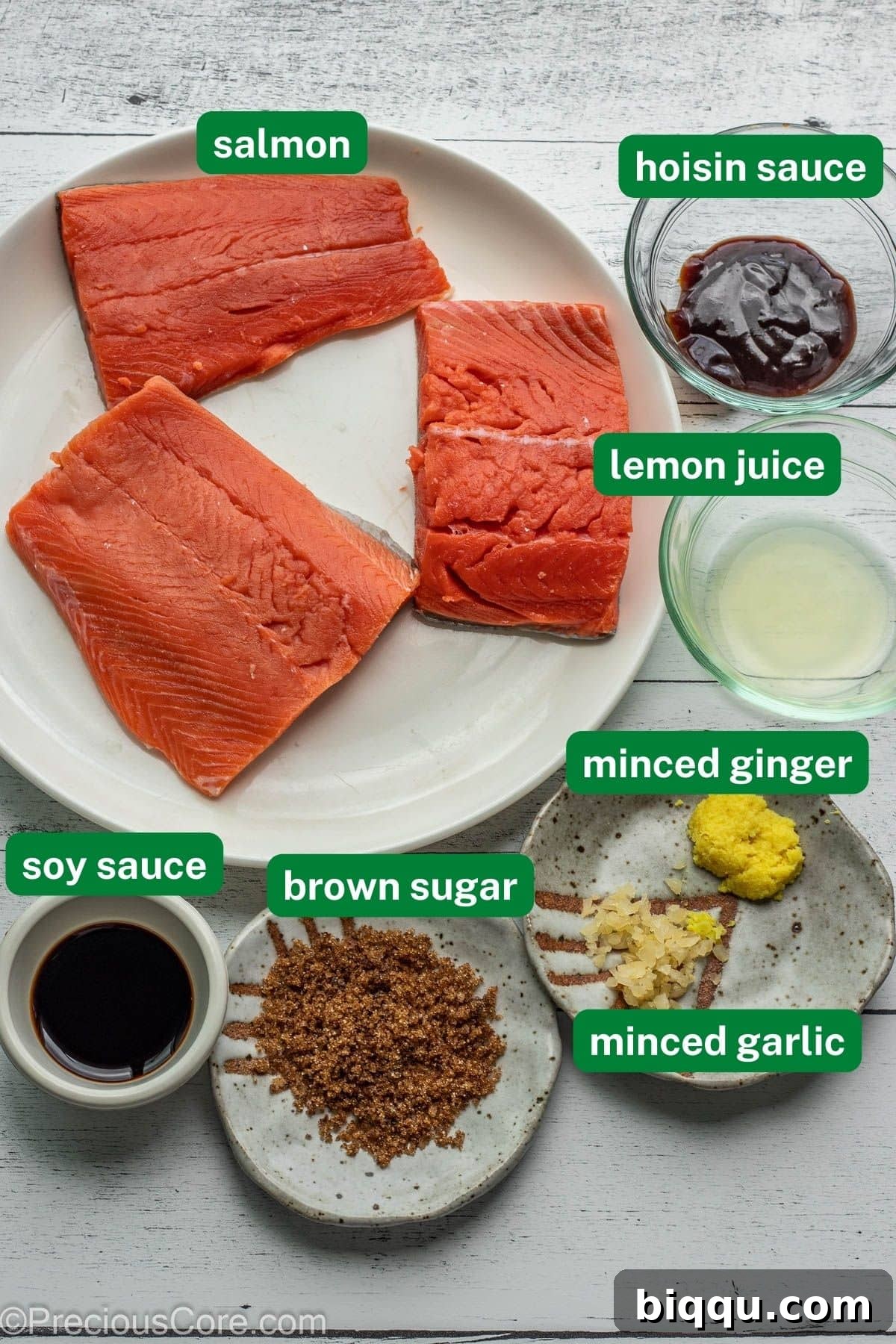
- Salmon Fillets: The star of our dish! For the richest flavor and best texture, we highly recommend using wild-caught salmon. It typically offers a firmer texture and a more pronounced flavor profile. If wild-caught isn’t available, opt for responsibly farm-raised salmon, ensuring sustainable practices. You can use either skin-on or skinless fillets; skin-on helps keep the fish moist and can crisp up beautifully in the pan.
- Lemon Juice: Freshly squeezed lemon juice is paramount here. Its bright acidity is crucial for cutting through the sweetness of the brown sugar and balancing the richness of the salmon, much like mirin does in traditional teriyaki. It brightens the entire flavor profile.
- Salt, Black Pepper, and Light Olive Oil (not pictured): These three classic kitchen staples are essential for perfectly pan-frying the salmon. Salt enhances the natural flavor of the fish, black pepper adds a subtle warmth, and a neutral-flavored oil like light olive oil ensures a beautiful golden-brown sear without imparting unwanted flavors.
- Brown Sugar: This provides the signature sweetness to our teriyaki glaze, contributing to its luscious, caramelized finish. Brown sugar also adds a deeper, more complex sweetness compared to white sugar.
- Minced Garlic and Ginger: This dynamic duo is a powerhouse of flavor, elevating the teriyaki sauce with their pungent, aromatic, and slightly spicy notes. Freshly minced garlic and ginger are non-negotiable for the best results; they infuse the sauce with an unparalleled depth of taste. For easy mincing, a Microplane zester/grater works wonders.
- Soy Sauce: The backbone of any teriyaki sauce, soy sauce provides the essential umami and savory depth. We recommend using a good quality, low-sodium soy sauce to better control the overall saltiness of the dish.
- Hoisin Sauce: This ingredient is our secret weapon, offering a rich, slightly sweet, and tangy complexity that enhances the teriyaki sauce. It provides a beautiful gloss and depth of flavor, making our homemade sauce truly exceptional.
- Water: A small amount of water helps to create the perfect consistency for our sauce, allowing it to simmer and reduce into a thick, glossy glaze that clings beautifully to the salmon.
For the complete list of ingredients with precise measurements, please refer to the detailed recipe card provided below.
Creative Substitutions and Delicious Variations
One of the joys of cooking is the ability to adapt recipes to your pantry or preferences. This pan-fried teriyaki salmon recipe is incredibly flexible, allowing for various substitutions and exciting variations:
- Other Fish Options: No salmon on hand? No problem! This teriyaki sauce pairs wonderfully with other firm, flaky white fish. Feel free to substitute salmon with trout, halibut, cod, or red snapper. Adjust cooking times slightly based on the thickness of your chosen fish.
- Soy Sauce Alternatives: If you’re looking for an alternative, Maggi seasoning sauce offers a similar savory profile to soy sauce. For a gluten-free option, tamari is an excellent choice. You can also opt for a low-sodium soy sauce to manage the salt content.
- Sweetener Swaps: Instead of brown sugar, honey or maple syrup can be used to provide sweetness to the sauce. These alternatives will subtly alter the flavor profile, offering a slightly different, yet equally delicious, sweetness.
- Spice It Up: For those who enjoy a little heat, add a pinch or two of red pepper flakes to the sauce mixture. Alternatively, a dash of sriracha or chili garlic sauce can be incorporated for an extra spicy kick.
- Teriyaki Chicken Adaptation: This recipe isn’t just for fish! Replace the salmon fillets with bite-sized pieces of chicken breast or thigh. Cook the chicken until fully done, then proceed with simmering and basting in the teriyaki sauce for a fantastic teriyaki chicken.
- Aromatic Sesame Oil Finish: For an added layer of nutty flavor, drizzle a tiny amount of toasted sesame oil over the cooked salmon just before serving. A little goes a long way to enhance the Asian-inspired profile.
- Add Vegetables to the Pan: While the salmon is resting, you can quickly sauté some thinly sliced bell peppers, snap peas, or broccoli florets in the same pan with a little sauce to create a complete meal in one skillet.
If you’re looking for more inspiration, be sure to check out our Cajun Honey Butter Salmon for a different flavor profile. And for those who enjoy Asian-inspired main courses, our Steak Fried Rice and Beef and Vegetable Stir Fry are equally delicious and satisfying.
Mastering How To Pan Fry Teriyaki Salmon: A Step-by-Step Guide
Achieving restaurant-quality pan-fried teriyaki salmon at home is simpler than you think. In just four straightforward steps, you can create perfectly cooked, flaky salmon bathed in an irresistibly delicious homemade teriyaki glaze. Follow these instructions carefully to bring those coveted Japanese restaurant flavors right into your kitchen:
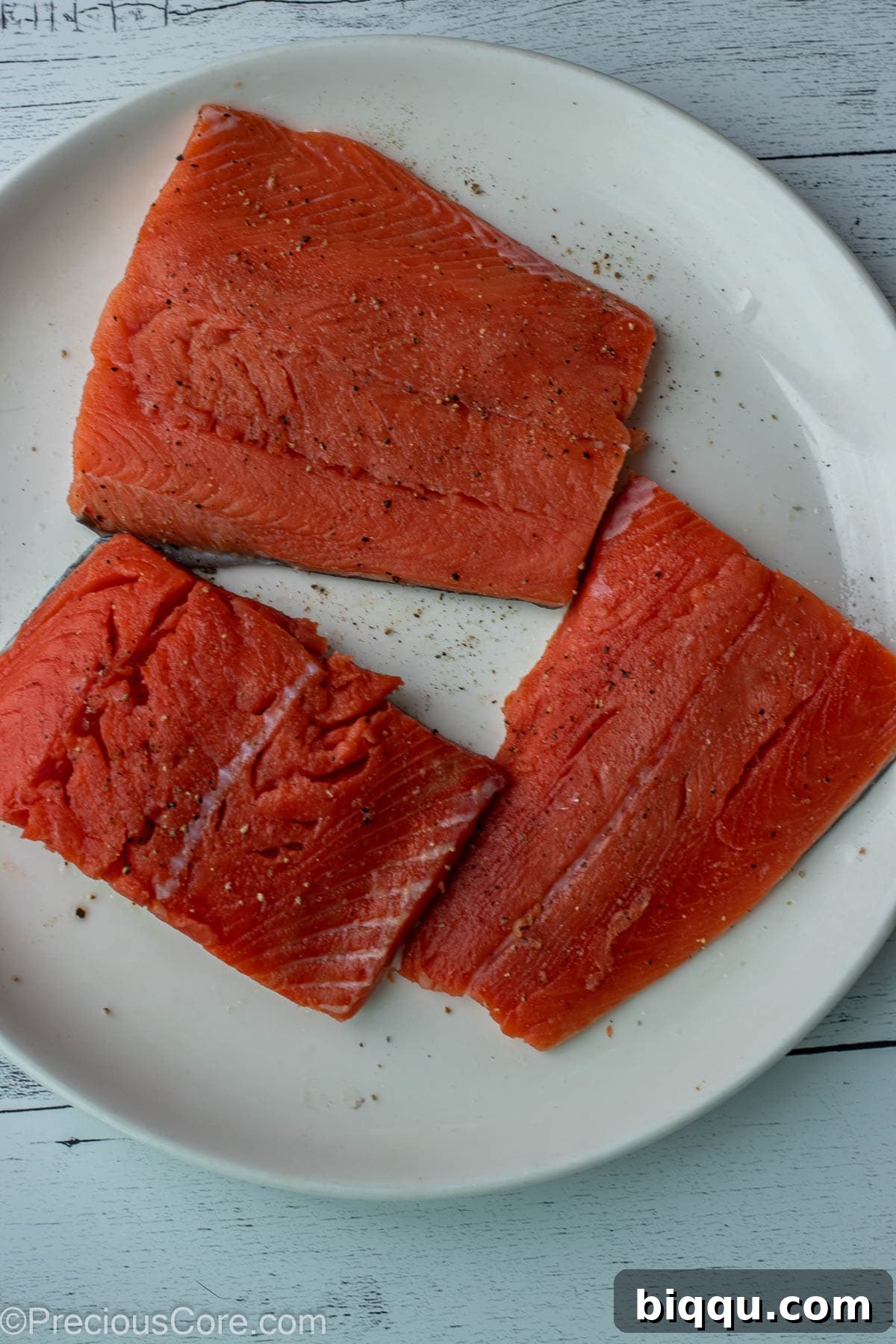
Step 1: Prepare the Salmon. Begin by gently patting both sides of your salmon fillets completely dry with paper towels. This crucial step helps remove excess moisture, which is key to achieving a beautiful, crispy sear. Once dry, generously season both sides of the salmon fillets with salt and freshly ground black pepper. Don’t be shy with the seasoning; it forms the foundation of the fish’s flavor.
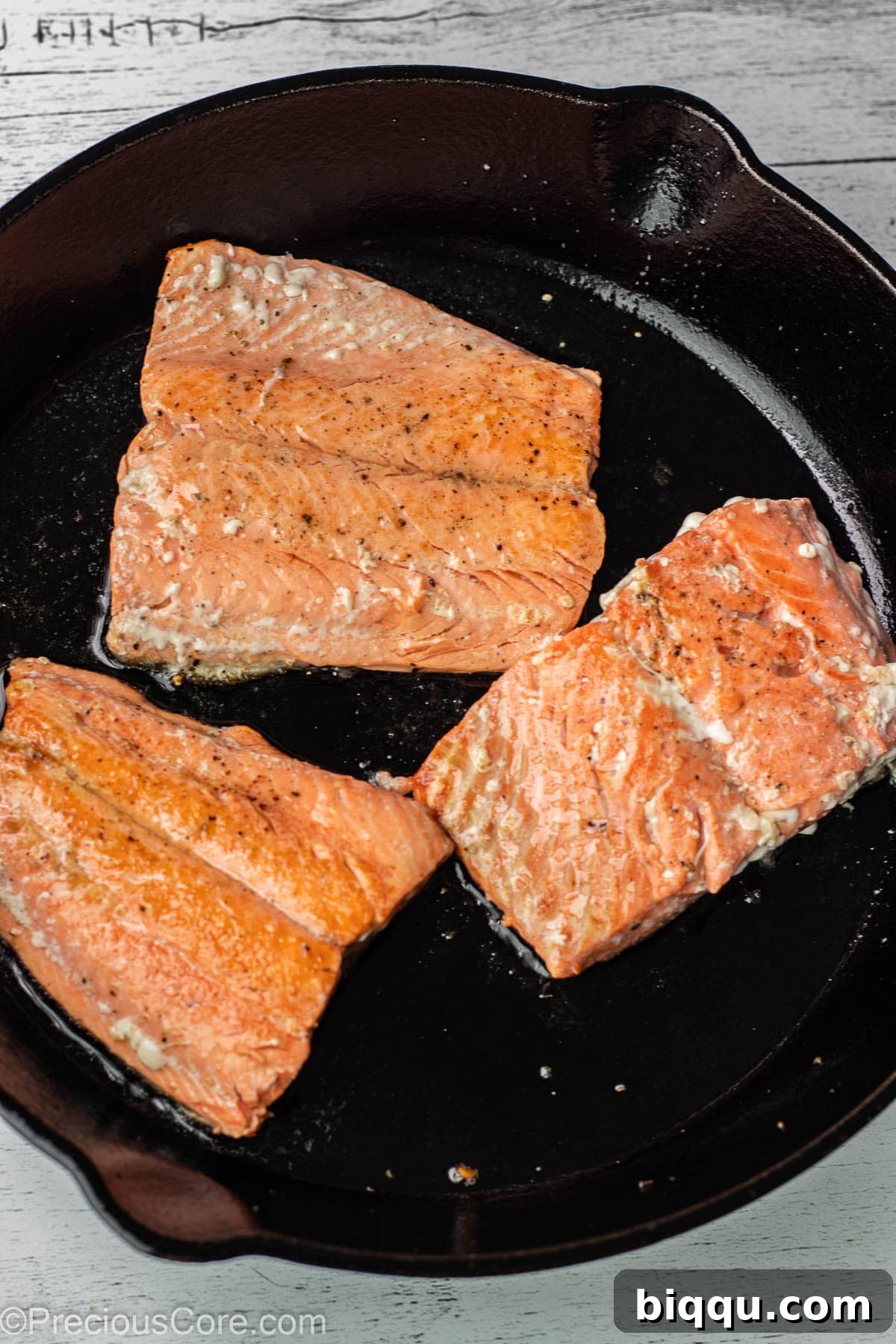
Step 2: Pan Fry the Salmon. Heat 2 tablespoons of light olive oil in a 10-12 inch frying pan over medium heat for about 2 minutes, until it shimmers. Carefully place the seasoned salmon fillets into the hot pan, skin side down first if your salmon has skin. Cook for 2-4 minutes on each side. The exact cooking time will depend on the thickness of your fillets. You’re looking for a beautiful golden-brown crust and for the fish to be cooked through, turning opaque and flaky. Resist the urge to move the fish too much during this stage to allow a proper crust to form.
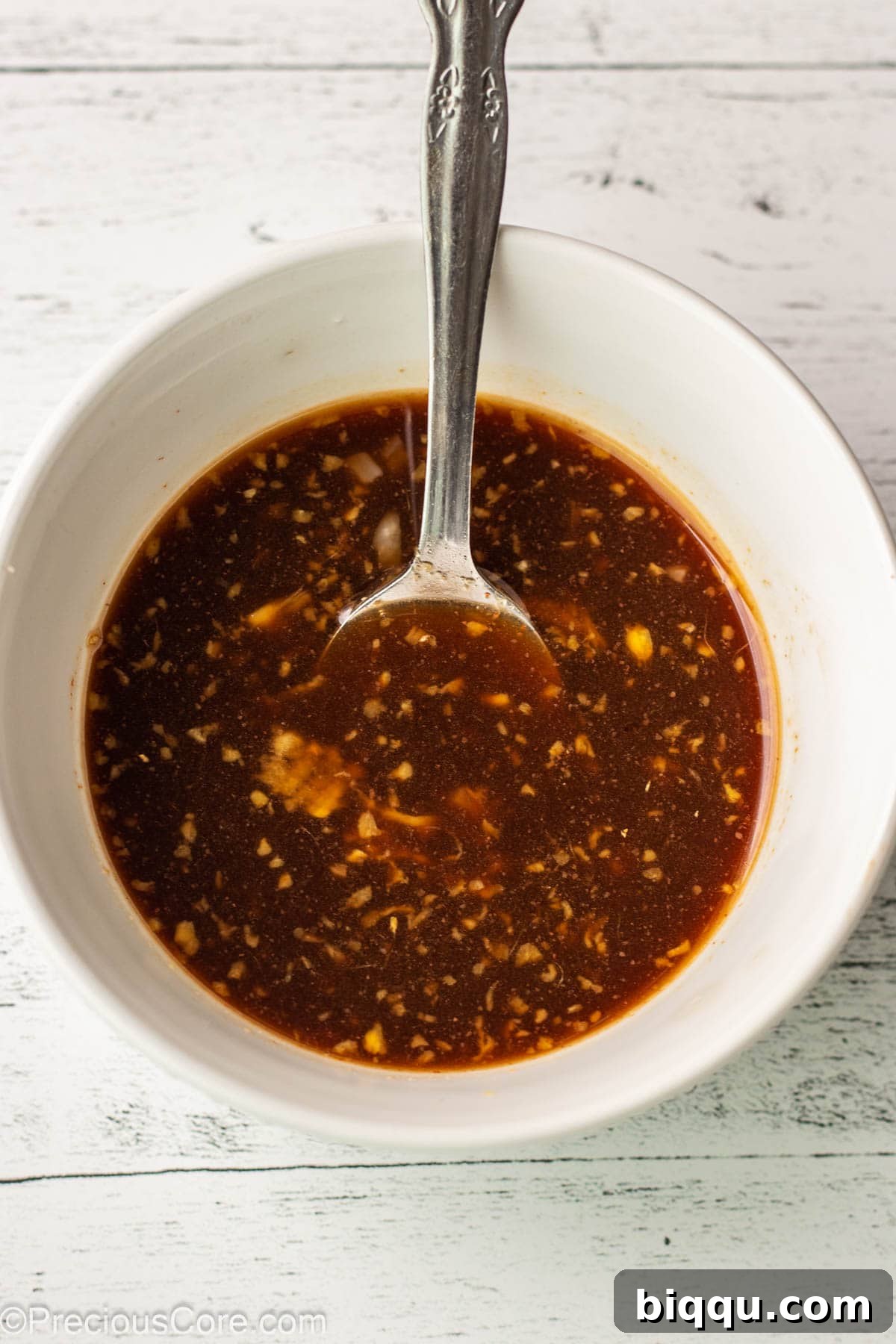
Step 3: Prepare the Teriyaki Sauce. While the salmon cooks, or just before, combine the sauce ingredients. In a small mixing bowl, whisk together the soy sauce, hoisin sauce, brown sugar, minced garlic, minced ginger, lemon juice, and water until the brown sugar is fully dissolved and all ingredients are well combined. This ensures a smooth and consistent sauce.
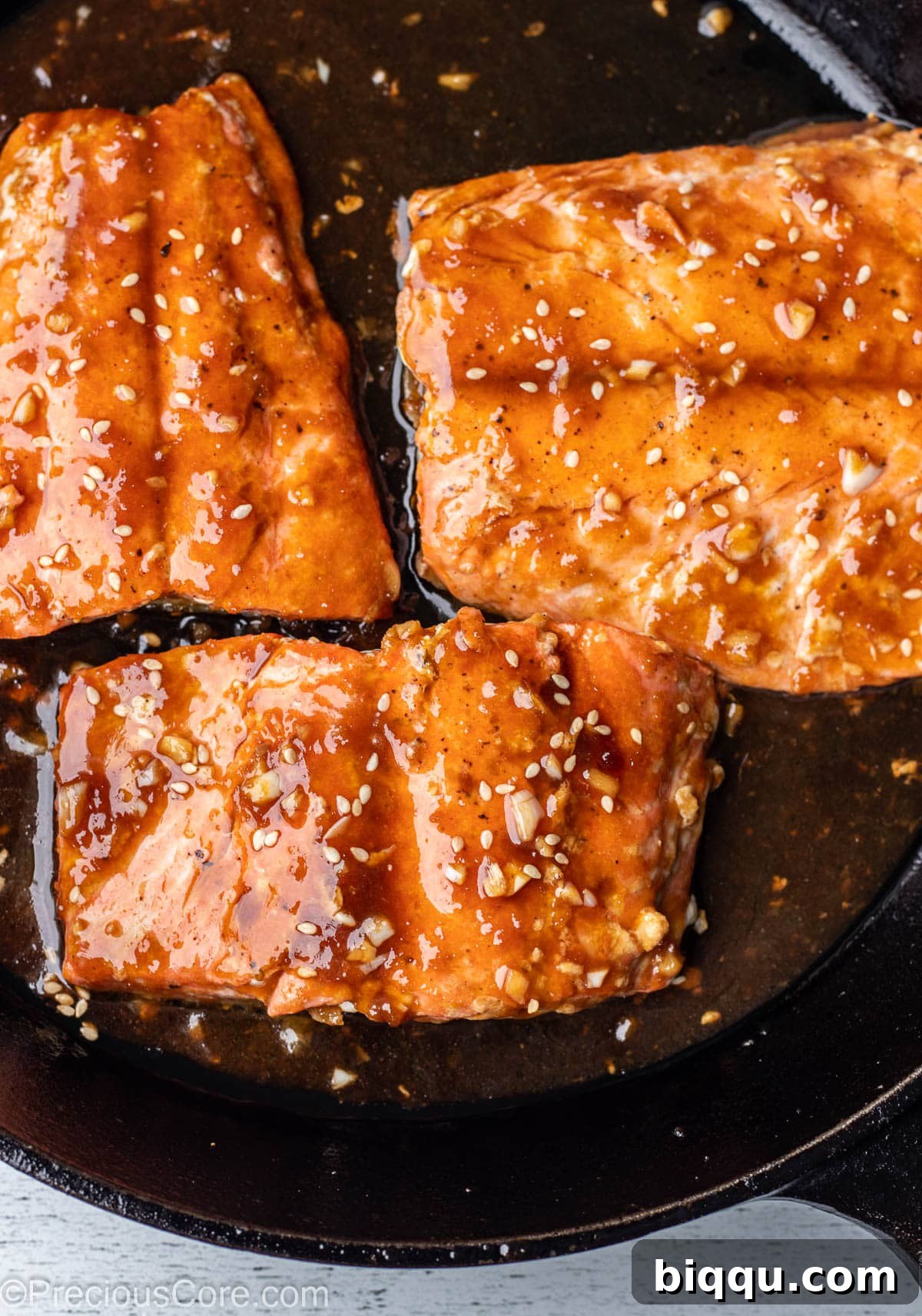
Step 4: Glaze and Serve. Once the salmon is cooked, carefully remove it from the pan and set it aside on a plate. Add the prepared hoisin sauce mixture directly to the hot pan. Bring the sauce to a gentle simmer and let it cook for about one to two minutes, stirring occasionally, until it thickens slightly into a glossy teriyaki glaze. Return the cooked salmon fillets to the pan. Generously spoon the thickened sauce over the fillets, ensuring each piece is beautifully coated. Turn off the heat immediately and serve your delicious teriyaki salmon warm with your favorite side dishes. Garnish with sesame seeds and chopped green onions or leeks for an extra touch of flavor and visual appeal.
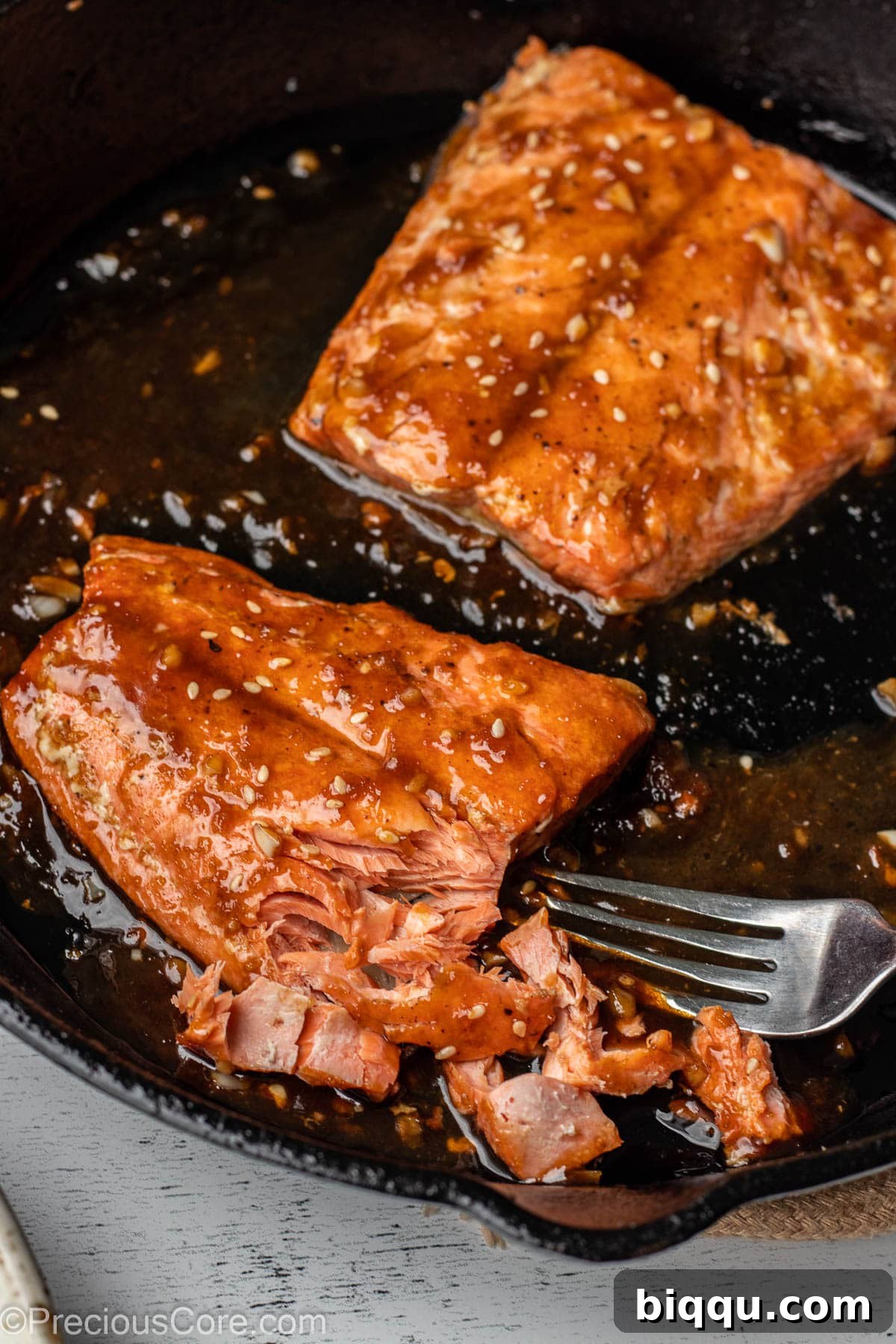
Chef’s Hint: The cooking time for salmon heavily depends on its thickness. For fillets approximately half to three-quarters of an inch thick, about 2 minutes per side is usually sufficient. If your salmon fillets are around 1 inch thick or more, you may need to increase the cooking time to 3-4 minutes per side, or until they reach your desired level of doneness. A good indicator of doneness is when the fish flakes easily with a fork.
Food Safety Reminder: According to the FDA (Food and Drug Administration), salmon should be cooked until the thickest part reaches an internal temperature of 145 degrees Fahrenheit (63 degrees Celsius) to ensure it is safe to eat.
Expert Tips for Achieving Perfect Pan Fried Teriyaki Salmon
To ensure your pan-fried teriyaki salmon turns out perfectly every time, keep these expert tips in mind:
- Don’t Overcrowd the Pan: Cooking salmon in batches if necessary is crucial. Overcrowding the pan will lower the temperature, steam the fish instead of searing it, and prevent that beautiful golden-brown crust from forming. Give each fillet enough space.
- Use a Reliable Skillet: A good quality non-stick pan or a well-seasoned cast iron skillet is your best friend for pan-frying. These pans distribute heat evenly and minimize sticking, ensuring your salmon cooks beautifully without falling apart.
- Adjust Sweetness and Saltiness: Taste your teriyaki sauce before adding it to the pan with the salmon. You can always add a tiny bit more brown sugar for sweetness or a splash more soy sauce for saltiness, or even a bit more lemon juice for brightness, to suit your preference.
- Monitor Heat Carefully: Medium heat is ideal for pan-frying salmon. Too high, and the outside will burn before the inside cooks; too low, and the fish will dry out. Keep an eye on the pan and adjust as needed.
- Rest the Salmon Briefly: After removing the salmon from the pan before adding the sauce, let it rest for a minute or two. This allows the juices to redistribute, ensuring a more tender and moist fillet.
- Don’t Over-Reduce the Sauce: The sauce should be thick enough to coat the back of a spoon, but not overly thick or syrupy. Over-reducing can make it too sticky and intensely flavored. If it becomes too thick, you can thin it with a tiny bit of water or chicken broth.
- Fresh Ingredients Matter: Especially for garlic and ginger, using fresh ingredients will make a significant difference in the vibrancy and depth of your teriyaki sauce. Avoid powdered versions for the best flavor.
Storage and Reheating Tips for Teriyaki Salmon
Proper storage and reheating are key to enjoying your pan-fried teriyaki salmon leftovers without compromising flavor or texture:
- Storage: Once cooked and cooled, store any leftover Pan Fried Teriyaki Salmon in an airtight container in the refrigerator. It will stay fresh and delicious for up to 3 days. Ensure the salmon is completely cool before sealing to prevent condensation, which can make it soggy.
- Reheating in the Oven: For the best results, reheat salmon in the oven. Preheat your oven to 275°F (135°C). Place the salmon fillets on a baking sheet, ideally covered loosely with foil to retain moisture. Reheat for about 10-15 minutes, or until warmed through. This method helps maintain the salmon’s flaky texture and prevents it from drying out.
- Reheating in a Skillet: You can also gently reheat salmon in a non-stick skillet over low heat. Add a tablespoon of water or broth to the pan and cover it to create steam, which helps keep the salmon moist. Reheat for 5-7 minutes, flipping once, until warmed. Be careful not to cook it for too long.
- Microwave (Use with Caution): While convenient, reheating salmon in the microwave can sometimes dry it out or give it a rubbery texture. If using a microwave, place the salmon on a plate, cover loosely with a damp paper towel, and heat in short bursts (30-60 seconds) until just warm. This is generally not the preferred method for optimal quality.
Common Questions About Pan Fried Teriyaki Salmon
Both pan-frying and baking are excellent methods for cooking salmon, and the “better” choice often depends on your priorities. Pan-frying is significantly faster, typically taking less than 10 minutes, and it excels at creating a beautiful, crispy skin and a tender, flaky interior. Baking is a more hands-off approach, often preferred for cooking multiple fillets at once or when you have more time, resulting in a uniformly cooked, moist fish. For this teriyaki recipe, pan-frying is ideal for developing that initial sear and allowing for direct glazing.
Yes, it is essential to flip salmon when pan-frying. Flipping ensures that both sides of the fillet cook evenly and develop a consistent crust and color. Typically, you’ll cook one side (often the skin side first) until golden and then flip to finish cooking the other side, ensuring the salmon is cooked through from edge to edge.
If you are cooking salmon fillets with the skin on, it is highly recommended to pan-fry the skin side down first. This allows the skin to crisp up beautifully and renders some of the fat, contributing to flavor and preventing sticking. Cooking the skin side first also provides a protective barrier against the direct heat, helping the flesh cook more gently and stay moist. Once the skin is crispy and golden, you then flip it to finish cooking the flesh side.
Salmon is done when it flakes easily with a fork at its thickest part and appears opaque throughout. The flesh will transform from translucent to opaque, and you might see some white albumin (protein) coming out, which is a sign it’s fully cooked. The safest way to ensure doneness is to use an instant-read thermometer; the internal temperature should reach 145°F (63°C) as recommended by the FDA.
Yes, you absolutely can use frozen salmon fillets for this recipe. However, it is crucial to thaw them completely before cooking. Pat the thawed salmon very dry with paper towels to remove any excess moisture, as this is essential for a good sear. Using frozen-then-thawed salmon may result in a slightly different texture than fresh, but it will still be delicious.
Delicious Ways to Serve Pan Fried Teriyaki Salmon
Pan Fried Teriyaki Salmon is a versatile main dish that pairs beautifully with a variety of sides, allowing you to create a well-rounded and delicious meal. Beyond simple steamed vegetables, consider these fantastic accompaniments:
- Sautéed Vegetables: A mix of vibrant, tender-crisp vegetables like bell peppers, zucchini, and snap peas can add color, texture, and nutrition.
- Garlic Butter Green Beans: Simple yet elegant, these green beans offer a lovely crunch and a savory, buttery flavor that complements the salmon without overpowering it.
- Easy Coconut Rice: The subtle sweetness and creamy texture of coconut rice provide a wonderful counterpoint to the savory teriyaki, enhancing the Asian-inspired theme.
- Easy Roasted Potatoes: For a more comforting and hearty meal, roasted potatoes offer a satisfying starch that soaks up the extra teriyaki sauce beautifully.
- Quinoa or Brown Rice: For a healthier whole-grain option, quinoa or brown rice are excellent choices that provide fiber and a nutty flavor.
- Asian Noodle Salad: A cold, crisp noodle salad with a light vinaigrette can be a refreshing contrast to the warm salmon.
- Simple Garden Salad: A fresh, green salad with a ginger-sesame dressing can add a delightful lightness to the meal.
Explore More Flavorful Dishes
If you’ve enjoyed this Pan Fried Teriyaki Salmon, you’ll surely love these other delightful recipes that share similar profiles or offer exciting new culinary adventures:
- Steak Fried Rice
- Beef And Vegetable Stir Fry
- Pan Grilled Salmon
- Sheet Pan Salmon and Broccoli
If you make this recipe, please leave a star rating below in the comments! Your rating helps others discover this delicious recipe, and we always love hearing from you! Thank you!
Pan Fried Teriyaki Salmon
5 minutes
12 minutes
17 minutes
4 servings
Rate
Print Recipe
Ingredients
-
1 pound salmon fillets 3 fillets -
¼ teaspoon salt -
⅛ teaspoon ground black pepper -
2 Tablespoons light olive oil -
1 Tablespoon soy sauce -
1 Tablespoon hoisin sauce -
1 Tablespoon brown sugar -
1 Tablespoon lemon juice -
1 teaspoon minced garlic -
1 teaspoon minced ginger -
2 Tablespoons water
Instructions
-
Pat both sides of the salmon fillet dry with paper towels. This removes excess moisture, ensuring a better sear.
-
Sprinkle both sides of the salmon generously with the salt and black pepper for basic seasoning.
-
In a small mixing bowl, whisk together the soy sauce, hoisin sauce, brown sugar, lemon juice, minced garlic, minced ginger, and water until the sugar is dissolved and the sauce is well combined. Set aside.
-
Place a 10-12 inch skillet (preferably cast iron or heavy-bottomed) on medium heat. Add the olive oil and let it heat up for 2 minutes until it shimmers, indicating it’s ready for searing.
-
Carefully add the seasoned salmon to the hot skillet. If using salmon with skin on, place it skin side down first. Let it cook on one side for 2-4 minutes until golden-brown and then flip to the other side, cooking for another 2-4 minutes until done. Increase cooking time if the salmon fillets are 1 inch thick or thicker. (Refer to the Expert Tips and FAQs section for more salmon cooking guidance.)
-
Remove the cooked salmon from the pan and set aside on a plate. Add the prepared soy sauce mixture (from step 3) to the same pan. Bring it to a gentle simmer and let it cook for about one to two minutes, stirring occasionally, until it thickens into a rich, glossy teriyaki glaze.
-
Add the salmon fillets back to the pan, ensuring they are nestled in the sauce. Generously spoon the thickened sauce over the fillets, making sure the salmon is thoroughly coated in the delicious glaze.
-
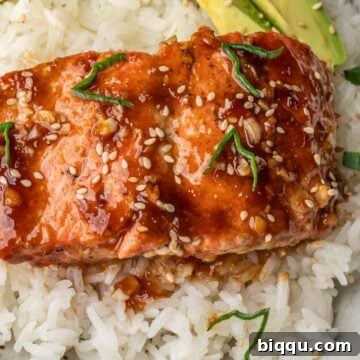
Turn off the heat immediately to prevent overcooking the salmon or over-reducing the sauce. Serve your pan-fried teriyaki salmon warm with your favorite sides. For an authentic touch, garnish the fish with a sprinkle of sesame seeds and finely diced green onions or leeks. Enjoy!
Notes
Serving: This tasty salmon is fantastic with hot rice and a side of steamed or sautéed vegetables for a simple, healthy, and incredibly easy dinner. For those following a low-carb diet, simply omit the rice and pair the salmon with a double portion of vegetables.
Storage: Store any leftover Pan Fried Teriyaki Salmon in an airtight container in the fridge for up to 3 days. Reheat gently in the oven or a skillet to maintain its moisture.
Nutrition
Carbohydrates: 6g |
Protein: 23g |
Fat: 14g |
Saturated Fat: 2g |
Polyunsaturated Fat: 4g |
Monounsaturated Fat: 8g |
Cholesterol: 62mg |
Sodium: 513mg |
Potassium: 584mg |
Fiber: 0.2g |
Sugar: 4g |
Vitamin A: 46IU |
Vitamin C: 2mg |
Calcium: 21mg |
Iron: 1mg
Additional Info
Main Course
Asian
248
Tried this recipe?
Mention @preciouscore or tag #PreciousCore!