
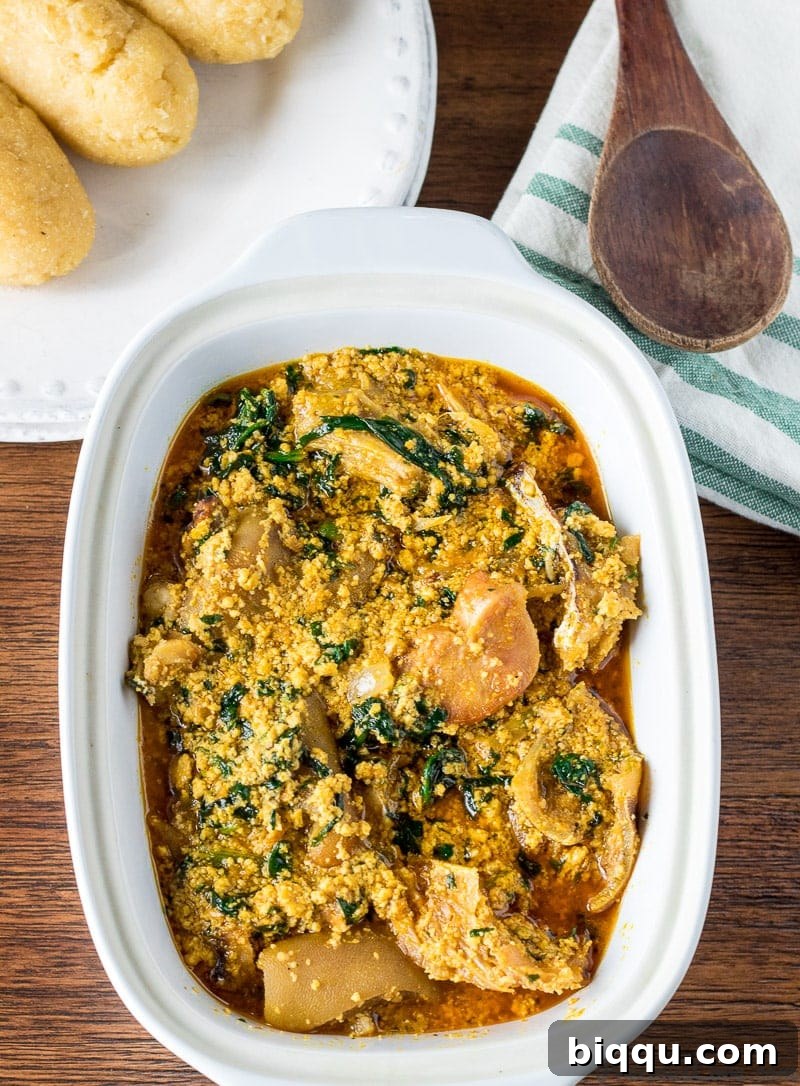
Authentic Nigerian Egusi Soup: A Flavorful Journey with Melon Seeds
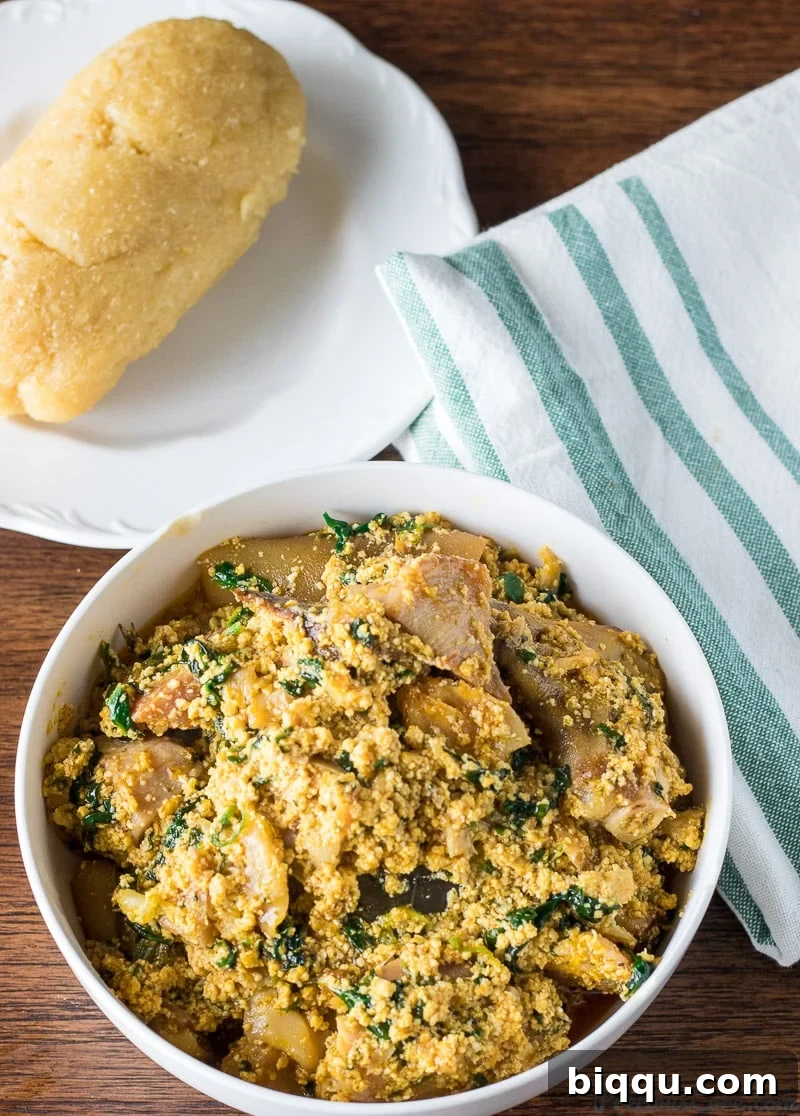
Embark on a culinary adventure to West Africa with Egusi Soup, a cherished Nigerian delicacy that tantalizes the taste buds with its rich, nutty, and subtly spicy flavors. Made from a unique variety of ground melon seeds, this hearty soup is more than just a meal; it’s a cultural cornerstone, celebrated across Nigeria and increasingly gaining global recognition. Its distinctive taste and satisfying texture make it an instant favorite, which is perhaps why this beloved dish even went viral on TikTok!
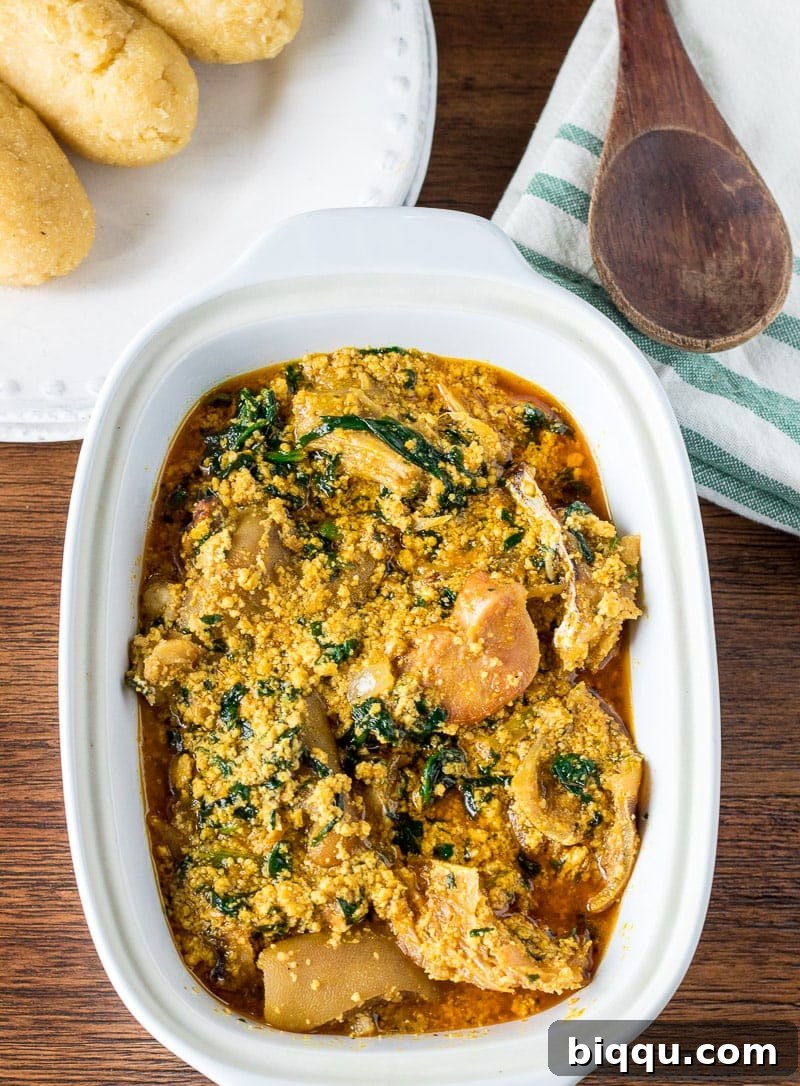
If you’re eager to explore the vibrant world of African cuisine, Egusi Soup is an excellent starting point. Its complex yet comforting profile promises a truly authentic experience. Beyond Egusi, the continent boasts a diverse array of flavorful soups and stews. Consider adding the refreshing African Okra Soup or the bold and aromatic Cameroonian Pepper Soup to your list of must-try dishes.
What Exactly is Egusi Soup? Unpacking the Core Ingredients
Egusi Soup stands out in Nigerian culinary tradition, primarily characterized by its key ingredient: ground melon seeds. These seeds, often referred to as white pumpkin seeds, form the base of the soup, imparting a distinctive nutty flavor and a rich, thick texture. The preparation method varies across regions and families, but the core essence remains the same: a savory, spicy, and deeply satisfying stew.
My decision to share this Egusi Soup recipe was spurred by overwhelming demand after a simple Instagram post. The enthusiastic response underscored just how much this delectable Nigerian Egusi Soup resonates with food lovers. And truly, every spoonful promises a symphony of flavors that will make your taste buds sing!
The Star Ingredient: Egusi (Melon Seeds)
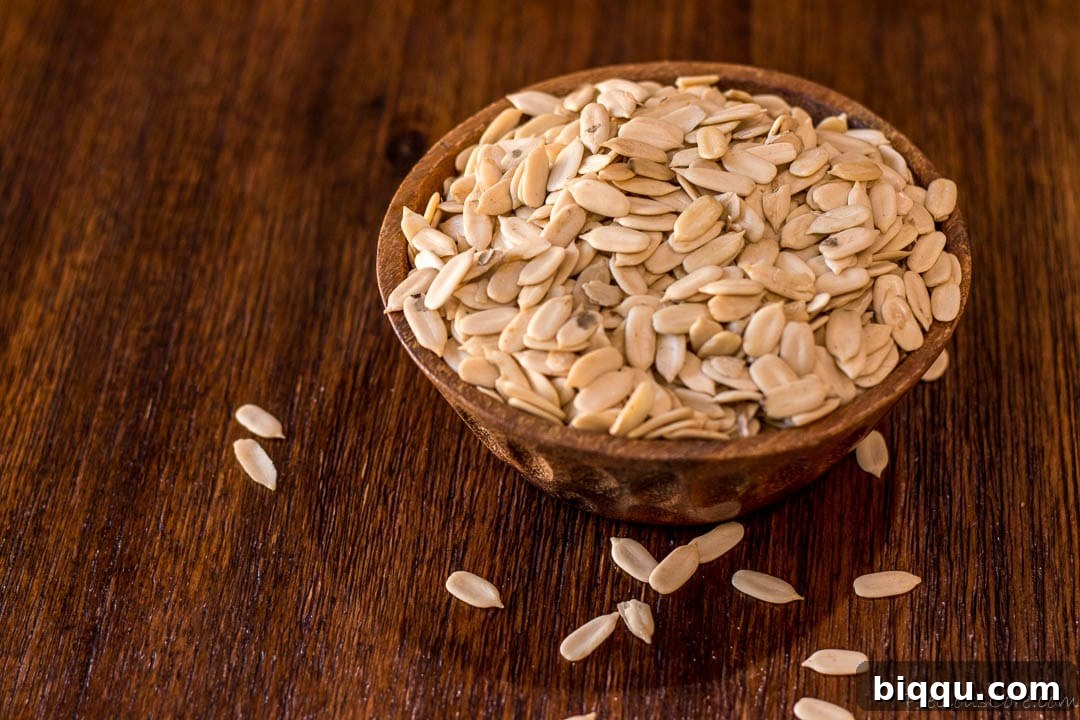
At the heart of this West African delicacy are the Egusi seeds themselves. These small, flat, white seeds are harvested from a type of melon, distinct from the sweet varieties typically eaten as fruit. They are packed with protein, healthy fats, and micronutrients, making Egusi Soup not only delicious but also highly nutritious.
You can find whole Egusi seeds at African markets or conveniently purchase them online. While pre-ground Egusi is available, many prefer to buy whole seeds and grind them fresh. This ensures the highest quality and prevents any potential adulteration, resulting in a more potent and authentic flavor.
Key Flavor Enhancers and Essential Components
Beyond the Egusi, a careful selection of ingredients contributes to the soup’s iconic taste and vibrant appearance:
- Ground Egusi Seeds: As the primary thickener and flavor base, these ground seeds can be prepared in a coffee grinder for a fine powder or blended with a little water into a smooth paste using a high-powered blender. The method of grinding can influence the final texture of your soup.
- Red Palm Oil: This ingredient is crucial, not only for its distinct flavor profile but also for giving the soup its characteristic bright orange hue. It’s a staple in West African cooking and provides a rich, earthy depth.
- Crayfish: West African crayfish, different from American crawfish, is dried and ground, adding an incredible depth of umami and a unique savory taste that is quintessential to Egusi Soup. It’s an indispensable component for an authentic flavor.
- Assorted Meats and Fish: The beauty of Egusi Soup lies in its versatility with protein. A medley of meats such as tender goat meat, succulent beef, chicken, or even smoked turkey is commonly used. Organ meats like tripe are also popular additions, adding distinct textures and flavors. Dried fish and stock fish, both readily available in African markets, contribute a powerful aroma and a layer of umami that deepens the soup’s complexity.
- Maggi Seasoning (or Bouillon): For an authentic Nigerian taste, Maggi seasoning cubes are often used. Alternatively, chicken or beef bouillon powder can be used to enhance the savory notes and bring all the flavors together.
- Hot Pepper: To introduce a delightful kick, hot peppers like habanero or scotch bonnet are typically added. The quantity can be adjusted to suit your preferred level of heat, making the soup as fiery or as mild as you desire.
- Leafy Vegetables: A vibrant mix of leafy greens adds freshness, color, and nutritional value. Traditional choices include bitter leaves (often blanched to reduce bitterness) or pumpkin leaves, known as ‘ugu’ in Nigeria. If these are not accessible, common substitutes like spinach or kale work wonderfully, offering similar nutritional benefits and a pleasant texture.
For a precise breakdown of ingredient measurements, be sure to consult the comprehensive recipe card provided further down this page.
The Rich & Nutty Flavor Profile of Egusi Soup
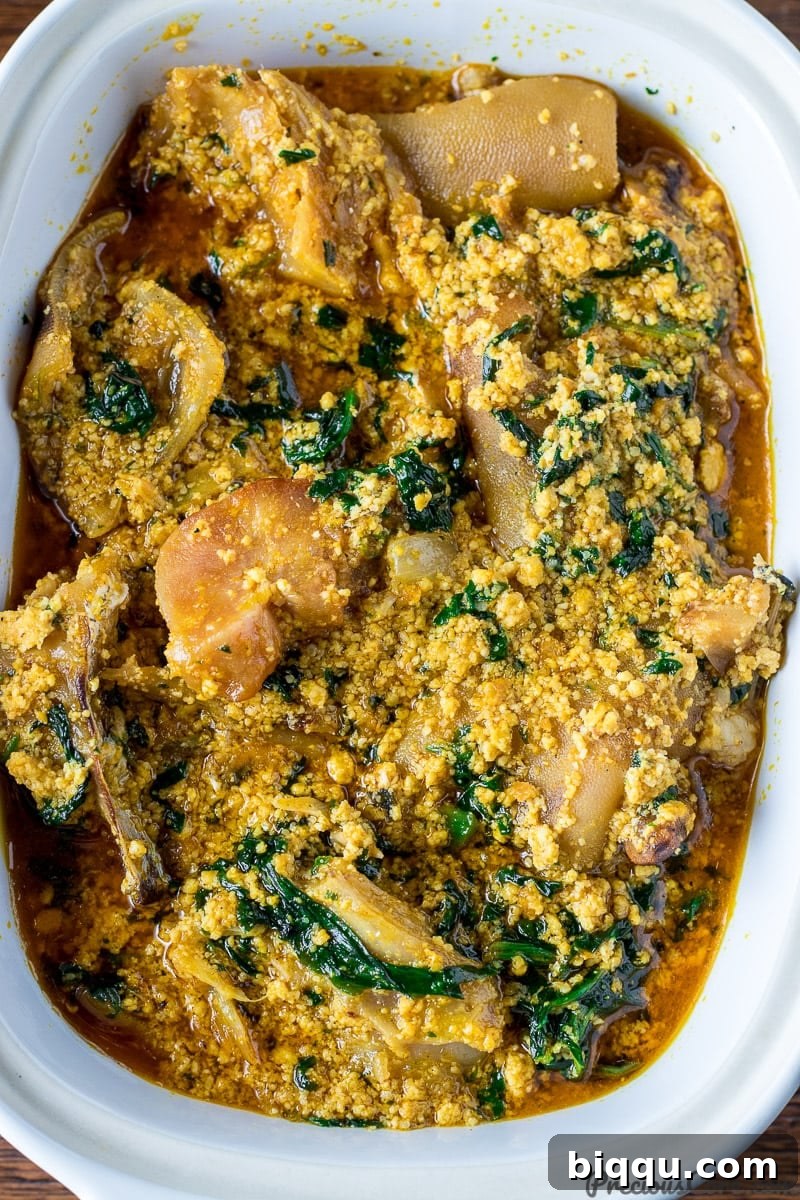
So, what exactly does a bowl of Egusi Soup taste like? Imagine a symphony of flavors: it’s profoundly nutty, with the distinctive taste of ground melon seeds forming its earthy foundation. This is beautifully complemented by a gentle, lingering spice from the peppers, creating a warmth that permeates every spoonful. The richness comes from the red palm oil, which lends a slightly sweet and robust character, while the assorted meats and fish infuse the soup with a deep, savory, and undeniably meaty essence. The combination results in a truly luxurious and satisfying culinary experience.
Egusi is cherished in various forms across West Africa, each iteration highlighting its versatility. For instance, you might encounter the delightful Cameroonian Egusi Pudding, a denser preparation, or the more concentrated Egusi Stew, often served with rice. Another popular variation, Ogbono and Egusi Soup, blends the two distinct African seed-based soups for an even deeper, more complex texture and flavor.
Mastering the Art of Making Egusi Soup: A Step-by-Step Guide
Creating this delicious soup might seem daunting at first, but it can be broken down into three relatively simple and manageable steps. The key lies in thoughtful preparation and allowing the flavors to meld beautifully.
Preparation is Key
- Boil the Meats and/or Fish: Begin by boiling your choice of meats and fish with a pinch of salt and some diced onions. For the best results and to save time on cooking day, it’s highly recommended to do this step the day before. Always boil tougher cuts of meat first, then add softer ones. Ensure you reserve the flavorful meat stock, as this forms the rich liquid base for your soup. If using stockfish, soak it for several hours, then rinse thoroughly before boiling it separately from other meats. Discard its pungent stock. While stockfish has a strong smell, its unique taste is essential for authentic Egusi Soup.
- Grind the Egusi: The quality of your ground egusi significantly impacts the final soup. It’s always advisable to purchase whole Egusi seeds and grind them yourself just before cooking. This ensures freshness and allows you to confirm the quality of the seeds, avoiding potentially stale or adulterated pre-ground options. You can use a coffee grinder or a small blender cup for this task, aiming for a fine, consistent powder or a smooth paste if blending with water.
Cooking the Soup
- Make the Soup:
- Heat red palm oil in a large pot over medium-high heat for about 3 minutes. Be careful not to bleach the oil. Add your chopped onions and sauté until they become fragrant and translucent, releasing their sweet aroma.
- Stir in the freshly ground Egusi (or Egusi paste) and fry it gently in the palm oil for about 7-10 minutes. Continuously stir to prevent burning, allowing the Egusi to ‘fry’ until it slightly shrinks and begins to stick to the bottom of the pot. This crucial step develops its nutty flavor.
- Add a teaspoon of ground crayfish and stir well. Then, incorporate the pre-boiled meats and the reserved meat stock. Add the remaining crayfish, any shrimp seasoning cubes (like Maggi Crayfish or Crevette), and your chosen hot pepper (habanero or scotch bonnet). If the soup appears too thick, add a little water or more stock until your desired consistency is achieved. Stir thoroughly and taste, adjusting salt and seasonings as needed. Allow all the ingredients to simmer together for about 5 minutes, letting the flavors meld.
- Finally, add your chopped leafy greens. Cook them gently for just about 2 minutes to retain their vibrant color and nutrients. Turn off the heat, and your delectable Egusi Soup is ready to be served!
It’s genuinely that straightforward! With these steps, you’ll be enjoying an authentic bowl of Egusi Soup in no time.
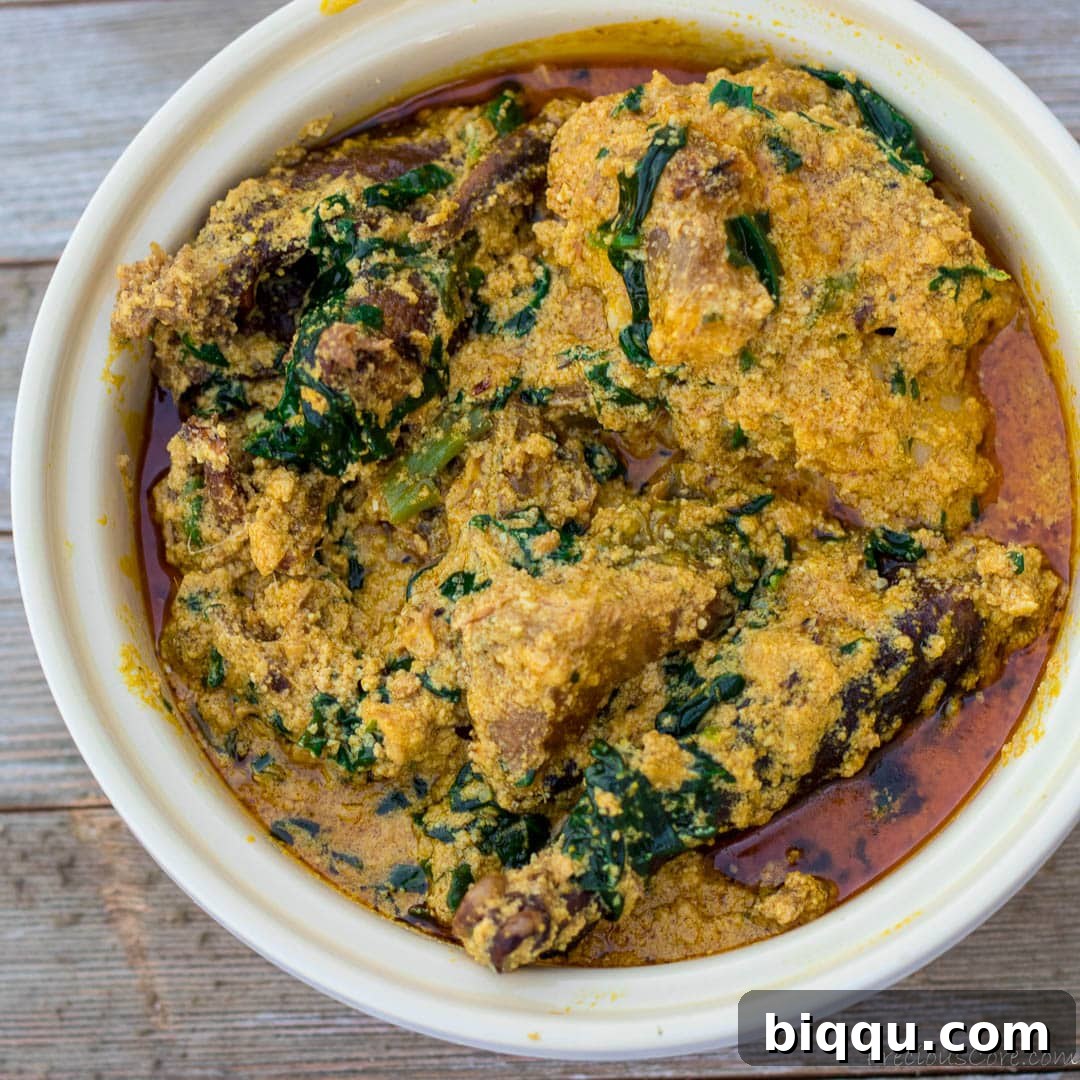
Traditional Pairings: How to Serve Egusi Soup
Egusi Soup is traditionally enjoyed with “swallows” – dough-like side dishes that are used to scoop up the soup. These pairings are not just a matter of custom but also complement the soup’s rich flavors and textures beautifully.
The Fufu Family
One of the most renowned ways to savor Egusi Soup is with **Pounded Yam**. This smooth, elastic dough is made from African white yam, traditionally pounded until soft and lump-free. Nowadays, yam flour is widely available in African stores and online, making it easier to prepare authentic pounded yam at home without the laborious pounding process.
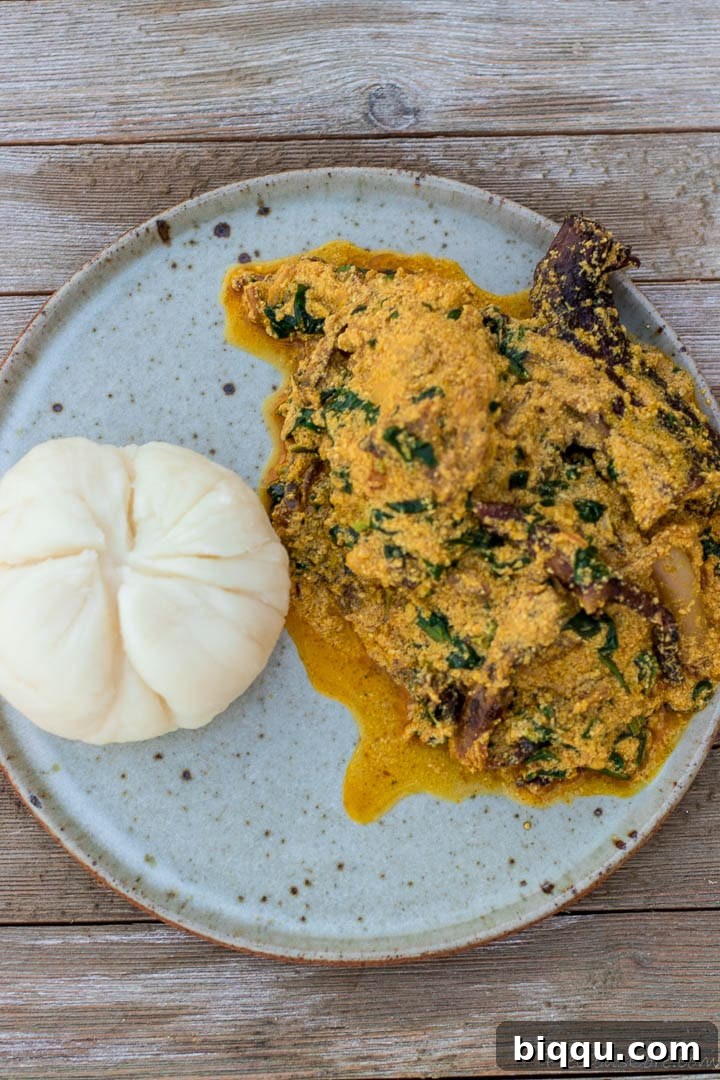
Another popular accompaniment is **Garri**, also known as Eba. Garri consists of fermented granules made from cassava (yucca root). To prepare it, simply boil water and gradually add the garri granules, stirring until a smooth, firm dough forms. This creates a slightly sour and textured contrast to the rich soup. You can see a visual guide on how to prepare garri in this helpful okra soup video.
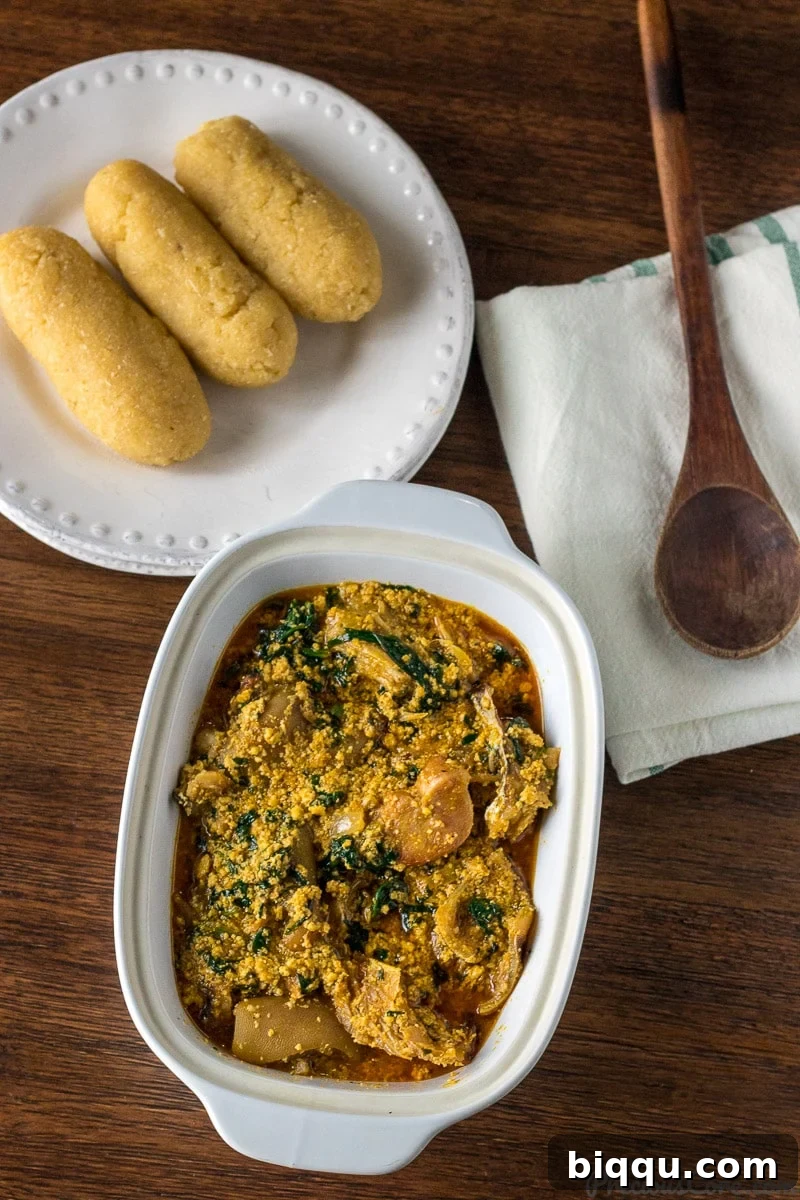
Other popular swallows include Semovita, Amala, and Fufu (a general term for various starchy doughs). Each offers a slightly different texture and flavor, allowing for diverse culinary experiences with your Egusi Soup.
Alternative Servings
While traditional swallows are highly recommended, Egusi Soup is incredibly versatile and pairs wonderfully with other staples. It can be served alongside fluffy white rice, boiled African white yam slices, or even sweet plantains, offering a different textural experience while still allowing the soup’s rich flavors to shine.
Exploring Variations of Egusi: Beyond the Classic Soup
The culinary possibilities with Egusi extend beyond the classic soup. While the core ingredient remains the same, different preparations can yield distinct dishes, each with its own character.
Egusi Stew vs. Egusi Soup
A common point of confusion is the difference between Egusi Soup and Egusi Stew. While both feature Egusi, their preparations and typical accompaniments differ significantly. Egusi Stew is generally a thicker, more concentrated sauce, often made with a tomato or pepper base, and is primarily intended to be eaten with rice. The ingredients and cooking process are adapted to create a denser, less liquid dish compared to the soup. For a deeper dive into this delicious variation, explore my dedicated Egusi Stew recipe.
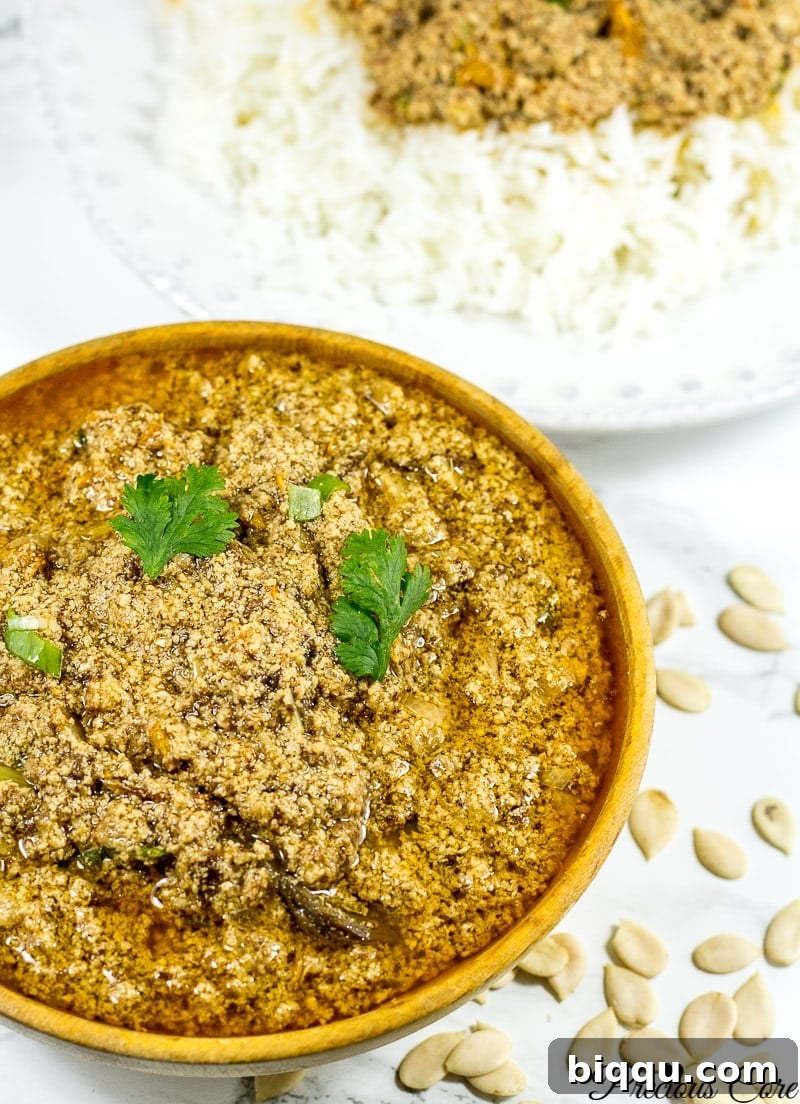
Other Egusi Creations
Beyond the stew, Egusi can be transformed into other delightful dishes. In some regions, Egusi is prepared as a pudding or cake, offering a unique texture and serving method. The versatility of these melon seeds truly showcases their importance in West African culinary traditions.
Watch the Magic Happen: Egusi Soup Video Guide
Seeing the process can often clarify steps and inspire confidence in the kitchen. I’ve finally put together a comprehensive video guide on how to make Egusi Soup, a project long in the making! I hope this visual aid enhances your cooking experience and helps you achieve the perfect bowl of Egusi Soup. Don’t forget to watch the video below for a full demonstration.
Watch How To Make Egusi Soup
For more amazing African recipes and cooking tips, make sure to subscribe to my channel:
Subscribe to My Channel
Explore More African Dinners
Fried Pork And Plantains
Catfish Pepper Soup
African Chicken Peanut Stew
Cameroonian Pepper Soup
The Complete Egusi Soup Recipe
If you make this recipe, please consider leaving a star rating below. Your feedback helps other home cooks discover and enjoy this delicious recipe, and I always love hearing from you! Thank you!
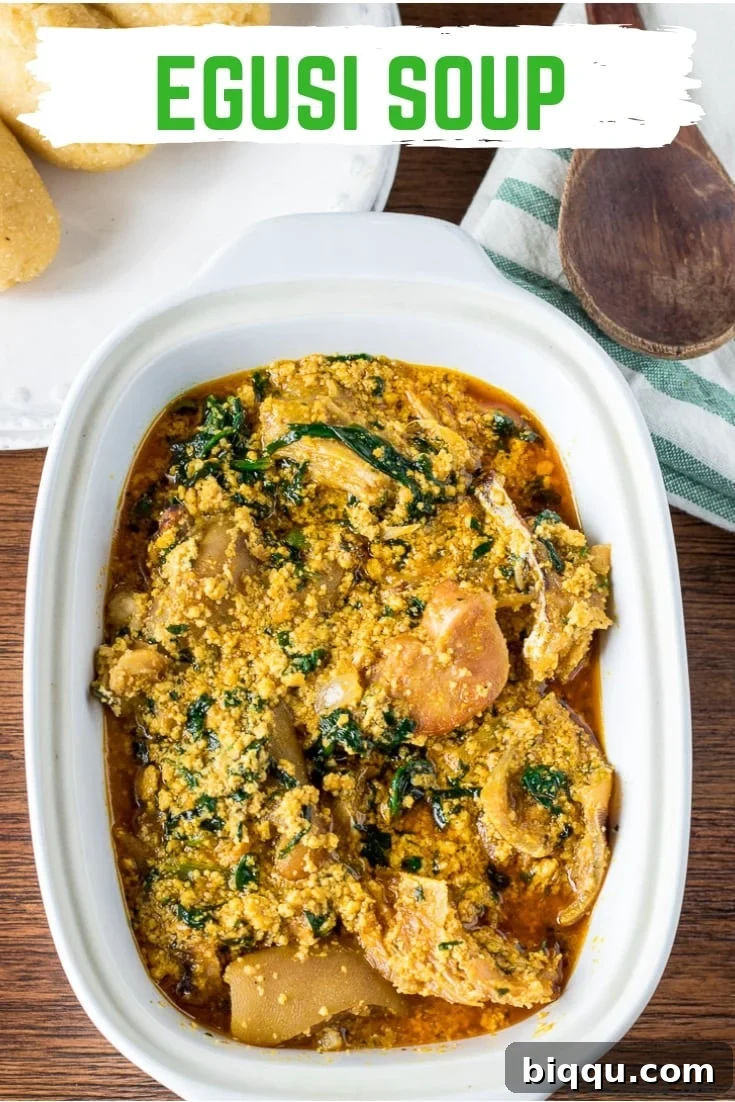
Egusi Soup – Authentic Nigerian Egusi Soup
Egusi soup prepared the Nigerian way, featuring rich red palm oil and a variety of meats. Best enjoyed with pounded yam, garri, or other fufu options.
Prep Time: 30 mins
Cook Time: 30 mins
Total Time: 1 hr
Servings: 6
Print Recipe
Ingredients
- 2 cups egusi (whole, not ground)
- 3/4 cup red palm oil
- 1/4 cup ground crayfish
- 1 shrimp seasoning cube (e.g., Maggi Crayfish or Maggi Crevette)
- 2 pounds assorted meats and fish (e.g., goat meat, stock fish, chicken)
- 1/2 cup onion – chopped
- 1 habanero (or scotch bonnet) pepper – whole or blended, to taste
- 1/2 – 1 cup chopped greens (authentic bitterleaf or ugu, or substitute with spinach or kale)
Instructions
- Boil the meats and fish: Start by boiling tougher meats like goat meat, then add less tough ones like chicken. Season with about a teaspoon of salt and diced onions halfway through. Reserve the meat stock. If using stockfish, soak it for several hours, rinse thoroughly, and boil separately. Discard its cooking water due to its pungent smell.
- Grind the egusi: Grind the whole egusi seeds using a coffee grinder or a small blender cup until finely powdered. Ensure to remove any bad seeds beforehand.
- Make the egusi soup:
- Heat palm oil in a large pot on high heat for about 3 minutes (do not bleach). Add chopped onions and sauté until fragrant.
- Stir in the ground egusi and cook in the palm oil, stirring occasionally, until the egusi shrinks and begins to stick to the bottom of the pot (about 7 minutes).
- Add one teaspoon of crayfish and stir. Then, add the cooked meats and their reserved stock. Incorporate the remaining crayfish, the shrimp seasoning cube, and the habanero or scotch bonnet pepper. Adjust thickness by adding water or more stock as needed. Stir well, taste, and adjust seasonings. Simmer for about 5 minutes to allow flavors to meld.
- Add the chopped greens and cook for approximately 2 minutes. Turn off the heat. Your Egusi Soup is ready to serve!
Notes
- Options for meats include beef, goat meat, smoked/dried fish. A blend of what’s available often works best.
- Most specialized ingredients for this recipe can be found in African stores or online retailers.
Nutrition
Calories: 302 kcal
Additional Info
Course: Main Course
Cuisine: African, Nigerian
Calories: 302
Pin this recipe to save for later:
“For I know the plans I have for you,” says the Lord. “They are plans for good and not for disaster, to give you a future and a hope.” Jeremiah 29:11 (NLT)