
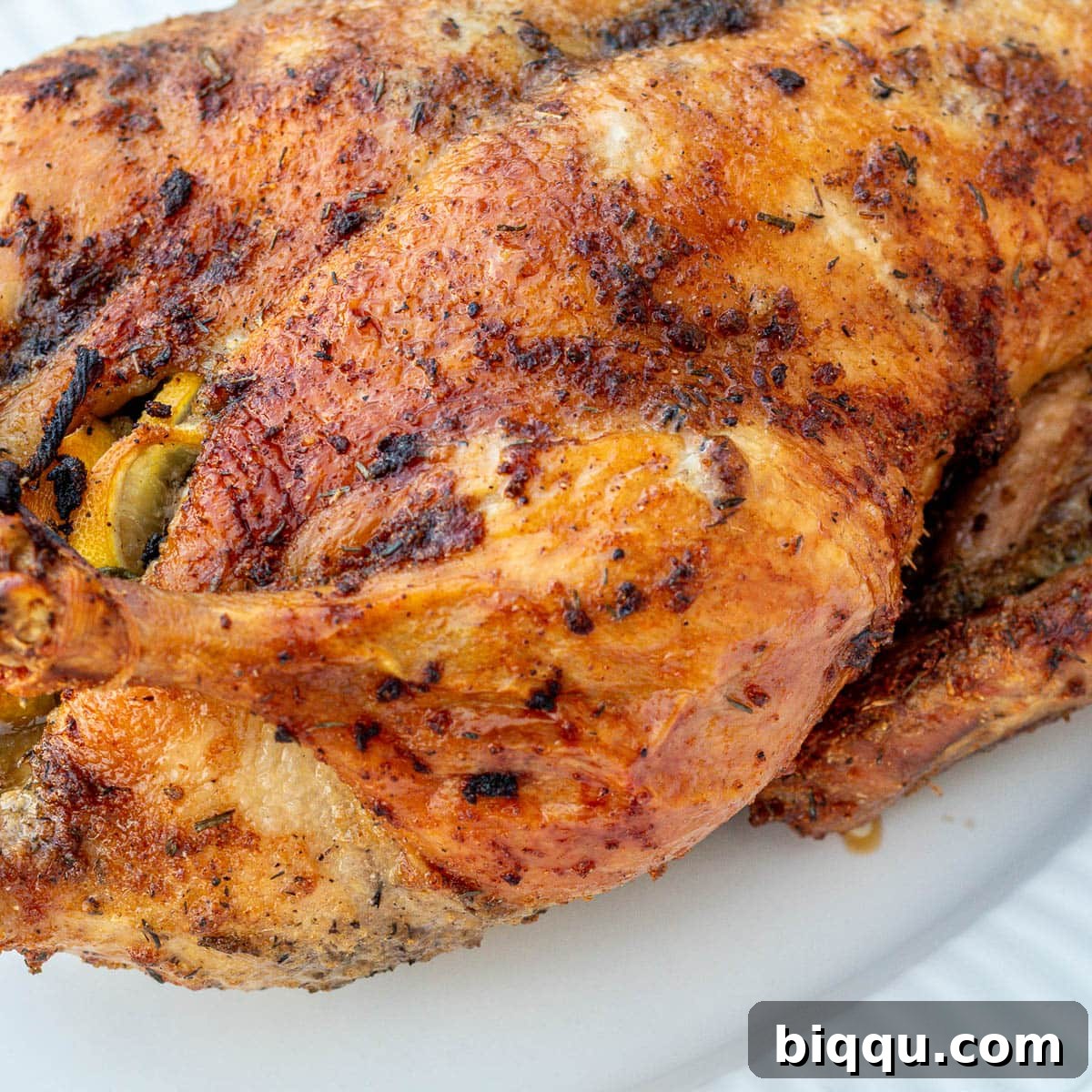
If you’re searching for a duck recipe that delivers an exceptionally tasty duck without relying on added sugars or sweeteners, look no further than this incredibly simple Herb Roasted Duck. This dish is infused with rich garlic and aromatic herbs, creating a flavor that penetrates deep into the bone. What’s more, it streamlines the roasting process by eliminating the need for intricate crisscross scoring of the flesh or pre-boiling the duck, making it accessible for home cooks of all skill levels.
This magnificent roast duck stands out as the quintessential main course for festive holiday gatherings and memorable special dinners. To spark inspiration for your complete meal, explore our comprehensive guide on What To Serve With Roast Duck, ensuring a truly unforgettable dining experience.
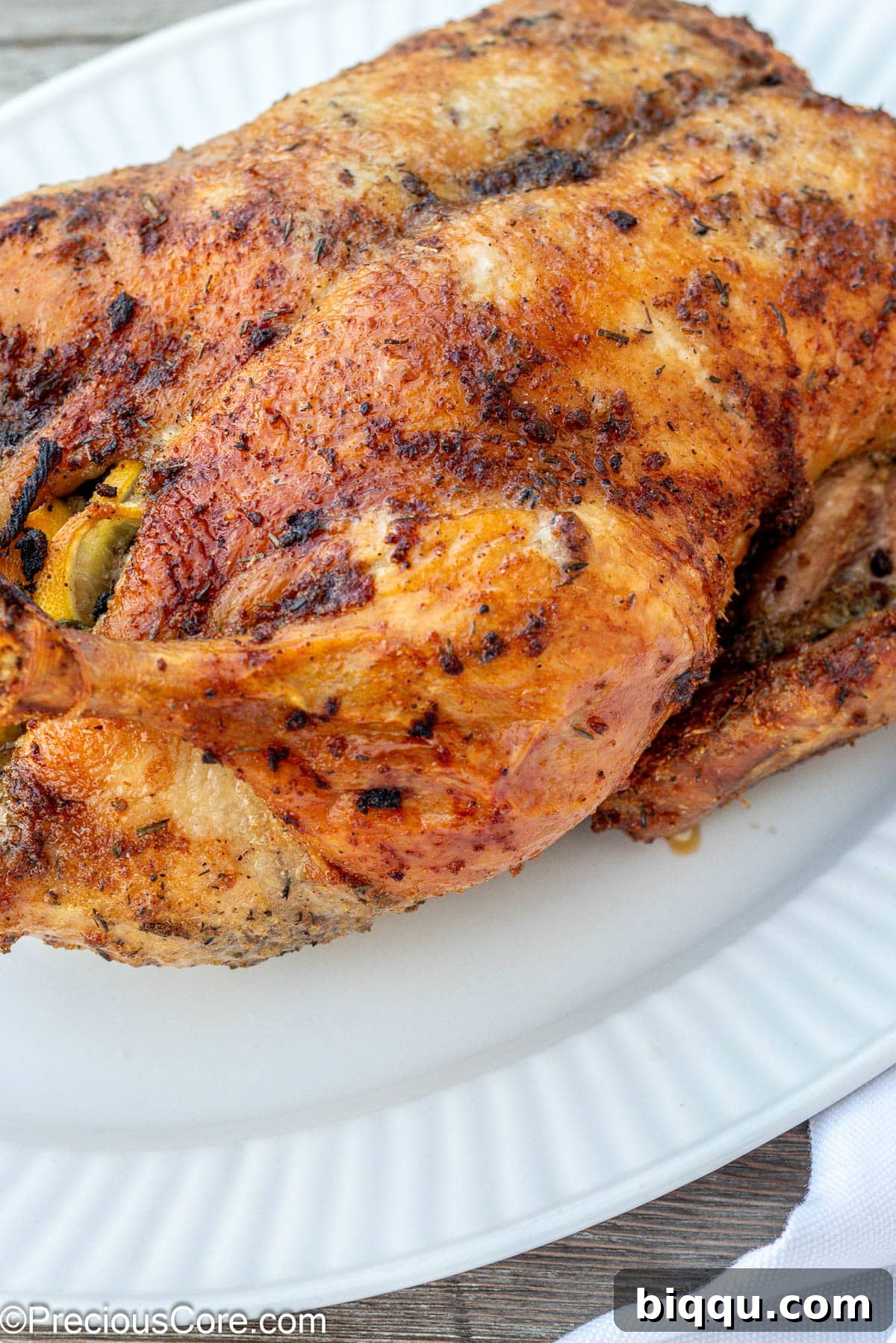
My journey to perfecting a family-favorite roast duck began after a serendipitous find of ducks at my local grocery store. Driven by a desire to create a recipe that my entire family would genuinely adore, I embarked on a series of experiments. The outcome has been nothing short of delightful! This herb-roasted duck is seasoned to perfection, offering incredibly juicy meat encased in wonderfully crispy skin, and bursting with an abundance of savory flavor. It’s truly a recipe that you’ll be eager to prepare again and again, becoming a cherished staple in your culinary repertoire.
This versatile roast is an impeccable choice for a comforting Sunday supper, an elegant dinner party, a romantic Valentine’s Day meal, or any special occasion that calls for a touch of culinary distinction. Duck meat, inherently dark and rich, possesses a profound flavor profile that requires minimal enhancement. Unlike some game meats, duck, particularly varieties like Pekin, is not overly “gamey,” making it a superb canvas for a medley of fresh herbs and aromatic spices. It pairs exquisitely with classic side dishes such as creamy Buttermilk Mashed Potatoes and vibrant Garlic Butter Green Beans, creating a harmonious and indulgent meal.
If you have a fondness for succulent oven-roasted meats, we highly recommend exploring some of our other celebrated recipes. Discover the secrets to a flawless main course with my Perfect Roast Chicken, savor the aromatic delight of Herb Roasted Chicken, or prepare tender and flavorful Roasted Turkey Thighs.
Table of Contents
- Why You’ll Love This Herb Roasted Duck Recipe
- Essential Ingredients for Herb Roasted Duck
- Discover the Best Herbs for Roasting Duck
- Step-by-Step Guide: How To Roast Duck Perfectly
- Advanced Tips for Roasting Duck
- Duck Cooking Guide & Internal Temperature Essentials
- Frequently Asked Questions About Duck Roasting
- Recommended Useful Tools for Roasting Duck
- Delicious Sides: What To Serve With Roasted Duck
- Explore More Mouthwatering Roast Recipes
- Full Herb Roasted Duck Recipe Card
Why You’ll Love This Herb Roasted Duck Recipe
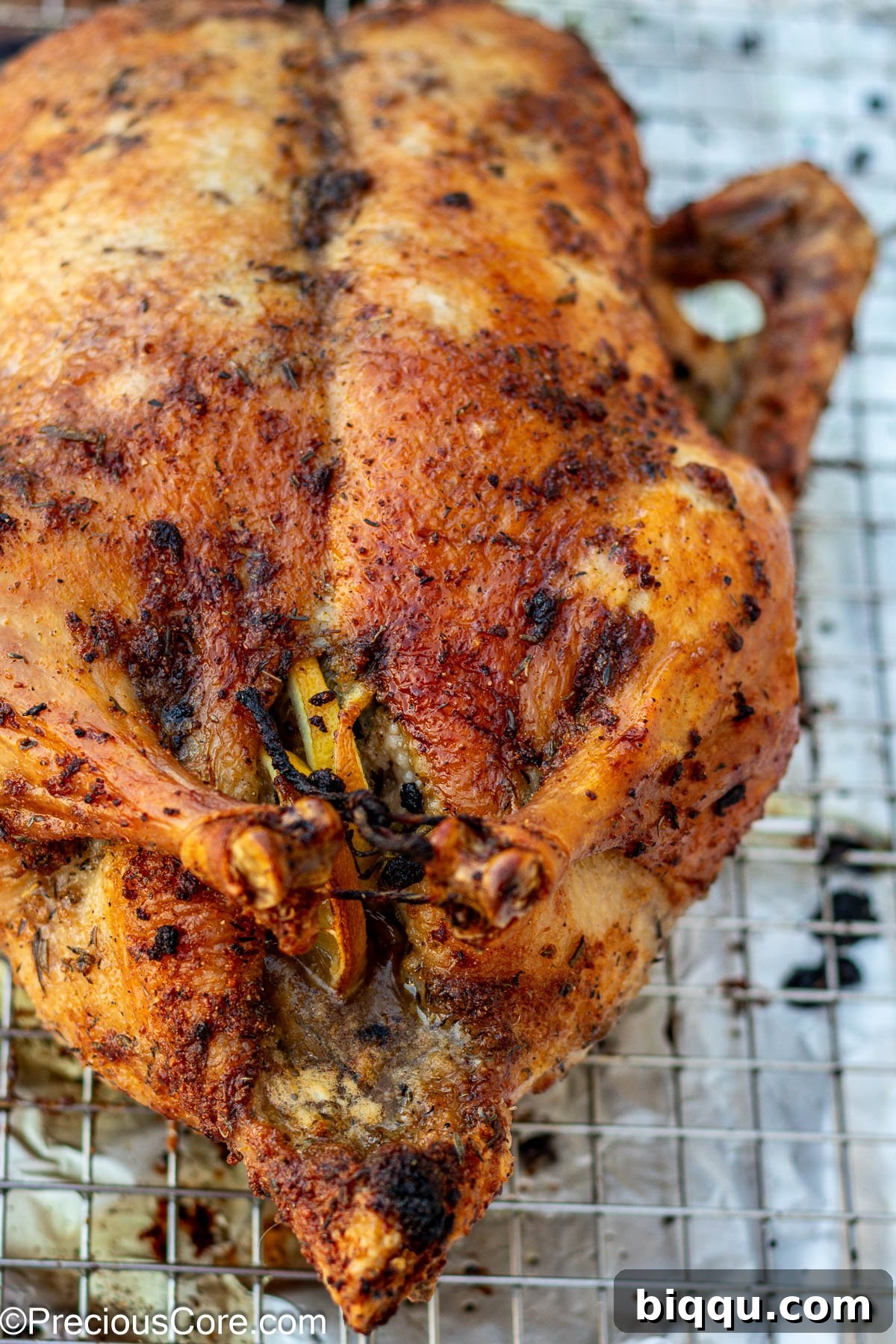
Have you recently picked up a duck from the grocery store but find yourself unsure of how to transform it into a spectacular meal? This straightforward roast duck recipe will guide you through the process of preparing a whole duck with a selection of simple herbs and spices, promising an impressive result. You’ll quickly fall in love with this recipe for several compelling reasons:
- It’s Remarkably Quick & Hands-Off: With an active preparation time of just about 10 minutes, you’ll have your duck ready for the oven in no time. Once it’s roasting, you’re free to attend to other tasks, making it a perfect choice for busy evenings or when hosting. The majority of the cooking time is hands-off, allowing for minimal fuss and maximum flavor.
- Insanely Tasty & Flavorful: Despite using only a handful of herbs (rosemary, thyme) and dried spices (garlic powder, onion powder), this recipe yields an intensely flavorful and incredibly juicy dark meat. Many find duck to be far more delicious and nuanced than chicken; my 10-year-old daughter, for instance, boldly declares it five times more flavorful than chicken! The rich, savory notes are truly irresistible.
- Perfect for Holiday Feasts: If turkey isn’t your holiday centerpiece of choice, or if you’re looking for an exciting alternative, duck is an excellent option. Duck naturally possesses a robust and distinctive flavor that, when well-seasoned, creates an unforgettable holiday meal. It pairs wonderfully with classic festive accompaniments like tangy cranberry sauce and all your favorite holiday side dishes, adding a touch of elegance to your celebration.
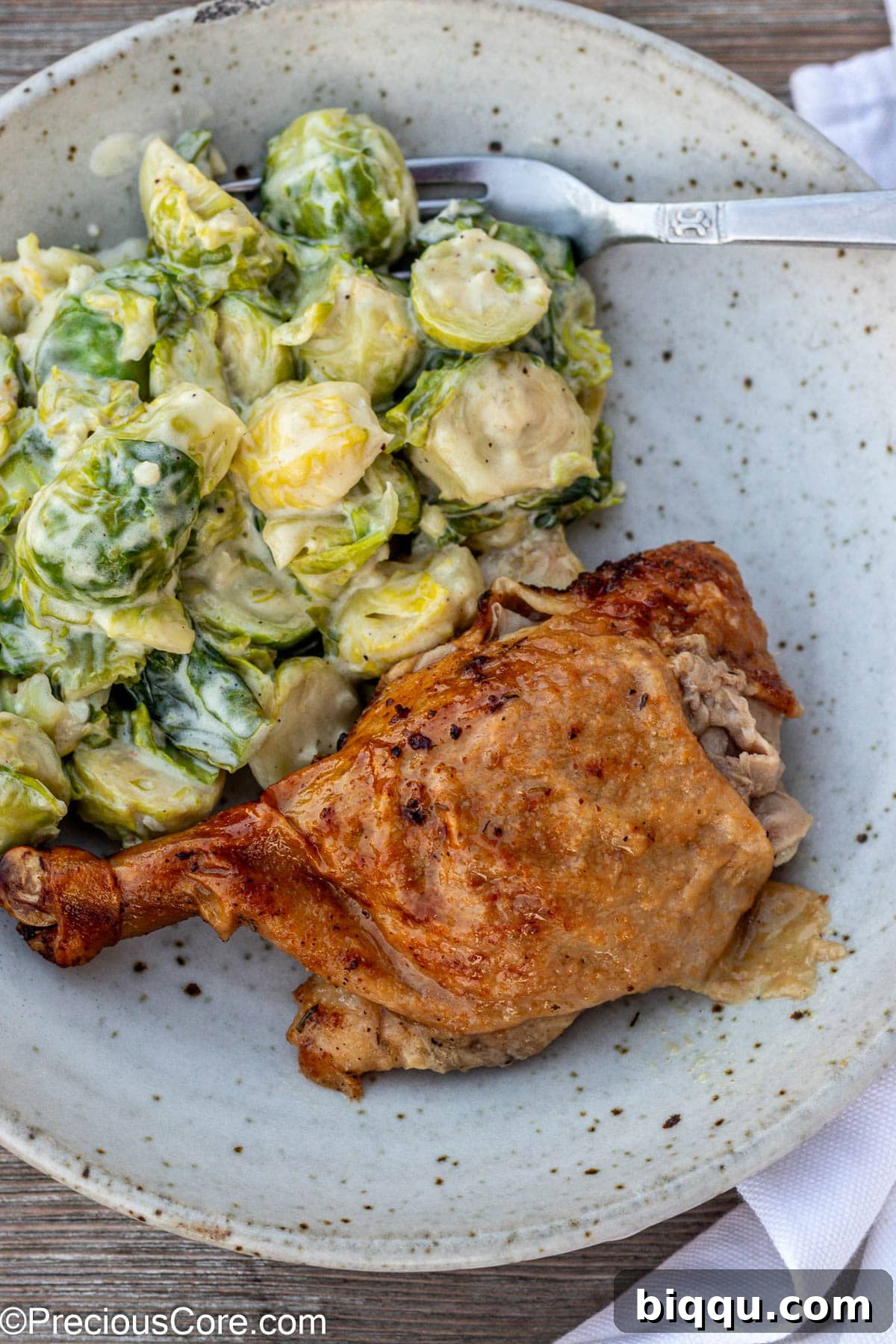
- Low-Carb Friendly & Versatile: This herb-roasted duck is naturally low in carbohydrates, making it a fantastic choice for those following a low-carb lifestyle. Simply complement it with your preferred non-starchy vegetables. I often serve it with creamy roasted Brussels sprouts for a truly soul-satisfying meal. It’s equally delicious with hearty rosemary garlic mashed potatoes and simple steamed broccoli, offering delicious flexibility for any dietary preference.
Essential Ingredients for Herb Roasted Duck
Gathering the ingredients for this savory Herb Roasted Duck recipe is straightforward. Many of the essential herbs and spices are likely already staples in your pantry, making preparation even easier. The key is to select fresh, high-quality ingredients to ensure the most vibrant flavors.
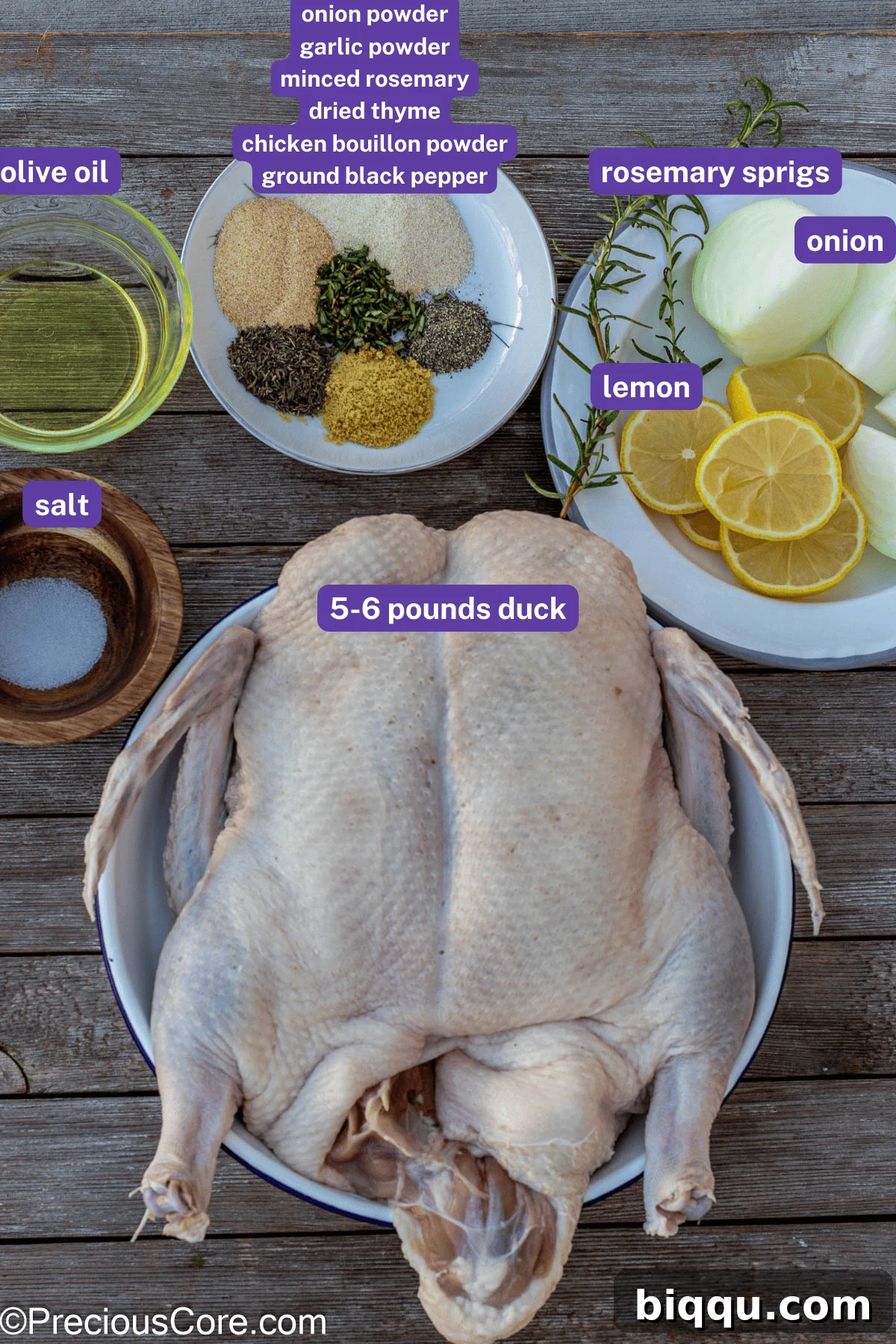
Here are some detailed notes on the key ingredients that make this roast duck truly exceptional:
- Duck: The star of our dish! For this recipe, I utilized a duck weighing almost 6 pounds, which comfortably serves my family of seven. When planning, a general guideline is to estimate approximately one pound of duck per person. When selecting your duck, look for one that feels plump and has an even distribution of fat. Whether fresh or frozen, ensure it is completely thawed before cooking for even roasting.
- Spices and Herbs: The magic happens with this carefully selected blend. Garlic powder and onion powder provide a foundational aromatic base, while fresh or dried rosemary and thyme introduce earthy, piney, and subtly floral notes that complement the rich flavor of duck beautifully. This combination creates a depth of flavor that permeates every bite.
- Chicken Bouillon Powder: This might seem unconventional, but chicken bouillon powder acts as a fantastic flavor enhancer, elevating the savory taste of the duck. It adds an extra layer of umami and depth that makes the meat incredibly delicious. I often opt for the Knorr brand for its consistent quality and flavor.
- Stuffing Ingredients: Don’t underestimate the power of simple aromatics tucked inside the duck cavity. Quartered onions, fresh rosemary sprigs, and lemon slices do more than just add fragrance; they infuse the meat with subtle flavors from the inside out and help keep the duck moist and juicy as it cooks. If you decide not to stuff your duck, remember that you may need to adjust and reduce the overall cooking time slightly.
For the complete list of ingredients, including precise measurements, please refer to the detailed recipe card located at the end of this post.
Discover the Best Herbs for Roasting Duck
Duck, with its rich and distinctive flavor, pairs wonderfully with a variety of herbs. The right combination can elevate the dish from good to extraordinary, enhancing its natural depth without overpowering it. Many herbs complement duck beautifully, each adding its own unique aromatic profile:
- Thyme: Offers a delicate, earthy, and slightly floral aroma that is a classic pairing with poultry.
- Rosemary: Provides a robust, piney, and pungent flavor that cuts through the richness of duck, offering a refreshing counterpoint.
- Basil: While less common for roasted duck, sweet basil can add a fresh, slightly peppery, and anise-like note.
- Parsley: A bright and fresh herb that adds a touch of green and a clean, slightly peppery flavor, often used as a garnish or in the stuffing.
- Sage: Known for its earthy, slightly peppery, and savory notes, sage is a traditional complement to rich meats, especially during autumn and winter.
- Marjoram: Similar to oregano but milder and sweeter, marjoram brings a delicate, slightly citrusy, and floral warmth.
- Oregano: A strong, pungent, and earthy herb that can add a Mediterranean twist to your duck.
- Herbes de Provence: A delightful blend of herbs common in southern French cuisine, typically including savory, marjoram, rosemary, thyme, and oregano, offering a balanced and aromatic profile.
When incorporating potent herbs like rosemary or oregano, it’s wise to exercise caution and use them sparingly. Their strong flavors can easily become overwhelming if applied too liberally, potentially masking the delicate nuances of the duck. A small amount is often all that’s needed to achieve the desired aromatic impact and enhance the overall taste of your roast duck.
Step-by-Step Guide: How To Roast Duck Perfectly
Achieving a perfectly roasted duck with crispy skin and juicy meat is surprisingly straightforward, especially when using a flavorful blend of herbs and spices. In my experience, this method yields the most delicious results. Follow this simple step-by-step guide to prepare an Herb Roasted Duck that will impress everyone at your table. Cooking an entire duck truly isn’t as daunting as it may seem!
Step 1: Thaw and Prepare the Duck
Begin by ensuring your duck is completely thawed. If frozen, transfer it to the refrigerator 2-3 days before cooking. For optimal cooking, allow the duck to come to room temperature for about 1 hour before you begin preparation. Carefully remove any excess fat from the duck’s cavity and trim the neck. Rinse the duck thoroughly, both inside and out, with cool water, then pat it exceptionally dry with paper towels. Achieving a very dry skin is crucial for maximum crispiness.
Step 2: Preheat Oven and Prepare Roasting Pan
Preheat your oven to 400°F (200°C). Line a sturdy sheet pan with aluminum foil for easier cleanup. Place an oven-safe wire rack directly on top of the foil-lined pan. This setup allows air to circulate around the duck and ensures that the rendered fat drips away, contributing to crispier skin.
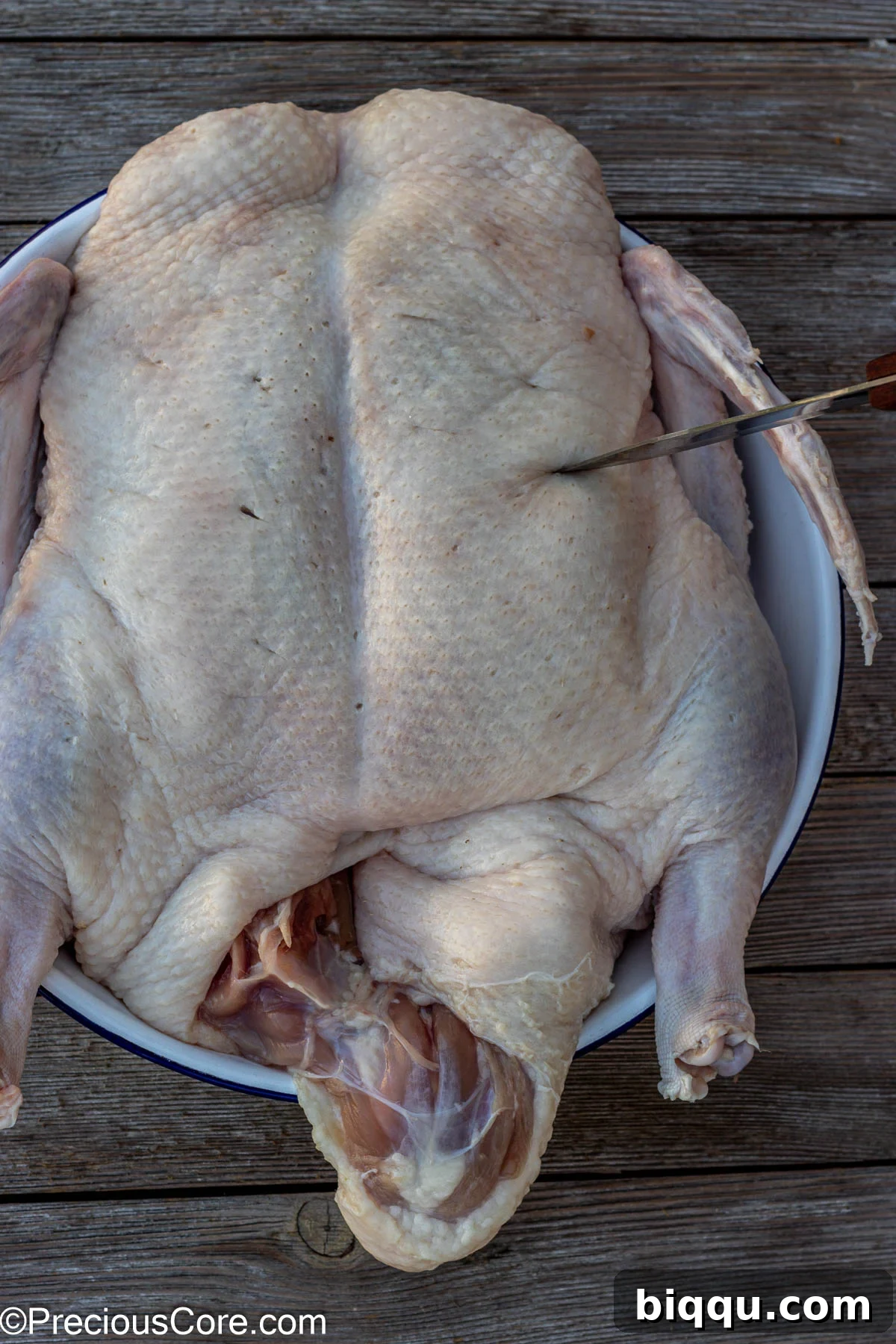
Step 3: Make Small Cuts on the Duck Skin
With the duck thoroughly patted dry, use a small, sharp knife to make shallow slits or scores across the duck breasts and thighs, being careful not to cut into the meat itself. These small cuts are essential; they help the abundant duck fat to render out more efficiently as the bird roasts, which is key to achieving that coveted crispy skin without needing to score the flesh deeply or pre-boil.
Step 4: Season the Duck Generously
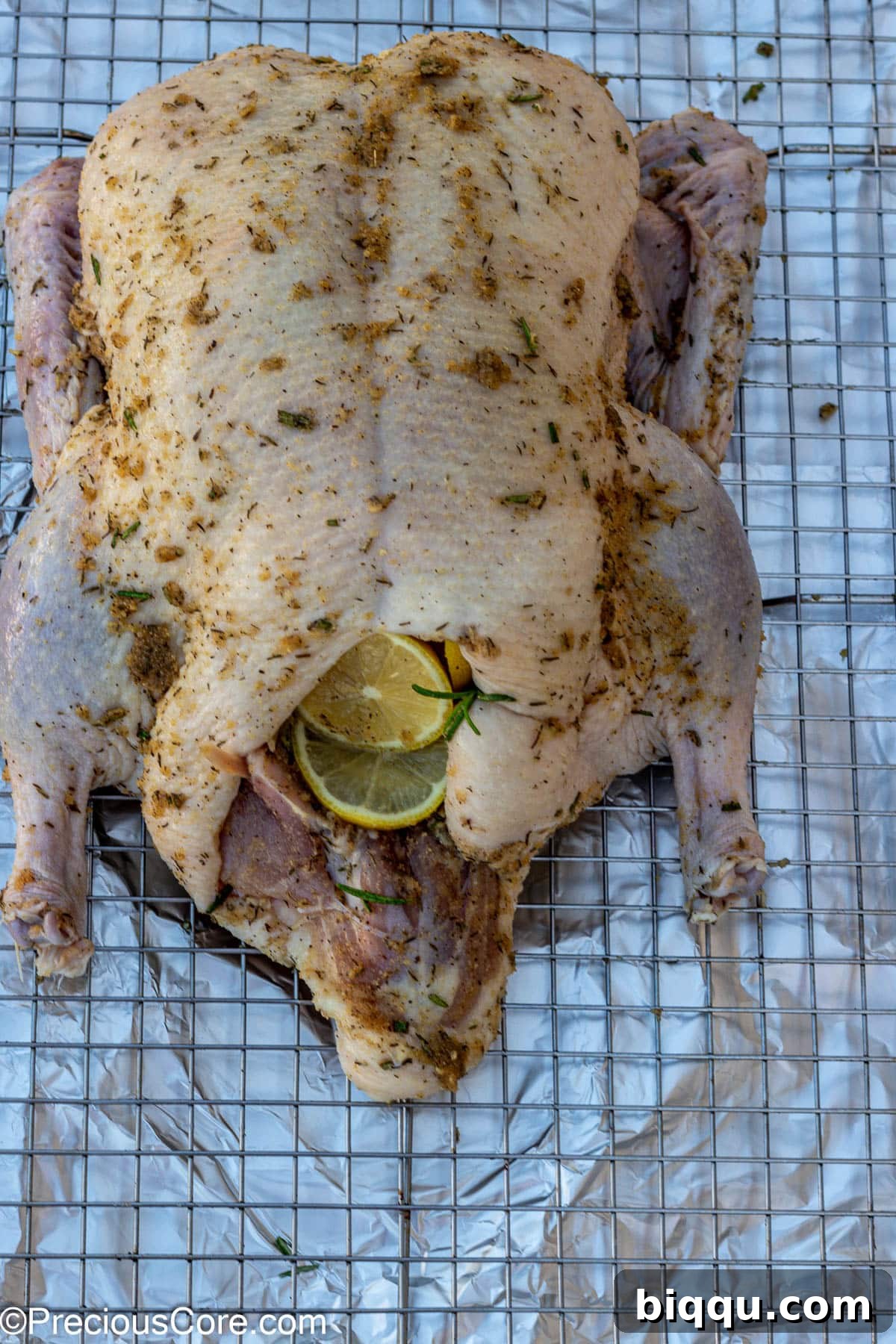
Drizzle olive oil evenly over the entire duck, then rub it in to ensure thorough coverage. In a small bowl, combine your chosen herbs and spices: salt, pepper, chicken bouillon powder, onion powder, garlic powder, dried thyme, and fresh minced rosemary. This blend creates a deeply savory and aromatic crust. Rub this seasoning mixture generously all over the duck, paying close attention to both the skin and the cavity, ensuring every part is coated. Next, carefully stuff the duck cavity with aromatics like onion quarters, fresh rosemary sprigs, and lemon slices. These not only impart internal flavor but also help keep the meat moist.
Step 5: Tie with Kitchen Twine and Tuck Wings
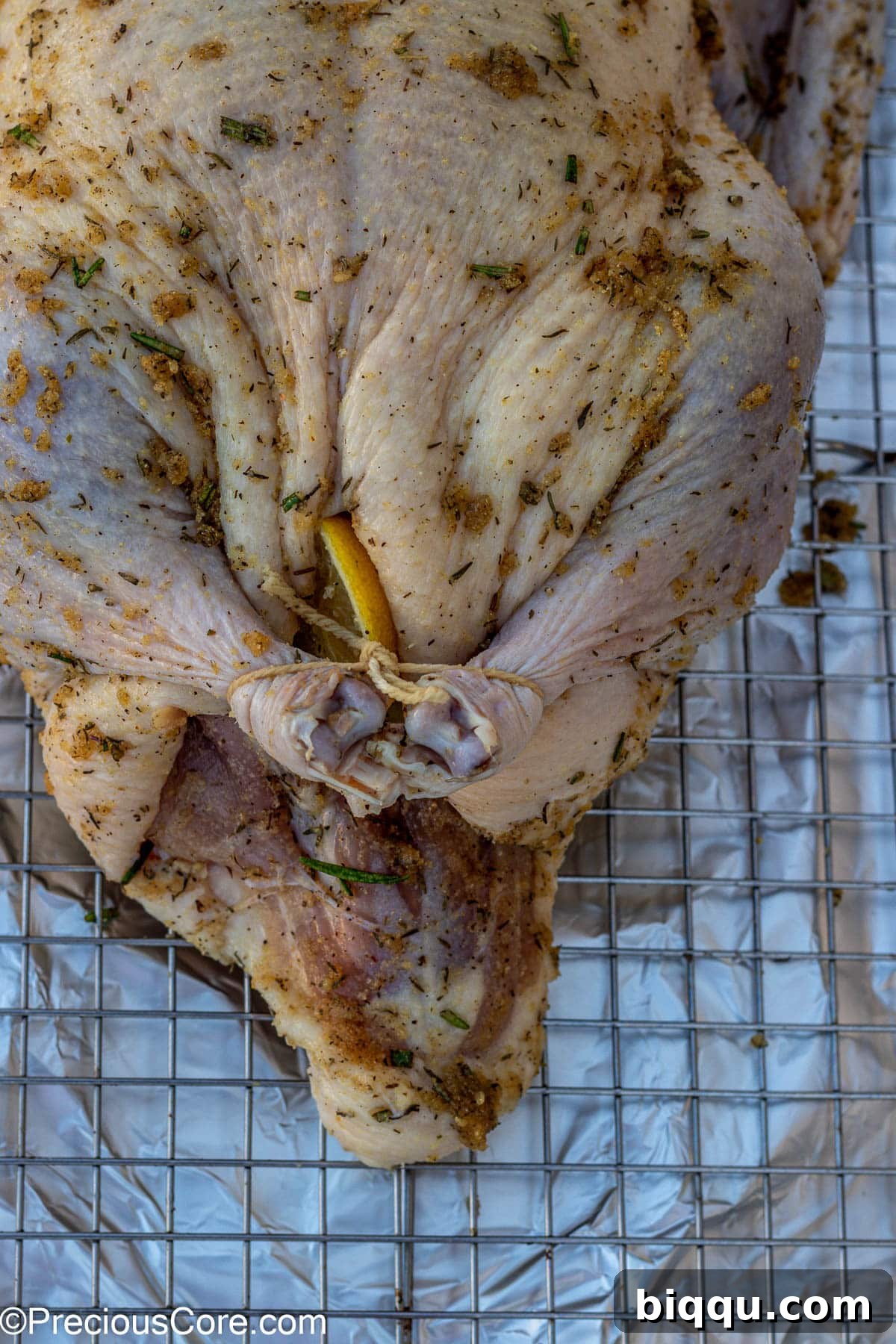
Using butcher’s twine, tie the duck legs together. This helps the duck cook more evenly and maintain a compact shape, preventing the legs from splaying out and drying. Additionally, tuck the wing tips underneath the bird. This prevents them from burning and helps create a more uniform roast.
Step 6: Roast to Perfection
Carefully transfer the seasoned duck onto the wire rack set on your foil-lined baking sheet or roasting pan. Place it into the preheated 400°F (200°C) oven and roast. The initial high temperature helps to crisp the skin. Continue roasting until the duck registers an internal temperature of 165°F (74°C) when measured with a reliable digital meat thermometer inserted into the thickest part of the thigh, avoiding the bone. Rotate the pan halfway through cooking to ensure even browning. After the first hour, it’s a good idea to loosely cover the duck with aluminum foil to prevent the skin from over-browning while the meat continues to cook through.
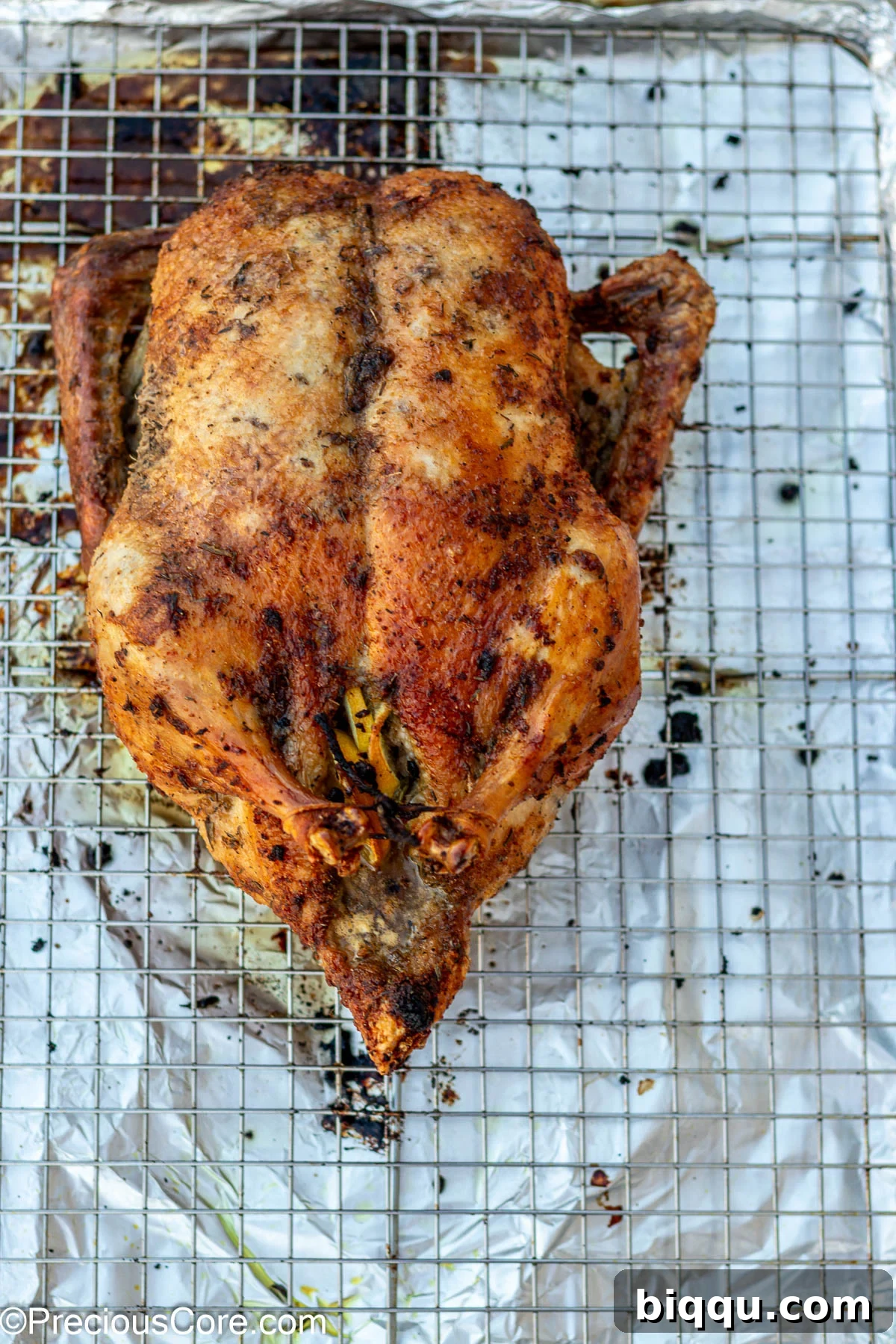
Step 7: Rest and Carve
Once the duck reaches its target internal temperature, remove it from the oven. This next step is critical for a truly juicy duck: transfer it to a cutting board or platter and loosely tent it with aluminum foil. Allow the duck to rest for at least 15 minutes. This resting period is essential as it allows the internal juices to redistribute throughout the meat, resulting in a more tender and succulent duck. If you cut into the duck immediately, the juices will escape, leading to dry meat. After resting, carefully snip and remove the butcher’s twine. Carve the duck with a sharp knife and serve your perfectly roasted, flavorful masterpiece immediately.
The Golden Rule of Roasting: Always Let Your Meat Rest! It is paramount to allow any roast, especially duck, to rest for a minimum of 10-15 minutes after it comes out of the oven. This crucial step enables the muscle fibers to relax and reabsorb the flavorful juices that have collected in the center during cooking, yielding incredibly juicy and tender meat. If you carve roast duck as soon as it’s removed from the heat, those precious juices will simply run out onto your cutting board, leaving you with disappointingly dry meat. Patience is truly a virtue for perfect results!
Advanced Tips for Roasting Duck
Beyond the basic steps, a few additional techniques can further enhance your herb-roasted duck experience and help you make the most of this magnificent bird:
- Utilize the Rendered Duck Fat: The golden, flavorful duck fat that accumulates at the bottom of the roasting pan is a culinary treasure. Do not discard it! It’s absolutely superb for roasting potatoes or other root vegetables. Simply toss some chopped red or golden potatoes with a spoonful or two of the rendered duck fat, season with salt and pepper, and roast them in the oven while your duck is resting. The potatoes will emerge incredibly crispy and infused with rich duck flavor. You can also strain and store excess duck fat in an airtight container in the refrigerator for future use; it’s excellent for sautéing or frying.
- Craft a Rich Duck Stock: Once you’ve carved your roasted duck, don’t let the carcass go to waste. It’s the perfect foundation for a deeply flavorful duck stock. Place the duck carcass into a large stockpot. Add aromatic vegetables such as roughly chopped onions, celery, and carrots, along with fresh sprigs of thyme and rosemary, a few garlic cloves, and a pinch of salt. Cover everything with enough water, bring it to a boil, then reduce the heat and simmer gently for approximately two hours. This slow simmering extracts all the rich flavors and nutrients. Once cooled, strain the stock to remove solids, then store it in an airtight container in the refrigerator for up to 3-4 days, or freeze for longer storage. Duck stock adds unparalleled depth to soups, stews, risottos, and gravies.
- Achieving Extra Crispy Skin: For an even crispier skin, consider increasing the oven temperature to 425°F (220°C) for the last 15-20 minutes of roasting, after the duck has reached its internal temperature. Watch it closely to prevent burning. Alternatively, some chefs use a broiler for a very short burst (1-2 minutes) but this requires extreme vigilance.
- Flavor Infusion: For an extra layer of flavor, consider rubbing some fresh minced garlic and herbs directly under the duck skin, especially on the breast, before seasoning the exterior. This infuses the meat directly.
Duck Cooking Guide & Internal Temperature Essentials
Understanding the proper cooking time and internal temperature is paramount for a safe and delicious roasted duck. While testing this recipe, I found a reliable guideline: plan for approximately 20 minutes of roasting time per pound of duck. Therefore, a 5-pound duck would typically cook in about 100 minutes, which translates to 1 hour and 40 minutes.
However, it’s important to remember that actual cooking times can vary based on several factors. These include whether the duck is stuffed (stuffed ducks generally require longer cooking times), the precise calibration of your oven temperature, and the specific size and fat content of your duck. If you cook at a slightly higher temperature, as recommended in this recipe, you might find the duck cooks a little faster while still achieving wonderfully juicy, succulent meat and that desirable crispy skin.
For food safety, herb-roasted duck should reach an internal temperature of 165°F (74°C) in the thickest part of the thigh, away from the bone, to be considered safe to eat. A high-quality digital meat thermometer (such as the one linked in our ‘Useful Tools’ section below) is an indispensable kitchen gadget that makes accurately determining the internal temperature of your bird incredibly easy and ensures consistent results every time. Trusting a thermometer over visual cues is always the safest bet.
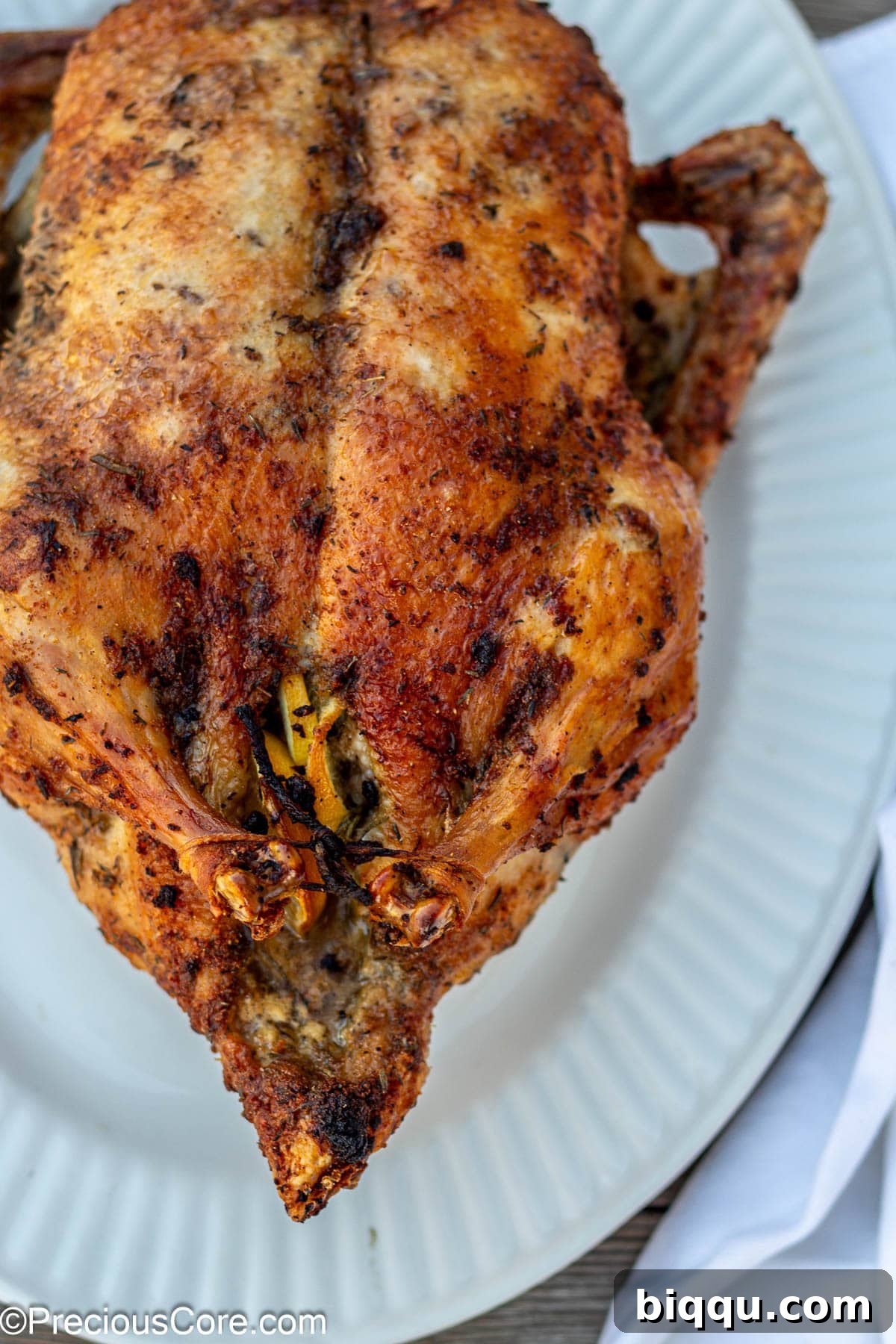
Versatile Seasoning for Duck Parts: This amazing herb and spice blend isn’t just for whole roasted ducks! You can easily adapt this seasoning recipe to elevate individual duck legs, duck breasts, or even duck wings. Simply apply the generous rub to your chosen duck parts and roast them in the oven until they are cooked through and beautifully golden brown. Adjust cooking times as needed for smaller cuts. This offers a fantastic way to enjoy the rich flavors of duck in a quicker, more portion-controlled manner.
Frequently Asked Questions About Duck Roasting
Duck’s rich flavor profile harmonizes beautifully with a wide array of seasonings. Classic choices include aromatics like garlic, onion, and fresh or dried herbs such as thyme and rosemary. Ginger can also add a delightful warmth. For more adventurous palates, seasoning blends like Chinese five-spice powder lend an exotic, sweet-savory note, while Italian seasoning offers a familiar, herbaceous medley that complements the meat.
Some traditional duck roasting methods involve boiling or blanching the duck before roasting. The primary reason for this step is to firm up the duck skin, making it easier to score and to help render a significant amount of fat before it even enters the oven. This can contribute to crispier skin. However, as demonstrated in this recipe, pre-boiling is an optional step that can be skipped entirely. By thoroughly patting the duck dry and making shallow cuts on the skin, you can still achieve a remarkably juicy and flavorful duck with wonderfully crispy skin.
Pekin duck (also known as Long Island duck) is widely considered the most popular and versatile choice for roasting, especially in North America. Its primary appeal lies in its succulent meat, generous fat layer, and a relatively mild, non-gamey flavor profile. This mildness makes Pekin duck an excellent “blank canvas” that readily absorbs and showcases the flavors of various seasonings and marinades, yielding consistently delicious results.
Achieving crispy duck skin is all about rendering the fat. Key steps include: 1) Pat the duck completely dry with paper towels before seasoning. Moisture is the enemy of crispiness. 2) Make shallow scores or slits on the skin, avoiding the meat, to allow fat to escape. 3) Roast on a wire rack over a pan so rendered fat can drip away, allowing hot air to circulate around the entire bird. 4) Start with a higher oven temperature (like 400°F/200°C) to kickstart the fat rendering, then optionally reduce for even cooking. 5) Don’t cover the duck with foil too early, as this traps steam and softens the skin. Only cover loosely if the skin is browning too much.
Yes, you can certainly prepare parts of the duck in advance to streamline your cooking process. You can season the duck up to 24 hours before roasting. After patting it dry and applying the herb rub, place the duck on a wire rack in a roasting pan, cover it loosely with plastic wrap, and refrigerate. This allows the flavors to meld and the skin to dry out even further, contributing to extra crispiness. Just remember to bring it out to room temperature for about an hour before roasting.
Recommended Useful Tools for Roasting Duck
Having the right tools in your kitchen can significantly simplify the process of roasting a duck and ensure fantastic results. These are all practical tools that I personally use and highly recommend, and they are versatile enough for a variety of other culinary tasks:
- Baking Sheet with Rack: An indispensable duo for roasting poultry. This baking sheet and wire rack set is ideal because it allows the duck fat to drip efficiently into the pan below as the bird roasts. This setup ensures excellent air circulation around the duck, which is crucial for achieving that desirable crispy skin all over, rather than just on the top.
- Butcher’s Twine: A simple yet effective tool for culinary tasks. Butcher’s twine makes tying the duck legs together much easier, helping the duck maintain a compact shape. This not only results in more even cooking but also contributes to a neater, more appealing presentation once the duck is roasted and ready to serve.
- Digital Meat Thermometer: The single most important tool for ensuring perfectly cooked, safe, and juicy meat every time. A reliable digital meat thermometer takes the guesswork out of roasting by allowing you to accurately determine if the duck has reached the correct internal temperature of 165°F (74°C). This prevents both undercooking and overcooking, guaranteeing tender and succulent results.
- Sharp Carving Knife: Essential for effortlessly carving your roasted duck. A long, thin, and sharp carving knife allows for clean, precise slices, making presentation easy.
- Large Cutting Board with Juice Groove: A sturdy cutting board, preferably with a channel around the edge, will collect any juices released during carving, keeping your countertop clean and allowing you to save those flavorful drippings for sauce or stock.
Delicious Sides: What To Serve With Roasted Duck
A perfectly roasted duck deserves an equally impressive accompaniment of side dishes. Here are some of our favorite recipes that pair beautifully with the rich, savory flavors of herb-roasted duck, creating a truly memorable meal:
Buttermilk Mashed Potatoes
Creamy, tangy mashed potatoes add a comforting and rich counterpoint to the duck.
Garlic Butter Green Beans
Crisp-tender green beans with a savory garlic-butter coating offer a fresh contrast.
Fried Carrots
Sweet and tender fried carrots provide a burst of color and a lovely caramelized flavor.
African Pepper Sauce
For those who love a kick, a spicy pepper sauce can cut through the richness of the duck.
Garlic Herb Rice
Aromatic rice infused with garlic and herbs makes a light yet flavorful pairing.
Rosemary Garlic Mashed Potatoes
Elevate your mashed potatoes with fragrant rosemary and pungent garlic for a sophisticated side.
Explore More Mouthwatering Roast Recipes
If you’ve enjoyed the succulent flavors and straightforward approach of this herb-roasted duck recipe, you’ll be delighted by our other roasted poultry creations. These recipes also focus on ease, flavor, and yielding perfectly cooked birds for any occasion:
Herb Roasted Turkey
A flavorful and moist turkey, perfect for Thanksgiving or any large gathering.
Herb Roasted Chicken
Simple yet incredibly flavorful, this chicken is a weeknight dinner winner.
Perfect Roast Chicken
Our go-to recipe for a consistently juicy and tender whole roasted chicken.
The Best Juicy Roast Turkey
Master the art of roasting a truly succulent turkey with this foolproof recipe.
If you make this recipe, we would absolutely love to hear from you! Please consider leaving a star rating and a comment below. Your feedback not only helps other home cooks discover this delicious recipe but also encourages us to continue sharing more fantastic meals. Thank you for your support and happy cooking!

Herb Roasted Duck
10 mins
1 hr
30 mins
1 hr
40 mins
4 servings
Rate This Recipe
Print Recipe
Ingredients
- 5-6 pounds whole duck (mine was 5.90 pounds)
- 2 Tablespoons olive oil
- ½ teaspoon salt
- 1 teaspoon chicken bouillon powder
- ½ teaspoon ground black pepper
- 1 Tablespoon onion powder
- 1 teaspoon dried thyme*
- 1 teaspoon fresh minced rosemary
- 2 sprigs fresh rosemary for stuffing cavity
- 1 lemon, sliced into rounds for stuffing cavity
- 1 medium onion, cut into quarters for stuffing cavity
Instructions
-
First, if frozen, keep the duck in the fridge to thaw for 2-3 days. Bring the duck to room temperature for 1 hour before you plan to cook it. Rinse the duck thoroughly, inside and out, with cool water, then pat it very dry with paper towels.
-
Line a sheet pan with aluminum foil and place an oven-safe wire rack on top. Preheat your oven to 400℉ (200°C).
-
Remove any excess fat from the duck cavity. Trim the duck neck and reserve it for making duck stock if desired. Use a small, sharp knife to poke small, shallow holes all over the duck breasts and thighs, being careful not to cut into the meat.
-
Drizzle the olive oil all over the duck and rub it evenly onto the bird. In a small bowl, mix together the salt, pepper, chicken bouillon powder, onion powder, garlic powder, dried thyme, and fresh minced rosemary. Sprinkle this seasoning mixture generously all over the duck, rubbing it into the skin and inside the cavity. Stuff the cavity first with the onion quarters, then add the fresh sprigs of rosemary and lemon slices. Tie the duck legs together with kitchen twine and tuck the wings underneath the bird to prevent them from burning.
-
Transfer the seasoned duck onto the rack on the foil-lined sheet pan. Place it in the preheated oven and roast for approximately 1 hour 30 minutes, or until it registers an internal temperature of 165℉ (about 74℃) on an instant-read meat thermometer inserted into the thickest part of the thigh, avoiding the bone. Rotate the pan halfway through cooking to ensure even browning. After the first hour, loosely cover the duck with aluminum foil if the skin is browning too quickly, to prevent over-browning. If you do not have a meat thermometer, you can make a small cut on a duck breast; if the juices run clear, the duck is ready.
-
Once the duck is done, remove it from the oven. Loosely cover it with aluminum foil and let it rest for 10 to 15 minutes. This crucial resting period allows the juices to redistribute throughout the meat, resulting in a more tender and juicy duck. After resting, cut and discard the butcher’s twine. Carve the duck with a sharp knife and serve immediately.
Notes
Resting the meat: It is essential to always let your roast duck rest for at least 10-15 minutes before carving and serving. This allows the internal juices to redistribute throughout the meat, guaranteeing an incredibly juicy and tender result. Cutting into the duck too soon will cause the juices to escape, leading to dry meat.
Variations: This versatile herb and spice seasoning can be adapted for individual duck legs or duck breasts. Simply season your chosen duck parts and roast them in the oven until they are fully cooked and beautifully golden. Adjust cooking times as appropriate for smaller cuts.
Nutrition Information (per serving, approximate)
Calories: 697kcal
|
Protein: 112g
|
Fat: 24g
|
Saturated Fat: 7g
|
Polyunsaturated Fat: 3g
|
Monounsaturated Fat: 7g
|
Cholesterol: 437mg
|
Sodium: 323mg
|
Potassium: 1520mg
|
Vitamin A: 301IU
|
Vitamin C: 35mg
|
Calcium: 17mg
|
Iron: 26mg
Additional Info
Tried this recipe?
Mention @preciouscore or tag #PreciousCore!
Düzeltmeler ve Eklemeler:
- **SEO Uyumu:**
* `