
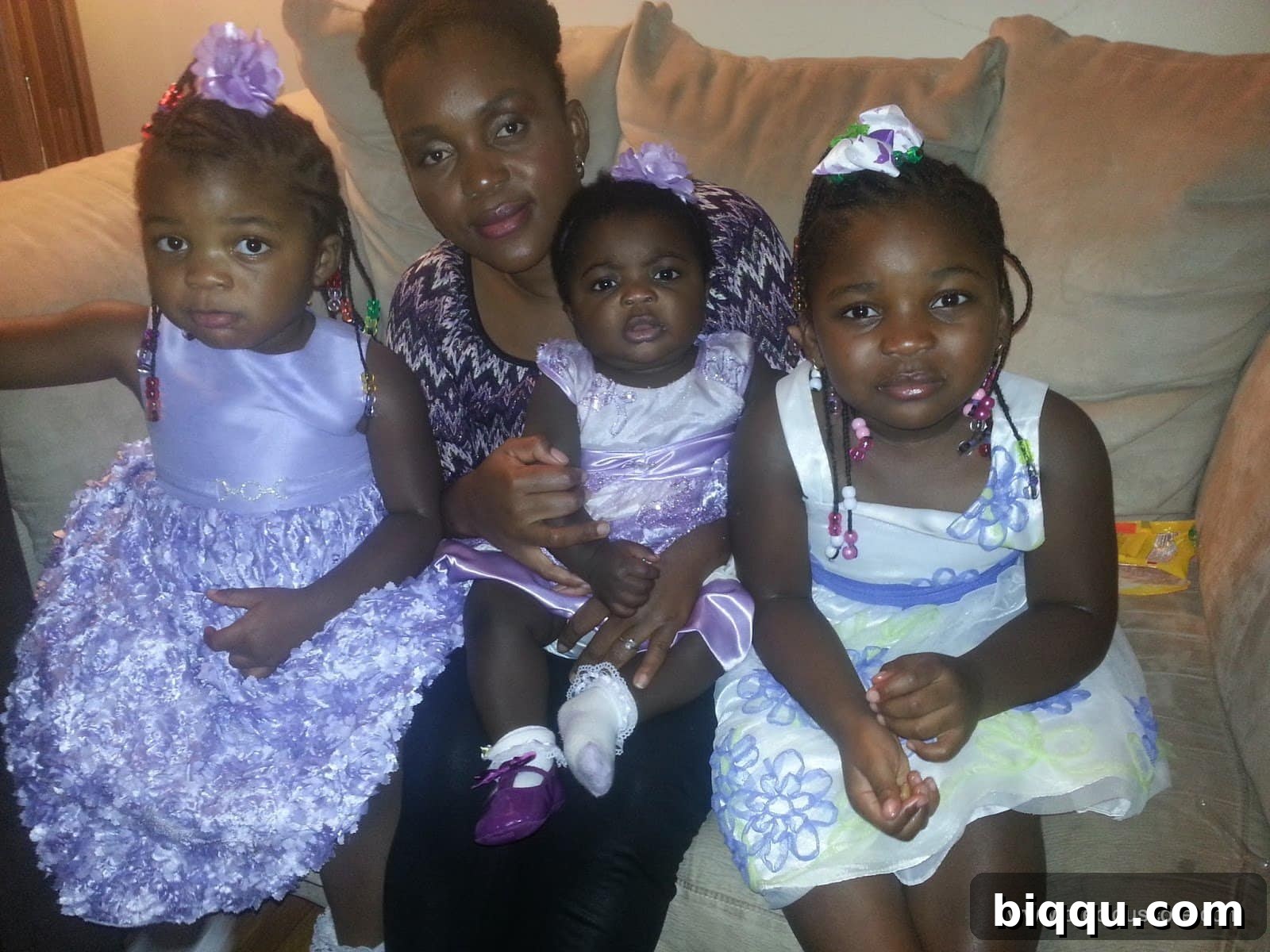
Celebrating Daughters: Redefining Value Beyond Gender Preferences
Embracing the inherent worth of every child and challenging cultural biases in parenting.
As Women’s History Month draws to a close, it offers a crucial moment to reflect on the immense value and unique contributions daughters bring to families and society. While global discourse increasingly champions gender equality, deeply embedded cultural biases continue to subtly—and sometimes overtly—diminish the perceived worth of girls in many communities worldwide. This article delves into the persistent societal preference for sons, particularly within various African cultural contexts, and passionately advocates for a much-needed paradigm shift towards celebrating every child, irrespective of their gender. It’s a call to action for parents and communities to recognize and nurture the profound potential within every daughter, fostering an environment of unconditional acceptance and empowerment.
Recently, a common social media interaction perfectly highlighted this ongoing societal dilemma. I noticed a friend’s jubilant announcement of her “prince,” arriving after she had already been blessed with three daughters. Her overwhelming joy at the birth of a son, after years of yearning, underscored a pervasive cultural norm. The comments that followed further solidified this perspective; one friend wrote in Cameroon Pidgin English, “You should thank God that you have given birth to your husband’s successor. If you didn’t get a son, your husband would have sent you packing from that marriage.” This sentiment, while stark, is not an isolated incident. It vividly illustrates the profound pressure women endure to produce male heirs, often impacting their status and security within their marital homes and broader communities.
The Deep Cultural Roots of Son Preference: Understanding the “Chop Chair” Tradition
In numerous parts of Cameroon, and indeed across many traditional African societies, a male child is ceremonially honored with the title of “chop chair” of his father. This deeply entrenched cultural term signifies that he is regarded as the rightful and most suitable heir, destined to succeed his father in matters of property, family lineage, and often, significant familial responsibilities. Daughters, regrettably, are seldom afforded this esteemed position, perpetuating a clear gender hierarchy that begins at birth. The arrival of a son is typically met with greater fanfare and perceived importance, overshadowing the celebration of a daughter’s birth.
Consequently, when a woman gives birth to a female child, the new arrival is often not valued with the same enthusiasm or granted the same social status as a male child. This often manifests as a palpable sense of relief and triumph for mothers who, after bearing multiple daughters, finally welcome a son. It is as if they have transitioned from what are often perceived as “darkening moments of daughters only” into the “light” of validated motherhood, having fulfilled a profound societal expectation. This immense psychological burden placed upon women can lead to deep-seated feelings of inadequacy and contribute to a cycle of gender discrimination that affects both mothers and their female offspring. The emotional toll of this cultural bias is significant, impacting maternal well-being and the early experiences of girls.
Unpacking the “Daughter-Only Syndrome”: A Harmful Societal Misconception
My personal experiences, both observed and lived, compel me to shed light on what I refer to as the “daughter-only syndrome”—a misnomer that many erroneously label as a social blight. This issue is not merely an academic concept; it’s a stark reality for countless women who navigate its complexities daily. I vividly recall the phone call I received after the birth of my second daughter. My sister-in-law, reflecting a typical African cultural viewpoint, called me and expressed her disappointment with the words, “We hear you are only giving birth to girls.” While perhaps not intended maliciously, her statement conveyed a clear message: I had, in her view, failed to produce a “chop chair” for my husband, reinforcing the pervasive societal disappointment associated with having only female offspring. This cultural judgment, often disguised as concern, highlights the subtle yet powerful ways in which gender bias can impact a mother’s sense of worth.
This subtle, yet profoundly impactful, devaluation often marks the beginning of a larger cycle of discrimination and potential violence against women. From the moment a girl is born, she may be overlooked, undervalued, and, in some extreme cases, subtly unwanted. This prenatal and postnatal bias can have lasting ramifications for her upbringing, impacting her self-esteem, educational opportunities, and future social standing. It is a societal affliction, often cloaked in the guise of tradition, that silently but systematically erodes the inherent worth and potential of half of our global population. Recognizing and addressing this bias is a critical step towards achieving true gender equality and ensuring that every child is celebrated for who they are.
The Detrimental Impact of Societal Pressure on Mothers and Daughters
Society’s relentless pressure on women to “subsequently bring forth a son and be a ‘real woman'” drives many into a harrowing cycle. This expectation often leads to rapid, successive pregnancies, fueled by a fervent, desperate hope: “It’s a boy this time.” The anxious wait for ultrasound results or birth announcements frequently culminates in bitter disappointment: “Nope! It’s a girl again.” Such news can be overwhelmingly disheartening, fostering deep feelings of inadequacy, particularly when mothers are confronted by “proud mamas of strong boys.” This environment can cultivate a profound inferiority complex that leaves lasting scars on a mother’s psyche, sometimes tragically influencing how she perceives and treats her “God-sent queen”—her own daughter.
Many women, trapped in this relentless pursuit of a male heir, struggle to abandon hope. They embark on a painful and exhausting journey, often producing a “chain of female children” in their desperate quest for a son. With each successive daughter, their initial hope gradually diminishes, replaced by a growing sense of desperation and emotional fatigue. Ultimately, they may find themselves “stuck with daughters only,” a fate that, in these societies, is often viewed with pity, scorn, or even as a sign of some personal failure. This narrative not only impacts the mother’s mental health but also inadvertently affects the daughters, who may grow up feeling like a source of their mother’s distress.
The consequences for these women can be devastating. Their husbands might feel compelled by societal pressures to take “second wives who can bear them sons,” further marginalizing the first wife and destabilizing the family unit. Beyond enduring “verbal abuse for their incapacity to produce sons,” these women are then forced to “battle it out with competitive co-wives,” navigating complex and often hostile domestic dynamics that erode their dignity and well-being. In more extreme and desperate cases, some mothers may even resort to visiting “witch doctors in search of a supernatural power that can cleanse their wombs and enable them to produce ‘real’ children,” vividly illustrating the profound desperation and intense societal pressure they face. This highlights the urgent need for education and awareness to dismantle such harmful beliefs and practices.
Challenging the “Accepted Madness”: Hospitals Leading the Change
This pervasive gender bias is far more than a mere cultural nuance; it’s a profound stigma with a cascade of harmful effects that I aptly term the “accepted madness.” This madness is so deeply ingrained that even vital institutions, such as hospitals in Cameroon, are now actively recognizing its detrimental impact and implementing measures to curb it. They are courageously putting a “STOP sign to it,” a clear and significant indication that this is a recognized societal problem demanding immediate and concerted intervention across various levels.
One such exemplary institution is the Mbingo Baptist Health Center, located in Douala, Cameroon’s bustling economic capital. During my first pregnancy, this facility was my chosen venue for an ultrasound. While I fully understood the critical medical benefits of visualizing my womb under the radiologist’s expert lenses, I, like countless expectant mothers, also harbored a natural curiosity to discover the baby’s sex—a desire often fueled by the simple joy of planning for “blue stuff or pink stuff.” However, to my initial disappointment, the medical specialist firmly declined to reveal the baby’s sex. It was only later that I came to grasp the profound and empathetic reasoning behind this seemingly unusual policy.
A compassionate midwife, who guided us through the antenatal classes at this very hospital, elucidated the rationale behind this crucial decision. She explained that the center had initiated its policy of refusing to disclose a baby’s sex to mothers precisely because of the profoundly negative emotional reactions from those who desperately desired boys and were left “frustrated when the medical images revealed they were carrying girls.” She elaborated that many women became visibly “downcast” upon learning they were expecting a daughter instead of a son, and, as she emphasized, carrying “that feeling of rejection towards a baby is not good for the well-being of the child.” This proactive and ethical approach by the Mbingo Baptist Health Centre epitomizes a profound commitment to the child’s holistic well-being, prioritizing it over outdated societal preferences. It champions the universal truth beautifully captured in the widely known Pidgin English saying, “Pikin na pikin” – a powerful affirmation meaning “every child is valuable no matter the sex.” This commitment reflects a growing awareness of the psychological impact of gender preference on both mothers and their unborn children, paving the way for more compassionate healthcare practices.
Global Echoes: Economic Disparity and Inheritance Challenges for Daughters
The preference for sons and the subsequent devaluation of daughters are not isolated phenomena confined to specific regions; they are global issues with far-reaching consequences. Reports from reputable international sources like the Huffington Post vividly illustrate the pervasive nature and grave implications of this gender bias. For instance, a chilling exposé revealed a Nigerian “baby factory” discovered months ago in the country’s southeastern region, where boys were reportedly sold for significantly higher sums of money than girls. This disturbing detail starkly underscores how deeply ingrained gender preference can manifest in extreme forms of human exploitation and the commodification of vulnerable lives, transforming children into commodities whose value is determined by their sex.
Furthermore, the Huffington Post highlighted a critical economic disparity that profoundly impacts women and girls throughout their lives. Nigerian ex-judge Oby Nwankwo was quoted stating, “Widows and daughters have faced massive obstacles when trying to inherit family resources after the death of a patriarch.” This statement elucidates a harsh reality: the gender bias doesn’t merely manifest at birth or in early childhood but systematically continues to disadvantage women across generations, severely impacting their ability to secure economic stability, achieve independence, and escape poverty. It unequivocally clarifies why women and girls often “feel disadvantaged”—they are systematically denied the same privileges, inheritance rights, and opportunities as men and boys. This fundamental inequality hinders their potential, perpetuates cycles of gender disparity, and undermines broader efforts towards economic empowerment and social justice. Addressing these systemic issues is crucial for fostering an equitable society where all individuals, regardless of gender, have the chance to thrive.
Redefining Value: Daughters Are Powerful and Not Lesser Children
Hailing from a typical African society, I possess an inherent understanding of the intricate cultural narratives that shape perceptions of gender. However, I steadfastly hold the belief that “a girl is not a less important child.” While I may entertain the desire to have a son in the future, this aspiration does not stem from feeling “handicapped as a girls-only mom.” My wish arises from a simple, holistic desire to experience the unique joys and challenges of raising children of both sexes, not from seeking “some approval from the propagators of this ‘accepted madness.'” My worth as a mother is not, and should never be, defined or diminished by the gender of my children. If bearing only girls is mistakenly considered a “crime” by some, then I proudly embrace being the “culprit.” If such a belief makes a mother “inferior” in the eyes of those who cling to outdated notions, then paradoxically, it only serves to make me feel “superior,” for I am raising intelligent, capable, and loving human beings.
Consider the universally admired example of former United States President Barack Obama, who is the proud father of two remarkable daughters, Malia and Sasha. Are they not cute, intelligent, accomplished, and influential young women in their own right? Is Michelle Obama, an icon of strength and grace, in any way “handicapped because she bore only girls?” The resounding and emphatic answer is an unequivocal “No!” Their family stands as a powerful, public testament that greatness, influence, joy, and familial completeness are entirely independent of a child’s gender. They serve as compelling role models, demonstrating that nurturing and empowering daughters leads to extraordinary outcomes, challenging the very core of gender preference narratives.
Changing the Narrative: Empowering and Unconditionally Celebrating Every Daughter
It is profoundly urgent to dismantle this “weird line of thinking” that our culture has persistently propagated—the erroneous and harmful idea that boys are inherently “better” than girls. Sadly, far too many mothers, influenced by relentless societal pressures and archaic beliefs, are still “buying into it,” thereby inadvertently perpetuating a cycle of undervaluation and entrenched gender bias. We must collectively and consciously challenge this harmful narrative and actively foster an environment where every child feels cherished, valued, and empowered from the earliest stages of their development.
Let us begin, with unwavering pride and boundless love, to celebrate our daughters from their earliest moments in our wombs, through their birth, and as they blossom into formidable, accomplished women. Let us “flaunt and flaunt them”—not out of defiance, but from a place of genuine appreciation for their unique spirits and immense potential—until those who stubbornly cling to the notion of boys being “better kids” become truly envious of the strength, resilience, intelligence, and undeniable beauty our daughters bring to the world. We must actively provide them with equal opportunities in education, careers, and leadership; instill in them boundless confidence and self-worth; and courageously encourage them to pursue their wildest dreams without the limitations imposed by outdated gender stereotypes. By undertaking these critical steps, we not only profoundly empower our daughters to reach their full potential but also immeasurably enrich our families, strengthen our communities, and contribute to a more equitable and inclusive society as a whole.
Just recently, my daughter held me close and whispered in her sweet, clear voice, “Mummy, I love you.” In that precious moment, the profound and undeniable truth resonated deeply within me: “daughters are really sweet.” They are not just sources of immense joy and boundless love, but also incredible reservoirs of strength, empathy, and remarkable potential. Each child, regardless of gender, is a unique and irreplaceable blessing, and it is our collective moral responsibility to nurture, cherish, and celebrate them equally, allowing them to flourish into the amazing individuals they are destined to be.
“Pikin na pikin and girl pikin na better pikin!”
(Every child is special, and girls are super special)
First published in my journal at WorldPulse.com