
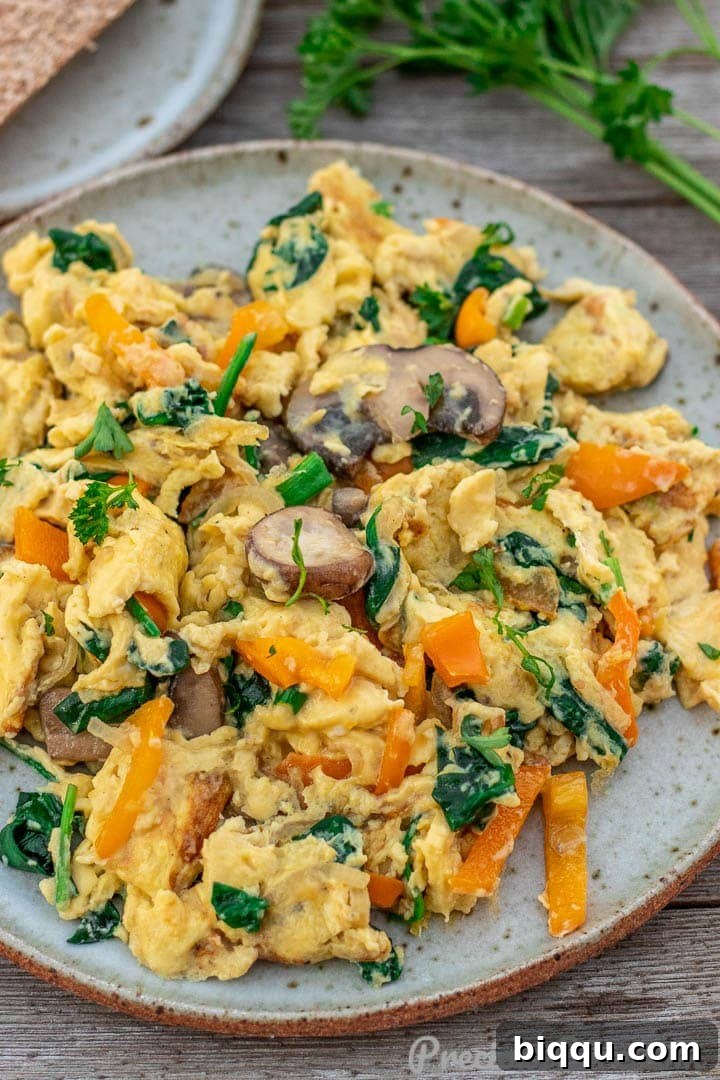
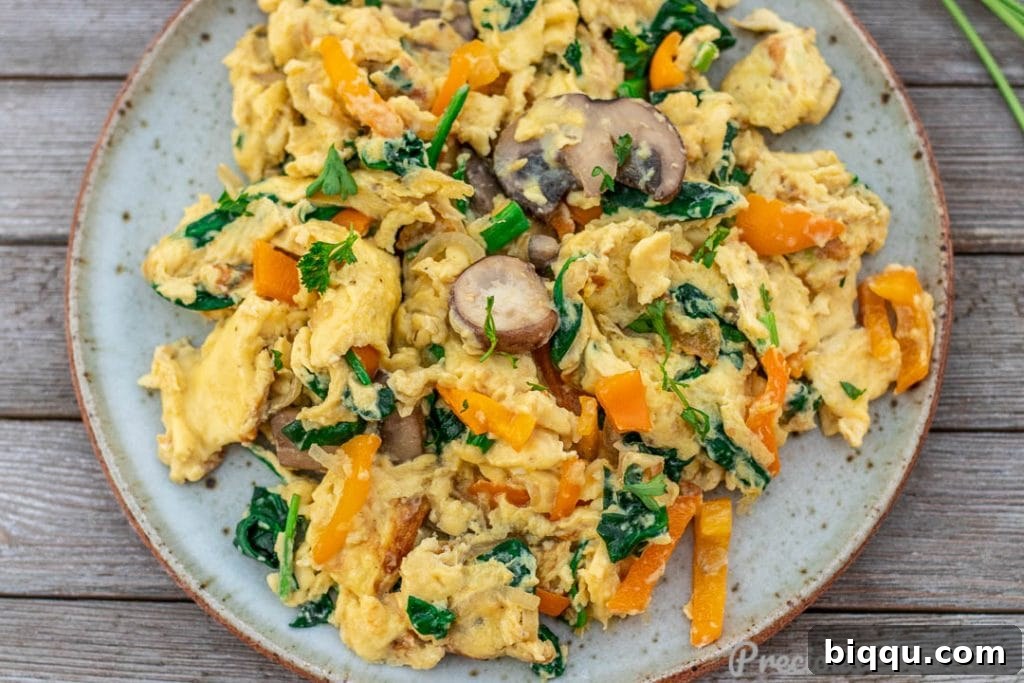
Scrambled Eggs With Vegetables offer an incredibly delicious and adaptable meal, perfect for any time of day – whether it’s a hearty breakfast, a satisfying lunch, or a quick, nutritious dinner. This vibrant dish, packed with wholesome vegetables, comes together in a flash, making it an ideal choice for busy weekdays and relaxing weekends alike. It’s more than just scrambled eggs; it’s a full-flavored, nutrient-rich experience that will quickly become a staple in your culinary repertoire.
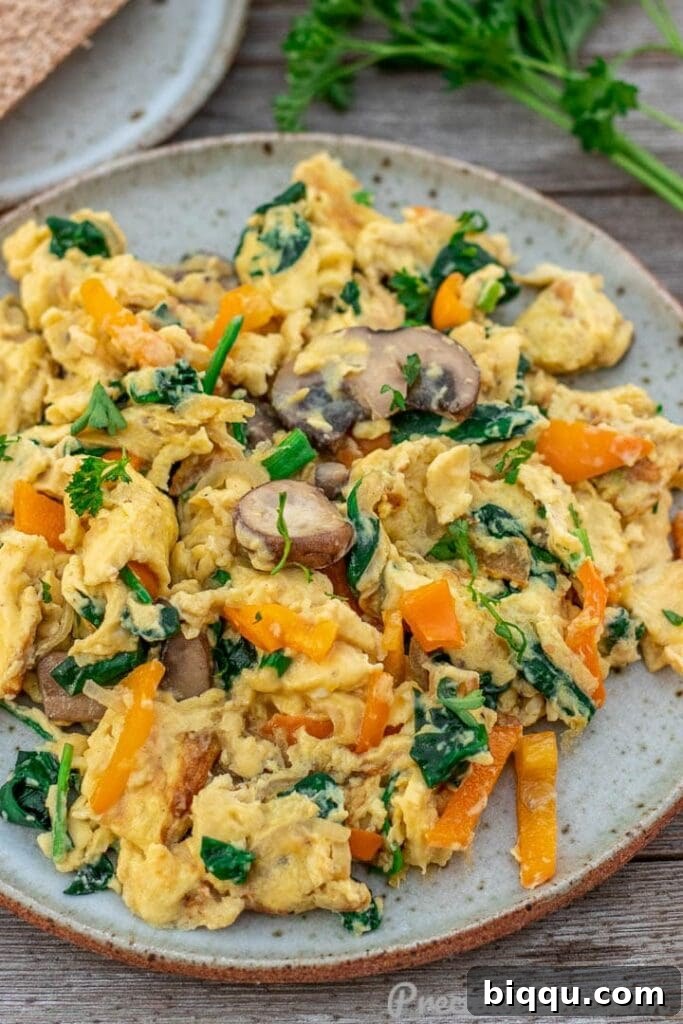
Why You’ll Love Scrambled Eggs with Vegetables
There’s a reason why scrambled eggs are a universal favorite, and when you infuse them with a medley of fresh vegetables, they transform into something truly special. We’re talking about incredibly creamy, flavorful eggs complemented by the earthy depth of mushrooms, the sweet crunch of bell peppers, and the vibrant goodness of spinach. This isn’t your average, plain scrambled egg dish; it’s a nutrient powerhouse designed to tantalize your taste buds while fueling your body with essential vitamins and minerals.
Quick & Easy Preparation
One of the biggest advantages of this recipe is its lightning-fast preparation time. In today’s fast-paced world, finding meals that are both healthy and quick to make is a culinary holy grail. This vegetable scramble fits the bill perfectly, requiring minimal effort and simple cooking techniques. From whisking the eggs to sautéing the vegetables and bringing it all together, you can have a gourmet-tasting meal on the table in under 20 minutes. It’s the ultimate solution for those mornings when you’re rushing out the door or evenings when you want a light, yet fulfilling, dinner without spending hours in the kitchen.
Nutrient Powerhouse
Eggs are often hailed as nature’s multivitamin, providing high-quality protein, essential amino acids, and vital nutrients like choline and Vitamin D. When combined with a colorful array of vegetables, this dish becomes an even greater nutritional champion. The added vegetables contribute fiber, antioxidants, and a wide spectrum of vitamins, turning a simple egg dish into a complete and balanced meal. You get the benefits of lean protein, healthy fats, and complex carbohydrates all in one delicious bite.
Infinitely Customizable
The beauty of scrambled eggs with vegetables lies in their incredible versatility. This recipe serves as a fantastic base, allowing you to easily swap out ingredients based on what you have on hand, what’s in season, or simply what you’re craving. It’s an excellent way to use up leftover vegetables in your fridge, minimizing food waste and maximizing flavor. Whether you prefer a specific type of mushroom, a mix of colorful peppers, or a generous handful of kale, this dish adapts effortlessly to your preferences, making it a truly personalized culinary experience every time.
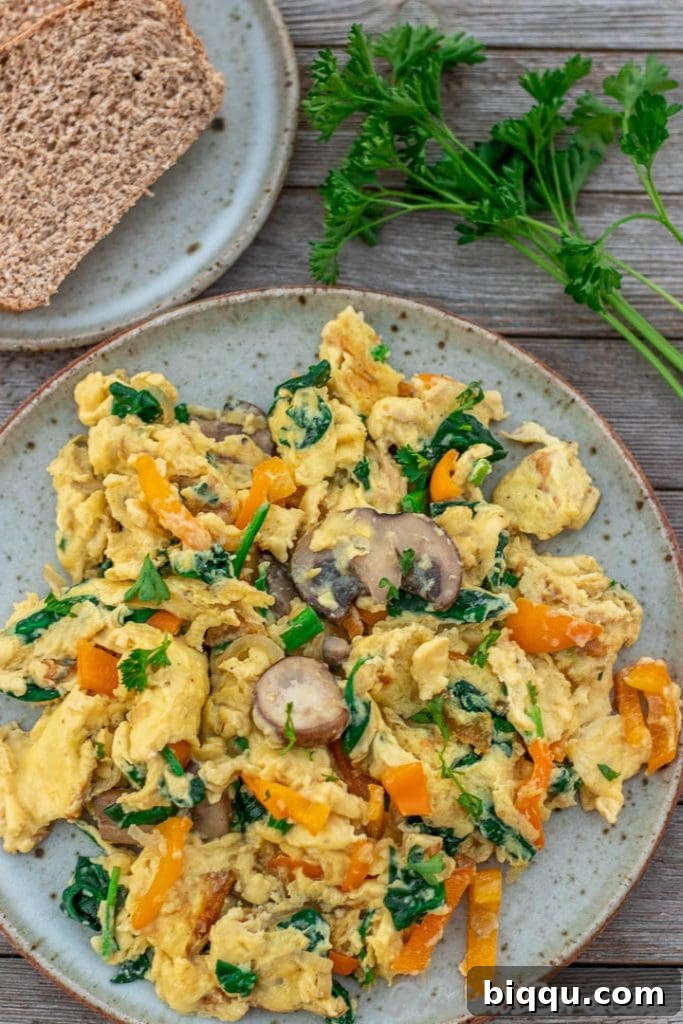
Serve this delightful scramble with a slice of wholesome whole-wheat toast, a side of crispy roasted potatoes, or enjoy it on its own for a lighter option. This is a genuinely healthy meal that you can savor any time of the year and at any mealtime. It’s definitely a recipe you’ll want to add to your regular weekly meal rotation, bringing both comfort and nutrition to your table.
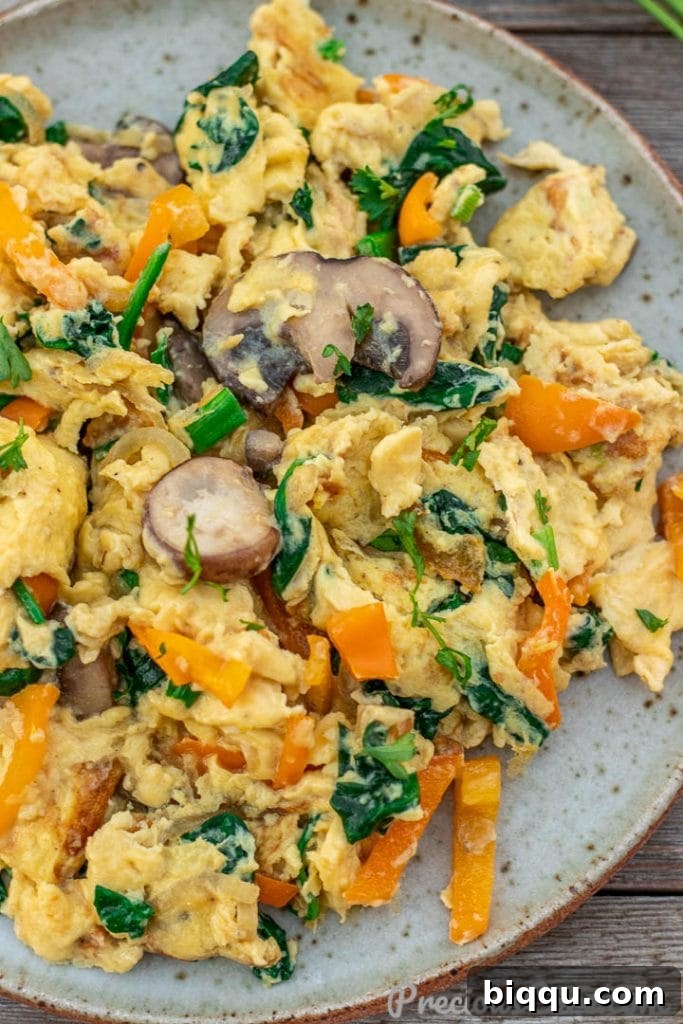
For more inspiration and delightful egg-based creations, don’t miss our recipe for Deviled Eggs with Cajun Shrimp – another fantastic way to enjoy eggs!
Key Ingredients for the Perfect Vegetable Scramble
Crafting these delectable vegetable scrambled eggs begins with selecting fresh, high-quality ingredients. While the full recipe below provides a detailed list of quantities, here’s a breakdown of the key components and why they are essential:
1. Eggs. The star of the show! Always opt for fresh, good quality large eggs. Fresh eggs have yolks that stand up proudly and firm whites, contributing to a better texture and richer flavor in your scramble. They are a powerhouse of protein and essential nutrients.
2. Heavy Cream. Cream is the secret weapon for achieving incredibly fluffy and rich scrambled eggs. It adds volume, a luxurious texture, and an unbeatable creaminess that elevates the dish. If you don’t have heavy cream, you can easily substitute it with whole milk, evaporated milk, or even a small amount of water. Just be mindful not to add too much water, as it can dilute the rich egg flavor. Milk or cream not only adds richness but also helps to prevent the eggs from becoming rubbery by inhibiting protein coagulation too quickly.
3. Olive Oil. Used for greasing the pan and sautéing the vegetables, olive oil adds a subtle fruity note and is a healthier cooking fat. Extra virgin olive oil is preferred for its flavor and health benefits. If you prefer, butter can also be used, lending a classic, nutty flavor that complements eggs beautifully. Both options ensure your vegetables cook perfectly and your eggs don’t stick.
4. Salt. A fundamental seasoning that enhances all the flavors in the dish. It brings out the natural taste of the eggs and vegetables. Remember to divide the salt between the egg mixture and the vegetables for balanced seasoning. Use fine sea salt or kosher salt for best results.
5. Pepper. Adds a pleasant hint of warmth and aroma. Freshly ground black pepper offers a robust, piquant flavor, while white pepper provides a milder, earthy undertone without the visible flecks, which some prefer for aesthetic reasons. Choose whichever you prefer to complement the other flavors.
6. Chicken Bouillon Powder. This is the secret ingredient that truly sets these scrambled eggs apart. A small amount of chicken bouillon powder introduces an incredible depth of savory, umami flavor, making the eggs taste richer and more complex. It’s a game-changer that adds an extra layer of deliciousness. For a vegetarian option, you can use vegetable bouillon powder or a pinch of nutritional yeast for a similar savory boost.
7. Onions. Finely chopped onions form the aromatic base of this scramble. Sautéing them until translucent releases their natural sweetness and creates a foundational layer of flavor for the vegetables and eggs. They provide a savory backbone that enhances the overall taste profile.
8. Versatile Vegetables. The beauty of this recipe lies in its adaptability, allowing you to use almost any vegetables you have on hand. Our recommended combination includes:
- Mushrooms: Sliced mushrooms add a fantastic “meatiness” and a rich umami flavor, contributing a hearty texture to the scramble. Button, cremini, or shiitake mushrooms work wonderfully.
- Bell Peppers: Chopped bell peppers (any color – red, yellow, orange, or green) provide a vibrant color, a sweet crunch, and a fresh flavor that brightens the dish.
- Spinach: Baby spinach wilts quickly and incorporates effortlessly, adding a boost of greens, iron, and a mild, earthy taste.
Feel free to experiment with other vegetables like zucchini, cherry tomatoes, kale, broccoli florets, or even leftover roasted vegetables. The key is to add tougher vegetables first to the pan (like carrots or broccoli) and softer ones (like spinach or tomatoes) last, just before the eggs, to prevent them from becoming overcooked and soggy. This ensures each vegetable retains its optimal texture and flavor within the scramble.
Step-by-Step: Crafting Your Delicious Vegetable Scrambled Eggs
Making these flavorful vegetable scrambled eggs is surprisingly simple and quick. Follow these easy steps to achieve a perfectly cooked, nutrient-packed meal. For detailed step-by-step instructions and precise measurements, refer to the full recipe below.
1. Prepare the Egg Mixture: In a large mixing bowl, gently whisk together the fresh eggs, heavy cream (or your chosen substitute), a portion of the salt, the chicken bouillon powder, and black or white pepper. Whisk until the yolks and whites are fully combined and slightly frothy, but avoid over-whisking, as this can lead to tougher eggs. The cream and seasonings should be evenly distributed for consistent flavor and texture.
2. Sauté the Vegetables: Heat the olive oil in a large skillet, preferably non-stick, over medium heat. Once the oil is shimmering, add the chopped onions and sauté them for 1-2 minutes until they become translucent and fragrant, stirring occasionally. Next, add the sliced mushrooms and continue to sauté for another 2 minutes, allowing them to release their moisture and develop a beautiful color. Finally, incorporate the chopped bell peppers and cook for about 1 minute until slightly tender-crisp. Stir in the baby spinach, cooking just until it wilts, which usually takes about 1 minute. The goal is tender, not mushy, vegetables.
3. Cook the Scrambled Eggs: Pour the whisked egg mixture over the sautéed vegetables in the skillet. Allow the eggs to set undisturbed for about 1 minute around the edges. Then, using a wooden spoon or a heat-resistant spatula, gently push the cooked egg from the edges towards the center, tilting the pan to allow uncooked egg to flow underneath. Continue to stir gently and fold the eggs from time to time, allowing them to cook slowly and evenly. The key to creamy scrambled eggs is to cook them over medium-low heat and remove them from the heat when they are still slightly moist and creamy, rather than completely dry. They will continue to cook slightly from residual heat once removed from the pan.
4. Serve and Enjoy: Once your vegetable scrambled eggs reach your desired consistency, remove them from the heat immediately. Garnish with a sprinkle of fresh chopped parsley if desired, for a touch of color and fresh herb flavor. Serve them piping hot and enjoy as is, or with your favorite complementary side dish. They are particularly delightful alongside honey whole wheat toast.
Perfect Pairings: What to Serve with Your Scrambled Eggs
Scrambled eggs with vegetables are incredibly versatile and pair well with a wide variety of sides, making them suitable for any meal. Here are some popular and delicious serving suggestions to elevate your dining experience:
- Toast: A classic choice! Whether it’s white, whole wheat, sourdough, or artisanal bread, a crisp piece of toast is perfect for soaking up the creamy eggs and makes a simple yet satisfying meal.
- Roasted Potatoes or Breakfast Potatoes: The savory, crispy texture of roasted or pan-fried breakfast potatoes offers a delightful contrast to the soft eggs, creating a truly comforting and filling meal.
- Baked Plantains: For a touch of tropical sweetness, ripe baked plantains are an unexpected but delicious accompaniment, offering a soft texture and caramelized flavor.
- Warmed Tortillas: Turn your scramble into a light taco or burrito filling. Warmed corn or flour tortillas provide a perfect vessel for the eggs and veggies, especially with a dollop of salsa or avocado.
- Biscuits: Fluffy, buttery biscuits are a comforting addition, especially for a brunch setting. Their tender crumb pairs wonderfully with the rich eggs.
- Honey Whole Wheat Rolls: Lightly sweet and soft, these rolls provide a wholesome and delicious option to complete your meal, adding a hint of sweetness that complements the savory eggs.
Exciting Variations: Customizing Your Scrambled Eggs
Want to make your scrambled eggs with vegetables even more “egg-citing”? The beauty of this dish lies in its endless possibilities for customization. Consider adding the following ingredients to enhance flavor, texture, and nutritional value:
- Cheese: For wonderfully cheesy scrambled eggs, fold in your favorite shredded cheese (cheddar, mozzarella, feta, goat cheese, or a Mexican blend) into the whisked eggs just before adding them to the pan. The cheese will melt beautifully, creating gooey, flavorful pockets throughout the scramble.
- Sausage or Other Proteins: For a meatier scramble with an extra boost of protein, sauté some crumbled sausage (pork, chicken, or turkey), crispy bacon bits, diced ham, or even plant-based sausage with the onions before adding the eggs. Ensure the meat is fully cooked before introducing the eggs.
- Seasoning Blends: Experiment with different seasoning blends to introduce exciting global flavors. A pinch of Cajun seasoning adds a spicy, smoky kick; Italian seasoning provides herbaceous notes; or a Mexican blend can give it a vibrant, zesty character. Add your chosen blend when whisking the eggs for even distribution.
- Fresh Herbs: Freshly chopped herbs like parsley, chives, basil, cilantro, or dill are a fantastic addition, offering bright, fresh flavors. Stir them into the whisked eggs or sprinkle them over the cooked scramble just before serving for a burst of freshness.
- Spicy Kick: If you love a little heat, add a pinch of red pepper flakes with the vegetables, or drizzle some hot sauce (like sriracha or tabasco) over the finished dish.
- Avocado: Sliced or diced avocado added just before serving provides a creamy texture and healthy fats, making the meal even more satisfying.
- Cherry Tomatoes: Halved cherry tomatoes add a burst of juicy sweetness and color. Add them towards the end of the vegetable sauté so they soften slightly but retain their shape.
Tips for Fluffy, Creamy Scrambled Eggs Every Time
Achieving that perfect fluffy, creamy texture in your scrambled eggs is an art, but it’s one that’s easily mastered with a few simple techniques:
- Low and Slow Heat: This is arguably the most important tip. Cooking eggs over medium-low heat allows them to cook gently and evenly, preventing them from becoming dry, rubbery, or tough. Patience is key for that custardy texture.
- Don’t Overcrowd the Pan: If you’re cooking for a crowd, use a large enough skillet or cook in batches. Overcrowding the pan can lower the temperature, leading to steamed rather than properly scrambled eggs.
- Whisk Thoroughly, But Not Excessively: Whisking incorporates air, which contributes to fluffiness. Whisk until the yolks and whites are fully combined and slightly frothy, but stop before the mixture becomes too foamy. Over-whisking can break down the protein structure too much.
- Use a Non-Stick Pan: A good quality non-stick skillet is your best friend for scrambled eggs. It prevents sticking and ensures easy stirring and cleanup, helping you achieve a smooth, even scramble.
- Know When to Stop Cooking: This is crucial. Remove the eggs from the heat when they are still slightly wet and creamy-looking. They will continue to cook from the residual heat in the pan. If you wait until they look fully set in the pan, they will be overcooked and dry by the time they reach your plate.
- Add a Splash of Liquid: A bit of heavy cream, milk, or even water (as in this recipe) helps to make the eggs more tender and creamy by breaking up the protein chains and preventing them from tightening too much during cooking.
- Gentle Stirring: When the eggs start to set, use a spatula to gently push the cooked portions from the edges towards the center, allowing the uncooked egg to flow underneath. Avoid vigorous stirring, which can break the eggs into tiny, dry pieces. Large, soft curds are the goal.
Storage and Reheating
While scrambled eggs are best enjoyed fresh, you can store leftovers and reheat them if necessary:
- Storage: Allow any leftover scrambled eggs with vegetables to cool completely. Transfer them to an airtight container and refrigerate for up to 2-3 days.
- Reheating: For best results, reheat scrambled eggs gently. You can warm them in a non-stick skillet over low heat, stirring occasionally, until just heated through. Adding a tiny splash of milk or water during reheating can help restore some moisture and prevent them from drying out. Alternatively, you can microwave them in short bursts (30 seconds at a time), stirring between each burst, until warm. Be careful not to overheat, as this will make them rubbery.
Frequently Asked Questions (FAQs)
Here are answers to some common questions about making scrambled eggs with vegetables:
- Q: Can I use frozen vegetables for this recipe?
A: Yes, you can use frozen vegetables, but they might release more water during cooking. Thaw them first and pat them dry to remove excess moisture. You might need to sauté them for a bit longer to evaporate any remaining water before adding the eggs. - Q: How do I prevent my scrambled eggs from being watery?
A: Watery eggs often result from vegetables releasing too much moisture. Ensure your fresh vegetables are patted dry before cooking. Also, make sure to sauté the vegetables thoroughly until most of their water has evaporated before adding the eggs. Using heavy cream instead of just water can also help achieve a richer, less watery consistency. - Q: Can I make the egg mixture ahead of time?
A: You can whisk the eggs, cream, and seasonings a few hours ahead of time and keep the mixture covered in the refrigerator. However, for the best texture and fluffiness, it’s generally recommended to whisk the eggs just before cooking. - Q: What’s the secret to fluffy eggs?
A: The key to fluffy eggs lies in whisking them well to incorporate air, using a touch of dairy (like cream or milk), and cooking them over low to medium-low heat with gentle stirring. Don’t overcook them! Removing them when they’re still slightly wet ensures they remain tender and fluffy. - Q: What kind of pan is best for scrambled eggs?
A: A good quality non-stick skillet is highly recommended for scrambled eggs to prevent them from sticking and to ensure easy stirring and clean-up.
Essential Kitchen Tools for Scrambled Eggs
Having the right tools can make all the difference in preparing perfect scrambled eggs. Here are a few essential items:
- Non-Stick Skillet: Crucial for preventing eggs from sticking and ensuring an easy, even cook.
- Heat-Resistant Spatula: Ideal for gently stirring and folding the eggs without scratching your non-stick pan.
- Whisk: For thoroughly combining the eggs and seasonings, incorporating air for fluffiness.
- Large Mixing Bowl: To comfortably whisk the egg mixture without spills.
- Cutting Board and Knife: For preparing your fresh vegetables.
More Egg-cellent Recipes to Explore
If you love eggs as much as we do, be sure to check out these other fantastic egg-based recipes from our collection:
- Easy Quiche Recipe
- Avocado Egg Salad
- Deviled Eggs

Scrambled Eggs With Vegetables
10
10
20
4 servings
Print Recipe
Ingredients
- 6 large eggs
- 1/4 cup heavy cream (60 ml) substitute with evaporated milk, whole milk or water
- 1/2 teaspoon salt, divided
- 1/4 teaspoon chicken bouillon powder
- 1/8 teaspoon ground black pepper or white pepper
- 2 tablespoons olive oil
- 2 tablespoons chopped onion
- 1/2 cup sliced mushrooms
- 1/2 cup chopped bell pepper (about half a large bell pepper) I used an orange bell pepper but any color bell pepper would work
- 2 cups baby spinach, tightly packed
Instructions
-
In a large bowl whisk together the eggs, cream, 1/4 teaspoon of salt, the chicken bouillon powder and black pepper.
-
Place a large skillet (preferably non-stick) on medium heat and add the olive oil. Heat up the oil for 1-2 minutes.
-
Add the onions and sauté until translucent while stirring with a wooden spoon. It takes about 1-2 minutes.
-
Add the mushrooms and stir. Let the mushrooms cook for 2 minutes while stirring from time to time.
-
Add the bell pepper and stir in. Let it cook for 1 minute.
-
Add the spinach and stir in. Let it cook for 1 minute.
-
Add the beaten eggs into the skillet. Let it set for 1 minute then stir gently using a wooden spoon or heat-resistant spatula. Let it cook slowly while stirring from time to time until all of the egg is set.
-
Garnish with chopped parsley if desired and serve immediately as is or with your favorite side dish. I love it with honey whole wheat toast.
Notes
- Herbs like parsley or chives
- Crushed pepper flakes for some heat
- Any vegetables you have on hand. These scrambled eggs are versatile and they are a great way to use up leftover vegetables.
2. If you want creamier eggs, take them off the heat when they are still creamy and slightly runny.
Nutrition
Carbohydrates: 5g |
Protein: 10g |
Fat: 18g |
Saturated Fat: 6g |
Polyunsaturated Fat: 2g |
Monounsaturated Fat: 8g |
Trans Fat: 0.03g |
Cholesterol: 262mg |
Sodium: 436mg |
Potassium: 276mg |
Fiber: 1g |
Sugar: 2g |
Vitamin A: 2565IU |
Vitamin C: 29mg |
Calcium: 65mg |
Iron: 2mg
Additional Info
This post contains affiliate links.