
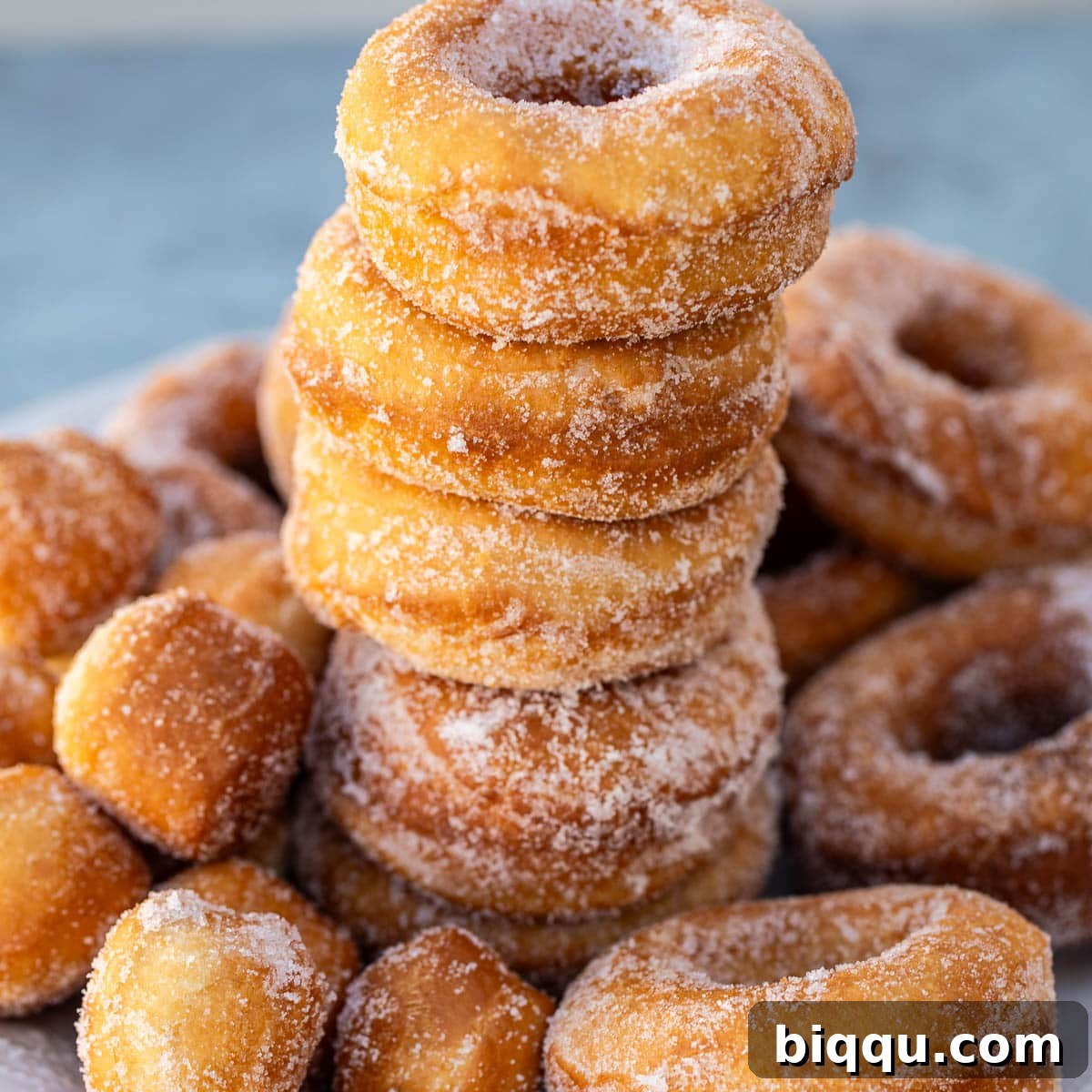
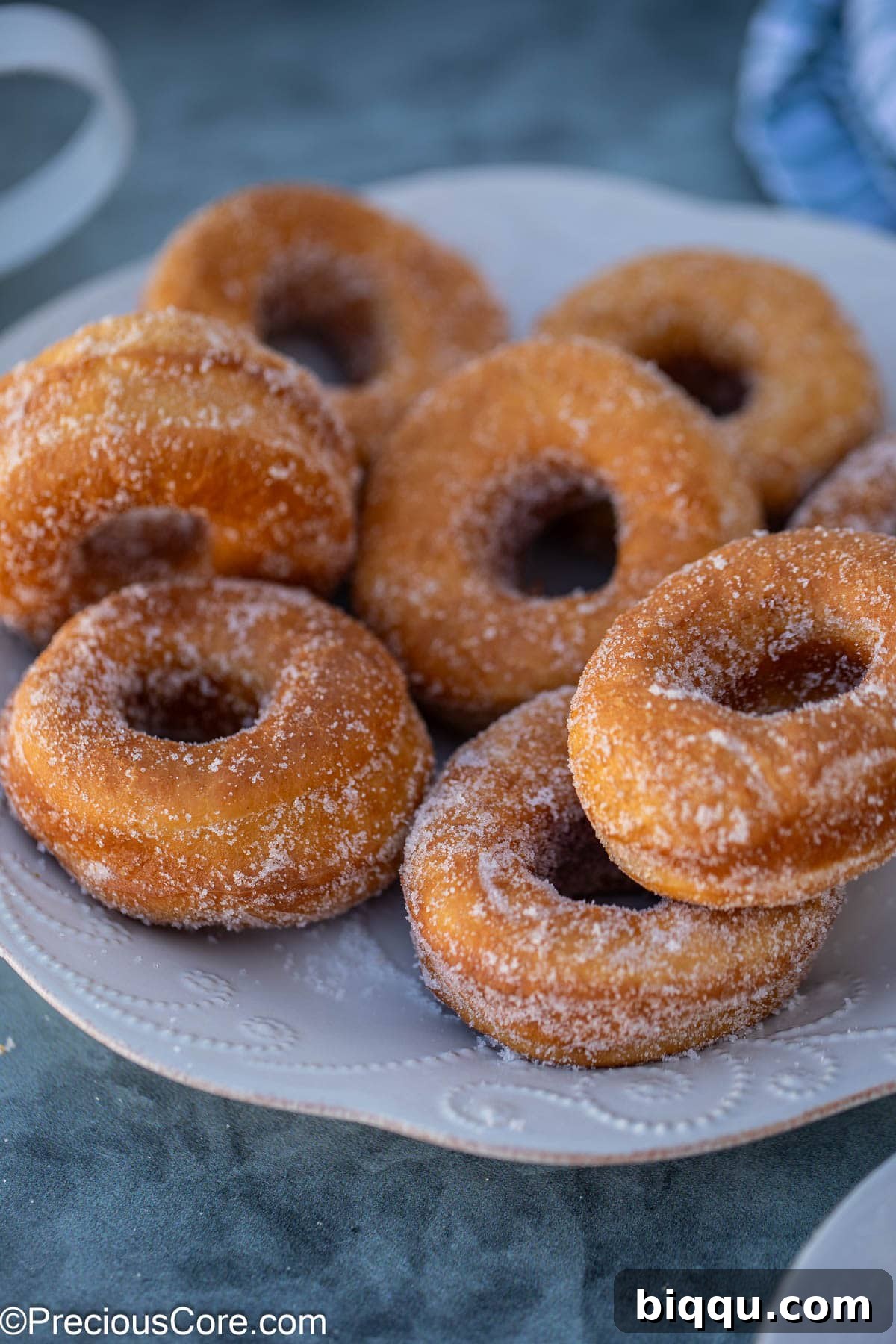
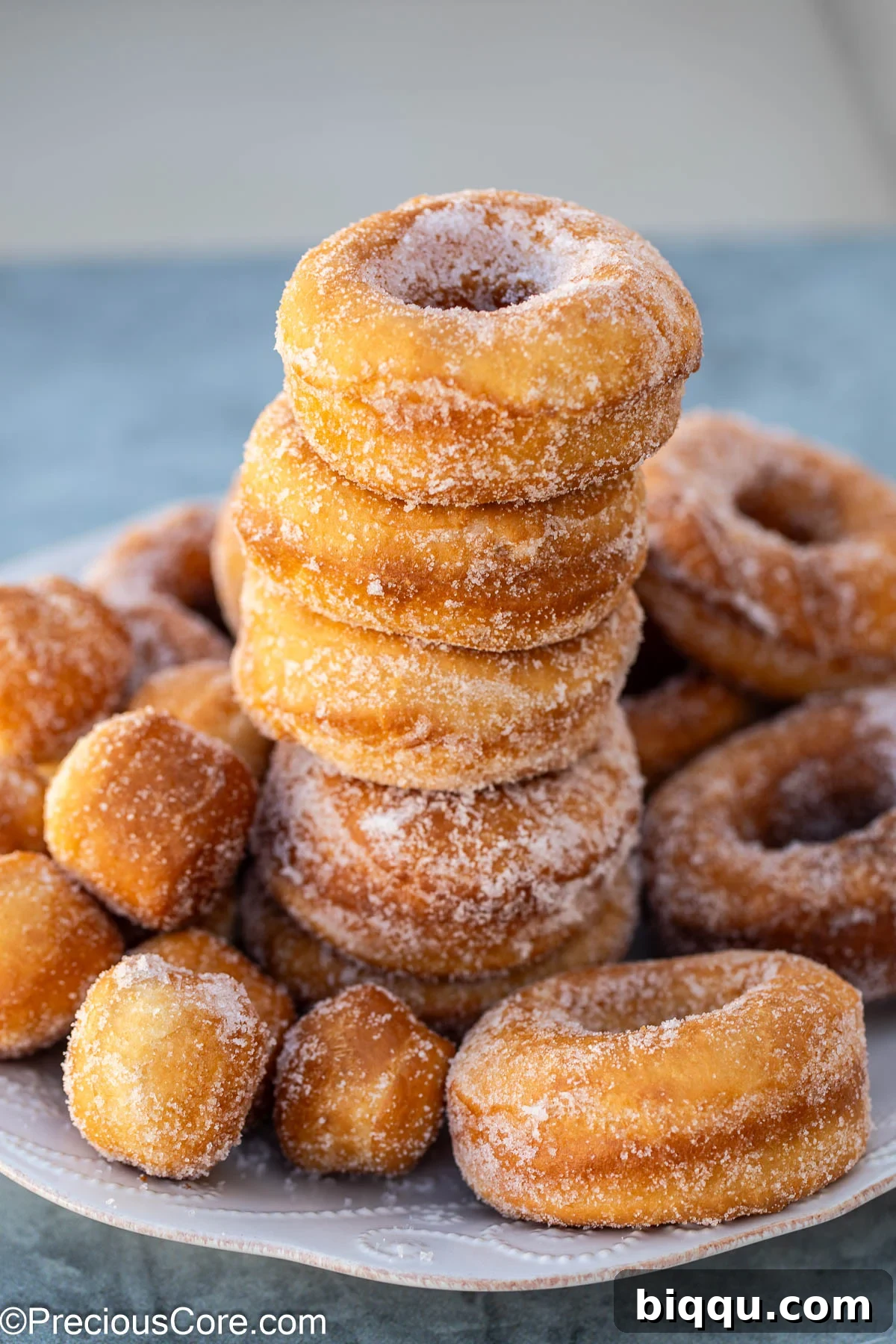
There’s nothing quite as comforting and delightful as biting into a hot, fresh, homemade doughnut. Forget the bakery — with this comprehensive guide, you’ll learn exactly how to craft incredibly soft, wonderfully fluffy, and perfectly light Sugar Coated Donuts right in your own kitchen. These yeast-leavened doughnuts boast an unbeatable depth of flavor and a tender crumb that simply can’t be matched by their cake counterparts. Prepare to impress your family and friends with a batch of these irresistible treats, ideal when served with a warm cup of tea, rich hot chocolate, or your favorite coffee!
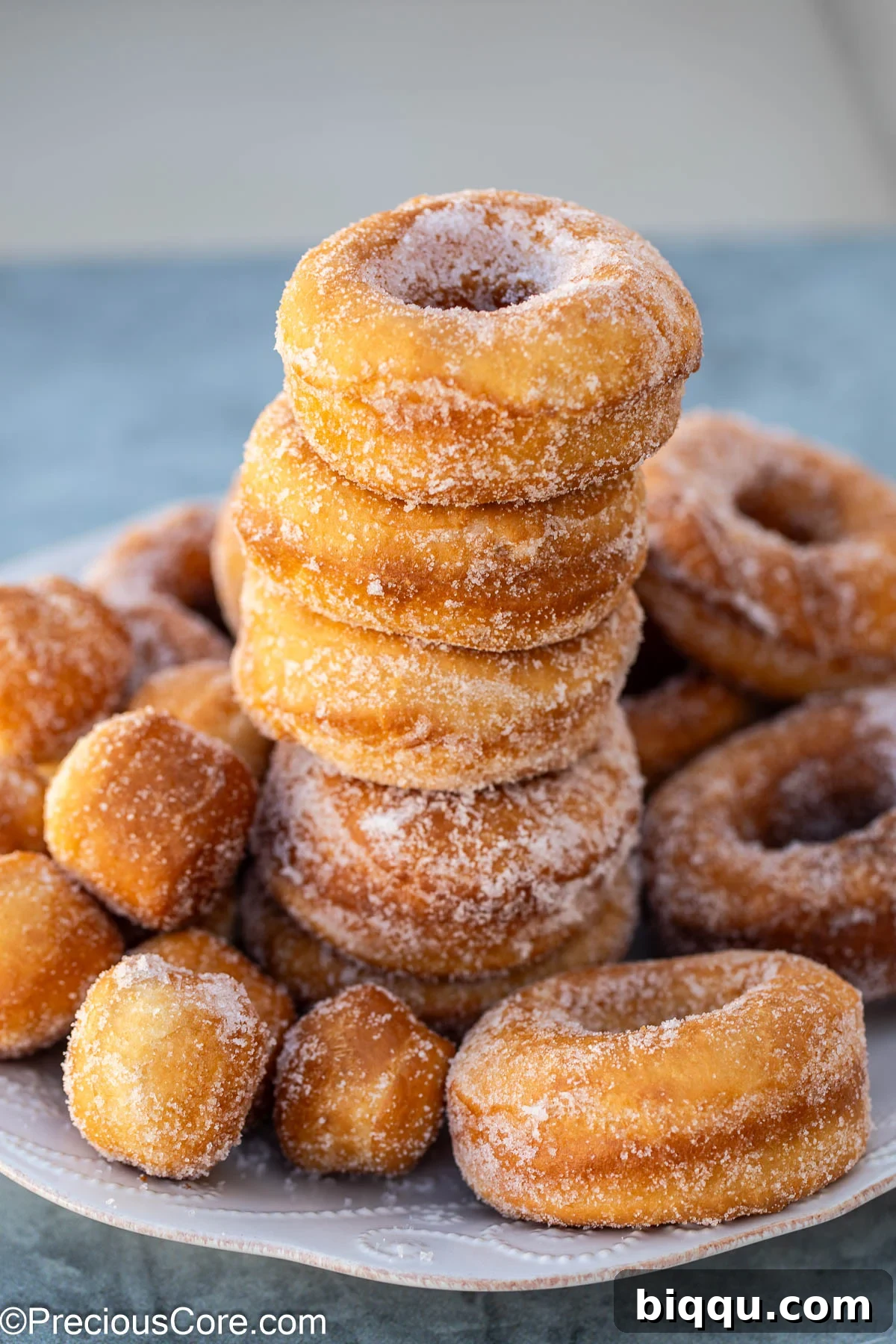
Imagine waking up on a lazy weekend morning and treating your loved ones to these old-fashioned, bakery-style donuts. The aroma alone will fill your home with warmth and nostalgia. My own daughters are absolutely enamored with these sugar-coated beauties, and I can assure you that the delightful taste will bring smiles to your kids’ faces too. While baked donuts offer a lighter alternative, I personally find that frying them yields a superior texture and a deeper, golden-brown color that baking simply cannot replicate. If you share this preference for fried perfection, you might also enjoy some of my other popular fried donut recipes, such as African Twisted Doughnuts, Coconut Doughnuts, or Cameroon Doughnuts!
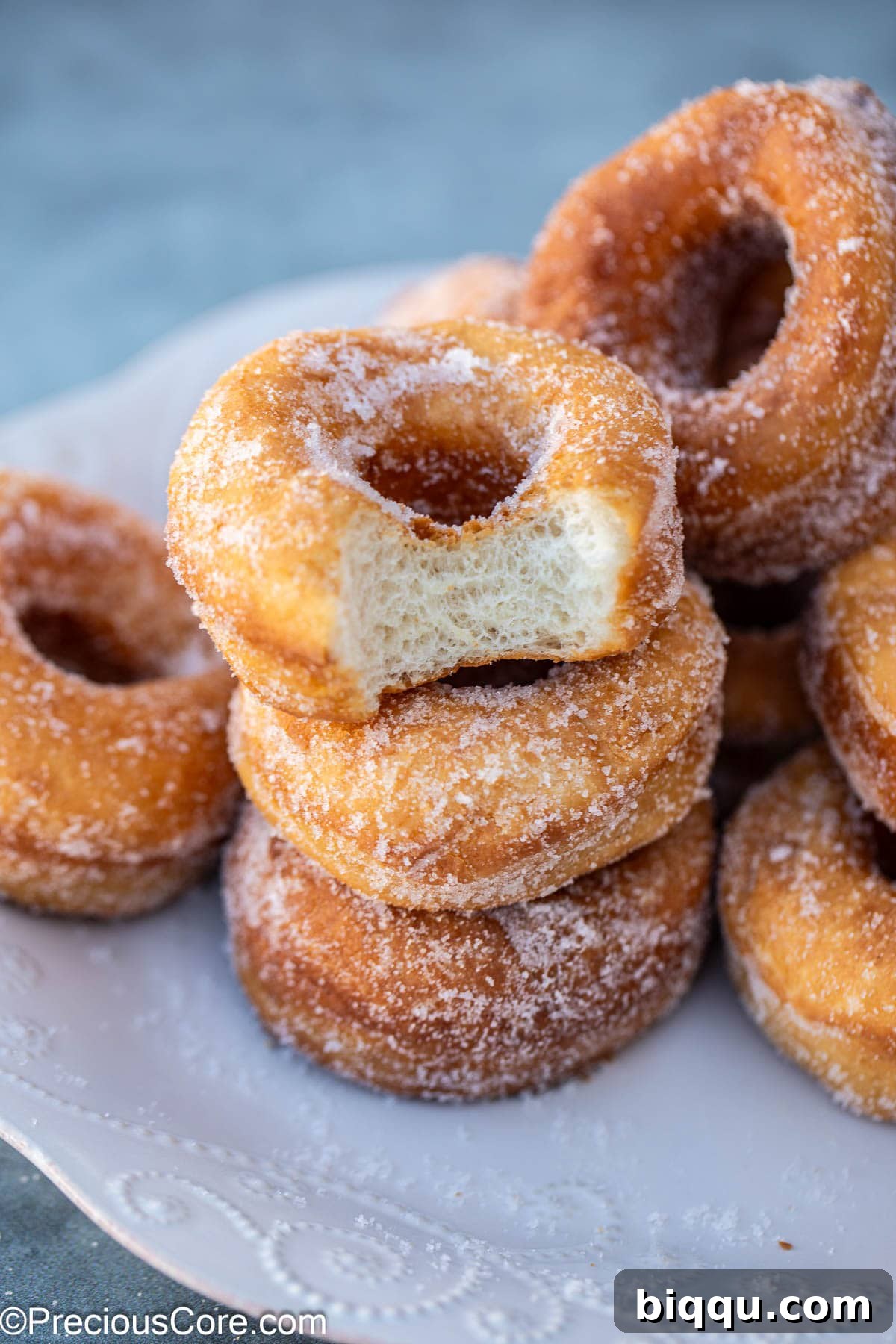
This sugar-coated donut recipe strikes the perfect balance of sweetness, making it an ideal indulgence for a morning treat or a delightful dessert any time of day. Its versatility means you don’t have to limit your enjoyment – these pillowy soft delights are truly a joy to savor around the clock.
Table of Contents
- Why You’ll Love This Donut Recipe
- Essential Ingredients for Perfect Sugar Coated Donuts
- Step-by-Step Guide to Making Sugar Coated Donuts
- Substitutions and Flavor Variations
- Expert Tips for Mastering Homemade Donuts
- Recipe Frequently Asked Questions
- Serving Suggestions
- Similar Donut Recipes to Try
- More Desserts to Satisfy Your Sweet Tooth
- Sugar Coated Donuts Recipe Card
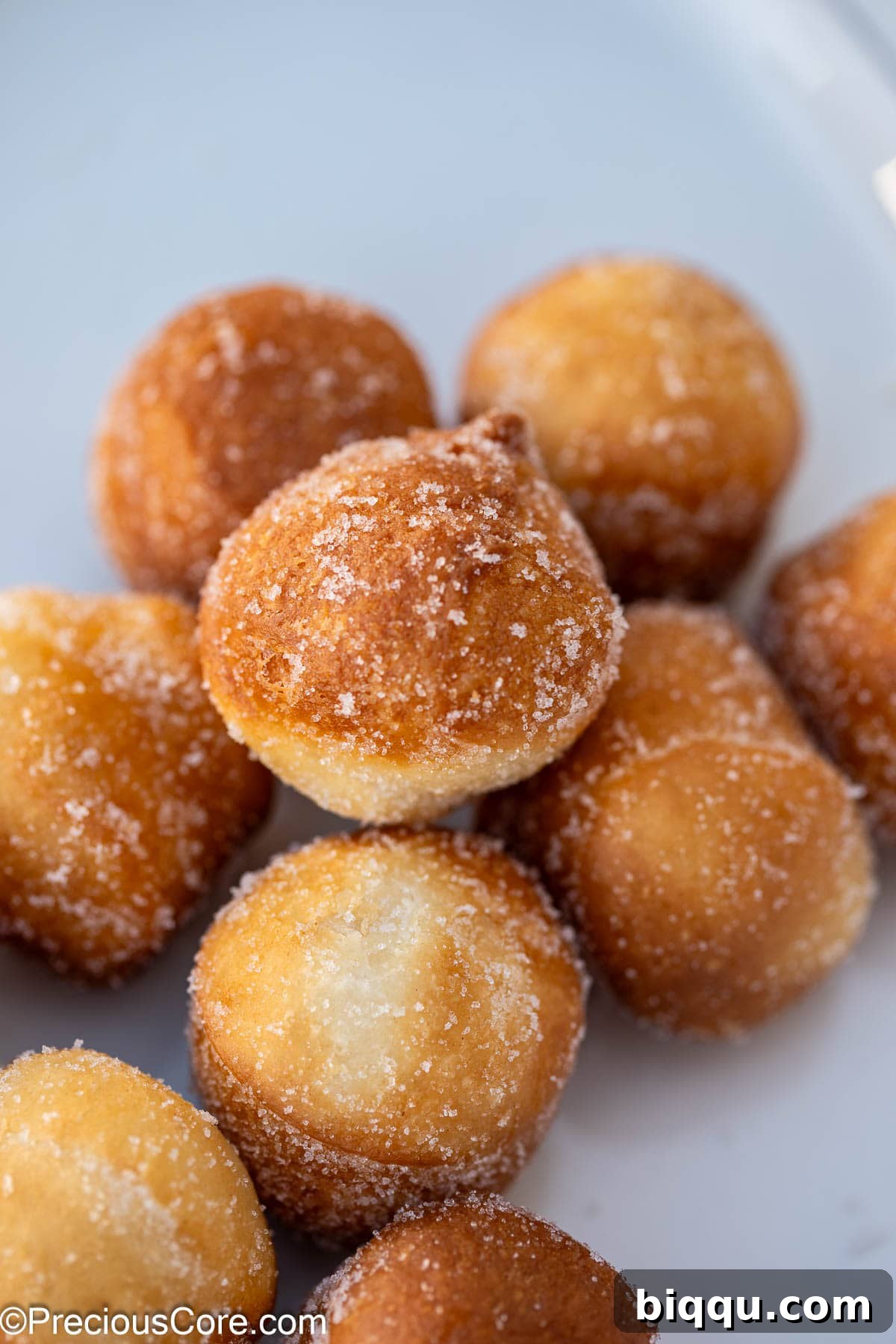
Why You’ll Love This Donut Recipe
In my honest opinion, these traditional yeast-raised donuts are far superior to dense cake donuts. There are countless reasons why you’ll adore this incredibly easy and rewarding recipe. The best part? No special donut pan is required!
- A Timeless Classic: There’s a universal charm to a simple yet utterly delicious warm doughnut coated generously in sugar. With its incredibly fluffy interior, each bite feels like sinking your teeth into a cloud. When fried to perfection, the exterior develops a beautiful golden-brown hue, while the sugar granules provide a delicate crunch and a perfect measure of sweetness that makes them truly irresistible. It’s a taste of pure nostalgia.
- Remarkably Adaptable: These versatile yeast donuts can be savored for a delightful breakfast, a satisfying snack, or a decadent dessert. Beyond the timing, this recipe offers a fantastic foundation for culinary creativity. You can easily modify them to suit seasonal celebrations, add festive spices to the dough, or experiment with various sugar coatings. This basic recipe empowers you to let your imagination run wild!
- A Joyful Baking Experience: Engaging in homemade baking is a truly rewarding activity—it’s both relaxing and exciting. There’s immense satisfaction in crafting classic pastries from scratch, and learning new techniques in the kitchen is always a pleasure. Make it a family affair by involving your children; they’ll love helping you cut out the donut shapes!
- Economical & Impressive: Making donuts at home is significantly more budget-friendly than frequent trips to the local bakery. Plus, achieving bakery-quality results from your own kitchen is incredibly impressive and a fantastic way to treat your family without breaking the bank.
- Freshness You Can Taste: The difference between store-bought and freshly made donuts is incomparable. The warmth, the soft texture, and the vibrant flavor of a donut pulled straight from your fryer and coated in sugar is an experience that truly defines indulgence.
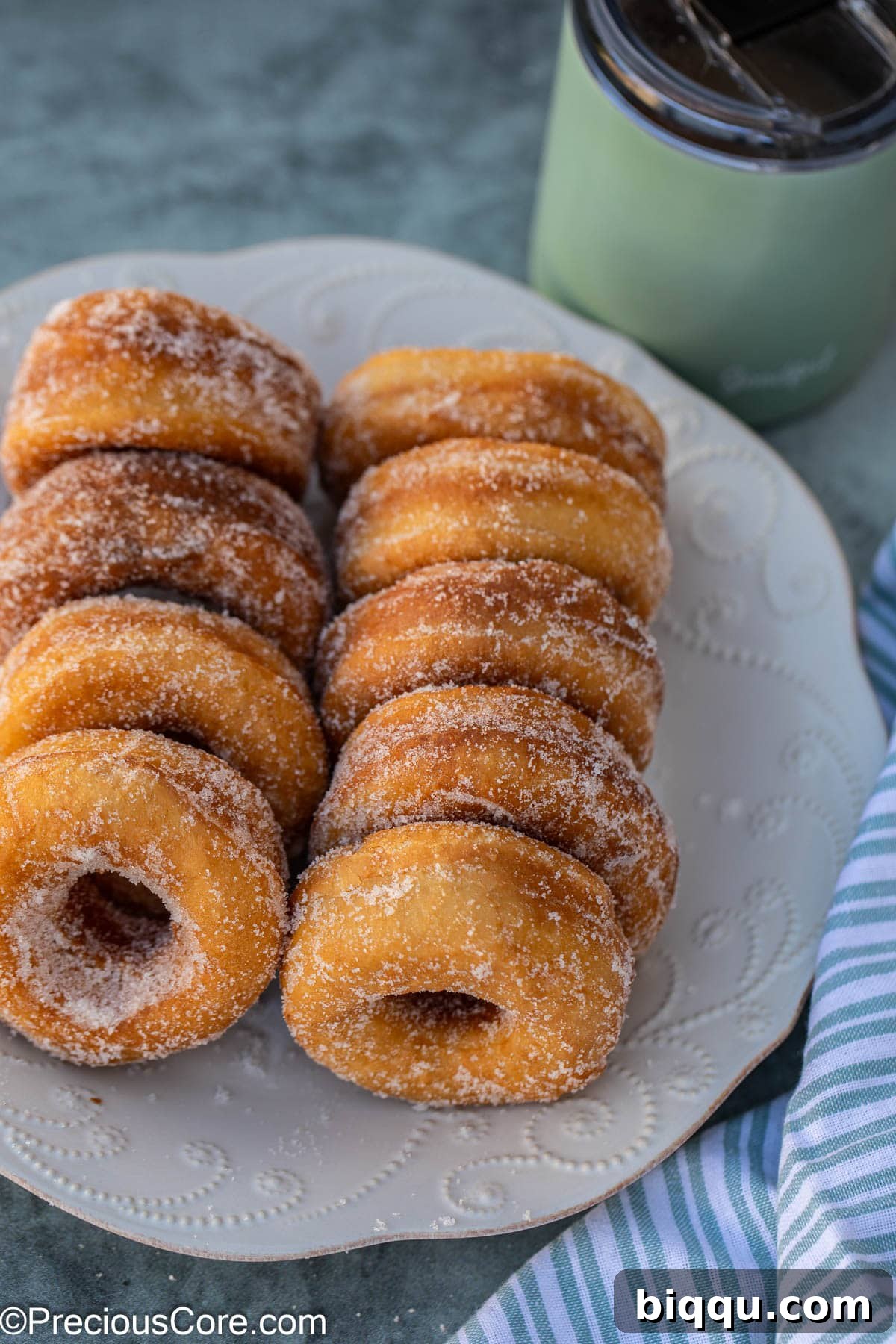
Essential Ingredients for Perfect Sugar Coated Donuts
Crafting exceptional sugar-coated donuts begins with selecting the right ingredients and understanding their role in the final product. Here’s a closer look at the key components you’ll need:
- Active Dry Yeast: This is the superstar ingredient that gives your donuts their signature light and airy texture. Yeast helps the dough ferment, producing gas that creates those wonderful bubbles and ensures a soft, tender crumb. Active dry yeast, readily available at most grocery stores, needs to be “proofed” (activated) in warm liquid before being combined with other ingredients. While instant yeast can be used in a pinch, active dry yeast offers a slight edge in flavor development.
- Granulated Sugar: You’ll need sugar in two forms for this recipe: a small amount to sweeten the dough itself and a generous quantity for the classic sugar coating that gives these donuts their iconic finish. The sugar in the dough also feeds the yeast, aiding in the rising process.
- All-Purpose Flour: For optimal results, all-purpose flour is highly recommended. Its balanced protein content is ideal for achieving the desired chewiness and structure without making the donuts too tough. While other types of flour might be substituted, they could alter the texture of the dough, as this recipe’s ingredient ratios are carefully calibrated for all-purpose flour.
- Unsalted Butter: Butter is crucial for creating an incredibly soft dough, enhancing its texture, and imparting a rich, luxurious flavor. Using unsalted butter allows you to control the overall saltiness of the dough, preventing it from becoming overly savory. Ensure it’s melted before incorporating for smooth mixing.
- Milk: Whole milk contributes to the richness and tenderness of the dough. It also serves as the warm liquid required to activate the active dry yeast. Maintaining the correct milk temperature is vital for yeast activity – too hot will kill it, too cold won’t activate it.
- Large Egg: The egg adds richness, helps bind the ingredients together, and contributes to the dough’s structure and golden color during frying.
- Salt: A pinch of salt is essential to balance the sweetness, enhance the overall flavor, and control yeast activity.
- Olive Oil (for greasing): A small amount of olive oil is used to grease the mixing bowl, preventing the dough from sticking during its rise.
- Vegetable Oil (for frying): For deep frying, a neutral-flavored oil with a high smoke point is key. Vegetable oil is a common choice, but other excellent options include canola oil, corn oil, or peanut oil. More on frying oil choices later!
For the full list of ingredients with precise measurements, make sure to check out the detailed recipe card below.
Top Tip: You can mix and knead the donut dough either by hand for a satisfying tactile experience or effortlessly in a stand mixer fitted with a dough hook attachment on low speed.
Step-by-Step Guide to Making Sugar Coated Donuts
Making these simple sugar donuts is a rewarding process, broken down into clear, manageable steps to ensure perfect results every time.
- Activate the Yeast & Combine Ingredients: Begin by gently warming your milk to the ideal temperature for yeast activation. In a large bowl (or the bowl of a stand mixer), proof the active dry yeast with a portion of the granulated sugar in the warm milk until it becomes foamy. This confirms your yeast is alive and ready to work its magic. Then, add the remaining granulated sugar, salt, melted butter, egg, and all-purpose flour to the yeast mixture. Mix thoroughly until a cohesive dough forms.
- Knead & First Rise (Proofing): Once the dough comes together, incorporate the softened butter and continue kneading until the dough is smooth, elastic, and no longer overly sticky. Lightly grease your mixing bowl with olive oil, place the dough inside, turning it once to coat, and cover it loosely with plastic wrap or a clean kitchen towel. Allow the dough to rise in a warm, draft-free place until it has visibly doubled in size – this usually takes about an hour, but could be longer depending on your environment.
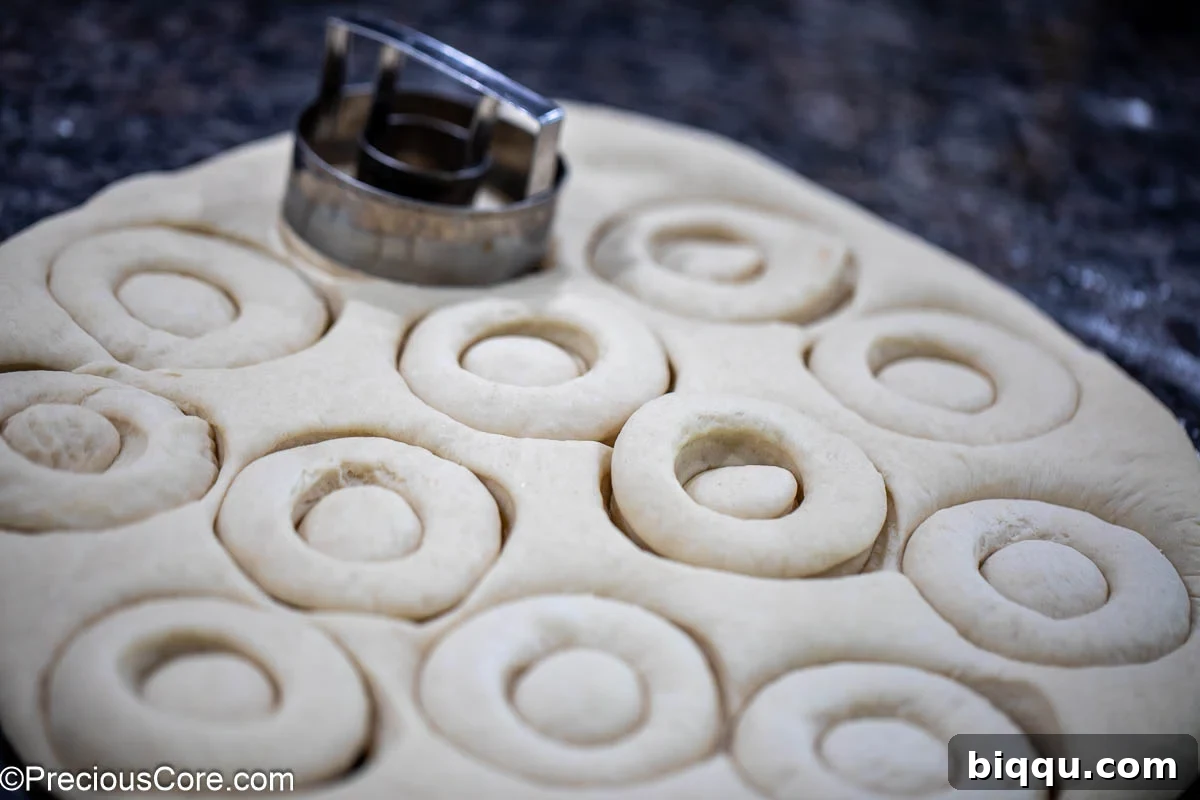
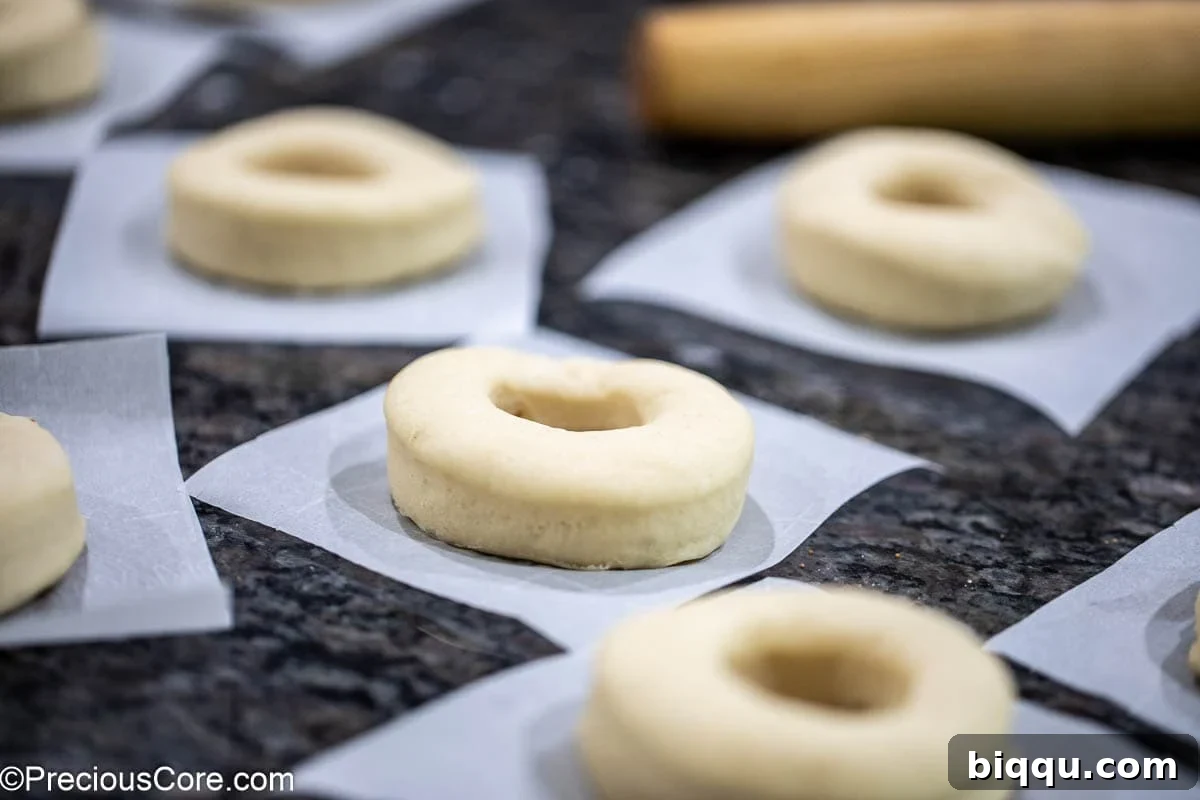
- Roll, Cut & Second Rise: Gently punch down the risen dough to release excess air. Transfer it to a lightly floured work surface and use a rolling pin to roll it out to an even thickness of about half an inch. With a 3-inch donut cutter or even a round cookie cutter (and a smaller one for the holes), cut out your donut shapes. Carefully place each donut onto individual squares of parchment paper. Arrange the donut holes on a parchment-lined baking sheet. Allow the cut donuts to rest for a second, shorter rise, which will ensure maximum fluffiness.
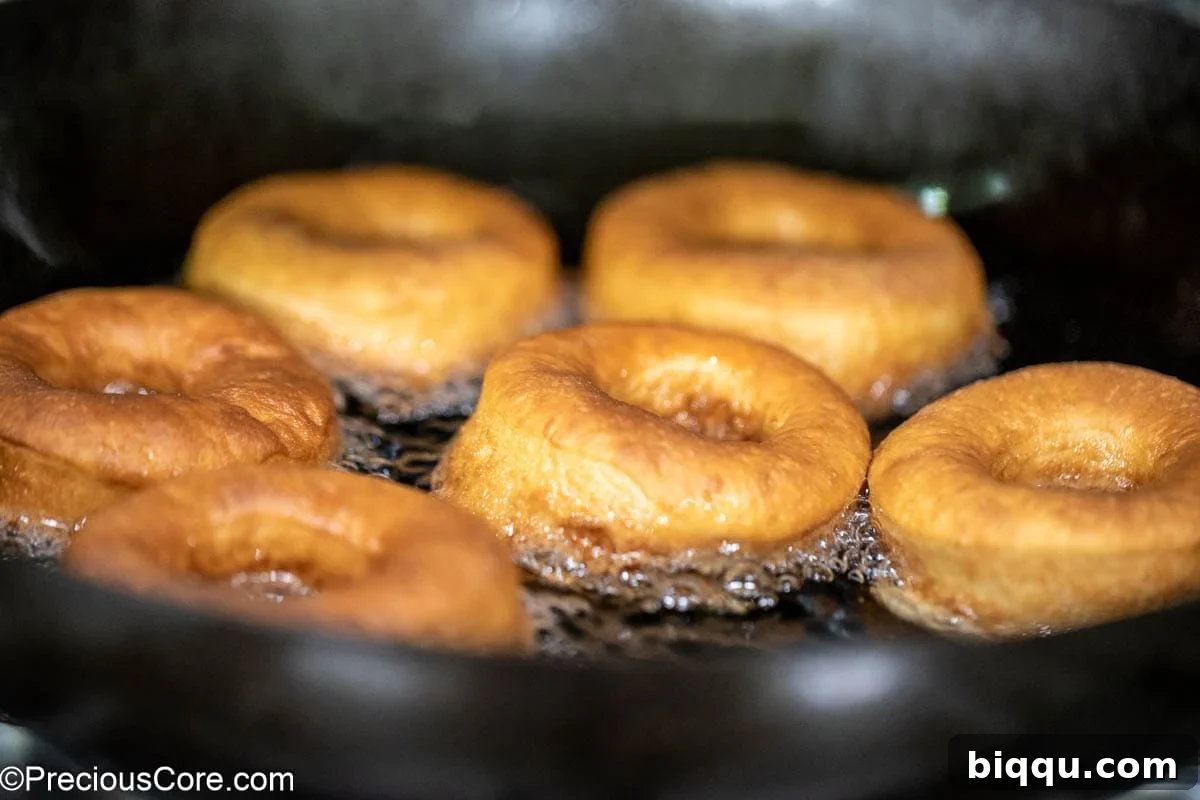
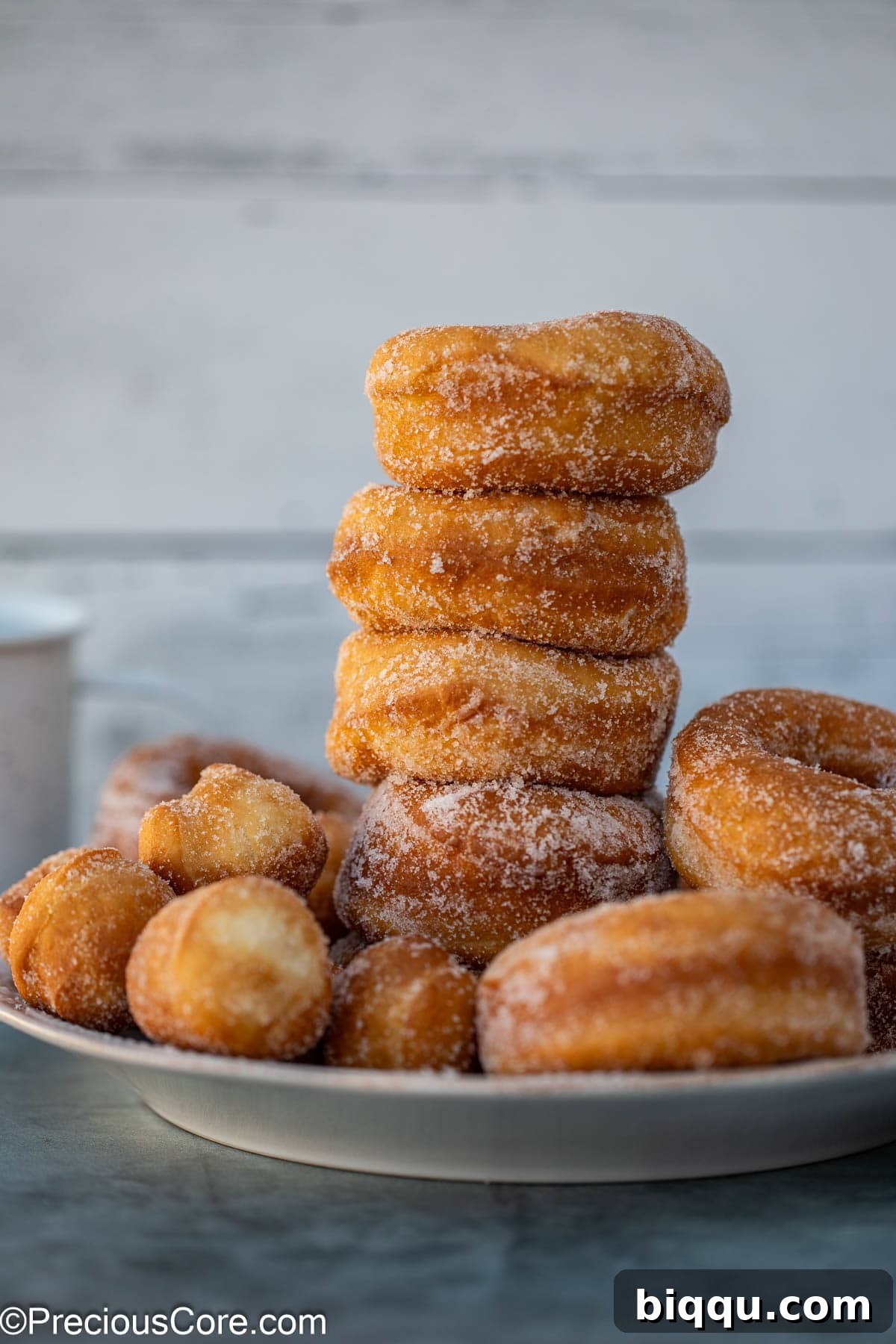
- Deep Fry & Coat: Heat a neutral frying oil in a heavy-bottomed pot (like cast iron) to the precise temperature of 350°F (176°C). Carefully lower the rested donuts into the hot oil, frying them in small batches to avoid overcrowding the pot. Fry for about 1-2 minutes per side, or until they achieve a beautiful golden-brown color. Using a slotted spoon, remove the cooked donuts and immediately transfer them to a paper towel-lined baking sheet to absorb any excess oil. While still warm, place the hot donuts in a paper bag with granulated sugar and shake well to ensure an even, generous coating. Repeat this process with the remaining donuts and donut holes.
Substitutions and Flavor Variations
The beauty of this classic sugar-coated donut recipe lies in its adaptability. Once you master the basic technique, you can easily customize the flavors to suit any craving or occasion:
- Cinnamon Sugar Donuts: For a decadent twist, elevate your granulated sugar coating by adding two teaspoons of ground cinnamon. The warm spice beautifully complements the sweet sugar, creating a beloved flavor combination.
- Lemon Sugar Donuts: Craving a bright, citrusy pastry? Infuse your sugar coating with one tablespoon of fresh lemon zest. The fragrant oils from the lemon peel will add a refreshing zing that perfectly cuts through the sweetness.
- Powdered Sugar Doughnuts: If you prefer the delicate, melt-in-your-mouth texture of powdered sugar, you can easily adapt this recipe. However, a crucial tip: allow the fried donuts to cool slightly before dusting them. If coated while too hot, the powdered sugar will melt and disappear. If some sugar does dissolve, simply give them another toss in more powdered sugar for an even coating.
- Alternative Frying Oils: Don’t have vegetable oil on hand? No problem! Other excellent neutral oils for frying include corn oil, peanut oil, canola oil, or even sunflower oil. Choose an oil with a high smoke point for best results.
- Milk Alternatives: The whole milk in this recipe can be easily substituted with 2% milk without any significant changes to the outcome. For a richer flavor, you could even try half-and-half, adjusting consistency slightly if needed.
- Flour Swaps: As previously mentioned, all-purpose flour yields the best texture. However, if you’re out, bread flour can be used as a one-to-one substitute. Be aware that bread flour has a higher protein content, which may result in a slightly chewier donut, but they will still be utterly delicious.
- Vanilla Extract: To infuse your donuts with a classic, aromatic sweetness, add one teaspoon of pure vanilla extract to the dough mixture along with the wet ingredients. This simple addition creates delicious vanilla-flavored donuts.
- Nutmeg Infusion: For a traditional touch often found in old-fashioned donuts, grate a pinch of fresh nutmeg into the dough. This spice adds a subtle warmth and depth that is truly delightful.
- Glazed Donuts: Instead of a sugar coating, try a simple glaze! Whisk together powdered sugar, a splash of milk or water, and a touch of vanilla extract until smooth. Dip warm donuts into the glaze for a different kind of sweet finish.
For a lighter, baked donut option, be sure to check out my delightful Pumpkin Spice Doughnuts.
Expert Tips for Mastering Homemade Donuts
Achieving bakery-quality donuts at home is entirely possible with a few key expert tips:
- Master Oil Temperature: This is arguably the most critical factor in successful donut frying. Always use a deep-fry thermometer to maintain a consistent oil temperature of 350°F (176°C). If your oil is too cold, the donuts will absorb too much oil, resulting in a greasy, heavy, and unappetizing pastry. Conversely, oil that is too hot will quickly burn the exterior of the donut, leaving the inside raw and doughy. Adjust heat as needed to keep the temperature stable between batches.
- Avoid Overcrowding the Pot: Resist the urge to fry too many donuts at once. Crowding the pot will drastically lower the oil’s temperature, leading to greasy donuts, and it will also make it difficult to flip them evenly. Fry in small batches, typically no more than 3-4 at a time, allowing enough space for them to move and cook uniformly.
- Yeast Activation is Key: When warming the milk for proofing the yeast, its temperature should not exceed 115°F (46°C). Any temperature above this threshold will kill the yeast, rendering it inactive. Dead yeast means your donuts won’t rise, resulting in a dense, brick-like texture instead of the desired light and fluffy interior. If you don’t have a thermometer, aim for milk that is comfortably warm to the touch, like a baby’s bathwater.
- Don’t Overwork the Dough: While yeast dough requires kneading for gluten development, overworking it can lead to tough donuts. Knead until the dough is smooth and elastic but still tender. A stand mixer typically takes 3-5 minutes after all ingredients are combined. If kneading by hand, pay attention to the dough’s texture – it should spring back when lightly pressed.
- Proper Rising Environment: Yeast thrives in warm, draft-free conditions. To create an ideal environment for your dough to rise, you can turn on your oven light (but keep the oven itself off) and place the covered bowl inside. The gentle warmth from the light will encourage a perfect rise.
- Coat While Warm: For the sugar coating to adhere properly and create that beautiful crust, you must coat the donuts immediately after they come out of the oil and have briefly drained on paper towels. Their residual heat helps the sugar stick. If they cool too much, the sugar won’t cling as effectively.
- Use Parchment Squares: Placing cut donuts on individual parchment paper squares before their second rise makes them incredibly easy to transfer to the hot oil without deflating them. Simply pick up the square and gently drop the donut into the oil (the paper will separate easily).
Recipe Frequently Asked Questions
The most common reason for sugar not sticking is coating the donuts too late. It’s crucial to toss them in sugar immediately after they are removed from the hot oil and have drained for just a moment. The residual heat from the freshly fried donut creates a slightly sticky surface that allows the sugar to adhere perfectly. This is why I recommend working in small batches: fry, drain, and then coat each batch before frying the next. If your donuts have already cooled, don’t despair! You can still salvage them. Gently melt a small amount of unsalted butter, lightly brush it over the cooled fried donuts, and then toss them in your sugar mixture. Be careful not to use too much butter, as this could make them soggy.
Dense donuts are usually the result of one of two common issues when working with yeast dough: either the dough was over-mixed or it wasn’t given sufficient time to rise. When mixing, knead the dough until it’s smooth and elastic, but avoid over-kneading it as you might with some bread recipes; donuts benefit from a more tender crumb. Additionally, patience is key during the rising process. If you rush the proofing and don’t allow the dough to fully double in size, it won’t develop enough air pockets, leading to a heavy, dense texture. Always wait for the dough to visibly double in volume in a warm, draft-free environment.
To properly store your delicious sugar-coated donuts, ensure they have cooled completely to room temperature first. Then, place them in an airtight container or a resealable bag. They can be stored at room temperature for up to 2 days, but for extended freshness, it’s best to place them in the fridge, where they will last for approximately 5-7 days. If you prefer to enjoy them warm again, reheating is simple. You can microwave an individual donut for about 15-30 seconds, or bake them in a preheated oven at 300°F (148°C) for about 5-10 minutes until warmed through.
Yes, you absolutely can prepare the donut dough ahead of time! After the first rise, gently punch down the dough, cover the bowl tightly with plastic wrap, and refrigerate it for up to 24 hours. The cold temperature will slow down the yeast activity, allowing for a slower, longer fermentation which can even enhance the flavor. When you’re ready to fry, remove the dough from the refrigerator, let it sit at room temperature for 30-60 minutes to take off the chill, then proceed with rolling, cutting, and the second rise as directed in the recipe.
The best oils for frying donuts are neutral-flavored oils with a high smoke point. This ensures that the oil won’t impart unwanted flavors to your donuts and can withstand the high heat required for frying without breaking down. Excellent choices include vegetable oil, canola oil, peanut oil, corn oil, and sunflower oil. Avoid olive oil or butter, as they have lower smoke points and will burn quickly, imparting an unpleasant taste to your donuts.
Serving Suggestions
These delightful sugar-coated donuts are incredibly versatile and pair beautifully with a variety of beverages and light accompaniments. Serve them:
Iced Coffee Recipe
Coconut Hot Chocolate
Watermelon Lemonade
Similar Donut Recipes to Try
If you loved making these sugar-coated donuts, you’ll surely enjoy exploring other variations of homemade fried dough from around the world:
How To Make Puff Puff
African Doughnuts – Twisted Doughnuts
Pumpkin Spice Doughnuts
Mandazi – East African Doughnuts
New Orleans Beignets
Cinnamon Sugar Pretzel Bites
More Desserts to Satisfy Your Sweet Tooth
Beyond donuts, explore these other delightful dessert recipes perfect for any occasion:
Chocolate Chip Butterscotch Chip Cookies
Chocolate Cupcakes With Chocolate Frosting
Butter Pecan Pound Cake
Brown Butter Pecan Cookies
If you make this recipe, please consider leaving a star rating below! Your feedback helps others discover delicious recipes, and I always love hearing from you! Thank you!
Sugar Coated Donuts
Rate
Print Recipe
Equipment
-
1 Stand mixer
-
1 3-inch doughnut cutter
-
1 Deep Fry Thermometer
-
Parchment paper
-
Large heavy-bottomed pot or deep fryer
-
Slotted spoon or spider strainer
-
Paper towels or a cooling rack
Ingredients
- 1½ cups whole milk (can substitute with 2% milk)
- 2¼ teaspoons active dry yeast
- 3 Tablespoons granulated sugar
- 1 teaspoon salt
- 3 Tablespoons melted unsalted butter
- 1 large egg
- 4¾ cups all-purpose flour
- 1 Tablespoon softened unsalted butter
- 1 Tablespoon olive oil (for rubbing bowl)
- 4-5 cups Vegetable oil, for frying (Canola oil, corn oil, or peanut oil also work)
For Coating the Doughnuts
- ⅓ cup granulated sugar
Instructions
-
1. Proof the yeast: In a small pot, gently warm the whole milk over medium heat until it reaches approximately 115°F (46°C). Transfer the warm milk to the bowl of a stand mixer (or a large mixing bowl if mixing by hand). Add the active dry yeast and 1 Tablespoon of the granulated sugar. Stir gently to combine and let the mixture sit undisturbed for about 5 minutes. You’ll notice it becoming creamy with a layer of foamy bubbles on top, which indicates the yeast is active and ready.
-
2. Make the dough: To the activated yeast mixture, add the remaining 2 Tablespoons of granulated sugar, salt, melted unsalted butter, large egg, and all-purpose flour. Using a stand mixer fitted with a dough hook attachment, mix on low to medium speed until a shaggy dough begins to form and all ingredients are just combined.
-
3. Add the butter & knead: At this stage, the dough will likely be somewhat sticky. Add the 1 Tablespoon of softened unsalted butter. Continue kneading on low speed for another 3-5 minutes, allowing the butter to be fully incorporated. The dough should become smooth, elastic, and pull away cleanly from the sides of the bowl. Avoid over-kneading to ensure tender donuts.
-
4. First rise (proofing): Remove the dough from the bowl. Lightly brush the inside of the bowl with olive oil or spray with cooking spray. Place the dough back into the bowl and turn it around once or twice to ensure it is completely coated with the oil. Cover the bowl securely with plastic wrap or a clean kitchen cloth. Place the covered dough in a warm, draft-free place to rise for approximately 1 hour, or until it has doubled in size and feels light and airy. (A good warm spot is inside an oven with just the light on, not heated).
-
5. Prepare parchment squares: While the dough is rising, cut twenty 5 by 5-inch squares of parchment paper. These will be used to individually place the cut donuts, making them easy to transfer to the hot oil without disturbing their delicate rise.
-
6. Cut out doughnuts: Once the dough has doubled, gently punch it down to release the excess air. Lightly flour a clean working surface and transfer the dough onto it. Use a rolling pin to roll the dough out to an even thickness of about half an inch. Using a 3-inch donut round cutter (and a smaller cutter for the centers), cut out the donuts and their accompanying donut holes. Carefully place each cut donut onto an individual 5 by 5-inch square of parchment paper. Arrange the donut holes on a separate parchment paper-lined baking sheet. Gather the dough scraps into a ball, re-roll gently, and cut out more donuts until all dough is used. Allow the cut donuts to rest on their parchment squares for an additional 15-20 minutes for a final mini-rise.
-
7. Fry the donuts: While the donuts are resting, fill a heavy-bottomed pot (such as a cast iron Dutch oven) with 2-3 inches of neutral frying oil. Heat the oil over medium-high heat until it reaches a consistent temperature of 350°F (176°C) as measured by a deep-fry thermometer. Carefully lower 3-4 donuts into the hot oil, starting with those that were cut first. Fry for approximately 1-2 minutes per side, or until they turn a beautiful golden brown. Using a slotted spoon or spider strainer, carefully remove the cooked donuts and immediately transfer them to a paper towel-lined baking sheet to absorb any excess oil.
-
8. Coat with sugar: While the donuts are still hot from frying, transfer them (in batches) to a large paper grocery bag containing 1 Tablespoon of the granulated sugar designated for coating. Shake the bag vigorously but gently to ensure the sugar evenly coats each donut. Repeat the frying and coating process with the remaining donuts and finally, fry the donut holes until golden.
-
9. Serve and store: Serve these homemade sugar-coated donuts warm, ideally alongside a fresh cup of tea, hot chocolate, or coffee. For storage, ensure donuts are completely cooled. Place them in an airtight bag or container and refrigerate for up to a week. To reheat, microwave for 15-30 seconds or bake in an oven at 300°F (148°C) for 5-10 minutes.
Notes
2. No donut cutter? No problem! If you don’t have a specific donut cutter, you can easily use the rim of a drinking glass (about 3 inches in diameter) dipped in flour to cut out the larger donut shapes. For the center hole, use a smaller bottle cap or piping nozzle. Keep in mind that donuts cut this way might be slightly thicker and may take a little longer to cook through in the oil.
3. Coat immediately: For the best sugar adhesion, always coat the doughnuts with granulated sugar while they are still hot from the fryer. The residual warmth creates the perfect surface for the sugar to stick, forming a lovely sweet crust.
4. Flavor variations: To make delicious cinnamon-sugar doughnuts, simply add 2 teaspoons of ground cinnamon powder to the granulated sugar before coating the doughnuts. For zesty lemon-sugar doughnuts, mix 1 tablespoon of fresh lemon zest into the granulated sugar before coating.
Nutrition
Carbohydrates: 47g |
Protein: 7g |
Fat: 10g |
Saturated Fat: 4g |
Polyunsaturated Fat: 2g |
Monounsaturated Fat: 4g |
Trans Fat: 0.2g |
Cholesterol: 27mg |
Sodium: 242mg |
Potassium: 111mg |
Fiber: 1g |
Sugar: 9g |
Vitamin A: 186IU |
Vitamin C: 0.002mg |
Calcium: 48mg |
Iron: 2mg
Additional Info
Tried this recipe?
Mention @preciouscore or tag #PreciousCore!