
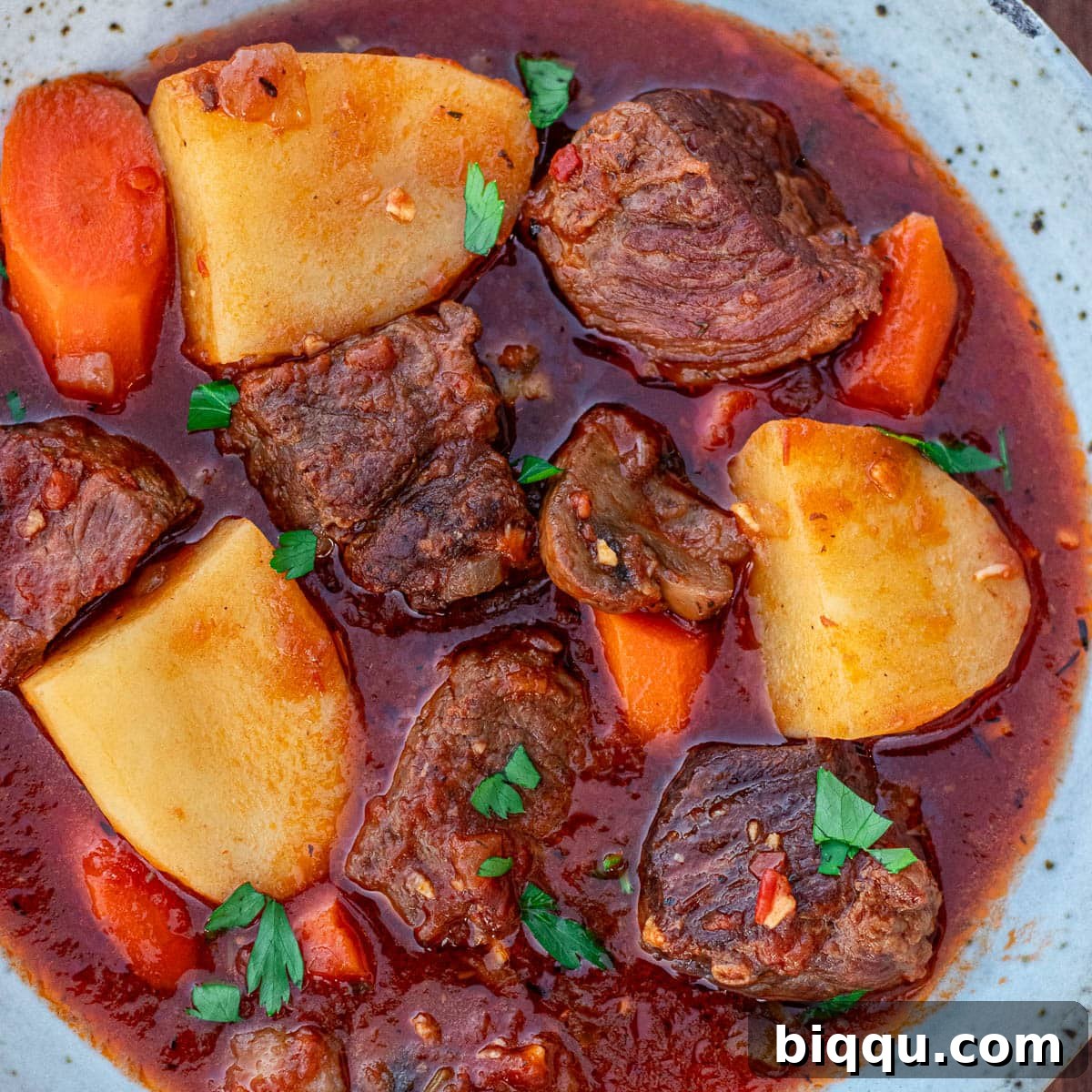
This recipe for super tasty Beef Stew Without Wine features tender chunks of beef, carrots, and potatoes, enveloped in a rich savory sauce. Comfort in a bowl!
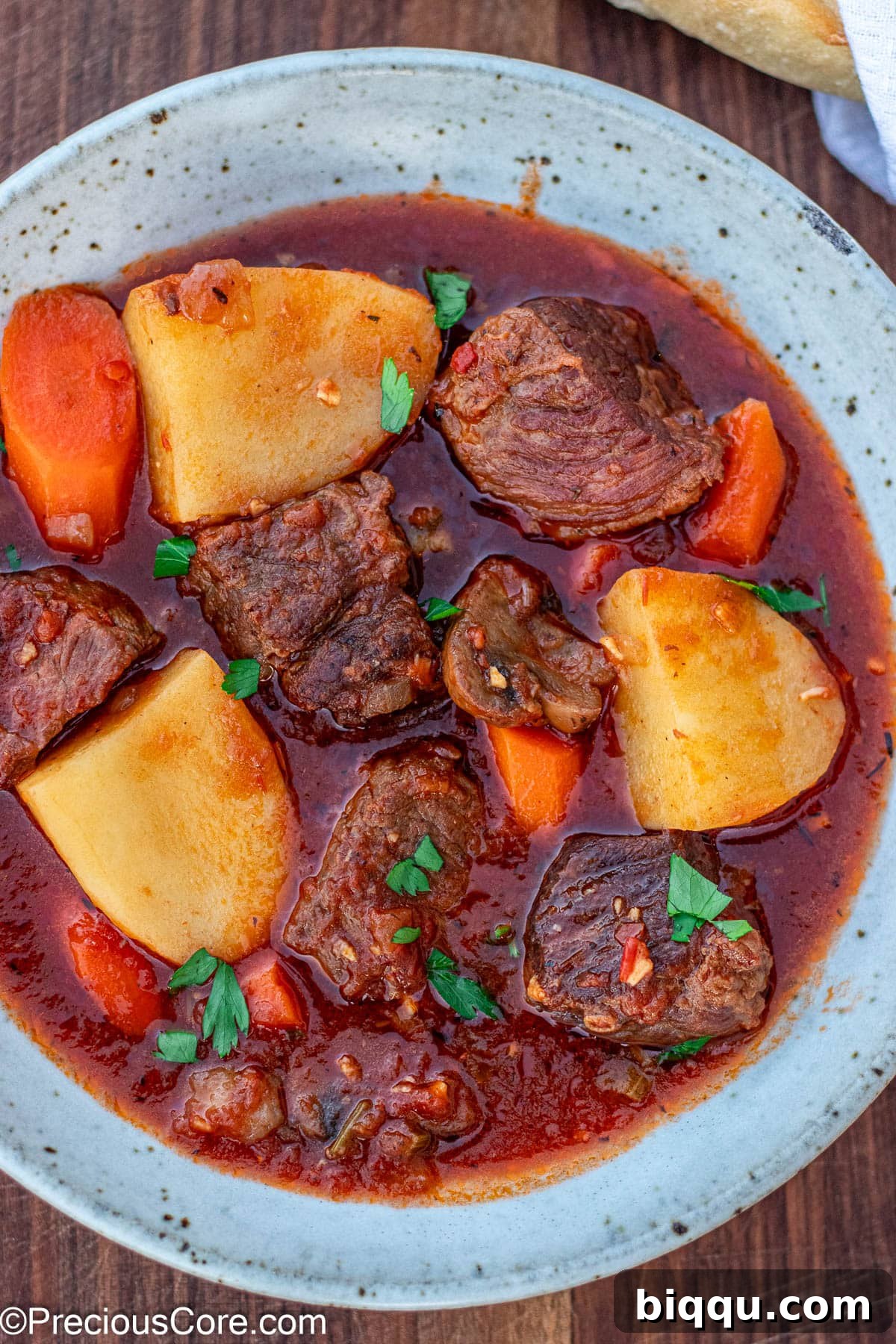
As autumn leaves begin to fall and the air turns crisp, there’s nothing quite as comforting as a warm, hearty bowl of beef stew. It’s a timeless classic, a culinary embrace that brings families together around the dinner table. This particular recipe stands out as an old-fashioned beef stew, meticulously crafted to deliver exceptional flavor and a satisfyingly thick consistency, all without relying on wine or flour. If you’re searching for a genuinely wholesome and delicious homemade beef stew that everyone can enjoy, look no further.
Our goal with this recipe was to create a beef stew that is not only incredibly tasty but also accessible to all, especially those who prefer to avoid alcohol in their cooking or seek a gluten-free option. The result is a glossy, rich stew that is deeply flavorful and wonderfully hearty, proving that you don’t need fancy ingredients or complex techniques to achieve perfection in comfort food. It’s a complete meal on its own, but also pairs beautifully with a variety of sides.
Serve this delightful Beef Stew Without Wine alongside some Easy Homemade French Bread, perfect for soaking up every last drop of the rich sauce, or perhaps with a Sourdough Bread Grilled Cheese for an extra layer of indulgence. The possibilities are endless when it comes to complementing this comforting dish!
Table of Contents
- The Essence of Stovetop Beef Stew Without Wine
- Mastering the Ingredients For a Superb Beef Stew
- Step-by-Step: How To Make Beef Stew Without Wine
- Essential Tips For Stew Success
- Thoughtful Substitutions For Beef Stew
- Exciting Variations to Customize Your Stew
- Frequently Asked Questions About Beef Stew
- More Comforting Recipes to Explore
- Serving Suggestions For Your Beef Stew
- Beef Stew Without Wine Recipe Card
The Essence of Stovetop Beef Stew Without Wine
This recipe revolutionizes the classic beef stew by proving that you absolutely do not need wine to achieve a deeply complex and utterly satisfying flavor profile. Instead, we harness the power of humble, yet robust, ingredients like crushed tomatoes and rich beef stock to create an extraordinary stew, all prepared right on your stovetop. Forget about needing specialized equipment; this is not a slow cooker beef stew or an instant pot beef stew. This is a celebration of the timeless, traditional stovetop method, allowing you to create meltingly tender beef without the need for a pressure cooker or a crock pot. Simplicity meets sophistication in every simmering pot.
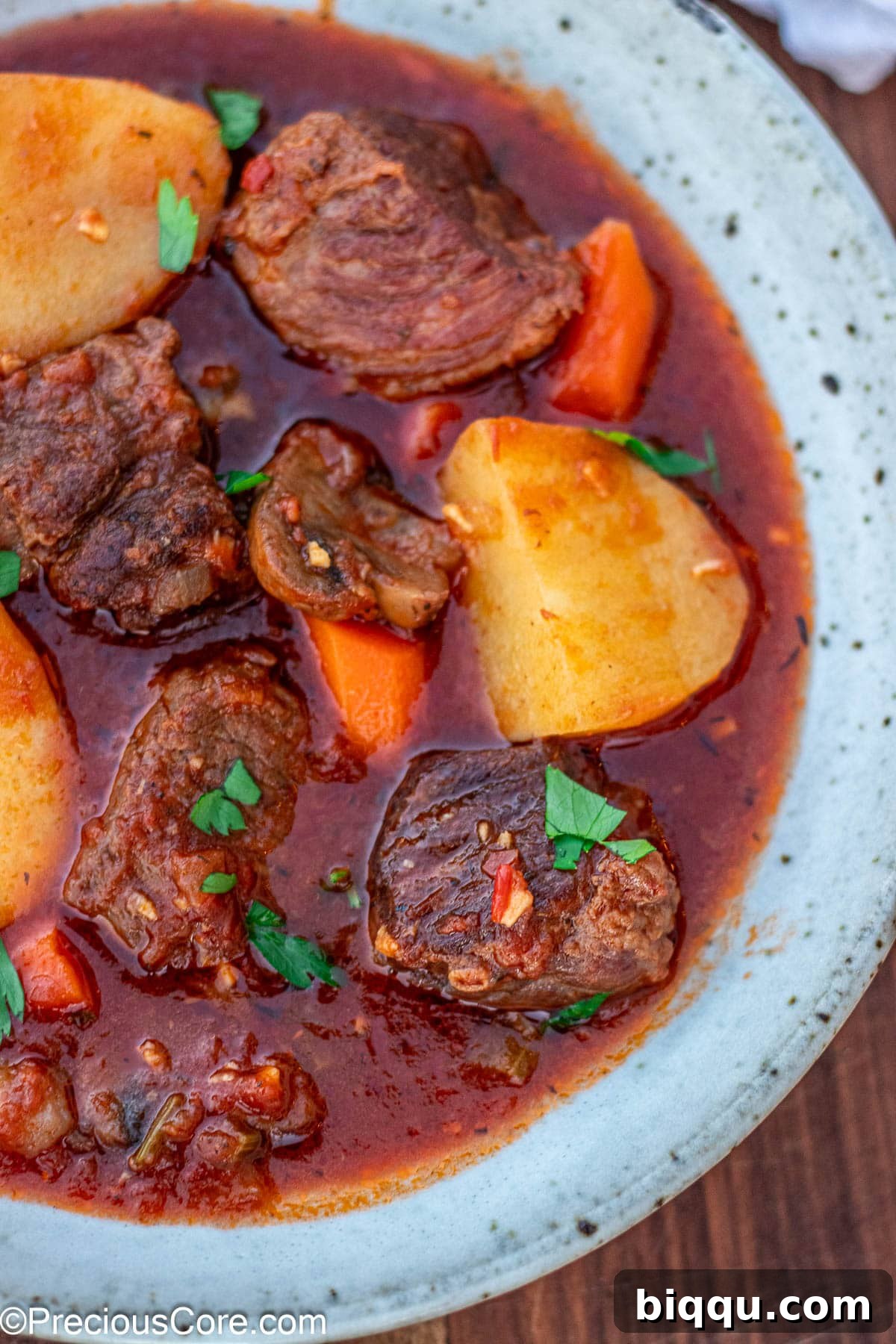
Over the years, I’ve experimented extensively with various beef stew recipes. I found that traditional versions incorporating wine, such as beef bourguignon, often introduced a flavor that wasn’t to our family’s preference. Beyond the taste, we also preferred to avoid alcohol in our daily meals. Then came the experiments with easy beef stew recipes that omitted wine, but frequently called for all-purpose flour as a thickener. While better, the flour often resulted in a stew that felt unnecessarily heavy and gloopy, detracting from the natural richness of the ingredients. Even a small amount of cornstarch could sometimes lead to a similar, less-than-ideal consistency.
Through careful testing, I discovered that by eliminating flour entirely, the stew achieved a perfect consistency, allowing the authentic flavors of the meat, vegetables, and herbs to truly bloom and shine. Many recipes rely on flour for thickness, but this approach demonstrates a more elegant solution. The secret lies in the strategic use of crushed tomatoes.
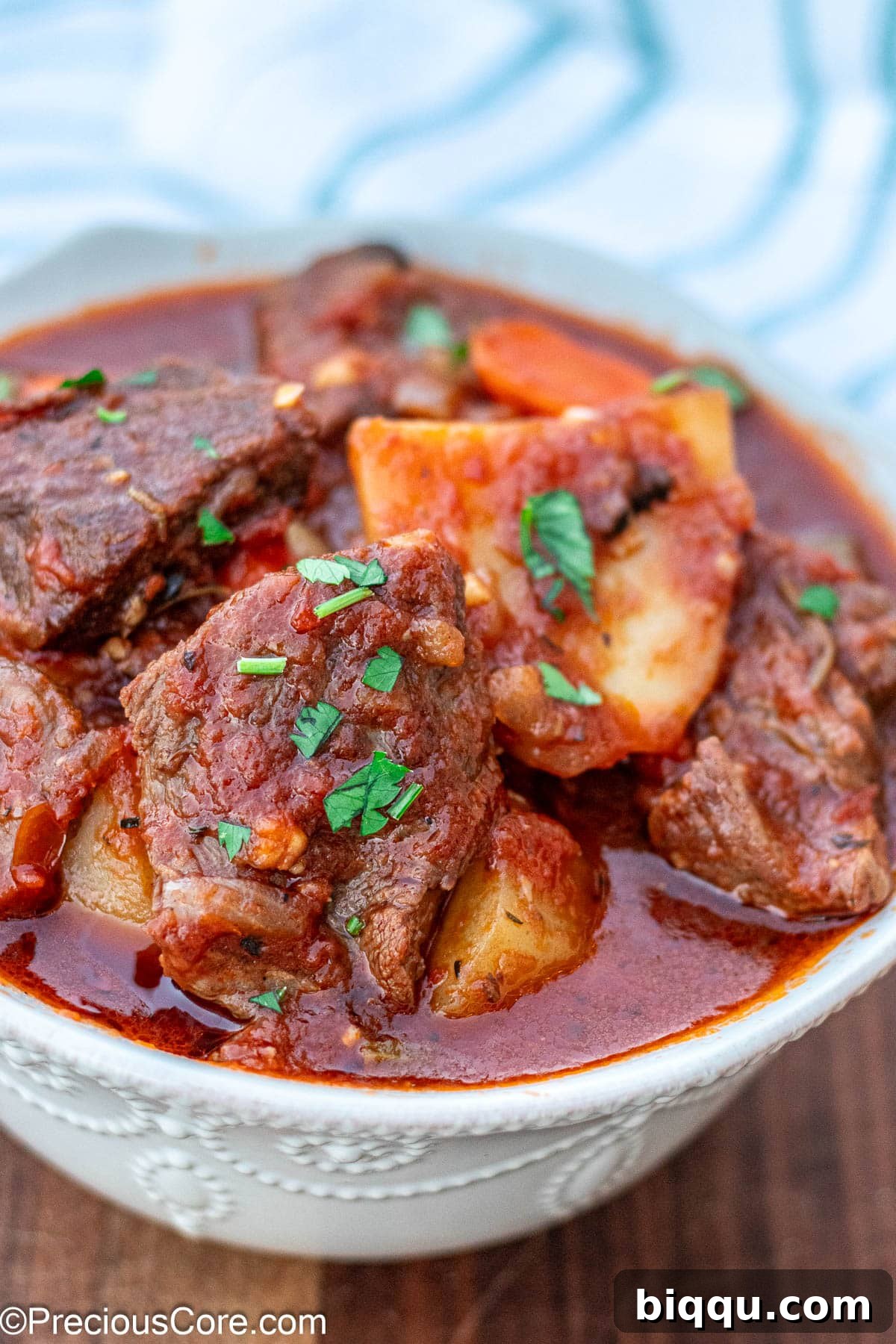
Crushed tomatoes are fantastic because they provide sufficient thickness without the need for additional flour, creating a naturally substantial body for the stew. Furthermore, their inherent acidity plays a crucial role. Just as wine is often added for its acidic properties to balance the richness of beef, crushed tomatoes accomplish this beautifully, enhancing the overall depth and complexity of the stew’s flavor profile. This not only makes the stew incredibly well-rounded but also means you avoid any potential masking of the delicate flavors from your chosen spices and herbs, which can sometimes occur with flour-based thickeners.
Another unsung hero in achieving the ideal texture is the humble potato. Potatoes, with their natural starch content, subtly contribute to the stew’s thickness as they break down during the long simmering process. This combination of crushed tomatoes and potatoes works synergistically to create a wonderfully rich, glossy, and perfectly thick sauce that coats every piece of tender beef and vegetable.
And so, we proudly present our family-favorite version of Stovetop Beef Stew Without Wine. My children are such avid fans that they frequently request it as a weekly staple. It truly is the epitome of comfort, especially on a cold night or a chilly day, embodying everything you could want in a wholesome, one-pot meal. We hope it becomes a cherished regular on your family table too, bringing warmth and deliciousness to your home.
If you appreciate hearty flavors and straightforward recipes, be sure to also check out my insanely good Roasted Tomato and Garlic Soup, which is absolutely divine when served with some crusty bread.
Mastering the Ingredients For a Superb Beef Stew
Crafting an exceptional beef stew begins with selecting the right ingredients. Here’s a closer look at the simple yet crucial components for this traditional beef stew recipe, along with important notes to ensure you achieve the best possible results:
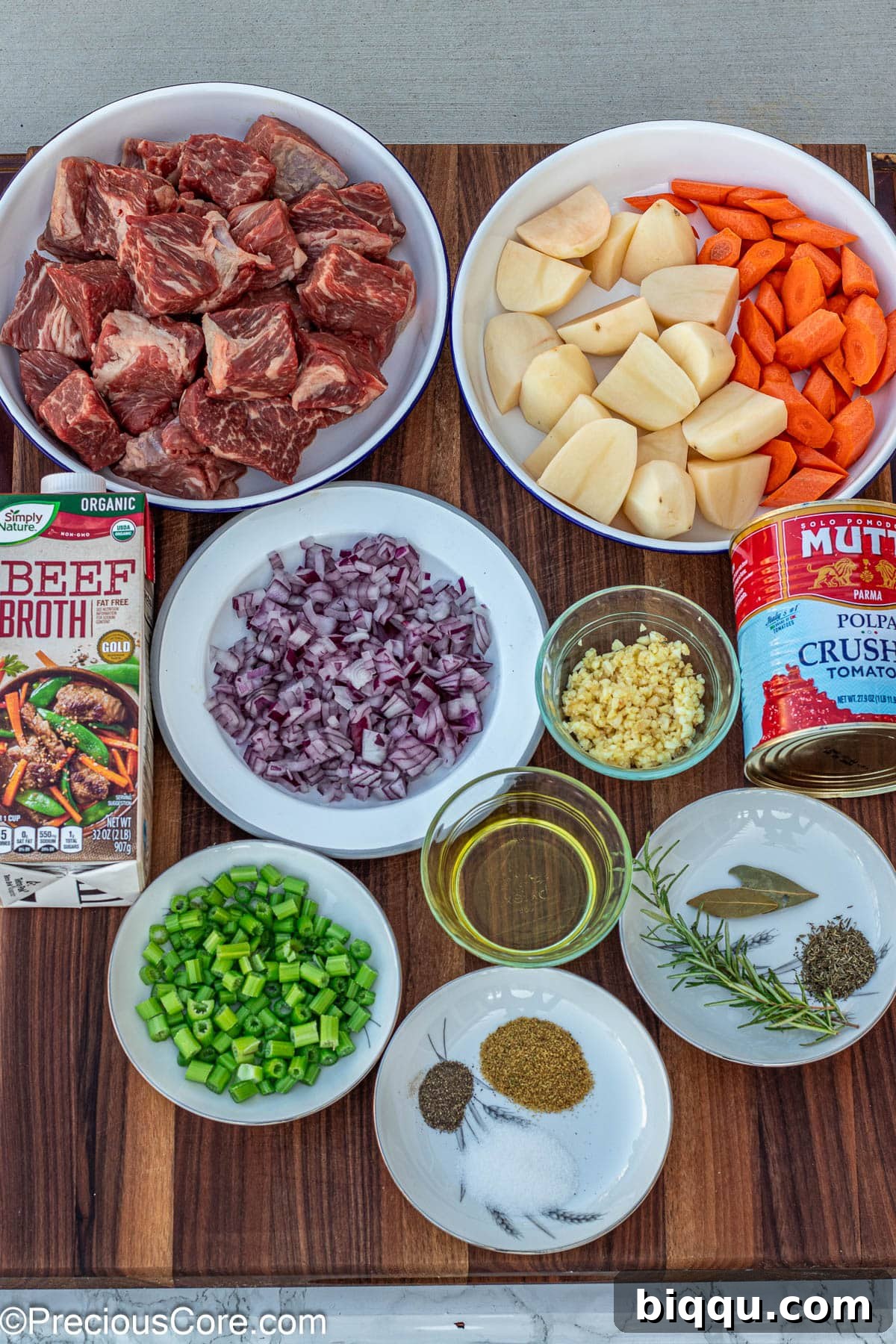
- Beef: The cut of beef is paramount for a truly tender stew. We highly recommend using chuck roast. Look for pieces with a good marbling of fat – those delicate veins of fat running through the meat are key. This marbling melts down during the long simmering process, infusing the stew with incredible flavor and ensuring the beef becomes fork-tender. While convenient, pre-packaged “stew meat” often consists of various cuts that can remain tough even after extended cooking. Chuck roast guarantees that desirable melt-in-your-mouth texture.
- Beef Bouillon Powder: This is truly one of the secret ingredients that elevates the beef flavor to new heights. It acts as an incredible enhancer, intensifying the meaty notes of the stew. Our long-standing favorite brand for consistent quality and rich flavor is Knorr Beef Bouillon Powder. It makes a noticeable difference.
- Crushed Tomatoes: This ingredient is a game-changer, simplifying the stew-making process by eliminating the need for separate tomato paste, tomato sauce, and diced tomatoes. Crushed tomatoes offer an ideal texture – not too chunky, yet not overly smooth – contributing a beautiful body to the stew. More importantly, they naturally thicken the sauce and provide a crucial acidic balance to the stew’s richness, effectively replacing the role red wine often plays in traditional recipes.
- Beef Stock or Broth: For optimal flavor control, especially regarding salinity, opt for low-sodium beef stock or broth. This allows you to adjust the seasoning precisely to your taste throughout the cooking process without worrying about an overly salty end product.
- Herbs: A fragrant combination of dried thyme, fresh rosemary sprigs, and bay leaves are essential for imbuing the stew with its classic, aromatic depth. These herbs release their flavors beautifully during the long simmer. For a final flourish and a touch of freshness, you can also incorporate fresh parsley or chives right before serving.
- Minced Garlic: No savory stew is complete without the pungent, aromatic foundation of garlic. Ensure it is very finely minced – whether by hand on a chopping board, passed through a garlic press, or grated on a microplane zester – to allow its flavors to meld seamlessly into the sauce.
For the full, precise list of ingredients with measurements, please refer to the comprehensive recipe card located at the end of this article.
Step-by-Step: How To Make Beef Stew Without Wine
Follow these detailed steps to create a rich and savory beef stew that’s sure to become a family favorite:
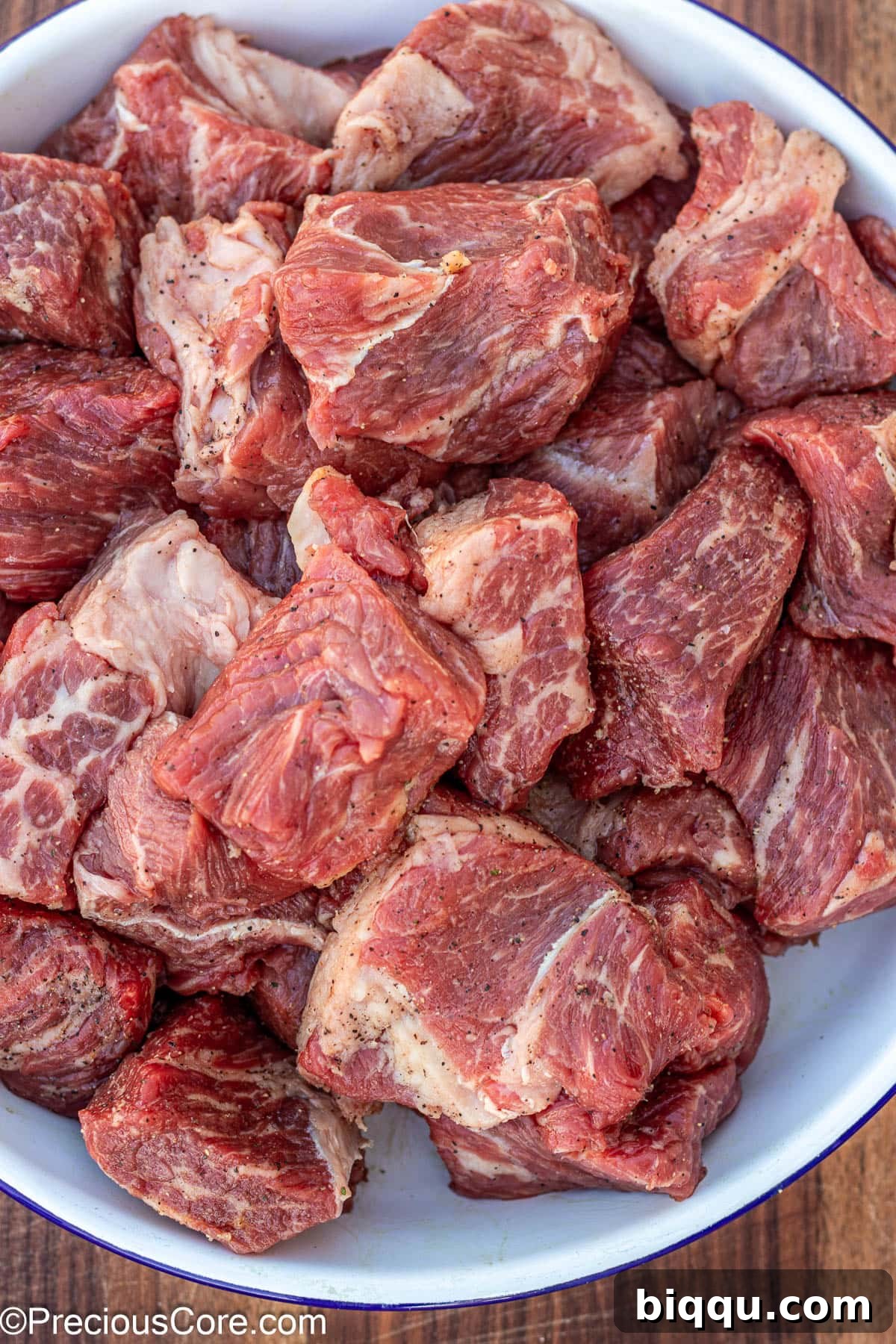
- First, thoroughly season the beef with salt, pepper, and beef bouillon powder. This initial seasoning is crucial; the beef bouillon powder is my secret weapon for ensuring every piece of beef is infused with deep, savory flavor from the very beginning. Take your time to toss the beef chunks thoroughly, ensuring an even coating.
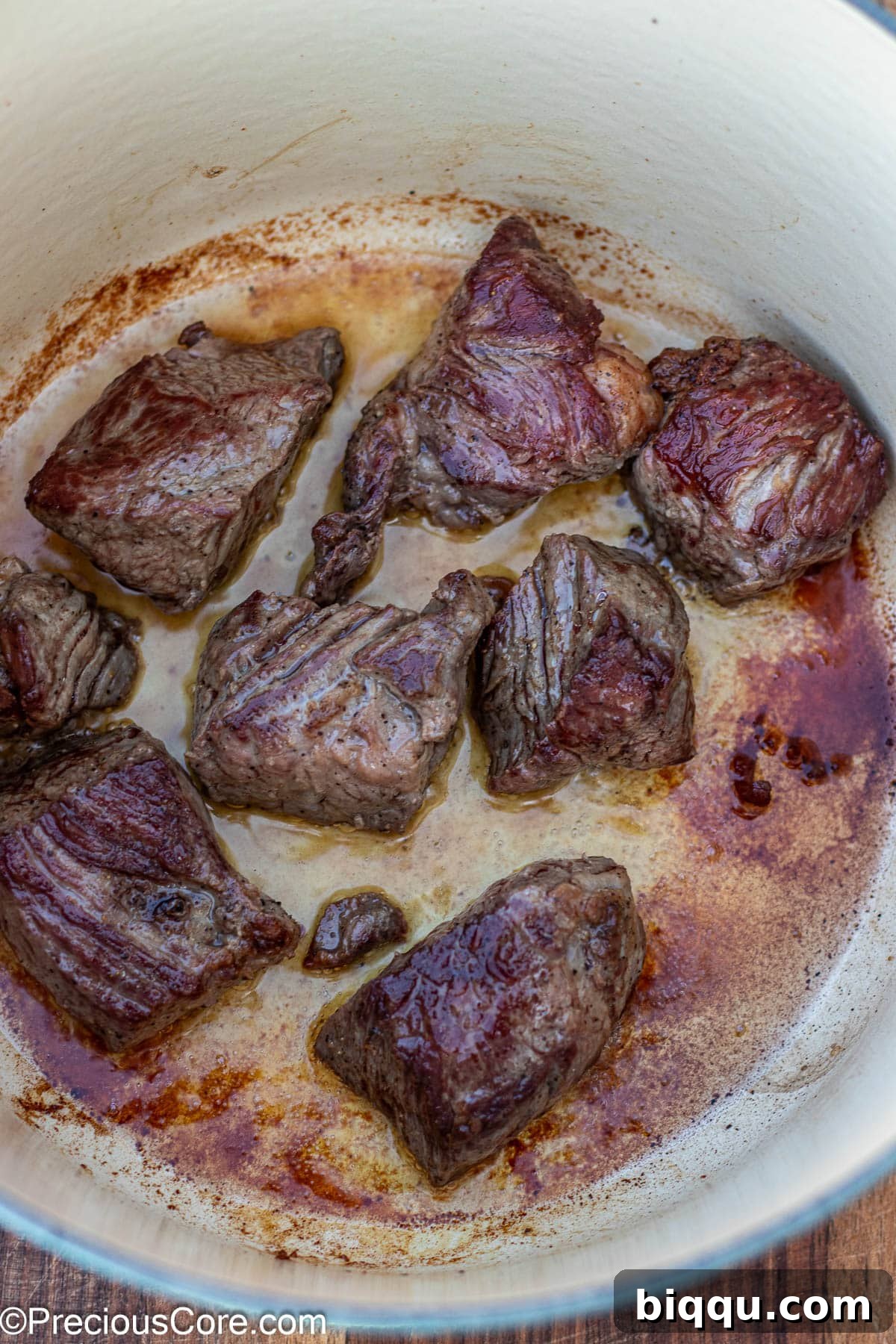
- Heat a bit of olive oil or vegetable oil in a large, heavy-bottomed Dutch oven, then brown the beef in batches. This step is critical for developing rich flavor. By browning the beef in smaller batches, you prevent overcrowding the pan, which would cause the meat to steam instead of searing. A beautiful brown crust on the beef means maximum flavor development. The simple, yet perfect, seasoning on the browned beef is so enticing, you might find yourself tempted to snack on a piece or two before it even makes it into the stew! (No judgment here.)
- After browning the beef, leave the flavorful beef fat and brown bits in the Dutch oven, then add the diced onions and celery. Cook these aromatics until they are softened and lightly caramelized. This step creates the essential flavor base that will set your beef stew up for incredible success. The fond (brown bits) at the bottom of the pot will dissolve into the vegetables, adding immense depth.
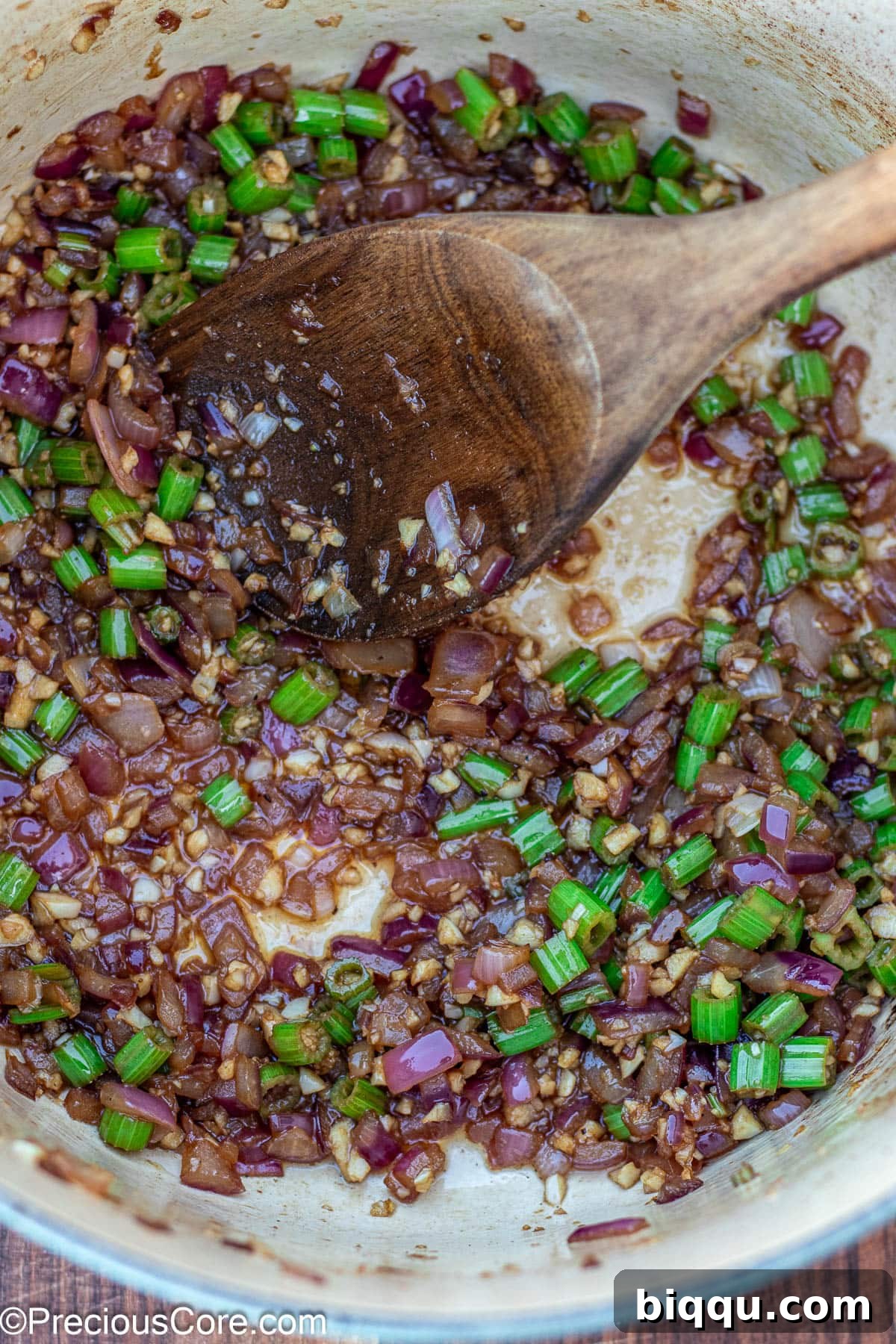
- Add the minced garlic and cook for just about 30 seconds to release its fragrant flavors. Be vigilant with the garlic’s cook time; it can burn quickly and turn bitter if overcooked. This is also the ideal moment to introduce sliced mushrooms if you’re including them. While optional, mushrooms add a wonderful umami depth, extra texture, and valuable nutrients to the stew, making it even more robust.
- Now, return the browned beef to the hot pan and add the crushed tomatoes, beef broth, bay leaves, dried thyme, and fresh rosemary sprigs. Give everything a good, hearty stir with your wooden spoon, ensuring all the ingredients are well combined. The stage is now set for the magic of simmering in this large pot, allowing all the flavors to meld beautifully.
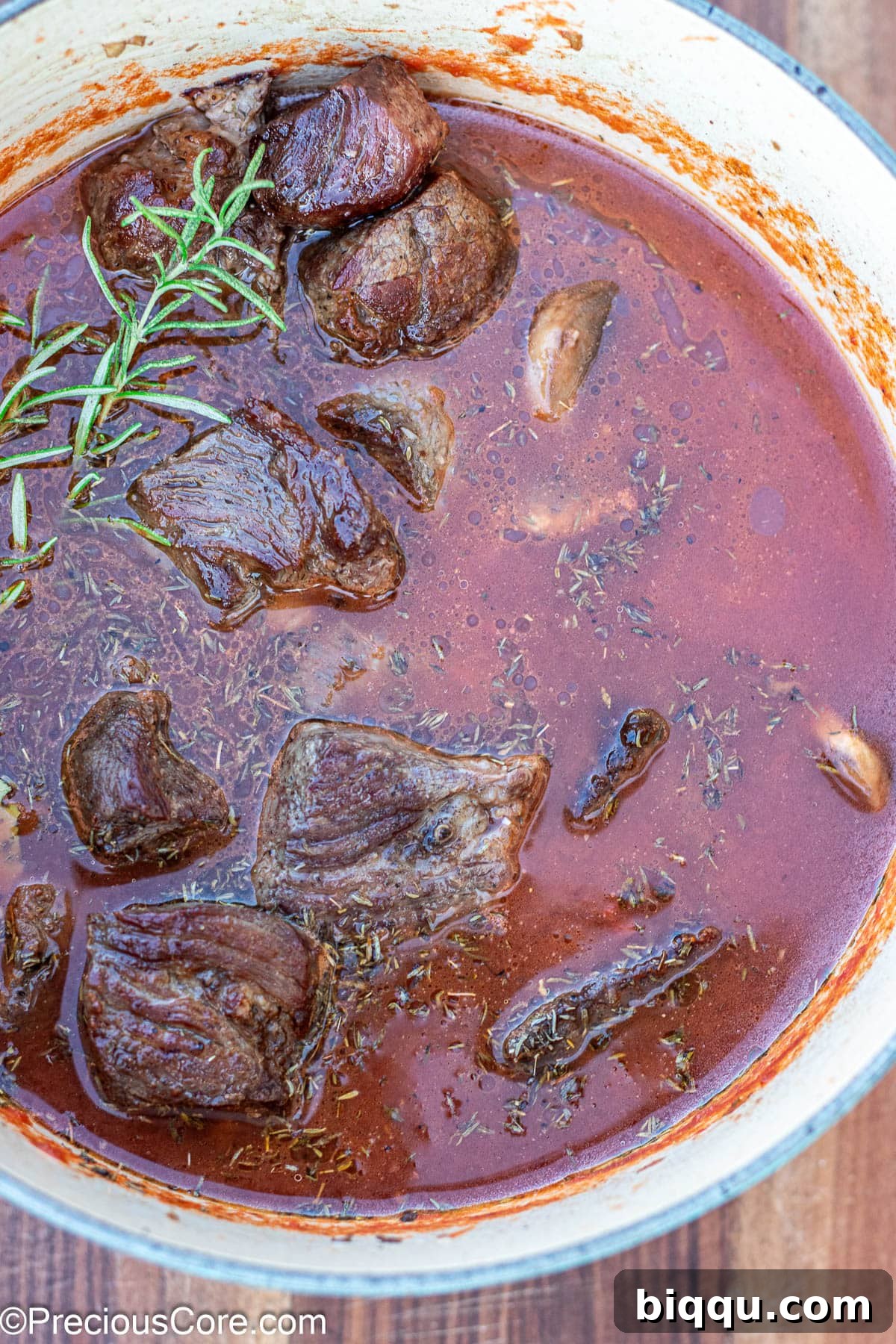
- Let the stew gently simmer, covered, until the beef is incredibly tender but still holds its shape. This slow, patient cooking process is key to achieving that desirable melt-in-your-mouth texture. Your house will undoubtedly fill with the most inviting aromas as this Dutch oven beef stew slowly cooks – truly one of the joys of making homemade stew!
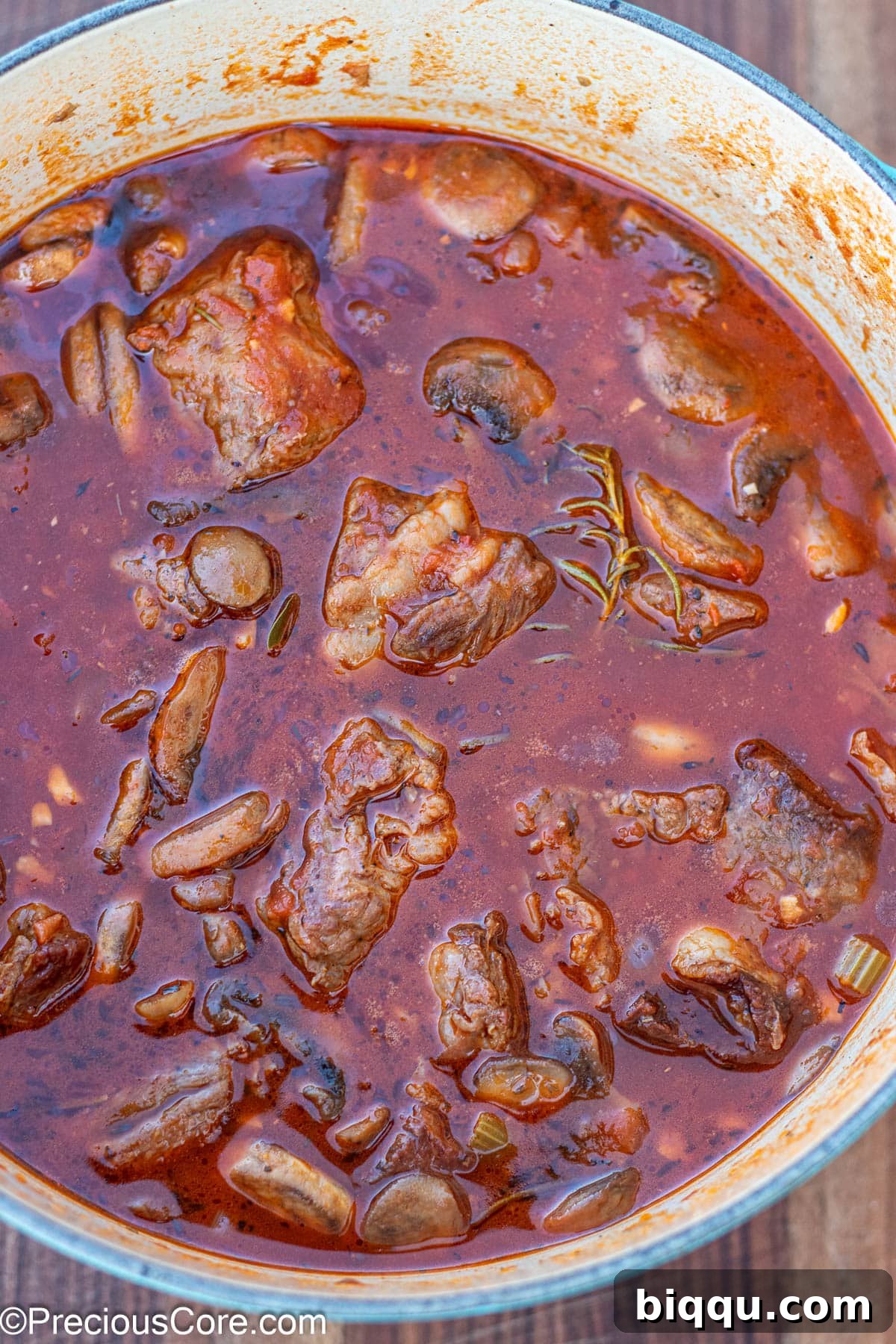
- Once the beef is tender, it’s time to add the carrots and potatoes. The stew already looks magnificent at this point, but these classic beef stew vegetables will enhance its heartiness and visual appeal, rounding out the dish beautifully.
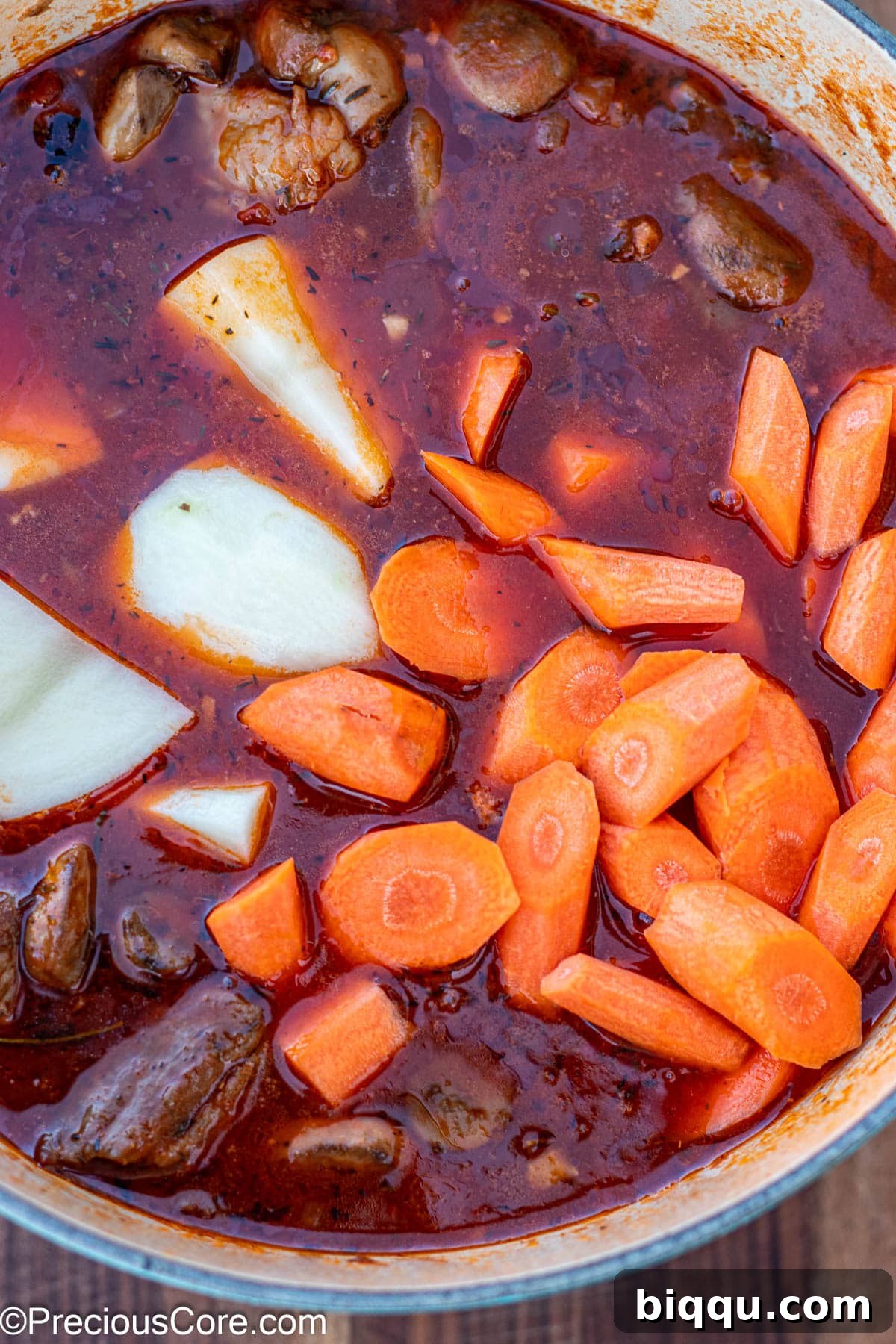
- Continue to cook the stew until the potatoes are perfectly fork-tender. This typically takes about 25 to 30 minutes, more than just a quick 10-15 minutes. Maintain the stovetop heat at a medium simmer to ensure the vegetables cook evenly without scorching the bottom of the pot.
- Finally, adjust the texture and taste of the stew to your preference. If the stew appears too thick, simply add a little more beef stock until it reaches your desired consistency. Conversely, if it’s too runny, increase the heat to medium-high and allow it to cook down and reduce until it thickens sufficiently. This is also the stage where I often add a touch more beef bouillon powder and a fresh grind of black pepper to really make the flavors pop. Once you’re satisfied with your stew, remember to carefully remove the rosemary stems and bay leaves before serving.
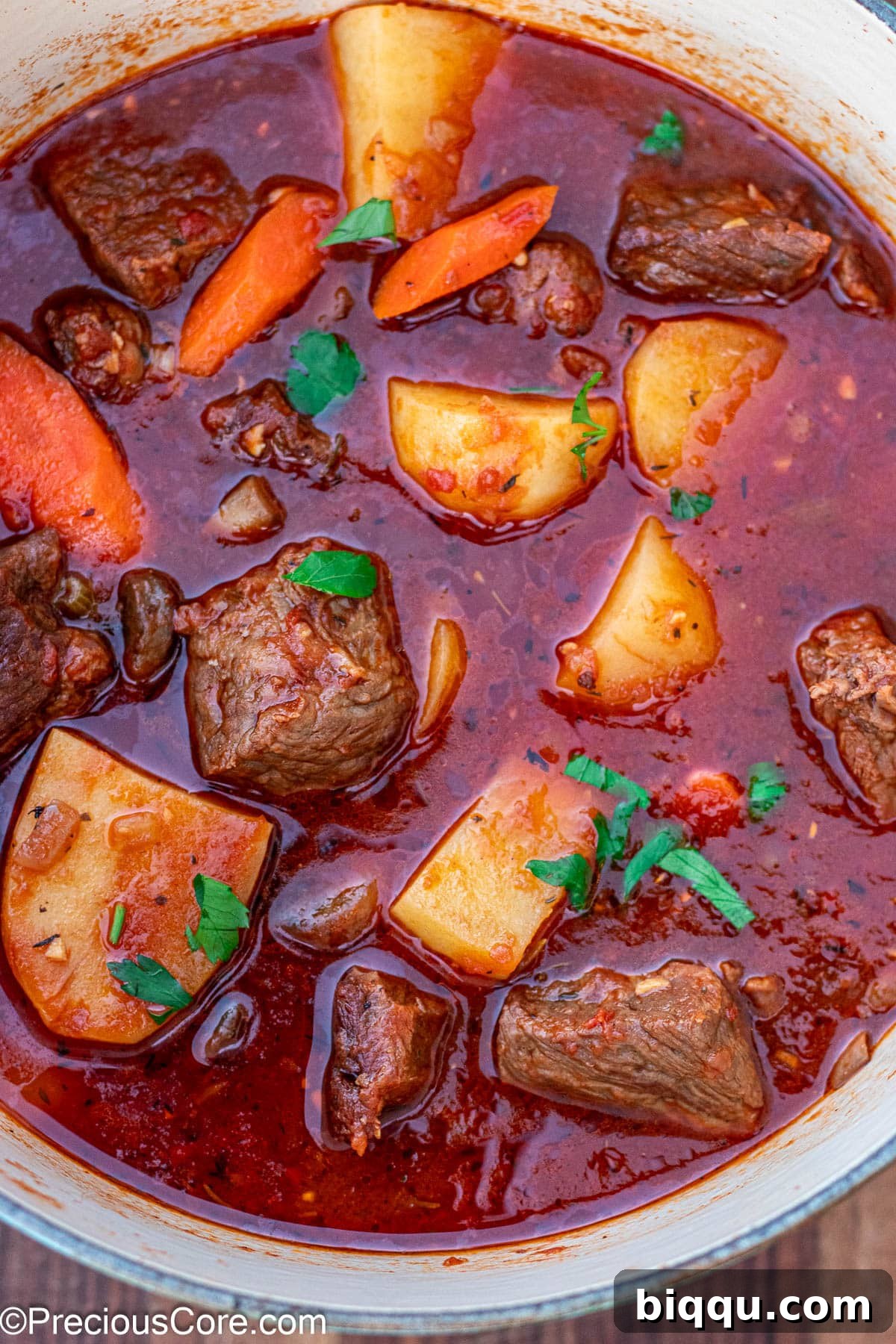
- Garnish generously and serve warm. A sprinkle of freshly chopped parsley or chives over the top adds a vibrant burst of color and a fresh note, giving your homemade stew that professional, “cheffy” finishing touch.
Serve this satisfying Beef Stew Without Wine warm on its own as a fulfilling meal, or complement it with your favorite side dishes for a truly memorable experience. Consider pairing it with light and fluffy Easy Dinner Rolls or a crisp, refreshing Lettuce Salad to complete your meal.
Essential Tips For Stew Success
Achieving a truly remarkable beef stew without wine involves a few key techniques and considerations. Here are our top tips to ensure your stew turns out perfectly every time:
- **Choose the Right Pot:** Always use an adequately large, heavy-duty pot or Dutch oven, such as a cast-iron Le Creuset model. These pots distribute heat evenly and retain it well, which is crucial for slow simmering. The last thing you want is to run out of room or have the bottom of your stew scorch during cooking!
- **Master Herb Timing:** While dried herbs like thyme and bay leaves can be added early to infuse deep flavor, fresh, delicate herbs such as parsley or chives should be reserved for the very end of cooking. Adding them as a garnish just before serving helps preserve their vibrant color, fresh aroma, and prevents them from wilting or losing their potency.
- **Embrace Patience in Cooking:** Good stew takes time. Resist the urge to rush the cooking process by using excessively high heat throughout. High heat can lead to a burnt bottom, and more importantly, it will cause the beef to become tough and chewy rather than gloriously tender. A slow, gentle simmer is your best friend for achieving that melt-in-your-mouth texture.
- **Uniform Meat Cuts:** For consistent cooking, it’s vital to cut the beef into pieces of roughly the same size. I recommend aiming for cubes that are approximately 1 ½ inches. While they don’t need to be perfectly square, uniform pieces ensure that all the meat cooks at the same rate, preventing some pieces from being overcooked while others are still tough. Rough-cut chunks also lend a lovely rustic appearance to your stew.
- **Chunky Vegetables:** Similarly, your vegetables should be cut into substantial, chunky pieces, ideally 1 to 1 ½ inch cubes. If you cut them too small, they risk breaking down excessively during the long simmer, effectively disappearing into the thick sauce rather than remaining as distinct, satisfying bites of vegetable. Keep them robust so they contribute texture and substance to every spoonful.
- **Smart Leftover Storage:** If you’re fortunate enough to have leftovers (which is often when stew tastes even better!), transfer them to an airtight container and store them in the refrigerator for up to 5 days. This beef stew also freezes exceptionally well. For space-saving convenience in the freezer, I prefer to store portions in freezer-safe bags. Ensure the stew has cooled completely before placing it into the bags. Lay the filled bags flat in the freezer until they harden; once solid, you can stack them vertically or horizontally, maximizing your freezer space. Thaw frozen stew in the refrigerator overnight before reheating gently on the stovetop or in the microwave.
Top Tip for Browning Beef: Do not overcrowd your pan! If you try to brown all the beef at once, the temperature of the pan will drop dramatically, causing the meat to steam rather than sear. This prevents the formation of that delicious brown crust and caramelization, which are essential for deep flavor. Always brown the beef in small batches, allowing each piece to develop a beautiful, rich exterior. Patience during this step truly pays off in the final taste of your stew.
Thoughtful Substitutions For Beef Stew
This beef stew recipe is wonderfully adaptable, allowing for a variety of substitutions to suit different tastes and dietary needs:
- Lamb: For a delicious alternative, replace the beef with an equal amount of lamb shoulder or leg, cut into similar chunks. Lamb offers a distinct, rich flavor that works beautifully in a hearty stew.
- Chicken: If you prefer poultry, chicken thighs or drumsticks (bone-in, skin-on for more flavor, or boneless, skinless for a lighter option) can be used instead of beef. Adjust cooking time accordingly, as chicken will cook faster.
- Vegetarian: Transform this into a robust vegetarian stew by replacing the beef with an assortment of hearty mushrooms (cremini, portobello, shiitake), firm tofu, or a combination of root vegetables like parsnips and turnips.
- Potatoes: While russet potatoes are excellent for their starchy contribution, you can certainly use other varieties. Yukon gold potatoes offer a slightly creamier texture, and baby potatoes can be added whole or halved for a charming presentation.
- Broth: Beef broth is undoubtedly the best option for intensifying the beefy flavor. However, if you find yourself without it, chicken broth can be used in a pinch. Be aware that this substitution will subtly alter the overall flavor profile of your stew. Vegetable broth is also a viable option for a lighter base.
Exciting Variations to Customize Your Stew
Once you’ve mastered the base recipe, feel free to get creative with these delicious variations to tailor your beef stew to your liking:
- Peas: For a touch of sweetness and vibrant color, add a cup of frozen peas to the stew during the last 5-10 minutes of cooking. They only need a short time to warm through and retain their freshness.
- Spicy: If you enjoy a bit of heat, introduce red pepper flakes or a pinch of cayenne pepper along with the other seasonings. Start with a small amount and adjust to your preferred level of spiciness.
- Other Global Flavors: Experiment with international influences! Add a teaspoon of ground cumin and a pinch of cinnamon for a stew with a delightful Moroccan flair. For an extra layer of umami and depth, consider a splash of Worcestershire sauce, a teaspoon of soy sauce, or even a dash of balsamic vinegar. These ingredients add complexity without overpowering the main flavors.
- Noodles: Turn your stew into a heartier meal by adding your favorite egg noodles directly into the pot towards the end of cooking. They will cook beautifully in the rich broth and absorb all the wonderful flavors.
Also, don’t miss trying out this flavorful African Chicken Stew and the wholesome Lentil Stew for more diverse and comforting meal ideas.
Frequently Asked Questions About Beef Stew
For a rich and flavorful beef stew without wine, the best substitutes are beef stock or beef broth. These liquids provide a savory base that complements the beef beautifully. You can also use a combination of beef bouillon powder dissolved in cold water to achieve a similar depth of flavor. In this recipe, crushed tomatoes also play a key role in providing the necessary acidity and depth that wine often contributes.
Yes, absolutely! Red wine is a common addition to beef stew, but it is by no means an essential ingredient. As this recipe demonstrates, you can achieve an incredibly rich, flavorful, and tender beef stew without any wine at all. The key is to build flavor through proper browning of the beef, a robust broth, aromatic vegetables, and acidic components like crushed tomatoes.
Red wine typically serves two main purposes in beef stew: it adds a layer of complex flavor, and its acidity helps to tenderize the meat. While these are desirable effects, they are not exclusive to wine. You can achieve a profoundly flavorful stew by using high-quality beef broth or stock, allowing the stew to simmer for an adequate amount of time on the stovetop to naturally break down the meat fibers and ensure tenderness. Additionally, ingredients like crushed tomatoes contribute acidity that effectively balances the richness of the stew, mimicking one of wine’s primary functions.
More Comforting Recipes to Explore
Loved this Beef Stew Without Wine Recipe? Dive into these other wonderfully comforting recipes that are perfect for any occasion:
Quick Chicken Noodle Soup
Cameroonian Pepper Soup
Lentil Stew
Nigerian Beef Stew
Serving Suggestions For Your Beef Stew
Elevate your hearty beef stew with these perfect accompanying side dishes:
Cornbread Without Buttermilk
Garlic Butter Rolls
Honey Whole Wheat Dinner Rolls
Easy Dinner Rolls
If you make this recipe, please consider leaving a star rating below. Your feedback helps others discover and enjoy the recipe, and I always love hearing from you! Thank you!
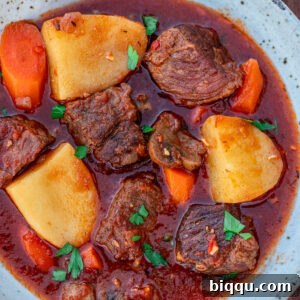
Beef Stew Without Wine
30 mins
1 hr
1 hr 30 mins
8 servings
Rate
Print Recipe
Ingredients
- 2 Tablespoons olive oil
- 3 pounds chuck roast cut into 1½ inch chunks
- 1 teaspoon salt
- ¼ teaspoon ground black pepper
- 1 teaspoon beef bouillon powder
- 1 medium onion diced
- 2 celery stalks diced
- 2 Tablespoons minced garlic from about 8 cloves
- 28 oz crushed tomatoes
- 4 medium carrots peeled and cut into 1-inch chunks
- 4 cups beef stock
- 1 pound russet potatoes about 4 medium potatoes, peeled and cut into 1½-inch chunks
- 1 teaspoon dried thyme
- 3 sprigs fresh rosemary
- 2 bay leaves
- Minced parsley or chives for garnish
- Crusty bread for serving
Instructions
-
Season the beef: Add the salt, ground black pepper, and beef bouillon powder to the beef chunks. Toss well to combine, ensuring every piece is coated.
-
Brown the beef: Place a large Dutch oven on high heat. Add the olive oil and heat for two minutes. Add part of the seasoned beef and brown thoroughly on all sides. You will need to brown the beef in batches to prevent overcrowding and ensure a good sear.
-
Sauté the aromatics: To the same pot where the beef was browned, leaving the rendered fat and brown bits, add the diced onion and celery. Cook, stirring occasionally, for about 4 minutes until the onion softens and becomes translucent. Add the minced garlic and sauté for just 30 seconds, being careful not to overcook or burn it.
-
Combine ingredients and simmer: To the pot, add the crushed tomatoes, beef stock, browned beef, dried thyme, fresh rosemary sprigs, and bay leaves. Stir well to combine all ingredients. Bring the mixture to a boil over high heat, then reduce the heat to medium-low to maintain a gentle simmer. Let it simmer for about 10-15 minutes.
-
Add carrots and potatoes: Add the chopped carrots and potatoes to the pot. Cover and continue to simmer for about 25 to 30 minutes, or until the potatoes are completely fork-tender. Taste the stew and adjust seasoning as needed; I often add about ½ a teaspoon more beef bouillon powder at this stage for an extra flavor boost.
-
Adjust consistency: If the stew is too soupy for your liking, increase the heat slightly and allow it to cook uncovered until it reduces and thickens to your desired consistency. Before serving, remove the rosemary stems and bay leaves.
-
Garnish and serve: Garnish the finished stew with freshly minced parsley or chives, then serve warm with crusty bread on the side.
Notes
Potatoes: After peeling and cutting the potatoes into chunks, it’s a good practice to soak them in cold water. This prevents oxidization, which can cause them to turn an undesirable color.
Adding mushrooms: Mushrooms are a fantastic addition to this beef stew, offering a boost of umami flavor. If you choose to add them, use about 8 ounces of sliced mushrooms. Sauté them in the same pot after cooking the aromatics (onions and celery) and before adding the crushed tomatoes and broth.
Storage: This beef stew stores wonderfully. Refrigerate any leftovers in an airtight container for up to 5 days. For longer storage, freeze the stew for up to 3 months. Ensure it is completely cooled before freezing.
Nutrition
Carbohydrates: 43g |
Protein: 55g |
Fat: 34g |
Saturated Fat: 14g |
Polyunsaturated Fat: 3g |
Monounsaturated Fat: 17g |
Trans Fat: 1g |
Cholesterol: 129mg |
Sodium: 31407mg |
Potassium: 1751mg |
Fiber: 4g |
Sugar: 27g |
Vitamin A: 5344IU |
Vitamin C: 16mg |
Calcium: 162mg |
Iron: 7mg
Additional Info
Tried this recipe?
Mention @preciouscore or tag #PreciousCore!