
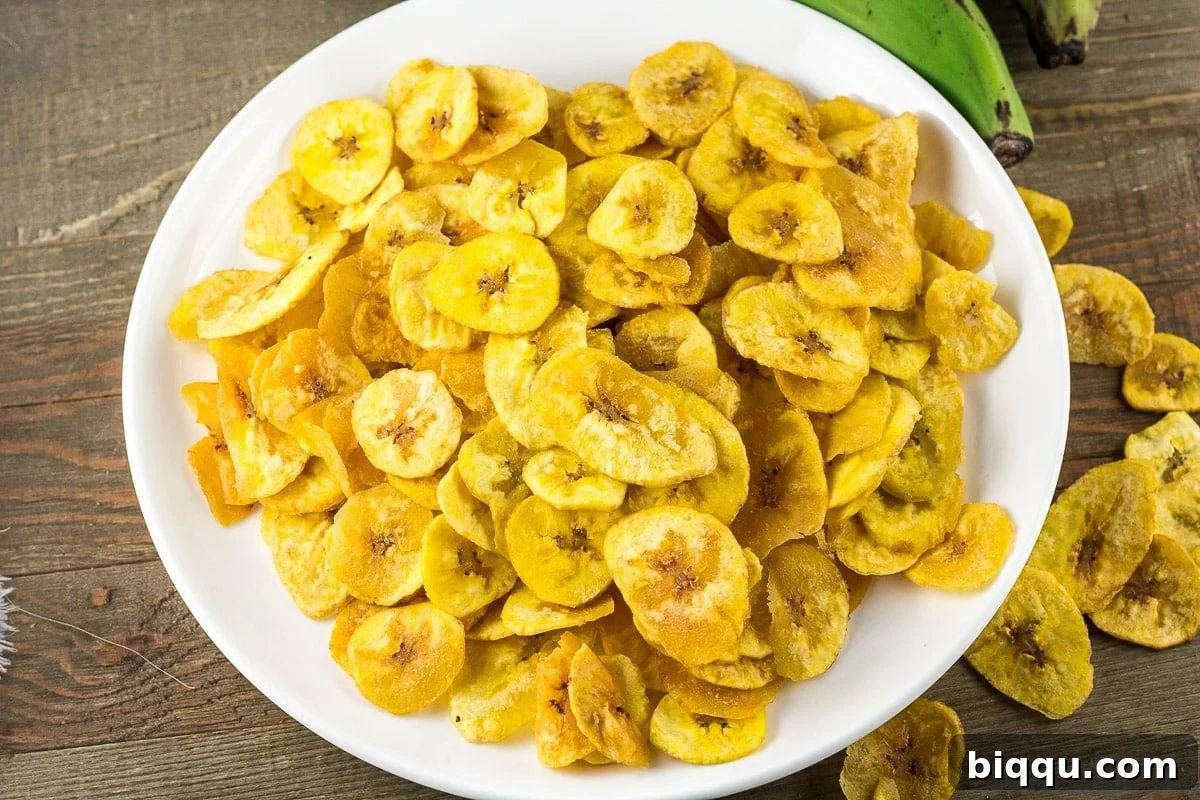
Welcome to the definitive guide on crafting the most irresistible, crispy homemade plantain chips! A cherished snack deeply rooted in the vibrant culinary traditions of countries like Cameroon, plantain chips offer a delightful crunch and a unique savory flavor that makes them truly addictive. After years of perfecting this simple yet rewarding recipe, I’m excited to share all my expert tips and tricks to ensure your plantain chips are nothing short of spectacular.
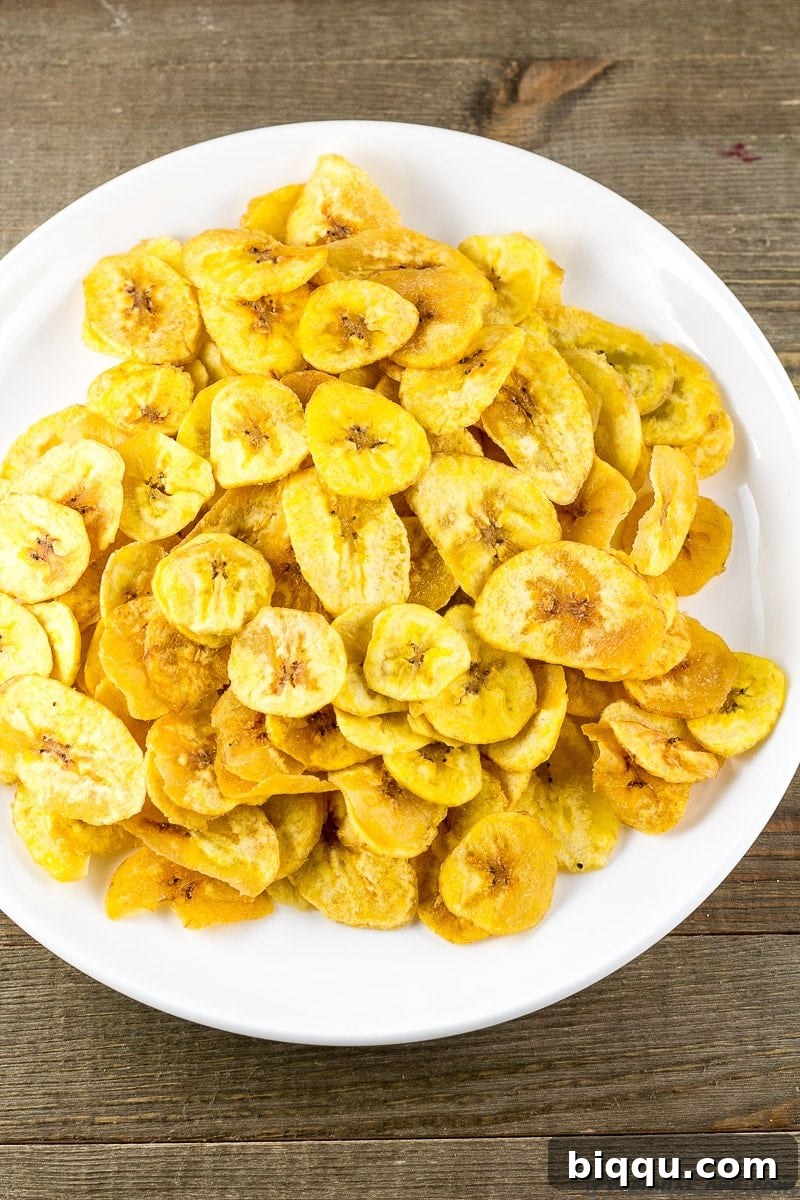
These golden-brown marvels boast a texture akin to tortilla chips but with the distinct, earthy sweetness of plantain. They are perfect on their own as a satisfying snack, or even better, used as a sturdy dipper for your favorite spreads. Imagine scooping up a generous dollop of fresh guacamole or a zesty salsa with these crunchy delights.
For those who adore plantains as much as I do, this recipe is just the beginning. Be sure to explore other fantastic ways to enjoy this versatile fruit with our recipes for Baked Plantains, the sweet indulgence of Sweet Fried Plantains, and the savory delight of Twice-Fried Plantains (Tostones). Each recipe highlights a different facet of plantain’s incredible culinary potential.
Table of Contents
- The Irresistible Crunch of Plantain Chips
- What Are Plantain Chips?
- Why Make Homemade Plantain Chips?
- Ingredients You’ll Need
- Step-by-Step: How to Make Plantain Chips
- Expert Tips for Perfect Plantain Chips
- Serving Suggestions
- More Plantain Inspirations
- Plantain Chips Recipe
The Irresistible Crunch of Plantain Chips
There’s something truly special about plantain chips. They are undoubtedly my biggest weakness! My usual intention is to prepare a large batch, thinking it will last us a few days as a convenient snack. However, that plan invariably fails. The moment these golden discs emerge from the oil, they vanish almost instantly – devoured by my family and me with an enthusiasm that borders on competitive! My husband, Mr. N, and our girls share my fervent love for these crunchy delights, often leading to friendly squabbles over the last few pieces. They are simply that good!
I recall a time when I would eagerly purchase plantain chips from local vendors, enjoying their distinct flavor. Now, the joy of making them from scratch in my own kitchen is unparalleled. The process is surprisingly straightforward, and the reward is a snack that is not only mouth-wateringly delicious but also incredibly satisfying to create. These chips are profoundly crispy, bursting with natural plantain flavor, and dangerously addictive. I truly believe the world needs to celebrate the sheer awesomeness of plantain chips; in my humble opinion, they easily surpass potato chips.
Plantains themselves are a nutritional powerhouse, naturally vegan, gluten-free, and boasting a unique taste profile. They are incredibly versatile, finding their way into a multitude of dishes. I often enjoy plantains as a savory side, such as Baked Plantain Fries, or as a key component of a hearty meal like Poulet DG (a rich stew combining chicken and plantains). For a sweeter treat, Plantain Puff Puff offers a delightful doughnut-like experience made with ripe plantains.
Whether you choose to boil, fry, or grill them, plantains are a consistently yummy ingredient, packed with essential nutrients. When I crave a truly indulgent and deeply satisfying snack, homemade plantain chips are my go-to. Their crunch and flavor are utterly irresistible!
What Are Plantain Chips?
Before diving into the recipe, let’s clarify what plantain chips are and what makes them so special. Plantains, often mistaken for bananas, are a starchy fruit native to tropical regions. While they belong to the same family, plantains are typically larger, firmer, and contain more starch and less sugar than dessert bananas, especially when green. This makes them ideal for savory preparations, much like a vegetable.
Plantain chips are thin slices of plantain, usually green (unripe) plantains, that are deep-fried until incredibly crispy. When fried green, they have a distinctly savory, slightly earthy flavor and a firm, brittle crunch. If made with slightly ripe (yellow) plantains, they can take on a subtly sweeter profile, though still maintaining a satisfying crispness if prepared correctly.
The beauty of plantain chips lies in their simplicity. With just a few basic ingredients, you can transform this humble fruit into a snack that is both exotic and comforting. They offer a fantastic alternative to potato chips, providing a different flavor dimension and a wonderful textural experience that is uniquely plantain.
Why Make Homemade Plantain Chips?
You might wonder why bother making plantain chips at home when store-bought options are available. The answer lies in several key advantages that homemade chips offer:
- Unmatched Freshness and Flavor: There’s simply no comparison to the taste of freshly made plantain chips. They are crispier, more flavorful, and free from the stale taste that can sometimes characterize packaged snacks.
- Control Over Ingredients: Making them yourself allows you to choose high-quality oil, control the amount of salt, and avoid any artificial preservatives or additives often found in commercial versions. This is particularly beneficial for those with dietary restrictions or who prefer a cleaner eating approach.
- Customizable Seasoning: While classic salt is divine, you can experiment with various seasonings. Imagine a sprinkle of garlic powder, a dash of paprika, or even a touch of chili for a spicy kick!
- Cost-Effective: Plantains are generally affordable, and making chips at home is often significantly cheaper than buying multiple bags of gourmet plantain chips from the store.
- A Rewarding Culinary Experience: The process itself is enjoyable, and the satisfaction of creating a delicious, wholesome snack from scratch is incredibly fulfilling. It’s a fantastic way to connect with traditional cooking methods and share a taste of culture.
Ingredients You’ll Need
One of the most appealing aspects of homemade plantain chips is the minimal ingredient list. You only need three essential items for a truly exceptional snack:
- Green Plantains: This is the star of our show. It’s crucial that your plantains are green, firm, and unripe to the touch. The greener they are, the starchier they will be, resulting in a crispier, more savory chip. If they are even slightly yellow, they will be sweeter and potentially softer. For purely savory chips, always opt for the firmest, greenest plantains you can find.
- Salt: Salt is more than just a seasoning here; it’s a flavor enhancer that truly brings out the natural taste of the plantains. While any salt will work, sea salt or fine-grain kosher salt are excellent choices due to their clean flavor and ability to dissolve well in the salt-water solution.
- Oil: You’ll need enough oil for deep frying. Choose a neutral-flavored oil with a high smoke point. Excellent options include vegetable oil, canola oil, sunflower oil, or even refined coconut oil. While olive oil can be used, its flavor might be noticeable, so a neutral oil is generally preferred to let the plantain flavor shine.
Step-by-Step: How to Make Plantain Chips
Making these crispy delights is quite simple, but paying attention to a few key details will make all the difference. Follow these steps for perfect homemade plantain chips:
- Prepare the Plantains for Peeling: Start by cutting off both ends of each green plantain. Green plantains have tough skins, so next, score a shallow line down the length of the plantain along one of its ridges. Repeat this scoring on the opposite side. This creates a natural seam for easier peeling.
- Peel the Plantains: Using your fingers, carefully lift the edge of the skin from one of the scored lines. Gently work your way around, peeling the entire skin off the plantain. You might need to use a knife tip to help pry it off if it’s particularly stubborn.
- Slice Them Thinly and Evenly: This is arguably the most critical step for achieving uniformly crispy chips. The thinner and more consistent your slices, the better your results. A mandoline slicer is highly recommended here as it ensures razor-thin, even slices with minimal effort. If you don’t have a mandoline, the slicing side of a box grater can work, or you can carefully use a sharp knife. Aim for slices that are about 1/16 to 1/8 inch thick.
- Prepare the Salt-Water Solution: In a small bowl, dissolve 1/2 teaspoon of salt in about 1/4 cup of water. Stir until the salt is fully incorporated. This solution will be used for seasoning.
- Heat the Oil: Pour enough neutral oil into a deep, heavy-bottomed pot or Dutch oven to reach a depth of about 3-4 inches. Heat the oil over medium-high heat until it reaches a temperature of 350°F (175°C). Using a kitchen thermometer is highly recommended for accuracy, as maintaining the correct oil temperature is crucial for crispiness.
- Fry the Plantains in Batches: Carefully add the sliced plantains to the hot oil, one piece at a time, ensuring you don’t overcrowd the pan. Overcrowding will lower the oil temperature and lead to soggy, unevenly cooked chips. Work in small batches.
- Season During Frying: Immediately after adding a batch of plantains to the hot oil, carefully add about 2 tablespoons of the salt-water solution to the oil. Be cautious as the water will cause the oil to splatter vigorously. It’s wise to take a step back during this addition. The salt water will distribute the seasoning evenly, ensuring every chip gets a perfect coating.
- Continue Frying and Stirring: Gently stir the plantains occasionally to ensure even cooking. Fry them for about 5-7 minutes per batch, or until they turn a beautiful golden brown and are visibly crispy. As they cool, they will become even crispier.
- Drain and Cool: Once crispy and golden, use a slotted spoon or spider strainer to remove the plantain chips from the oil. Transfer them to a plate lined with paper towels to absorb any excess oil. Allow them to cool completely before serving. They will continue to crisp up as they cool.
- Store (if any are left!): If you manage to have any leftovers, store them in an airtight container at room temperature. They should remain crispy for several days.
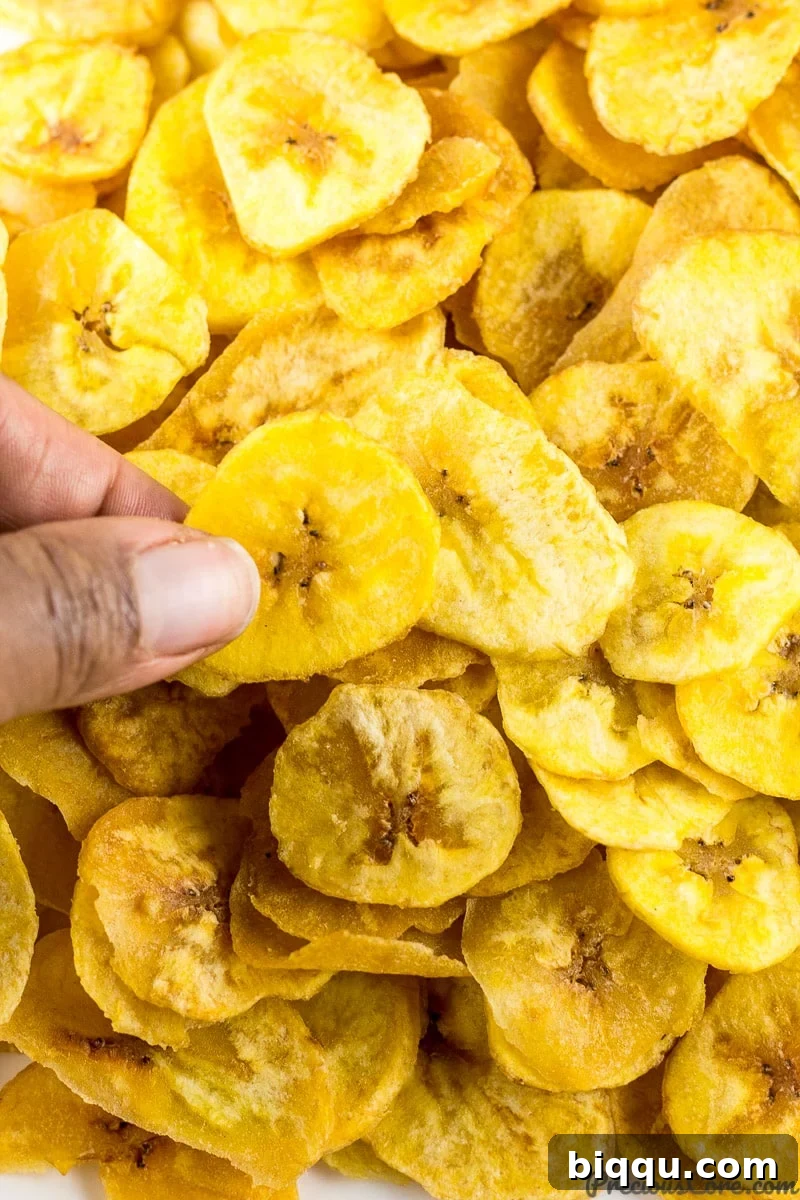
I must confess, once I start making homemade plantain chips, it feels like I’m caught in a delightful trap. I just keep eating and eating and eating… until they’re all gone! They are incredibly addictive. If you are blessed with enough willpower to save some, an airtight container at room temperature is the best way to keep them fresh.
Expert Tips for Perfect Plantain Chips
To truly elevate your plantain chip game, here are some invaluable tips derived from years of experience:
- The Salt-Water Advantage: Instead of simply sprinkling dry salt directly onto the plantain slices (which often leads to uneven seasoning or salt falling off), use a salt-water solution. Adding this solution directly into the hot oil while the plantains are frying ensures that the salt evenly coats every surface of each chip. This method creates a perfectly seasoned batch every time. Remember to be cautious as the water will react with the hot oil, causing splatters. Always add it slowly and take a step back.
- Precision Slicing is Key: For uniform crispiness, aim for consistently thin slices. A mandoline slicer is an absolute game-changer here, providing perfect, even thickness that allows all chips to cook at the same rate. If you don’t have one, the slicing blade of a box grater or a very sharp knife with steady hands can work. Inconsistent slices will result in some chips being perfectly crispy while others remain soft.
- Avoid Overcrowding the Pan: This tip cannot be stressed enough. Frying too many plantain slices at once significantly lowers the oil temperature. When the oil isn’t hot enough, the plantains will absorb more oil and become greasy and soft, rather than light and crispy. Fry in small batches, giving each chip enough space to cook freely and crisp up beautifully. Patience here truly pays off!
- Maintain Oil Temperature: Use a kitchen thermometer to monitor your oil temperature. Ideally, it should be maintained around 350°F (175°C). If the oil is too cool, chips will be greasy; if too hot, they will burn before crisping through. Adjust your heat source as needed between batches.
- Choose the Right Plantains: Stick to very green, firm plantains. As plantains ripen (turn yellow), their starch converts to sugar, making them softer and sweeter. While you can make sweet chips with slightly ripe plantains, for the classic savory and crispy version, unripe is the way to go.
- Cool Completely: Don’t rush to eat them immediately after frying. Plantain chips continue to crisp up as they cool. Allow them to rest on paper towels for several minutes until they are at room temperature for maximum crunch.
- Storage for Longevity: If you manage to have any left, store your cooled plantain chips in an airtight container or a Ziploc bag. This will protect them from moisture and keep them crispy for up to a week at room temperature.
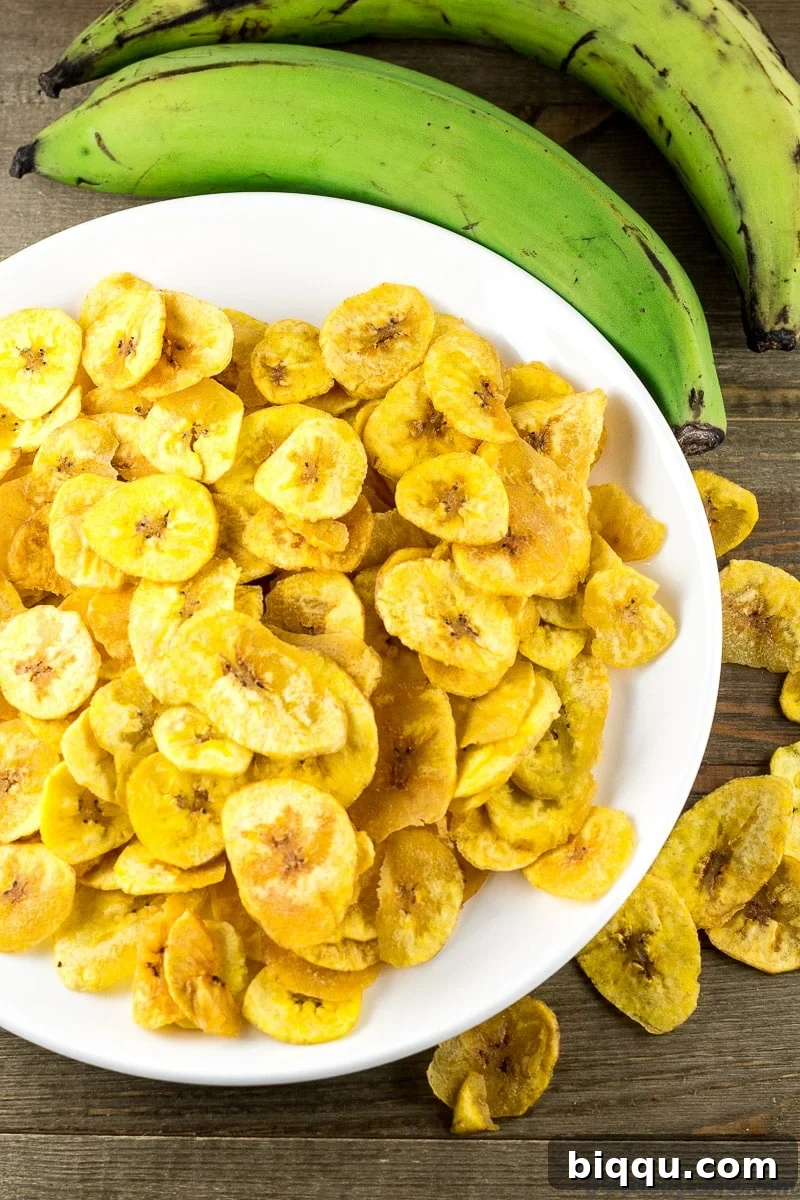
To give you a visual aid, I’ve created a video demonstrating exactly how to make these homemade plantain chips. Watching the process can clarify any steps and give you extra confidence before you start frying. You can find the video on my channel.
Serving Suggestions
Crispy plantain chips are incredibly versatile and can be enjoyed in numerous ways. Here are some serving suggestions to make the most of your delicious creation:
As a Standalone Snack
Enjoy them simply as they are! Their savory crunch makes them a perfect snack for any time of day, whether you’re relaxing at home or need a quick pick-me-up.
Paired with Dips
Plantain chips are fantastic dippers for a variety of sauces:
4 Ingredient Guacamole Recipe
Creamy and flavorful, guacamole is a classic pairing that complements the savory notes of plantain chips beautifully.
Mango Avocado Salsa
For a refreshing and slightly sweet contrast, a vibrant mango avocado salsa adds an exotic touch to your snack.
African Pepper Sauce
If you enjoy a spicy kick, a homemade African pepper sauce provides an intense, flavorful heat that pairs wonderfully with the mild plantain chips.
As a Side Dish
Use plantain chips to add texture and flavor to your main meals. They can accompany grilled meats, stews, or even a simple sandwich, offering a delightful alternative to traditional potato chips or fries.
In Salads or Bowls
Crush them slightly and sprinkle over salads or grain bowls for an unexpected crunch and a burst of flavor. They add an exciting element to fresh greens and vegetables.
More Plantain Inspirations
The culinary possibilities with plantains are truly vast, extending from savory main courses to delightful desserts. If you’ve enjoyed making these crispy chips, you’ll love exploring the abundance of other plantain recipes available. Here are a few more to inspire your kitchen adventures:
Poulet DG Recipe
A classic Cameroonian dish combining tender chicken and sweet plantains in a flavorful stew – a complete meal in itself.
Plantain Fries
A healthier, baked alternative to fried plantains, offering a soft interior and a slightly crispy exterior.
Plantain Frittata
An innovative dish that combines the sweetness of plantains with eggs and vegetables, perfect for breakfast or brunch.
Plantain Lasagna – Pastelon
A comforting and hearty Latin American casserole using plantain slices as “noodles” layered with meat and cheese.
Plantain Puff Puff Recipe
Deliciously fluffy and slightly sweet, these African doughnuts made with ripe plantains are a delightful dessert or snack.
Sweet Fried Plantains
A simple, quick, and incredibly satisfying way to enjoy ripe plantains, perfect as a side or dessert.
As you can see, plantains are not just for chips! Their adaptability makes them a beloved ingredient in various cuisines around the world, offering both savory and sweet profiles depending on their ripeness and preparation.
If you make this recipe, please consider leaving a star rating below. Your feedback not only helps others discover and trust the recipe but also brings immense joy to me. Thank you for your support!
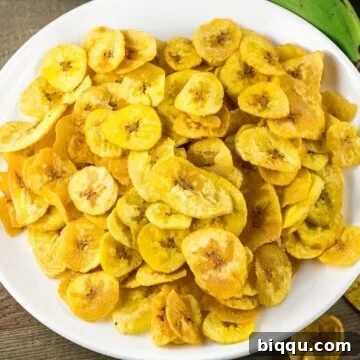
How To Make Plantain Chips
These plantain chips are ultra crispy, incredibly tasty, and wonderfully addictive! Don’t forget to review all the expert tips provided above in the article for the best results.
Prep Time: 20 mins
Cook Time: 20 mins
Total Time: 40 mins
Yields: 6 servings
Pin Recipe
Print Recipe
Ingredients
- 3 green plantains (unripe and firm to the touch)
- 1/2 teaspoon salt
- Oil for frying (e.g., vegetable, canola, or sunflower oil)
- 1/4 cup water (for salt solution)
Instructions
- Peel the plantains: Cut off both tips of each plantain. Score a line across the ridges of the plantain, then gently lift the skin from the cut portion and remove the entire skin with your hands.
- Slice thinly: Using a mandoline slicer, the slicing side of a box grater, or a sharp knife, slice the plantains into very thin, even chips (approximately 1/16 to 1/8 inch thick).
- Prepare salt solution: In a small bowl, mix the 1/4 cup of water and 1/2 teaspoon of salt. Set aside.
- Heat and fry: Pour oil into a deep pan to a depth of about 3-4 inches. Heat the oil over medium-high heat until it reaches 350°F (175°C). Carefully add the plantains one by one into the hot oil, ensuring not to overcrowd the pan.
- Season while frying: Immediately after adding a batch of plantains to the hot oil, carefully add about 2 tablespoons of the salt-water solution. Be cautious as the water will cause the oil to splatter. Gently stir the plantains and fry for about 5-7 minutes, stirring occasionally, until they are golden brown and crispy.
- Drain and cool: Remove the fried chips with a slotted spoon and place them on paper towels to absorb excess oil. Allow them to cool completely; they will become even crispier as they cool.
- Enjoy: Once cold, serve and enjoy your homemade plantain chips! Store any leftovers in an airtight container at room temperature.
Notes
- Plantain Ripeness: For the crispiest, savory chips, use very green and firm plantains. Slightly ripe (yellow) plantains will yield sweeter chips but might be less firm.
- Even Slicing: A mandoline slicer is highly recommended for consistent, thin slices, which are crucial for uniform crispiness.
- Salt Application: The salt-water solution ensures even seasoning. Add it carefully to the hot oil after adding the plantains, taking a step back to avoid splatters.
- Avoid Overcrowding: Fry plantains in small batches. Overcrowding lowers the oil temperature, resulting in soft, greasy chips instead of crispy ones.
- Oil Splatter Safety: When adding salt water to hot oil, be extremely careful. The water will cause the oil to splatter. Always maintain a safe distance.
Nutrition
Calories: 109kcal | Carbohydrates: 29g | Protein: 1g | Fat: 0.3g | Sodium: 197mg | Potassium: 436mg | Fiber: 2g | Sugar: 16g | Vitamin A: 1009IU | Vitamin C: 16mg | Calcium: 3mg | Iron: 0.5mg
Additional Info
Course: Snack
Cuisine: International
Calories: 109
Tried this recipe? Mention @preciouscore or tag #PreciousCore!
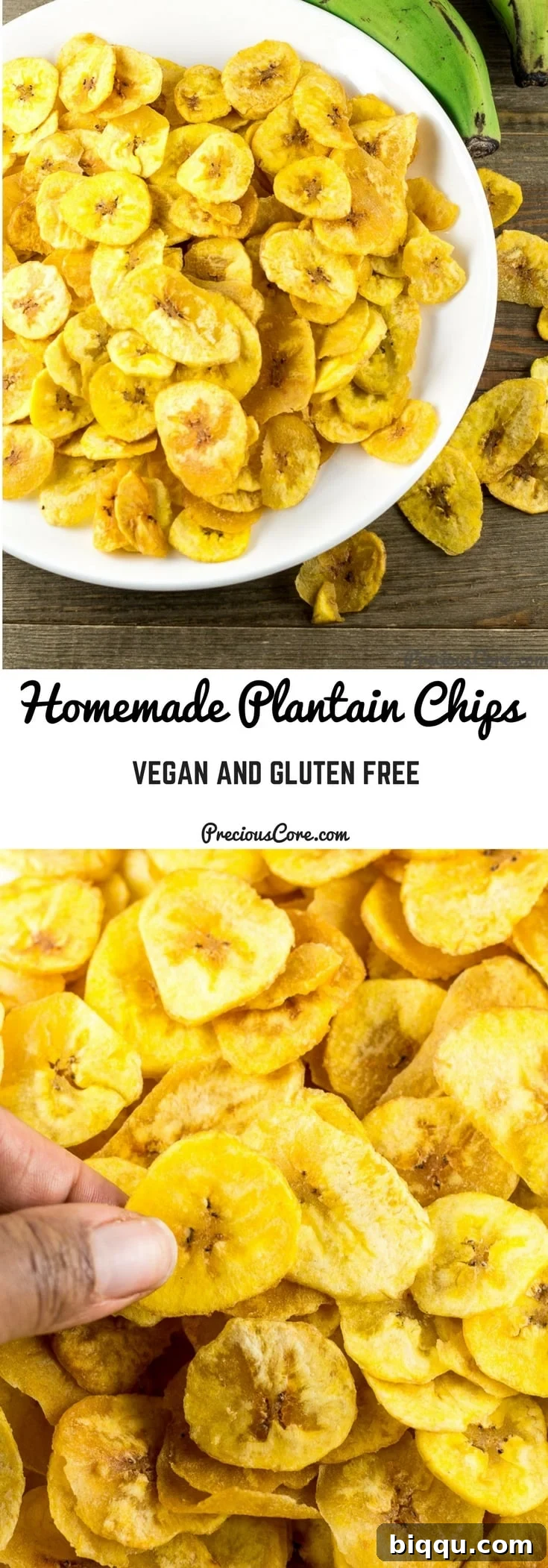
Pin this recipe:
Remember, clarifying your vision and writing it down is a powerful practice. Read your goals daily and let that vision continuously fuel your inspiration and efforts.