My journey with Accra Beans began quite unexpectedly, during my second pregnancy. Before that pivotal time, this delightful snack was merely another item on the bustling street food scene, largely unnoticed by me. However, pregnancy has a peculiar way of introducing you to culinary obsessions, transforming casual preferences into intense cravings. For me, Accra Beans became that undeniable addiction, a craving that lingered long after the pregnancy glow had faded.
During that period, I was teaching part-time at a private university, conveniently located within a stone’s throw of the vibrant Great Soppo market in Buea, nestled in the scenic South West region of Cameroon. Lecture days, which often coincided with market days, became a ritual. As soon as classes concluded, I’d practically sprint to the market, eager to reach the stall of a particular lady known for frying the most exquisite Accra Beans on the spot. This quest for Accra Beans was the very reason I’d alight from a taxi and walk with such swiftness; waiting until I reached home to savor them was an exercise in futility. In fact, my impatience often led to impromptu dining experiences, transforming the backseats of taxis into my private eating space. I’d tear open the plastic bag, letting the irresistible aroma fill the confined space, and quickly munch on these savory fritters. Even now, years later, without the sway of pregnancy hormones, my affection for Accra Beans remains as strong as ever – a true testament to their enduring appeal.
Oh, the irresistible delight!
When you find a dish that captures your heart so completely, it’s only natural to desire to recreate it yourself. The convenience of a street vendor is not always at hand, but the longing for that taste, and the hungry mouths waiting, are constant. The truly wonderful news is that you don’t need to be on the African continent to whip up a batch of these delectable fritters. The star ingredient, black-eyed peas, is a global staple, readily available in the bean aisle of almost any grocery store worldwide. So, trust me when I say, delicious Accra Beans are within your reach, no matter where you are.
Accra, also affectionately known as Akara in Nigeria and “Black-Eyed Peas Fritters” in broader culinary terms, holds a special place in the hearts of many West Africans. It’s a quintessential street food in Cameroon, hawked by vendors, sold in quaint food kiosks, and cherished by virtually everyone. These golden-brown bites are an extraordinary way to showcase the humble black-eyed pea, transforming it into something truly magnificent. The traditional preparation involves carefully peeling the beans, soaking them for several hours, grinding them into a smooth paste, and then deep-frying them to perfection. While freshly ground beans offer an unparalleled texture, powdered black-eyed peas can also be used, mixed with water, for a quicker alternative. My initial forays into making this snack at home were with powdered black-eyed peas (known as Koki Beans powder), generously sent by my dear mother. While the powdered version yields a tasty result, its texture differs noticeably from that made with fresh beans. For an authentic, truly satisfying experience, I always advocate for fresh beans, despite the longer preparation time. Each crispy, flavorful bite makes every moment of effort entirely worthwhile.
The name “Accra” itself carries a rich cultural heritage, believed by many to be linked to Accra, the capital of Ghana, where similar bean fritters are a popular staple. Across West Africa, variations of this dish exist, each with its local name and unique twist, but the core essence remains the same: a celebration of the black-eyed pea. For us Cameroonians, or if you’re a “contri geh” (local girl/guy) like me, it’s simply Accra Beans. For our Nigerian neighbors, it’s Akara. No matter the name, ensure your mouth opens wide as you pronounce it – it’s a dish meant to be savored with gusto!
Oh, the absolute perfection!
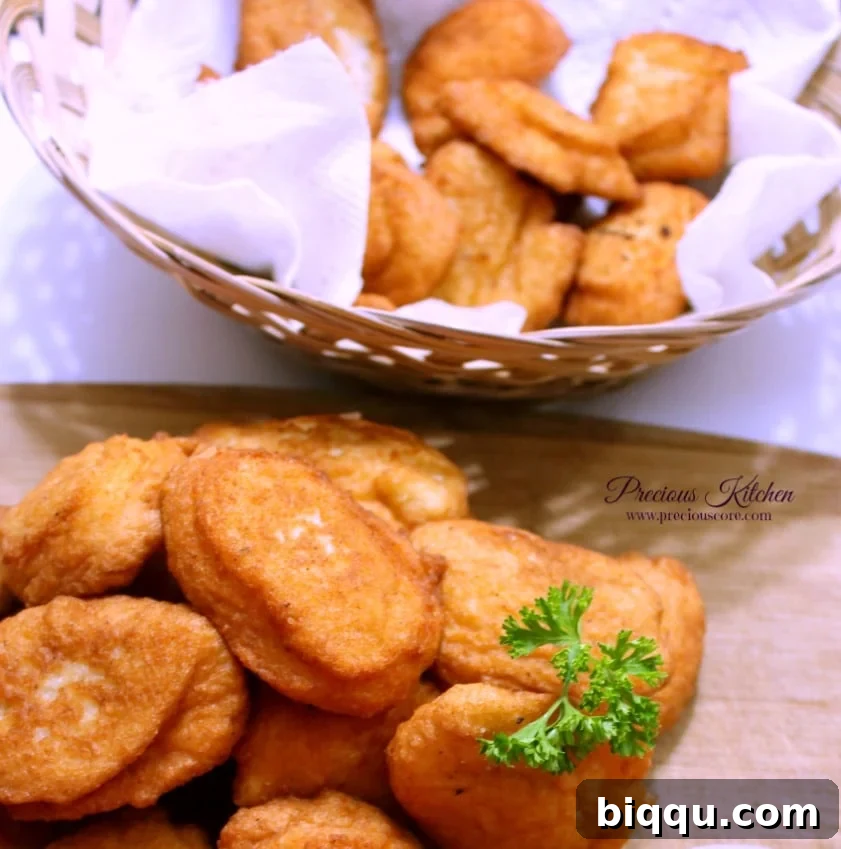
When freshly prepared, these fritters boast an enticing crunch on the outside, giving way to a wonderfully soft and airy interior. Their versatility makes them suitable for any meal of the day. They make an excellent appetizer, a hearty breakfast dish, or a satisfying snack. For a traditional Cameroonian breakfast, serve Accra Beans with Pap, a smooth and comforting porridge made from corn, or with a creamy custard. Many Cameroonians also enjoy these fritters as a sandwich filler, tucking them into bread for a simple yet incredibly flavorful meal, a practice often praised for its deliciousness. Personally, I frequently enjoy them as a standalone snack, often accompanied by my renowned killer pepper sauce, which elevates the experience to another level.
To embark on your own Accra Beans culinary adventure, you will need just a handful of simple ingredients: Koki beans (black-eyed peas), salt, vegetable oil, and a medium-sized onion. The preparation begins the night before with the crucial step of peeling the beans. Start by soaking the beans in water for a mere five minutes, then transfer them to a blender and pulse for about two minutes. This action gently loosens the skins without grinding the beans themselves. Next, pour enough water into the bowl with the pulsed beans to make the loosened skins float to the surface. Carefully drain these floating skins using a colander. Repeat this process of adding water and draining until almost all the skins are removed. A few stray skins are perfectly fine and won’t affect the final product. Once peeled, let the beans soak in clean water overnight, or for a minimum of six hours, to ensure they are perfectly hydrated and ready for the next stage.
The following morning, drain the soaked beans thoroughly. Now comes the blending process. Combine the drained beans with your chopped onion in a blender, adding only a very minimal amount of water. The key here is to achieve a really thick, smooth paste, so resist the urge to add too much liquid. If your blender has a small, powerful compartment, I highly recommend using it, as it often proves more effective in creating that ideal smooth consistency. It might take a bit of patience and blending in small batches, but the creamy texture is crucial for light and airy fritters. If you possess a food processor, it is an even better tool for this step, as it can typically grind the beans into a paste with little to no water, mimicking the traditional method more closely. Pour the resulting smooth paste into a bowl.
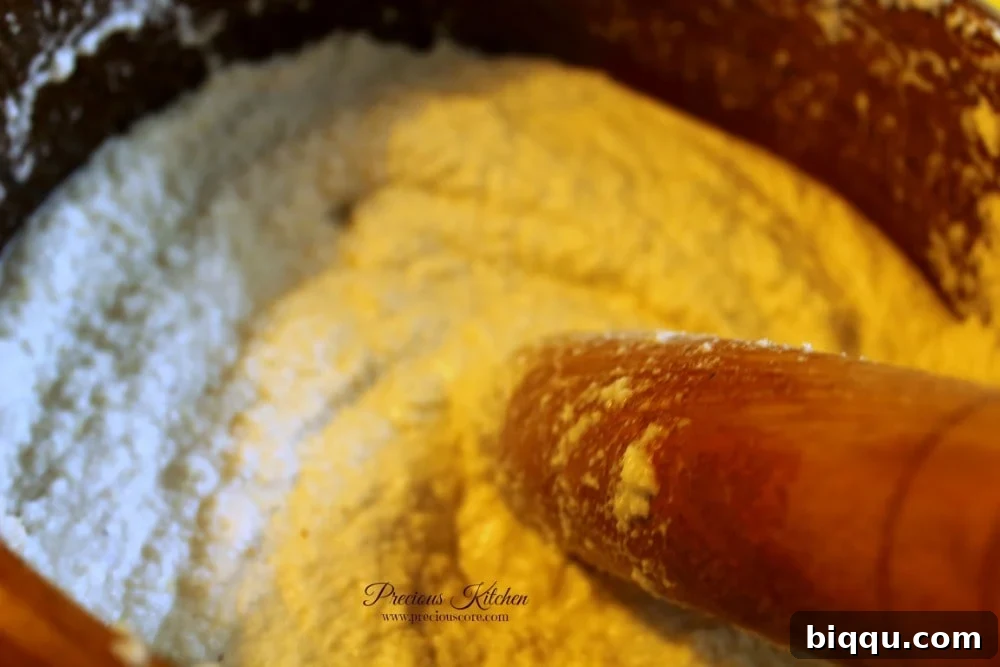
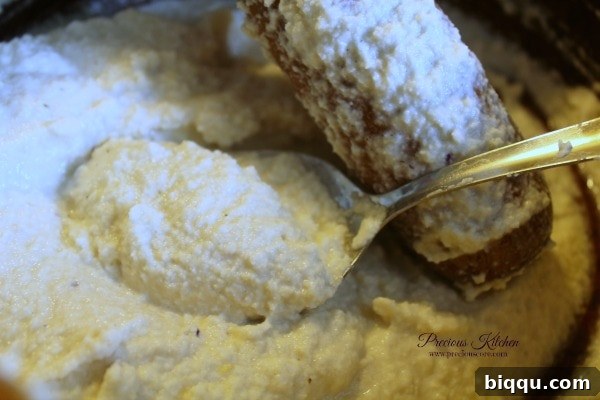
I chose to transfer my blended paste to a traditional mortar and pestle, embracing the method often used by “Mami Accra” street vendors, which adds a touch of authenticity to the experience. However, a simple wooden spoon and a regular kitchen bowl will work just as well for the next step. Add a generous teaspoon of salt to the paste. Now, begin stirring the mixture vigorously in a circular motion. This essential step incorporates air into the batter, making it light and fluffy, ensuring your Accra fritters are not dense and heavy. While you are stirring, place a pot of vegetable oil on medium-high heat to warm up. Continue stirring until the mixture feels lighter and slightly increased in volume. The consistency should be somewhat aerated and smooth.
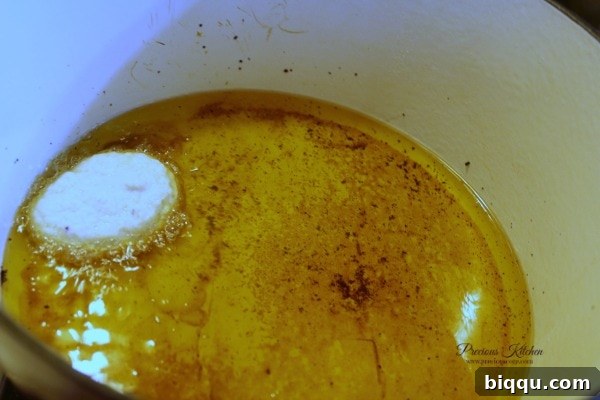
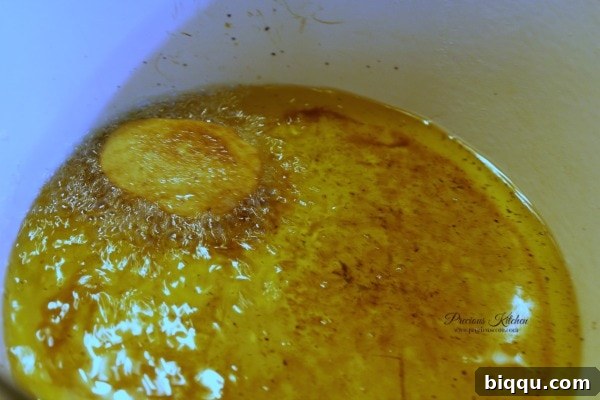
Once the oil is sufficiently hot, it’s time to begin frying. Use a flat-headed cooking spoon to scoop out a portion of the dough and carefully place it into the hot oil.
I always start by frying just one scoop as a test. This allows me to gauge if the oil has reached the perfect temperature.
If the test fritter fries beautifully, turning a delightful golden-brown color, I know the oil is ready. At this point, I carefully flip it to cook evenly on the other side.
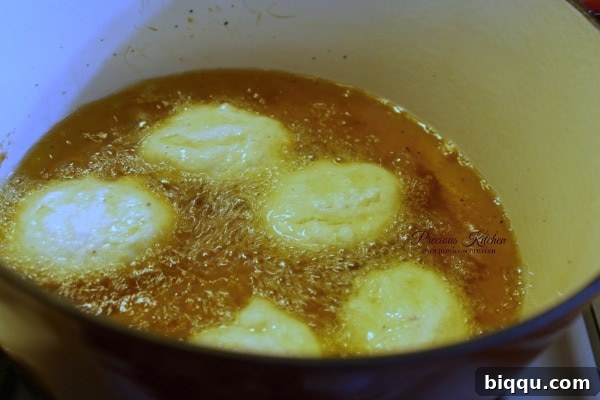
Then, I proceed with the rest of the batter, scooping several spoonfuls into the oil. Remember to be mindful not to overcrowd your pot; leaving enough space allows the fritters to cook evenly and maintain the oil temperature.
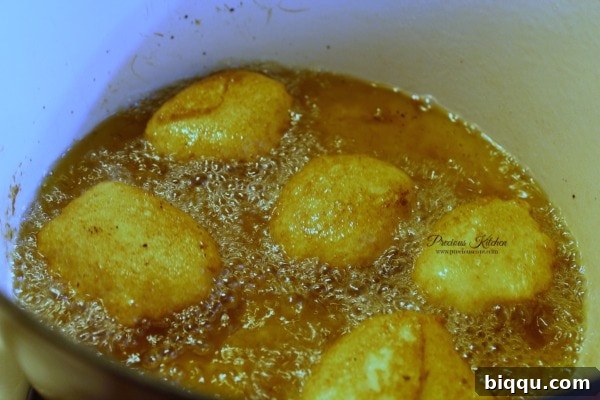
Allow them to fry on each side for approximately two minutes, or until they achieve that beautiful golden-brown hue. You’ll notice they tend to swell slightly as they cook, becoming beautifully puffed and airy.
Once perfectly golden and cooked through, remove the Accra Beans from the oil and place them on paper towels to absorb any excess oil. At this stage, it’s almost impossible to resist grabbing one for a quick, divine bite – savor that moment!
And, of course, don’t forget the truly phenomenal pepper sauce to accompany your freshly made Accra Beans. The combination is absolutely heavenly. Below, you’ll find the complete printable recipe for these wonderful fritters!
print recipe
Accra Beans (Black-Eyed Peas Fritters)
by Precious Meshi Nkeih (www.preciouscore.com) July-19-2016
A cherished Cameroonian vegan snack made from nutritious black-eyed peas, offering a delightful crunch and rich flavor.
Ingredients
2 cups black-eyed peas (koki beans), dried
Half a medium-sized onion, roughly chopped
1 teaspoon salt, plus more to taste
2-3 cups vegetable oil, for deep frying
Water (as needed for soaking and blending)
Instructions
Step 1: Preparing and Peeling the Beans Place 2 cups of dried black-eyed peas in a large bowl and cover with 4 cups of water. Let them soak for 5 minutes. Drain the water. Transfer the partially soaked beans into a blender. Add just enough fresh water to barely cover the beans (about 1 cup). Pulse the blender for approximately 2 minutes. The goal is to loosen the skins, not to grind the beans themselves. Return the pulsed beans to a large bowl. Pour in about 8 cups of fresh water. The skins, now detached, will float to the surface. Gently pour the water, along with the floating skins, through a colander. This separates the skins from the beans. Repeat this process of adding water, stirring gently, and draining until almost all the skins are removed. A few remaining skins are acceptable. For any stubborn beans that haven’t shed their skins, gently rub them between your palms to loosen and remove. Once peeled, cover the beans with 4 cups of fresh water and let them soak overnight, or for a minimum of 6 hours. This ensures they soften sufficiently for blending.Step 2: Blending the Beans into a Smooth Paste The next morning, drain the soaked beans thoroughly. Combine the drained beans and the roughly chopped half onion in your blender. Add a very small amount of water to start – typically 1/4 to 1/2 cup, or just enough to get the blades moving. The objective is to create a very thick, smooth, and consistent paste. If your blender has a small, powerful compartment, utilize it as it’s often more effective in achieving the desired thick consistency. Blend in small batches if necessary, patiently processing until the mixture is entirely smooth, with no noticeable bean chunks. *Chef’s Note: If you have a food processor, it is an ideal tool for this step, as it can often grind the beans into a paste with minimal to no water, resulting in an even denser and more traditional batter.*Step 3: Aerating and Seasoning the Batter Pour your thick, smooth bean paste into a large mixing bowl. Add 1 teaspoon of salt. Begin to stir the mixture vigorously in a circular motion. This is a crucial step that incorporates air into the batter, making the fritters light and fluffy rather than dense. Continue stirring for about 5-10 minutes until the batter feels lighter and slightly increased in volume. Halfway through the stirring process, place your vegetable oil in a deep pot or frying pan over medium-high heat to begin heating. Continue stirring the batter until it reaches the desired airy consistency. The batter should taste slightly saltier than you would prefer for a cooked meal, as the saltiness will mellow out during frying. If you add ‘just enough’ salt, your Accra might taste bland.Step 4: Frying the Accra Beans Once the oil is hot (you can test by dropping a tiny bit of batter; it should sizzle immediately), scoop spoonfuls of the aerated batter using a flat-headed spoon or a regular tablespoon. Carefully drop the batter into the hot oil. Avoid overcrowding the pot to maintain the oil temperature and ensure even cooking. Fry the fritters on one side until they turn a beautiful golden-brown color, which usually takes about 2-3 minutes. Carefully flip each fritter to the other side and continue frying until that side is also golden-brown and the fritters are cooked through. They will puff up slightly as they fry. Using a slotted spoon, remove the cooked Accra Beans from the oil and place them on a plate lined with paper towels to drain any excess oil. Serve immediately while hot and crispy.
Details
Prep time: Cook time: Total time: Yield: Approximately 20-25 delicious fritters
**Chef’s Notes & Expert Tips:**
* **No Seasoning Cubes Needed:** Authentic Accra Beans shine with the natural flavors of black-eyed peas, onion, and salt. There is no need for artificial seasoning cubes (like Maggi or Knorr); they can overpower the delicate taste.
* **Optional Heat:** For those who enjoy a little kick, feel free to add a small amount of fresh chili pepper to the beans before grinding. This is entirely optional and can be adjusted to your spice preference.
* **Consistency is Key:** The thickness of the bean paste is paramount. If your paste is too watery, your fritters will be dense and absorb too much oil. If this happens, you can try adding a tablespoon or two of all-purpose flour to stiffen it slightly, but this will alter the traditional texture.
* **Oil Temperature:** Maintaining the correct oil temperature is vital for perfect Accra. If the oil isn’t hot enough, the fritters will soak up too much oil and become greasy. If it’s too hot, they will brown too quickly on the outside, leaving the inside uncooked. A consistent medium-high heat is ideal.
* **Storage and Reheating:** Leftover Accra Beans can be stored in an airtight container in the refrigerator for up to 3 days. To reheat, you can warm them in a dry pan over medium heat until crispy again, or bake them in an oven at 350°F (175°C) for 10-15 minutes.
* **Serving Variations:** While traditional with pepper sauce, Accra Beans also pair wonderfully with fresh tomato salsa, a sprinkle of fresh herbs, or even a squeeze of lime juice for brightness. Get creative with your accompaniments!